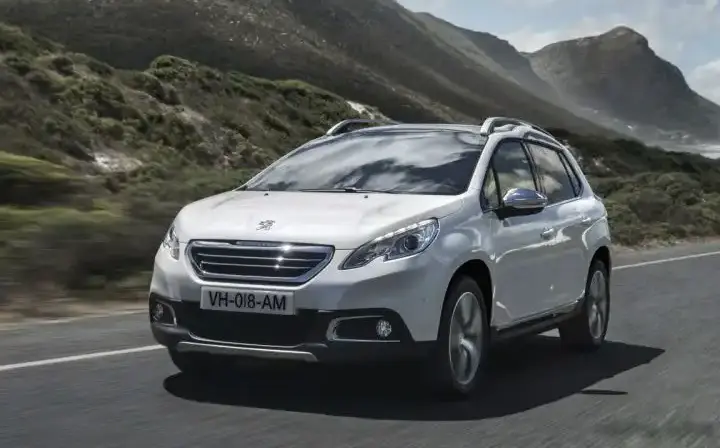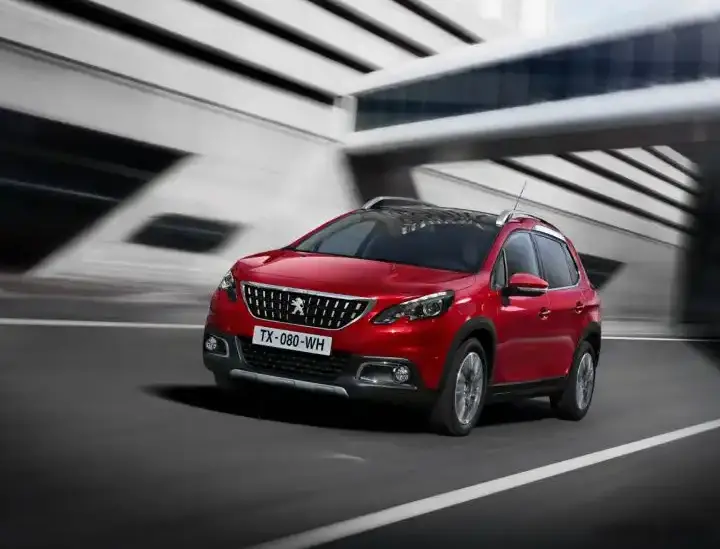
The Peugeot 2008 I (facelift 2016) 1.2 PureTech 130 Stop&Start represents a significant iteration within the first generation of Peugeot’s popular subcompact SUV. Introduced as part of a mid-cycle refresh in 2016 and continuing through the 2019 model year, this variant aimed to balance fuel efficiency with a respectable level of performance, appealing to a broad segment of the European market. Positioned as a mid-range offering within the 2008 lineup, it slotted between the lower-powered 1.2 PureTech 110 and the more expensive diesel options. The 2008 itself was Peugeot’s entry into the burgeoning crossover SUV segment, designed to attract buyers seeking a stylish, practical, and economical vehicle.
Technical Specifications
| Brand | Peugeot |
| Model | 2008 |
| Generation | 2008 I (facelift 2016) |
| Type (Engine) | 1.2 PureTech (130 Hp) start&stop STT |
| Start of production | 2016 |
| End of production | 2019 |
| Powertrain Architecture | Internal Combustion engine |
| Body type | SUV, Crossover |
| Seats | 5 |
| Doors | 5 |
| Fuel consumption (urban) | 6 l/100 km (39.2 US mpg, 47.1 UK mpg, 16.7 km/l) |
| Fuel consumption (extra urban) | 4.1 l/100 km (57.4 US mpg, 68.9 UK mpg, 24.4 km/l) |
| Fuel consumption (combined) | 4.8 l/100 km (49 US mpg, 58.9 UK mpg, 20.8 km/l) |
| CO2 emissions | 110 g/km |
| Fuel Type | Petrol (Gasoline) |
| Acceleration 0 – 100 km/h | 9.3 sec |
| Acceleration 0 – 62 mph | 9.3 sec |
| Acceleration 0 – 60 mph | 8.8 sec |
| Maximum speed | 200 km/h (124.27 mph) |
| Emission standard | Euro 6 |
| Weight-to-power ratio | 8.9 kg/Hp, 112.1 Hp/tonne |
| Weight-to-torque ratio | 5 kg/Nm, 198.3 Nm/tonne |
| Power | 130 Hp @ 5500 rpm |
| Power per litre | 108.4 Hp/l |
| Torque | 230 Nm @ 1750 rpm (169.64 lb.-ft. @ 1750 rpm) |
| Engine layout | Front, Transverse |
| Engine Model/Code | HNY EB2DTS |
| Engine displacement | 1199 cm3 (73.17 cu. in.) |
| Engine configuration | Inline |
| Fuel injection system | Direct injection |
| Engine aspiration | Turbocharger, Intercooler |
| Engine oil capacity | 3.5 l (3.7 US qt | 3.08 UK qt) |
| Kerb Weight | 1160 kg (2557.36 lbs.) |
| Trunk (boot) space – minimum | 350 l (12.36 cu. ft.) |
| Fuel tank capacity | 50 l (13.21 US gal | 11 UK gal) |
| Length | 4159 mm (163.74 in.) |
| Width | 1829 mm (72.01 in.) |
| Width including mirrors | 2004 mm (78.9 in.) |
| Height | 1556 mm (61.26 in.) |
| Wheelbase | 2537 mm (99.88 in.) |
| Front track | 1472-1482 mm (57.95 – 58.35 in.) |
| Rear (Back) track | 1482-1492 mm (58.35 – 58.74 in.) |
| Drivetrain Architecture | The Internal combustion engine (ICE) drives the front wheels of the vehicle. |
| Drive wheel | Front wheel drive |
| Number of gears and type of gearbox | 6 gears, manual transmission |
| Front suspension | Independent, type McPherson with coil spring and anti-roll bar |
| Rear suspension | Semi-independent, coil spring |
| Front brakes | Ventilated discs |
| Rear brakes | Disc |
| Assisting systems | ABS (Anti-lock braking system) |
| Steering type | Steering rack and pinion |
| Power steering | Electric Steering |
| Tires size | 195/60 R16; 205/50 R17 |
| Wheel rims size | 16; 17 |
Powertrain & Engine Architecture
At the heart of the 2008 1.2 PureTech 130 lies Peugeot’s EB2DTS engine, a 1.2-liter turbocharged inline-three cylinder petrol engine. This engine is part of the “PureTech” family, known for its efficiency and responsiveness. The EB2DTS utilizes direct fuel injection, delivering fuel directly into the combustion chamber for improved combustion efficiency and reduced emissions. A single-scroll turbocharger with an intercooler boosts power output, mitigating the typical power deficit often associated with small-displacement engines. The engine produces 130 horsepower at 5500 rpm and 230 Nm (169.64 lb-ft) of torque at 1750 rpm. The engine is paired with a six-speed manual transmission, providing a balance between fuel economy and driver engagement. The Start&Stop system further enhances fuel efficiency by automatically shutting off the engine when the vehicle is stationary, such as at traffic lights.
Driving Characteristics
The 1.2 PureTech 130 offered a noticeable step up in performance compared to the base 110 hp version. While not a sports car, the turbocharger provides a good amount of low-end torque, making it feel lively around town. Acceleration from 0-60 mph takes approximately 8.8 seconds, which is adequate for everyday driving. The six-speed manual transmission allows drivers to keep the engine in its optimal power band. Compared to diesel variants, the 1.2 PureTech 130 is generally quieter and smoother, but it doesn’t offer the same level of fuel economy. The gear ratios are well-chosen for both urban and highway driving, providing sufficient power for overtaking maneuvers. The engine’s responsiveness makes it a pleasant companion for daily commutes and longer journeys.
Equipment & Trim Levels
The 1.2 PureTech 130 typically came equipped with a reasonable level of standard features. These included air conditioning, a touchscreen infotainment system with Bluetooth connectivity, power windows and mirrors, and alloy wheels. Higher trim levels offered additional features such as a panoramic sunroof, navigation system, rear parking sensors, and automatic climate control. Interior upholstery was typically cloth, with options for leather upgrades. Safety features included ABS, ESP (Electronic Stability Program), and multiple airbags. The overall interior design was modern and functional, with a focus on ergonomics and practicality.
Chassis & Braking
The 2008 1.2 PureTech 130 utilizes a McPherson strut front suspension and a semi-independent coil spring rear suspension. This setup provides a comfortable ride quality while maintaining reasonable handling characteristics. The front brakes are ventilated discs, while the rear brakes are solid discs. ABS (Anti-lock Braking System) is standard, enhancing braking performance and stability. The steering is electric power-assisted, providing light and precise steering feel. The chassis is tuned to prioritize comfort over outright sportiness, making it well-suited for everyday driving conditions.
Market Reception & Comparison
The Peugeot 2008 1.2 PureTech 130 was generally well-received by automotive critics. It was praised for its fuel efficiency, responsive engine, and stylish design. However, some critics noted that the interior materials could be of higher quality. Compared to the 1.6 BlueHDi diesel variant, the PureTech 130 offered a more refined driving experience but lower fuel economy. Against the 1.2 PureTech 110, the 130 hp version provided a noticeable performance boost, justifying the higher price tag for drivers seeking more power. The 2008 competed with other subcompact SUVs such as the Renault Captur, Nissan Juke, and Opel/Vauxhall Mokka.
Legacy
The 1.2 PureTech engine has proven to be a reliable and durable powertrain, although early versions did experience some issues with timing chain wear. Regular maintenance, including oil changes and timing chain inspections, is crucial for ensuring long-term reliability. On the used car market, the 2008 1.2 PureTech 130 remains a popular choice due to its blend of practicality, efficiency, and affordability. Its relatively low running costs and stylish design continue to appeal to buyers seeking a versatile and economical subcompact SUV. The engine’s continued use in other Peugeot and Citroën models demonstrates its enduring appeal and engineering soundness.