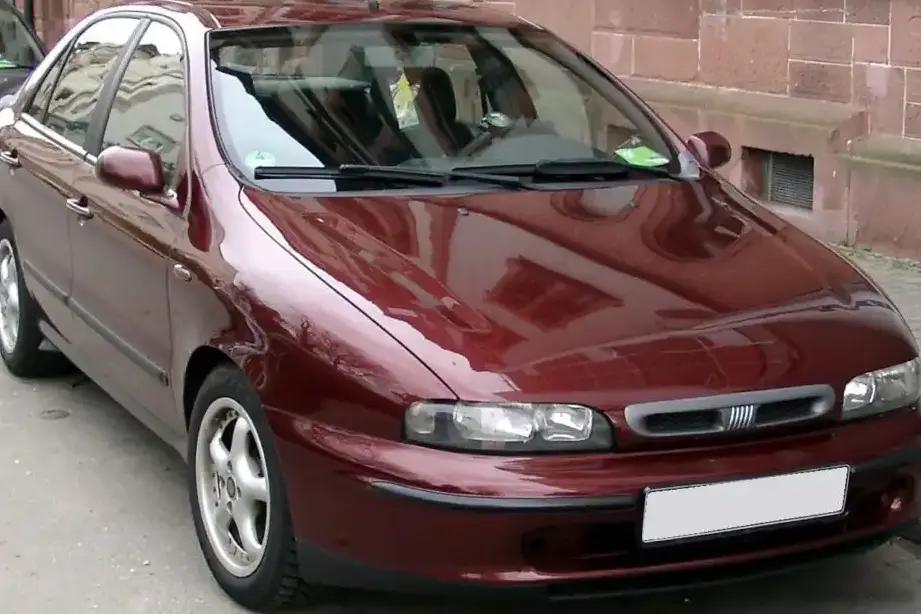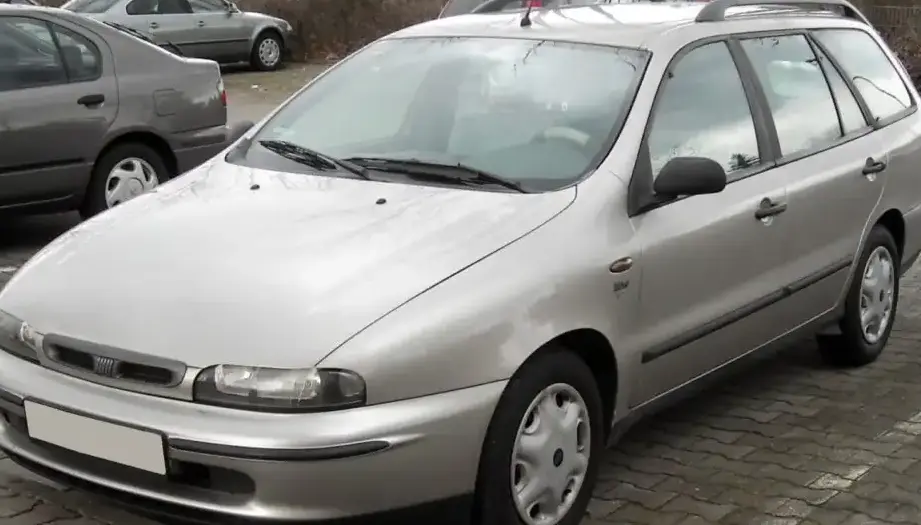
The Fiat Marea Weekend 2.0 i 20V Turbo (designated chassis code 185) was a performance-oriented variant of the Marea station wagon, produced between 2000 and 2002. Positioned as the flagship of the Marea Weekend range, it offered a significant power upgrade over the naturally aspirated engines available, targeting drivers seeking a blend of practicality and spirited driving. The Marea itself was a large family car produced by Fiat, representing their offering in the D-segment (mid-size) market, primarily aimed at European consumers. The Weekend body style, a station wagon or estate, expanded the Marea’s appeal by providing increased cargo capacity and versatility.
Technical Specifications
| Brand | Fiat |
| Model | Marea |
| Generation | Marea Weekend (185) |
| Type (Engine) | 2.0 i 20V Turbo (182 Hp) |
| Start of production | 2000 year |
| End of production | 2002 year |
| Powertrain Architecture | Internal Combustion engine |
| Body type | Station wagon (estate) |
| Seats | 5 |
| Doors | 5 |
| Fuel Type | Petrol (Gasoline) |
| Acceleration 0 – 100 km/h | 7.9 sec |
| Acceleration 0 – 62 mph | 7.9 sec |
| Acceleration 0 – 60 mph | 7.5 sec |
| Maximum speed | 223 km/h (138.57 mph) |
| Weight-to-power ratio | 7.5 kg/Hp, 133.8 Hp/tonne |
| Weight-to-torque ratio | 5.2 kg/Nm, 194.1 Nm/tonne |
| Power | 182 Hp @ 6000 rpm |
| Power per litre | 91.1 Hp/l |
| Torque | 264 Nm @ 2750 rpm (194.72 lb.-ft. @ 2750 rpm) |
| Engine layout | Front, Transverse |
| Engine Model/Code | 185 A4.011 |
| Engine displacement | 1998 cm3 (121.93 cu. in.) |
| Number of cylinders | 5 |
| Engine configuration | Inline |
| Cylinder Bore | 82 mm (3.23 in.) |
| Piston Stroke | 75.65 mm (2.98 in.) |
| Compression ratio | 8.5:1 |
| Number of valves per cylinder | 4 |
| Fuel injection system | Multi-port manifold injection |
| Engine aspiration | Turbocharger |
| Kerb Weight | 1360 kg (2998.29 lbs.) |
| Max. weight | 1860 kg (4100.6 lbs.) |
| Max load | 500 kg (1102.31 lbs.) |
| Trunk (boot) space – minimum | 500 l (17.66 cu. ft.) |
| Trunk (boot) space – maximum | 1560 l (55.09 cu. ft.) |
| Fuel tank capacity | 63 l (16.64 US gal | 13.86 UK gal) |
| Length | 4485 mm (176.57 in.) |
| Width | 1740 mm (68.5 in.) |
| Height | 1510 mm (59.45 in.) |
| Wheelbase | 2540 mm (100 in.) |
| Front track | 1475 mm (58.07 in.) |
| Rear (Back) track | 1440 mm (56.69 in.) |
| Drivetrain Architecture | The Internal combustion engine (ICE) drives the front wheels of the vehicle. |
| Drive wheel | Front wheel drive |
| Number of gears and type of gearbox | 5 gears, manual transmission |
| Front suspension | Wishbone |
| Rear suspension | Coil spring |
| Front brakes | Ventilated discs |
| Rear brakes | Disc |
| Assisting systems | ABS (Anti-lock braking system) |
| Steering type | Steering rack and pinion |
| Power steering | Hydraulic Steering |
| Tires size | 195/60 R15 |
Powertrain & Engine Architecture
The heart of the Marea Weekend 2.0 i 20V Turbo was the 185 A4.011 engine, a 1.998-liter inline-five cylinder gasoline engine. This engine was a derivative of Fiat’s well-regarded twin-cam, five-cylinder design, featuring multi-point fuel injection and a turbocharger. The 20 valves (four per cylinder) contributed to improved breathing and higher power output. The turbocharger, a Garrett unit, provided a significant boost in horsepower and torque compared to the naturally aspirated 1.8L and 2.0L engines offered in other Marea Weekend models. The engine’s compression ratio was set at 8.5:1, a compromise between performance and reliability when used with a turbocharger. The engine was transversely mounted in the front of the vehicle, driving the front wheels. The five-speed manual transmission was the only gearbox option available with this engine, prioritizing driver engagement and performance.
Driving Characteristics
The 182 horsepower and 194.72 lb-ft of torque delivered by the 2.0 i 20V Turbo engine transformed the Marea Weekend’s driving experience. Acceleration to 60 mph was achieved in approximately 7.5 seconds, and the car could reach a top speed of 138.57 mph. The turbocharger provided a noticeable surge of power in the mid-range, making overtaking maneuvers effortless. While not a sports car, the Marea Weekend Turbo offered a level of performance that was uncommon in station wagons of its era. The five-speed manual transmission allowed drivers to fully exploit the engine’s powerband. Compared to the standard Marea Weekend models, the Turbo variant felt significantly more responsive and capable. The suspension, while tuned for comfort, provided adequate handling for spirited driving, though body roll was present during hard cornering.
Equipment & Trim Levels
The Marea Weekend 2.0 i 20V Turbo was typically equipped with a higher level of standard features than the base models. These included power windows, central locking, power steering, ABS brakes, and an upgraded audio system. Interior upholstery was typically cloth, but leather options were available. Air conditioning was standard. Optional extras included a sunroof, alloy wheels, and a more sophisticated sound system. The dashboard featured a sporty design with clear instrumentation. The trim level was generally considered the top-of-the-line for the Marea Weekend, offering a premium experience for buyers seeking both practicality and performance.
Chassis & Braking
The Marea Weekend featured independent wishbone suspension at the front and a coil spring rear suspension. The front brakes were ventilated discs, providing strong stopping power, while the rear brakes were solid discs. ABS (Anti-lock Braking System) was standard, enhancing safety and control during emergency braking. The chassis was reinforced compared to the lower-powered models to handle the increased torque and power output. Stabilizer bars were fitted to both the front and rear axles to reduce body roll. Tire size was typically 195/60 R15, providing a good balance between grip and ride comfort.
Market Reception & Comparison
The Marea Weekend 2.0 i 20V Turbo was generally well-received by automotive critics, who praised its performance and practicality. It was seen as a compelling alternative to more expensive and less versatile performance cars. Fuel economy was reasonable for a turbocharged engine of this size, but it was still lower than the naturally aspirated models. Reliability was generally good, although the turbocharger added a layer of complexity that required regular maintenance. Compared to the 1.8L and 2.0L non-turbo Marea Weekend models, the Turbo variant offered a significant performance advantage but came at a higher price point. It competed with other performance-oriented station wagons, such as the Ford Mondeo ST and the Opel/Vauxhall Vectra GSi.
Legacy
The Fiat Marea Weekend 2.0 i 20V Turbo remains a relatively rare and sought-after vehicle among enthusiasts. The inline-five engine is known for its distinctive sound and robust construction. While finding parts can be challenging due to the car’s age and limited production numbers, the engine is generally considered reliable if properly maintained. Today, the Marea Weekend Turbo represents a unique and affordable option for those seeking a practical and engaging driving experience. Its blend of performance, space, and Italian styling has earned it a loyal following in the used car market. The 185 A4.011 engine, while not as legendary as some other performance engines of the era, is remembered as a capable and enjoyable powerplant.