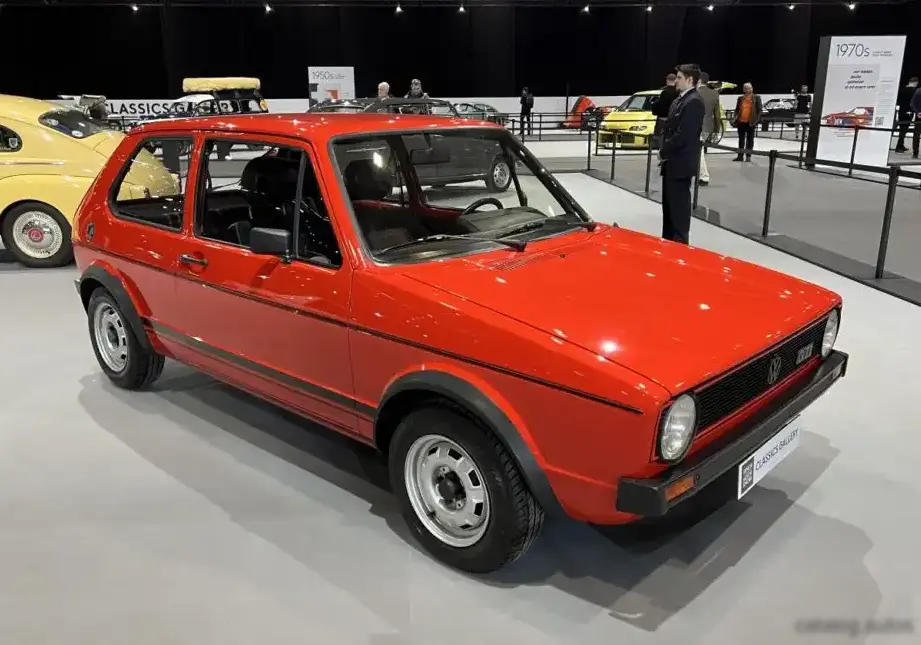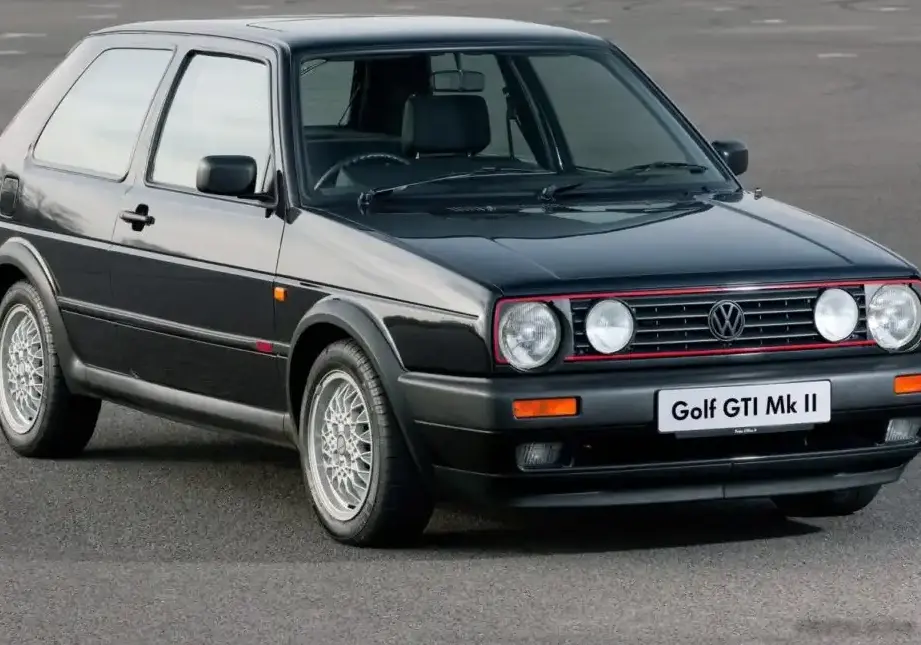
The Volkswagen Golf Mk2, produced from 1983 to 1992, represented a significant evolution of the original Golf, offering improved aerodynamics, a more refined interior, and a wider range of engine options. The 1987 facelift brought subtle but important changes to the exterior styling and interior appointments. Among the various iterations of the Mk2, the 3-door 1.8 GTI 16V, producing 129 horsepower, occupied a sweet spot in the lineup, blending performance with relative affordability. Production of this specific variant ran from 1987 to 1991, becoming a popular choice for enthusiasts seeking a sporty and practical hatchback.
Technical Specifications
| Brand | Volkswagen |
| Model | Golf |
| Generation | Golf II (3-door, facelift 1987) |
| Type (Engine) | 1.8 GTI 16V (129 Hp) |
| Start of production | 1987 |
| End of production | 1991 |
| Powertrain Architecture | Internal Combustion engine |
| Body type | Hatchback |
| Seats | 5 |
| Doors | 3 |
| Fuel consumption (urban) | 11.3 l/100 km (20.8 US mpg, 25 UK mpg, 8.8 km/l) |
| Fuel consumption (extra urban) | 6.9 l/100 km (34.1 US mpg, 40.9 UK mpg, 14.5 km/l) |
| Fuel Type | Petrol (Gasoline) |
| Acceleration 0 – 100 km/h | 9 sec |
| Acceleration 0 – 62 mph | 9 sec |
| Acceleration 0 – 60 mph | 8.6 sec |
| Maximum speed | 200 km/h (124.27 mph) |
| Weight-to-power ratio | 7.6 kg/Hp, 131 Hp/tonne |
| Weight-to-torque ratio | 5.9 kg/Nm, 170.6 Nm/tonne |
| Power | 129 Hp @ 5800 rpm |
| Power per litre | 72.4 Hp/l |
| Torque | 168 Nm @ 4250 rpm (123.91 lb.-ft. @ 4250 rpm) |
| Engine layout | Front, Transverse |
| Engine Model/Code | PL |
| Engine displacement | 1781 cm3 (108.68 cu. in.) |
| Number of cylinders | 4 |
| Engine configuration | Inline |
| Cylinder Bore | 81 mm (3.19 in.) |
| Piston Stroke | 86.4 mm (3.4 in.) |
| Compression ratio | 10:1 |
| Number of valves per cylinder | 4 |
| Fuel injection system | Multi-port manifold injection |
| Engine aspiration | Naturally aspirated engine |
| Valvetrain | DOHC |
| Engine oil capacity | 4 l (4.23 US qt | 3.52 UK qt) |
| Coolant capacity | 6.3 l (6.66 US qt | 5.54 UK qt) |
| Kerb Weight | 985 kg (2171.55 lbs.) |
| Max. weight | 1465 kg (3229.77 lbs.) |
| Max load | 480 kg (1058.22 lbs.) |
| Trunk (boot) space – minimum | 345 l (12.18 cu. ft.) |
| Trunk (boot) space – maximum | 1145 l (40.44 cu. ft.) |
| Fuel tank capacity | 55 l (14.53 US gal | 12.1 UK gal) |
| Permitted trailer load with brakes (12%) | 1200 kg (2645.55 lbs.) |
| Permitted trailer load without brakes | 510 kg (1124.36 lbs.) |
| Length | 4040 mm (159.06 in.) |
| Width | 1680 mm (66.14 in.) |
| Height | 1405 mm (55.31 in.) |
| Wheelbase | 2475 mm (97.44 in.) |
| Front track | 1427 mm (56.18 in.) |
| Rear (Back) track | 1422 mm (55.98 in.) |
| Drag coefficient (Cd) | 0.34 |
| Minimum turning circle | 10.5 m (34.45 ft.) |
| Drivetrain Architecture | The Internal combustion engine (ICE) drives the front wheels of the vehicle. |
| Drive wheel | Front wheel drive |
| Number of gears and type of gearbox | 5 gears, manual transmission |
| Front suspension | Independent type McPherson, Transverse stabilizer |
| Rear suspension | Transverse stabilizer, Elastic beam |
| Front brakes | Ventilated discs |
| Rear brakes | Disc |
| Steering type | Steering rack and pinion |
| Tires size | 185/60 R14; 195/50 R15 |
| Wheel rims size | 6J x 14; 6.5J x 15 |
Powertrain & Engine Architecture
The heart of the Golf 1.8 GTI 16V was the PL-code engine, a 1781cc inline-four cylinder powerplant. This engine was a significant upgrade over the earlier 8-valve GTI engines, featuring dual overhead camshafts (DOHC) and four valves per cylinder. This 16-valve configuration allowed for improved breathing and higher revs, contributing to the increased power output. Fuel delivery was handled by Bosch multi-port fuel injection, providing precise fuel metering for optimal performance and efficiency. The engine boasted a compression ratio of 10:1. The five-speed manual transmission was the standard offering, providing drivers with full control over the engine’s power. The transmission featured gear ratios tailored to maximize acceleration and cruising efficiency.
Driving Characteristics
The 1.8 GTI 16V offered a noticeably more engaging driving experience than the base Golf models. While not as brutally fast as the later VR6-powered GTIs, the 129 hp engine provided ample power for spirited driving. Acceleration from 0-60 mph took around 8.6 seconds, and the car could reach a top speed of 124 mph. The five-speed manual transmission allowed drivers to keep the engine in its sweet spot, maximizing power delivery. Compared to the 8-valve GTI, the 16V version felt more responsive and eager to rev. The chassis, while relatively simple, provided a good balance between comfort and handling. The steering was precise, and the car felt stable and predictable in corners.
Equipment & Trim Levels
The 1.8 GTI 16V was positioned as the performance-oriented trim level within the Mk2 Golf range. Standard equipment included sports seats, a leather-wrapped steering wheel, and a more comprehensive instrument cluster. Exterior features included a subtle rear spoiler and unique GTI badging. Optional extras included power windows, central locking, and an upgraded sound system. Interior upholstery typically consisted of patterned cloth seats, although leather options were available. The dashboard layout was functional and driver-focused, with all essential controls within easy reach.
Chassis & Braking
The Golf Mk2 GTI 16V utilized an independent McPherson strut suspension at the front, providing good wheel control and ride comfort. The rear suspension employed a torsion beam setup, which was cost-effective and provided adequate handling characteristics. Braking duties were handled by ventilated disc brakes at the front and solid discs at the rear. The braking system was generally effective, providing adequate stopping power for everyday driving and spirited performance. A stabilizer bar was fitted to both the front and rear axles to reduce body roll during cornering.
Market Reception & Comparison
The Golf Mk2 GTI 16V was well-received by automotive critics and enthusiasts alike. It was praised for its blend of performance, practicality, and affordability. Compared to the standard Golf models, the GTI 16V offered a significant upgrade in terms of driving enjoyment. It also represented a more accessible entry point into the world of performance hatchbacks compared to more expensive rivals. Fuel economy was reasonable for a performance car of its era, averaging around 34 mpg on the highway. Reliability was generally good, although regular maintenance was essential to keep the 16-valve engine running smoothly.
Legacy
The Volkswagen Golf Mk2 GTI 16V remains a popular choice among classic car enthusiasts today. Its combination of sporty styling, engaging driving dynamics, and relative affordability has made it a sought-after model in the used car market. The PL-code engine is known for its durability and tunability, making it a favorite among those who enjoy modifying their vehicles. While finding a well-maintained example can be challenging, the Golf Mk2 GTI 16V continues to offer a rewarding driving experience and a connection to a golden era of hot hatchbacks.