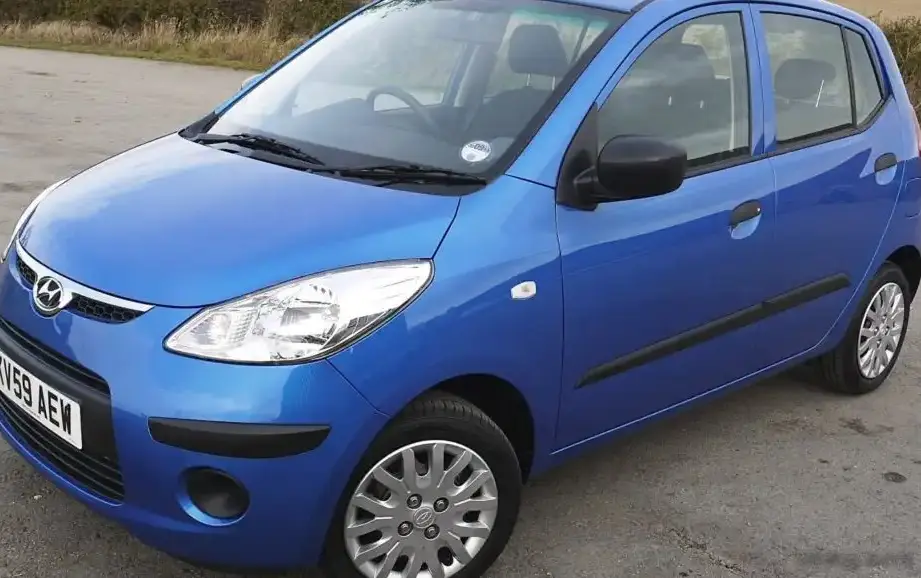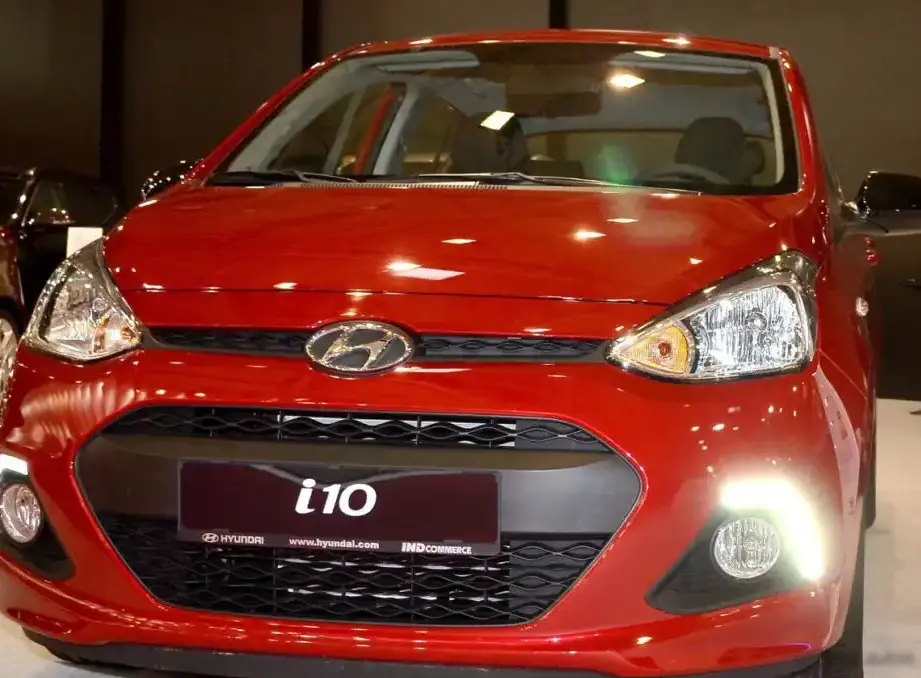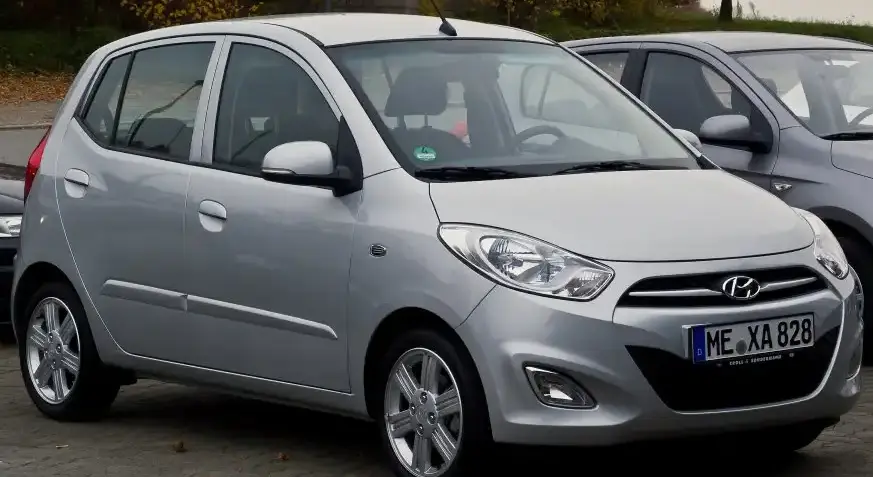
The Hyundai i10 first generation (PA), particularly the facelifted version introduced in 2011, represented a significant step forward for the Korean automaker in the European city car segment. Produced from 2008 to 2013, with the facelift arriving in 2011, the i10 aimed to provide affordable, reliable transportation with a surprisingly spacious interior for its diminutive size. The 1.2-liter engine with 86 horsepower paired with a four-speed automatic transmission was a key variant, positioned as a convenient and accessible option for buyers prioritizing ease of use over outright performance. This configuration was primarily marketed in Europe, where demand for automatic transmissions in the small car class was growing, though remained a smaller percentage of total sales compared to manual versions.
Technical Specifications
| Brand | Hyundai |
| Model | i10 |
| Generation | i10 I (facelift 2011) |
| Type (Engine) | 1.2 (86 Hp) Automatic |
| Start of production | 2011 |
| End of production | 2013 |
| Powertrain Architecture | Internal Combustion engine |
| Body type | Hatchback |
| Seats | 5 |
| Doors | 5 |
| Fuel consumption (urban) | 6.8 l/100 km (34.6 US mpg, 41.5 UK mpg, 14.7 km/l) |
| Fuel consumption (extra urban) | 4.7 l/100 km (50 US mpg, 60.1 UK mpg, 21.3 km/l) |
| Fuel consumption (combined) | 5.5 l/100 km (42.8 US mpg, 51.4 UK mpg, 18.2 km/l) |
| CO2 emissions | 129 g/km |
| Fuel Type | Petrol (Gasoline) |
| Acceleration 0 – 100 km/h | 13.8 sec |
| Acceleration 0 – 62 mph | 13.8 sec |
| Acceleration 0 – 60 mph | 13.1 sec |
| Maximum speed | 160 km/h (99.42 mph) |
| Emission standard | Euro 5 |
| Weight-to-power ratio | 10.9 kg/Hp |
| Weight-to-torque ratio | 7.8 kg/Nm |
| Power | 86 Hp @ 6000 rpm |
| Torque | 121 Nm @ 4000 rpm (89.25 lb.-ft. @ 4000 rpm) |
| Engine layout | Front, Transverse |
| Engine Model/Code | G4LA |
| Engine displacement | 1248 cm3 (76.16 cu. in.) |
| Number of cylinders | 4 |
| Engine configuration | Inline |
| Cylinder Bore | 71 mm (2.8 in.) |
| Piston Stroke | 78.8 mm (3.1 in.) |
| Compression ratio | 10.5:1 |
| Number of valves per cylinder | 4 |
| Fuel injection system | Multi-port manifold injection |
| Engine aspiration | Naturally aspirated engine |
| Valvetrain | DOHC |
| Engine oil capacity | 3.6 l (3.8 US qt | 3.17 UK qt) |
| Coolant capacity | 4.2 l (4.44 US qt | 3.7 UK qt) |
| Kerb Weight | 940 kg (2072.35 lbs.) |
| Max. weight | 1430 kg (3152.61 lbs.) |
| Max load | 490 kg (1080.27 lbs.) |
| Trunk (boot) space – minimum | 225 l (7.95 cu. ft.) |
| Trunk (boot) space – maximum | 910 l (32.14 cu. ft.) |
| Fuel tank capacity | 35 l (9.25 US gal | 7.7 UK gal) |
| Permitted trailer load with brakes (12%) | 700 kg (1543.24 lbs.) |
| Permitted trailer load without brakes | 450 kg (992.08 lbs.) |
| Length | 3585 mm (141.14 in.) |
| Width | 1595 mm (62.8 in.) |
| Height | 1540 mm (60.63 in.) |
| Wheelbase | 2380 mm (93.7 in.) |
| Front track | 1400 mm (55.12 in.) |
| Rear (Back) track | 1385 mm (54.53 in.) |
| Ride height (ground clearance) | 149 mm (5.87 in.) |
| Drag coefficient (Cd) | 0.32 |
| Minimum turning circle (turning diameter) | 9.5 m (31.17 ft.) |
| Drivetrain Architecture | Front wheel drive |
| Drive wheel | Front wheel drive |
| Number of gears and type of gearbox | 4 gears, automatic transmission |
| Front brakes | Ventilated discs |
| Rear brakes | Drum |
| Assisting systems | ABS (Anti-lock braking system) |
| Steering type | Steering rack and pinion |
| Tires size | 175/60 R14 |
| Wheel rims size | 14 |
INTRODUCTION
The 2011 facelift of the Hyundai i10 marked a refinement of the original model, bringing with it updated styling, improved interior materials, and enhanced safety features. The 1.2-liter engine with 86 horsepower coupled with a four-speed automatic transmission was a significant offering within the i10 range. It catered to buyers who valued the convenience of an automatic gearbox, particularly in congested urban environments. This variant occupied a middle ground in the i10 lineup, positioned above the base 1.0-liter models and below any potential special editions or higher-trim level options. It was designed to appeal to a broad demographic, including first-time car buyers, city dwellers, and those seeking a practical and economical vehicle.
Powertrain & Engine Architecture
The heart of this i10 variant is the Hyundai G4LA 1.2-liter inline-four cylinder engine. This engine utilizes a multi-point fuel injection system, delivering fuel directly into the intake ports. The engine features a double overhead camshaft (DOHC) valvetrain, operating with four valves per cylinder, contributing to improved breathing and efficiency. The compression ratio of 10.5:1 strikes a balance between performance and fuel economy. The four-speed automatic transmission is a conventional hydraulic automatic, offering smooth, if not particularly rapid, gear changes. It’s a relatively simple design, known for its reliability, but lacks the efficiency and responsiveness of more modern automatic transmissions like continuously variable transmissions (CVTs) or dual-clutch transmissions (DCTs). The transmission’s gear ratios are tuned for urban driving, prioritizing acceleration from a standstill and smooth cruising at lower speeds.
Driving Characteristics
The i10 1.2 Automatic doesn’t offer blistering performance. With 86 horsepower and a curb weight of around 940 kg (2072 lbs), acceleration from 0 to 60 mph takes approximately 13.1 seconds. However, the automatic transmission makes it exceptionally easy to drive in city traffic. The four-speed gearbox, while not offering a wide range of ratios, provides adequate power for everyday driving situations. Compared to the five-speed manual version of the 1.2, the automatic sacrifices some fuel economy and responsiveness. The manual transmission allows for more driver control and slightly quicker acceleration. The automatic prioritizes convenience, making it a more forgiving option for less experienced drivers or those who frequently encounter stop-and-go traffic. The steering is light and precise, making maneuvering in tight spaces effortless.
Equipment & Trim Levels
The i10 1.2 Automatic typically came equipped with a reasonable level of standard features for its price point. These generally included central locking, power steering, electric front windows, and an audio system with USB connectivity. Air conditioning was often standard, or available as a relatively inexpensive option. Interior upholstery was typically cloth, with a simple and durable design. Higher trim levels, if available, might have added features such as alloy wheels, fog lights, and a more sophisticated audio system. Safety features included ABS brakes and airbags for the driver and front passenger. The overall interior design was functional and practical, prioritizing space and usability over luxury.
Chassis & Braking
The i10’s chassis is a typical front-wheel-drive configuration, utilizing a MacPherson strut suspension at the front and a torsion beam suspension at the rear. The torsion beam setup is a cost-effective solution that provides adequate ride comfort for city driving. The front brakes are ventilated discs, offering good stopping power, while the rear brakes are drums, a common cost-saving measure in this class of vehicle. The steering is a rack and pinion system, providing light and precise control. The relatively lightweight construction of the i10 contributes to its nimble handling characteristics.
Market Reception & Comparison
The Hyundai i10 1.2 Automatic was generally well-received by automotive critics as a practical and affordable city car. It was praised for its spacious interior, ease of driving, and competitive price. However, some reviewers noted that the automatic transmission felt somewhat dated and lacked the refinement of more modern units. Compared to rivals like the Fiat Panda, Volkswagen Up!, and Toyota Aygo, the i10 offered a compelling combination of value, space, and reliability. Fuel economy was competitive, though not class-leading, and the i10’s reliability record was generally positive. The automatic version typically commanded a slight premium over the manual version.
Legacy
The Hyundai i10 first generation, including the 1.2 Automatic variant, established Hyundai as a serious contender in the European city car market. The G4LA engine and the four-speed automatic transmission proved to be relatively reliable, with many examples still on the road today. While not known for exceptional performance or cutting-edge technology, the i10 1.2 Automatic remains a popular choice in the used car market, particularly for buyers seeking an affordable, practical, and easy-to-drive vehicle. Its simplicity and robust construction contribute to its enduring appeal, making it a sensible option for those prioritizing reliability and low running costs.