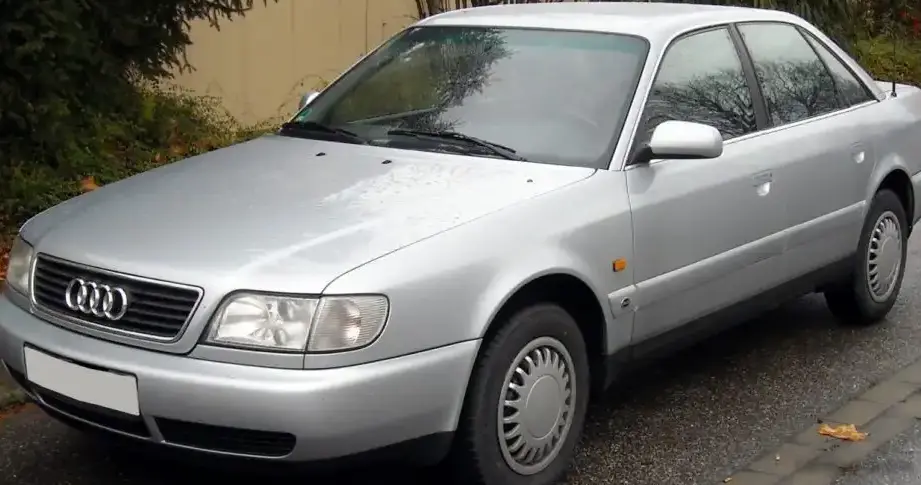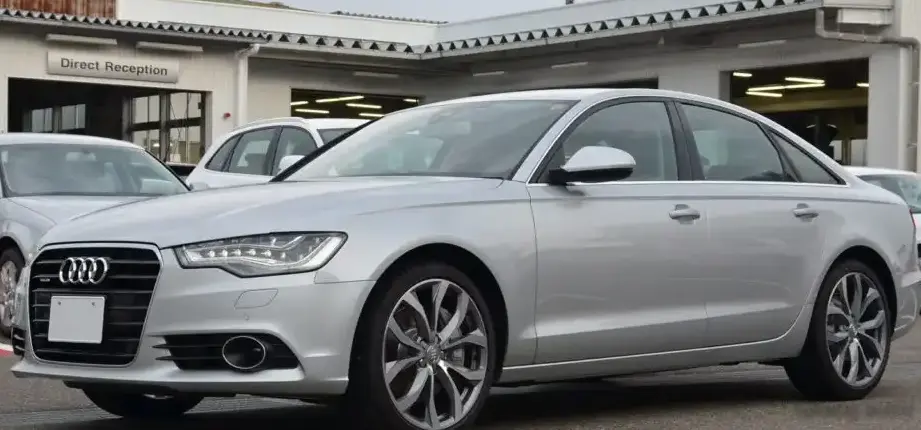
The Audi A6 Sedan (4G, C7) 2.0 TDI producing 136 horsepower was a key variant within the fourth generation (C7) of Audi’s mid-size executive car, produced between 2011 and 2014. Positioned as a fuel-efficient option within the A6 range, it catered to buyers prioritizing economy and refinement over outright performance. This model played a significant role in Audi’s European sales, offering a balance between luxury and practicality in a competitive segment. It represented a move towards downsizing and improved fuel efficiency, aligning with increasingly stringent emissions regulations.
Technical Specifications
| Brand | Audi |
| Model | A6 |
| Generation | A6 Sedan (4G, C7) |
| Type (Engine) | 2.0 TDI (136 Hp) |
| Start of production | 2011 |
| End of production | 2014 |
| Powertrain Architecture | Internal Combustion engine |
| Body type | Sedan |
| Seats | 5 |
| Doors | 4 |
| Fuel consumption (urban) | 6 l/100 km (39.2 US mpg, 47.1 UK mpg, 16.7 km/l) |
| Fuel consumption (extra urban) | 4.4 l/100 km (53.5 US mpg, 64.2 UK mpg, 22.7 km/l) |
| Fuel consumption (combined) | 4.9 l/100 km (48 US mpg, 57.6 UK mpg, 20.4 km/l) |
| CO2 emissions | 129 g/km |
| Fuel Type | Diesel |
| Acceleration 0 – 100 km/h | 10.3 sec |
| Acceleration 0 – 62 mph | 10.3 sec |
| Acceleration 0 – 60 mph | 9.8 sec |
| Maximum speed | 209 km/h (129.87 mph) |
| Emission standard | Euro 5 |
| Weight-to-power ratio | 12.1 kg/Hp, 82.4 Hp/tonne |
| Weight-to-torque ratio | 4.7 kg/Nm, 212.1 Nm/tonne |
| Power | 136 Hp @ 4200 rpm |
| Power per litre | 69.1 Hp/l |
| Torque | 350 Nm @ 1750-2500 rpm (258.15 lb.-ft. @ 1750-2500 rpm) |
| Engine layout | Front, Longitudinal |
| Engine Model/Code | CSUE, CGLE |
| Engine displacement | 1968 cm3 (120.09 cu. in.) |
| Number of cylinders | 4 |
| Engine configuration | Inline |
| Cylinder Bore | 81 mm (3.19 in.) |
| Piston Stroke | 95.5 mm (3.76 in.) |
| Compression ratio | 19.5:1 |
| Number of valves per cylinder | 4 |
| Fuel injection system | Diesel Commonrail |
| Engine aspiration | Turbocharger, Intercooler |
| Engine oil capacity | 5 l (5.28 US qt | 4.4 UK qt) |
| Kerb Weight | 1650 kg (3637.63 lbs.) |
| Max. weight | 2155 kg (4750.96 lbs.) |
| Max load | 505 kg (1113.33 lbs.) |
| Trunk (boot) space – minimum | 530 l (18.72 cu. ft.) |
| Trunk (boot) space – maximum | 995 l (35.14 cu. ft.) |
| Fuel tank capacity | 65 l (17.17 US gal | 14.3 UK gal) |
| Max. roof load | 100 kg (220.46 lbs.) |
| Permitted trailer load without brakes | 750 kg (1653.47 lbs.) |
| Permitted towbar download | 85 kg (187.39 lbs.) |
| Length | 4915 mm (193.5 in.) |
| Width | 1874 mm (73.78 in.) |
| Width including mirrors | 2086 mm (82.13 in.) |
| Height | 1468 mm (57.8 in.) |
| Wheelbase | 2912 mm (114.65 in.) |
| Front track | 1627 mm (64.06 in.) |
| Rear (Back) track | 1618 mm (63.7 in.) |
| Front overhang | 912 mm (35.91 in.) |
| Rear overhang | 1091 mm (42.95 in.) |
| Drag coefficient (Cd) | 0.26 |
| Minimum turning circle | 11.9 m (39.04 ft.) |
| Drivetrain Architecture | The Internal combustion engine (ICE) drives the front wheels of the vehicle. |
| Drive wheel | Front wheel drive |
| Number of gears and type of gearbox | 6 gears, manual transmission |
| Front suspension | Independent multi-link suspension |
| Rear suspension | Independent on trapezoidal lever |
| Front brakes | Ventilated discs |
| Rear brakes | Disc |
| Assisting systems | ABS (Anti-lock braking system) |
| Steering type | Steering rack and pinion |
| Power steering | Electric Steering |
| Tires size | 225/55 R17 |
| Wheel rims size | 17 |
INTRODUCTION
The Audi A6 Sedan (4G, C7) 2.0 TDI 136 hp, launched in 2011, represented a significant offering in the executive car segment. Built on the Volkswagen Group’s MLB platform (specifically the 4G variant), it shared its underpinnings with models like the Volkswagen Passat and Škoda Superb. This particular engine and power output was aimed at buyers in Europe, where diesel engines were – and continue to be – highly popular due to their fuel efficiency and lower running costs. The C7 generation A6 aimed to blend luxury, technology, and driving dynamics, and the 2.0 TDI 136 hp model provided an accessible entry point into the range.
Powertrain & Engine Architecture
The heart of this A6 variant is the 2.0-liter four-cylinder diesel engine, identified by engine codes CSUE or CGLE. This engine utilizes a common rail direct injection system, delivering fuel at extremely high pressure for optimized combustion. A turbocharger with an intercooler is employed to boost power and torque. The engine features four valves per cylinder and a sophisticated engine management system to balance performance and efficiency. The 136 horsepower and 350 Nm (258 lb-ft) of torque are delivered between 1750 and 2500 rpm, providing a broad and usable powerband. The engine is longitudinally mounted, driving the front wheels. The transmission is a six-speed manual gearbox, chosen for its efficiency and driver engagement, although an automatic transmission was also available as an option.
Driving Characteristics
The 2.0 TDI 136 hp A6 offered a comfortable and refined driving experience, prioritizing fuel economy over outright speed. Acceleration from 0-60 mph took around 9.8 seconds, and top speed was limited to 129.87 mph. While not a sports sedan, the engine provided sufficient power for everyday driving and highway cruising. The manual transmission allowed for precise gear selection, and the turbocharger provided a noticeable boost in power when needed. Compared to the more powerful 3.0 TDI variants, this engine felt less strained during acceleration, but lacked the same level of responsiveness. The gear ratios were tuned for fuel efficiency, meaning the engine often operated at lower RPMs during normal driving conditions.
Equipment & Trim Levels
The 2.0 TDI 136 hp A6 typically came with a respectable level of standard equipment. This included features like air conditioning, power windows, central locking, and an audio system. Higher trim levels, such as SE or Sport, added features like leather upholstery, alloy wheels, parking sensors, and a more advanced infotainment system. Optional extras included a sunroof, navigation system, and upgraded sound system. Interior upholstery was typically cloth on the base models, with leather available as an upgrade. The dashboard layout was clean and modern, with a focus on ergonomics and ease of use.
Chassis & Braking
The A6 C7 featured an independent multi-link suspension at the front and an independent trapezoidal lever suspension at the rear, providing a comfortable ride and good handling characteristics. The front brakes were ventilated discs, while the rear brakes were solid discs. Anti-lock Braking System (ABS) was standard. The suspension was tuned to prioritize comfort, but still offered a reasonable level of control in corners. Stabilizer bars were fitted to both the front and rear axles to reduce body roll. The weight distribution was relatively balanced, contributing to the car’s stability.
Market Reception & Comparison
The Audi A6 2.0 TDI 136 hp was generally well-received by automotive critics. It was praised for its fuel efficiency, comfortable ride, and refined interior. However, some critics noted that the engine lacked the punch of the more powerful variants. Compared to the 3.0 TDI models, the 2.0 TDI offered significantly better fuel economy, but at the expense of performance. Against competitors like the BMW 5 Series and Mercedes-Benz E-Class, the A6 2.0 TDI offered a compelling combination of value, efficiency, and luxury. Its fuel economy figures of around 48 US mpg combined made it an attractive option for drivers covering long distances.
Legacy
The 2.0 TDI engine proved to be relatively reliable, although like all diesel engines, it is susceptible to issues with the diesel particulate filter (DPF) if not properly maintained. Regular servicing and the use of high-quality diesel fuel are essential for long-term reliability. In the used car market, the A6 2.0 TDI 136 hp remains a popular choice due to its affordability and fuel efficiency. It represents a good value proposition for buyers seeking a comfortable and well-equipped executive car without the high running costs of more powerful engines. The C7 A6, in general, is considered a well-built and durable vehicle, and this variant continues to offer a practical and refined driving experience.