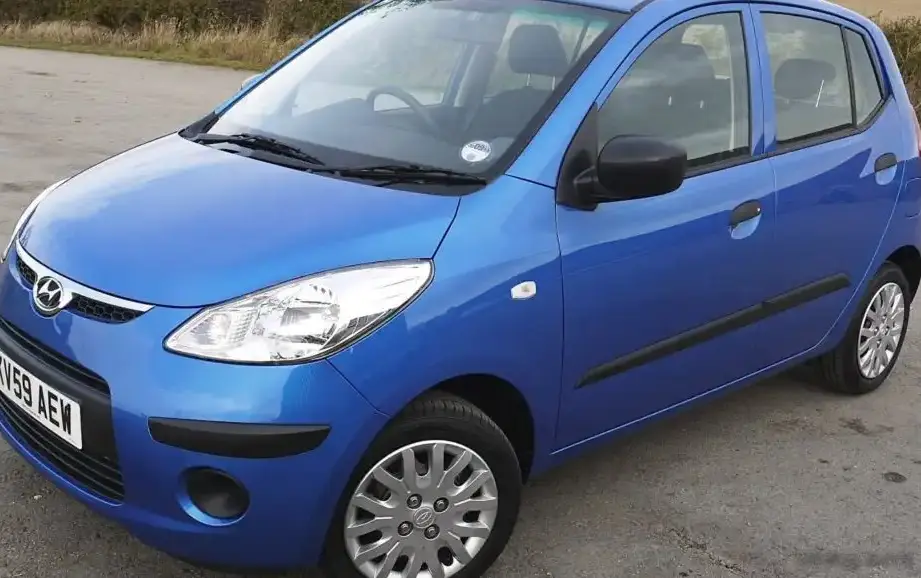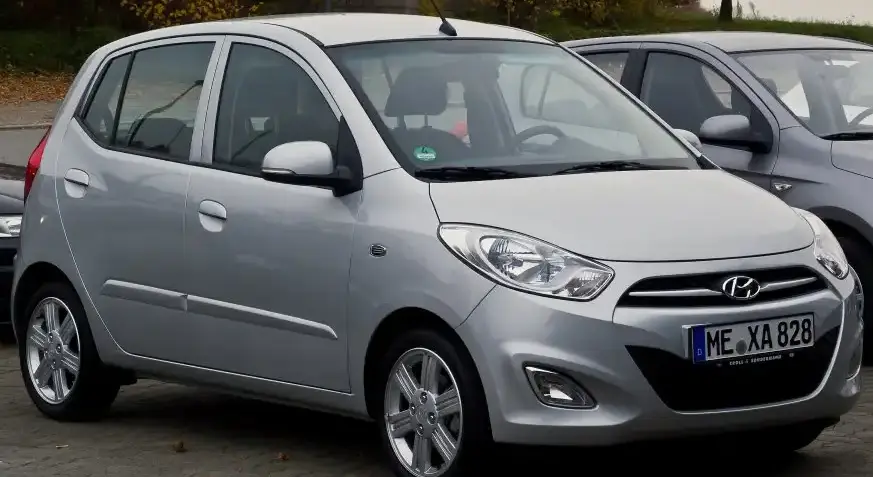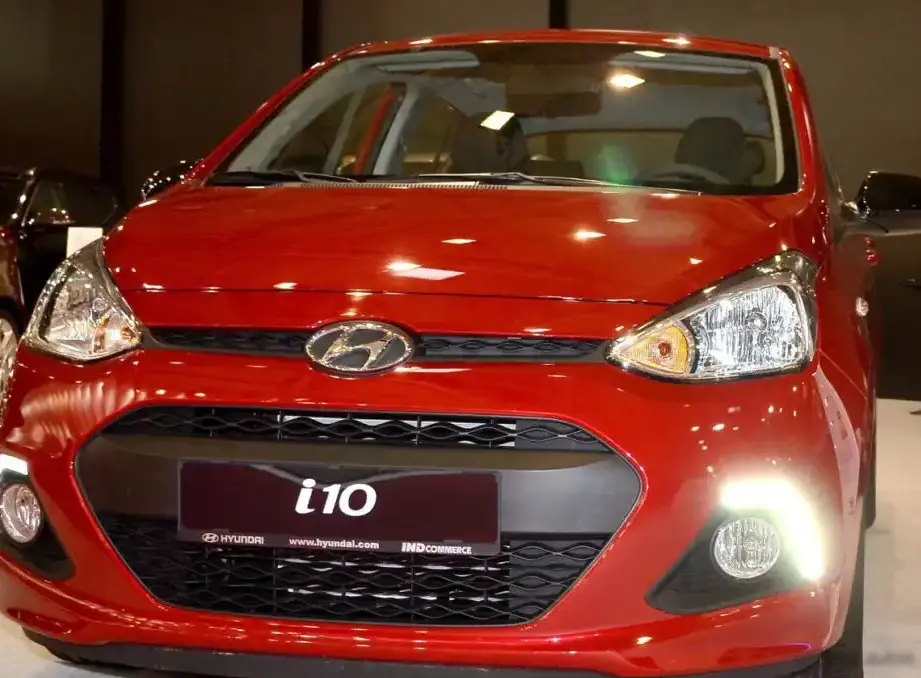
The Hyundai i10 II 1.0 16V, producing 67 horsepower, was a key entry point into the second-generation i10 (codenamed PA) lineup, manufactured from 2013 to 2016. Positioned as the most affordable and fuel-efficient variant, it catered to buyers prioritizing economy and practicality in the city car segment. The i10 II represented a significant step forward for Hyundai in the European microcar market, offering improved space, refinement, and build quality compared to its predecessor. This particular 1.0-liter engine and five-speed manual transmission combination was a mainstay of the range, particularly in price-sensitive markets.
Technical Specifications
| Brand | Hyundai |
| Model | i10 |
| Generation | i10 II |
| Type (Engine) | 1.0 16V (67 Hp) |
| Start of production | 2013 |
| End of production | 2016 |
| Powertrain Architecture | Internal Combustion engine |
| Body type | Hatchback |
| Seats | 5 |
| Doors | 5 |
| Fuel consumption (urban) | 6 l/100 km (39.2 US mpg, 47.1 UK mpg, 16.7 km/l) |
| Fuel consumption (extra urban) | 4 l/100 km (58.8 US mpg, 70.6 UK mpg, 25 km/l) |
| Fuel consumption (combined) | 4.7 l/100 km (50 US mpg, 60.1 UK mpg, 21.3 km/l) |
| CO2 emissions | 108 g/km |
| Fuel Type | Petrol (Gasoline) |
| Acceleration 0 – 100 km/h | 14.9 sec |
| Acceleration 0 – 62 mph | 14.9 sec |
| Acceleration 0 – 60 mph | 14.2 sec |
| Maximum speed | 155 km/h (96.31 mph) |
| Emission standard | Euro 5 |
| Weight-to-power ratio | 13.9 kg/Hp, 71.8 Hp/tonne |
| Weight-to-torque ratio | 9.8 kg/Nm, 101.8 Nm/tonne |
| Power | 67 Hp @ 5500 rpm |
| Power per litre | 67.1 Hp/l |
| Torque | 95 Nm @ 5500 rpm (70.07 lb.-ft. @ 5500 rpm) |
| Engine layout | Front, Transverse |
| Engine Model/Code | G3LA |
| Engine displacement | 998 cm3 (60.9 cu. in.) |
| Number of cylinders | 3 |
| Engine configuration | Inline |
| Cylinder Bore | 71 mm (2.8 in.) |
| Piston Stroke | 84 mm (3.31 in.) |
| Compression ratio | 10.5:1 |
| Number of valves per cylinder | 4 |
| Fuel injection system | Multi-port manifold injection |
| Engine aspiration | Naturally aspirated engine |
| Valvetrain | DOHC |
| Engine oil capacity | 3 l (3.17 US qt | 2.64 UK qt) |
| Coolant | 4.6 l (4.86 US qt | 4.05 UK qt) |
| Kerb Weight | 933 kg (2056.91 lbs.) |
| Max. weight | 1420 kg (3130.56 lbs.) |
| Max load | 487 kg (1073.65 lbs.) |
| Trunk (boot) space – minimum | 252 l (8.9 cu. ft.) |
| Trunk (boot) space – maximum | 1046 l (36.94 cu. ft.) |
| Fuel tank capacity | 40 l (10.57 US gal | 8.8 UK gal) |
| Length | 3665 mm (144.29 in.) |
| Width | 1660 mm (65.35 in.) |
| Height | 1500 mm (59.06 in.) |
| Wheelbase | 2385 mm (93.9 in.) |
| Front track | 1491 mm (58.7 in.) |
| Rear (Back) track | 1504 mm (59.21 in.) |
| Minimum turning circle | 9.6 m (31.5 ft.) |
| Drivetrain Architecture | ICE, Front wheel drive |
| Drive wheel | Front wheel drive |
| Number of gears | 5 gears, manual transmission |
| Front suspension | Independent type McPherson |
| Rear suspension | Independent coil spring |
| Front brakes | Ventilated discs |
| Rear brakes | Disc |
| Assisting systems | ABS (Anti-lock braking system) |
| Steering type | Steering rack and pinion |
| Power steering | Electric Steering |
| Tires size | 155/70 R13; 175/65 R14; 185/55 R15 |
| Wheel rims size | 4.5J x 13; 5.5J x 14; 5.5J x 14; 6.0J x 15 |
Powertrain & Engine Architecture
The heart of this i10 variant is the Hyundai G3LA engine, a 998cc inline-three cylinder petrol engine. This engine utilizes a multi-point fuel injection system and a double overhead camshaft (DOHC) valvetrain, contributing to its relatively efficient operation. The G3LA is a naturally aspirated engine, meaning it doesn’t rely on a turbocharger or supercharger for increased power. The engine’s modest 67 horsepower and 95 Nm (70 lb-ft) of torque are delivered at 5500 rpm. Paired with a five-speed manual transmission, the powertrain was designed for maximizing fuel economy rather than outright performance. The transmission itself is a conventional setup, prioritizing durability and ease of use over sporty shift feel.
Driving Characteristics
The i10 1.0 16V with a manual transmission delivers a driving experience best described as functional and economical. Acceleration is leisurely, taking approximately 14.9 seconds to reach 62 mph (100 km/h). In city driving, however, the engine feels more responsive, and the light clutch and steering make it easy to maneuver in tight spaces. The five-speed gearbox is well-matched to the engine’s characteristics, allowing drivers to keep the engine in its optimal power band. Compared to the slightly more powerful 1.2-liter engine option, the 1.0-liter feels noticeably slower, especially when carrying passengers or cargo. However, the trade-off is significantly improved fuel economy.
Equipment & Trim Levels
The 1.0-liter i10 typically came with a basic but functional equipment list. Standard features generally included central locking, power steering, electric front windows, and an audio system with USB connectivity. Safety features such as ABS and airbags were also standard. Higher trim levels, such as the Style or SE, added features like air conditioning, alloy wheels, and body-colored door handles and mirrors. Interior upholstery was typically cloth, with a simple and durable design. Optional extras included a panoramic sunroof and parking sensors.
Chassis & Braking
The i10 II utilizes a McPherson strut front suspension and a semi-independent coil spring rear suspension. This setup provides a comfortable ride quality, particularly on smooth roads. The front brakes are ventilated discs, while the rear brakes are discs, providing adequate stopping power for the vehicle’s weight and performance. The steering is electrically assisted, offering light and precise control. The i10’s relatively lightweight construction contributes to its nimble handling.
Market Reception & Comparison
The Hyundai i10 1.0 16V was well-received by critics as an affordable and practical city car. Its fuel economy was a major selling point, and its compact size made it easy to park and maneuver in urban environments. Compared to rivals like the Fiat 500 and Volkswagen Up!, the i10 offered a more spacious interior and a longer warranty. However, some critics noted that the engine lacked power, especially when fully loaded. The 1.2-liter engine offered a noticeable performance improvement, but at a higher price point and with slightly reduced fuel economy.
Legacy
The Hyundai i10 II 1.0 16V has proven to be a reliable and durable vehicle. The G3LA engine is known for its longevity, and the simple mechanical design makes it relatively easy and inexpensive to maintain. On the used car market, these i10s represent a good value proposition for buyers seeking an affordable and economical city car. While not particularly exciting to drive, they offer a practical and dependable transportation solution. The i10 II helped establish Hyundai as a major player in the European microcar segment, paving the way for future models like the i10 III and the Bayon.