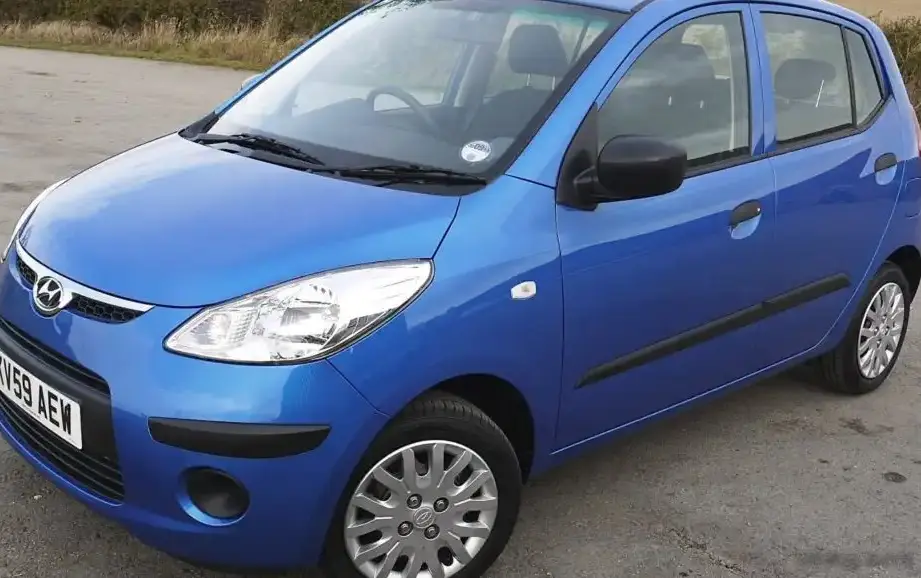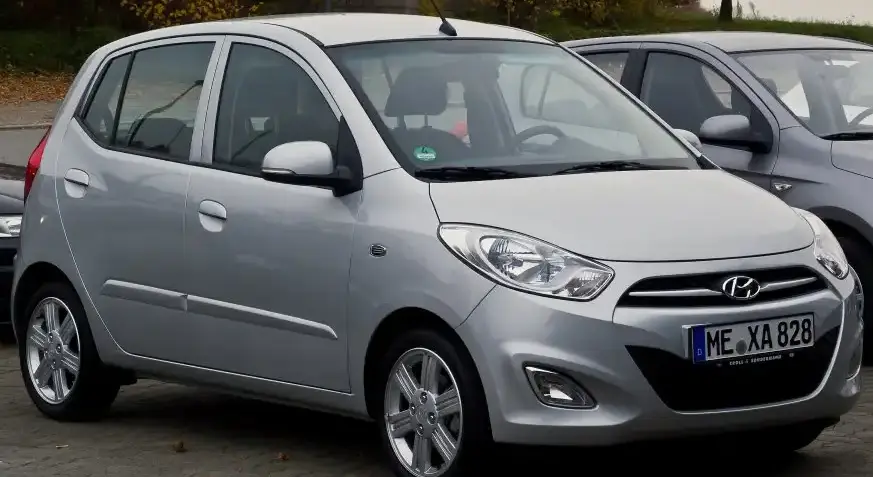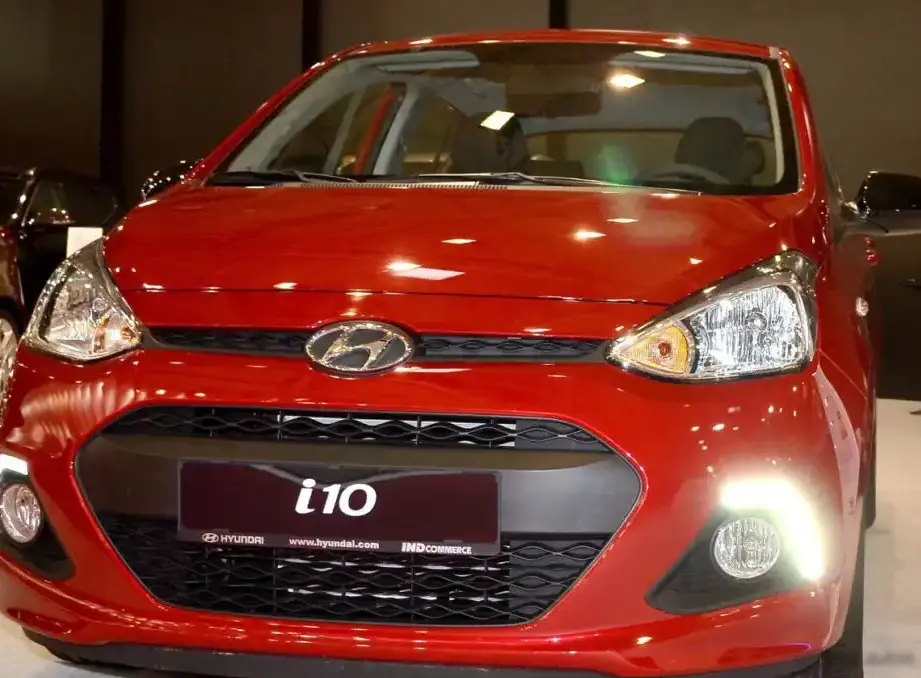
The Hyundai i10 II 1.0 16V (67 hp) Automatic, produced between 2013 and 2016, represents an entry-level offering within the second generation of Hyundai’s popular city car. Positioned as the most accessible powertrain option in the i10 II lineup, it catered to buyers prioritizing affordability and ease of use over outright performance. This variant was primarily sold in the European market, where the i10 competed with vehicles like the Fiat Panda, Volkswagen up!, and Toyota Aygo. The i10 II itself was a significant step forward for Hyundai in the A-segment, offering a more refined and spacious interior compared to its predecessor, along with improved build quality and a longer list of standard features.
Technical Specifications
| Brand | Hyundai |
| Model | i10 |
| Generation | i10 II |
| Type (Engine) | 1.0 16V (67 Hp) Automatic |
| Start of production | 2013 |
| End of production | 2016 |
| Powertrain Architecture | Internal Combustion engine |
| Body type | Hatchback |
| Seats | 5 |
| Doors | 5 |
| Fuel consumption (urban) | 7.5 l/100 km (31.4 US mpg) |
| Fuel consumption (extra urban) | 5 l/100 km (47 US mpg) |
| Fuel consumption (combined) | 6 l/100 km (39.2 US mpg) |
| CO2 emissions | 137 g/km |
| Fuel Type | Petrol (Gasoline) |
| Acceleration 0 – 100 km/h | 16.8 sec |
| Acceleration 0 – 62 mph | 16.8 sec |
| Acceleration 0 – 60 mph | 16 sec |
| Maximum speed | 145 km/h (90.1 mph) |
| Emission standard | Euro 5 |
| Weight-to-power ratio | 14.2 kg/Hp |
| Weight-to-torque ratio | 10 kg/Nm |
| Power | 67 Hp @ 5500 rpm |
| Torque | 95 Nm @ 5500 rpm (70.07 lb.-ft. @ 5500 rpm) |
| Engine layout | Front, Transverse |
| Engine Model/Code | G3LA |
| Engine displacement | 998 cm3 (60.9 cu. in.) |
| Number of cylinders | 3 |
| Engine configuration | Inline |
| Cylinder Bore | 71 mm (2.8 in.) |
| Piston Stroke | 84 mm (3.31 in.) |
| Compression ratio | 10.5:1 |
| Number of valves per cylinder | 4 |
| Fuel injection system | Multi-port manifold injection |
| Engine aspiration | Naturally aspirated engine |
| Valvetrain | DOHC |
| Engine oil capacity | 3 l (3.17 US qt | 2.64 UK qt) |
| Coolant capacity | 4.8 l (5.07 US qt | 4.22 UK qt) |
| Kerb Weight | 952 kg (2098.8 lbs.) |
| Max. weight | 1440 kg (3174.66 lbs.) |
| Max load | 488 kg (1075.86 lbs.) |
| Trunk (boot) space – minimum | 252 l (8.9 cu. ft.) |
| Trunk (boot) space – maximum | 1046 l (36.94 cu. ft.) |
| Fuel tank capacity | 40 l (10.57 US gal | 8.8 UK gal) |
| Length | 3665 mm (144.29 in.) |
| Width | 1660 mm (65.35 in.) |
| Height | 1500 mm (59.06 in.) |
| Wheelbase | 2385 mm (93.9 in.) |
| Front track | 1491 mm (58.7 in.) |
| Rear track | 1504 mm (59.21 in.) |
| Minimum turning circle | 9.6 m (31.5 ft.) |
| Drivetrain Architecture | Front wheel drive |
| Number of gears | 4 |
| Gearbox type | Automatic transmission |
| Front suspension | Independent type McPherson |
| Rear suspension | Independent coil spring |
| Front brakes | Ventilated discs |
| Rear brakes | Disc |
| Assisting systems | ABS (Anti-lock braking system) |
| Steering type | Steering rack and pinion |
| Power steering | Electric Steering |
| Tires size | 155/70 R13; 175/65 R14; 185/55 R15 |
| Wheel rims size | 4.5J x 13; 5.5J x 14; 5.5J x 14; 6.0J x 15 |
Powertrain & Engine Architecture
The heart of this i10 variant is the Hyundai G3LA engine, a 998cc inline-three cylinder petrol engine. This engine utilizes a multi-point fuel injection system and a double overhead camshaft (DOHC) valvetrain, contributing to relatively efficient combustion for its size. The G3LA engine is known for its simplicity and durability, though it doesn’t offer particularly high performance figures. Paired with this engine is a four-speed automatic transmission. This transmission, while providing convenience, is a traditional hydraulic automatic and lacks the efficiency of more modern continuously variable transmissions (CVTs) or dual-clutch transmissions. The four-speed configuration means wider gear ratios and potentially higher engine speeds during highway cruising.
Driving Characteristics
The 1.0L 67 hp automatic i10 is best described as a city car. Acceleration is leisurely, taking approximately 16.8 seconds to reach 62 mph. The automatic transmission prioritizes smooth shifts over rapid acceleration. In urban environments, the i10 is nimble and easy to maneuver, with light steering and a compact footprint. However, on highways or when fully loaded, the engine can feel strained, requiring frequent downshifts from the automatic transmission to maintain speed. Compared to the 1.2L engine option available in the i10 II, this variant offers significantly less power and a slower overall driving experience. Manual transmission versions of the 1.0L engine also felt more responsive due to the direct connection between the engine and wheels.
Equipment & Trim Levels
The 1.0L Automatic i10 typically came with a base level of equipment, focusing on essential features. Standard amenities generally included power steering, central locking, electric front windows, and an audio system with USB connectivity. Safety features such as ABS and airbags were also standard. Higher trim levels, available as options, added features like air conditioning, alloy wheels, and a more comprehensive audio system. Interior upholstery was typically cloth, with a simple and functional dashboard layout. The overall interior design prioritized practicality and durability over luxury.
Chassis & Braking
The i10 II utilizes a McPherson strut front suspension and a semi-independent coil spring rear suspension. This setup provides a comfortable ride quality, particularly on smooth roads. The front brakes are ventilated discs, offering adequate stopping power for the vehicle’s weight and performance. Rear brakes are discs, a step up from the drum brakes found on some earlier A-segment cars. The steering is rack and pinion with electric power assistance, providing light and precise steering feel. Stabilizer bars were fitted to both the front and rear axles to reduce body roll during cornering.
Market Reception & Comparison
The Hyundai i10 II 1.0L Automatic was generally well-received as an affordable and practical city car. Critics praised its spacious interior, comfortable ride, and long warranty. However, the engine’s lack of power and the automatic transmission’s dated technology were common criticisms. Compared to the manual transmission version, the automatic offered less fuel efficiency and slower acceleration. Against competitors like the Fiat Panda and Volkswagen up!, the i10 offered a compelling value proposition, often undercutting them in price while providing a similar level of equipment. Reliability was generally good, with few reported issues specific to the powertrain.
Legacy
The Hyundai i10 II 1.0L Automatic remains a relatively common sight on used car lots today. The G3LA engine is known for its robustness and relatively low maintenance costs. While not a performance-oriented vehicle, it provides reliable transportation for those seeking an affordable and easy-to-drive city car. The four-speed automatic transmission, while not the most efficient, is generally dependable. The i10 II as a whole helped establish Hyundai as a major player in the European A-segment, paving the way for future models like the i20 and i30.