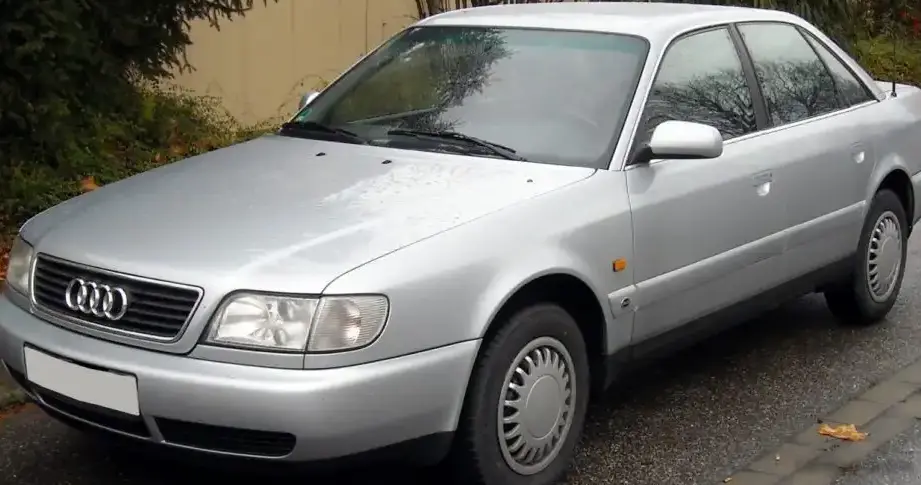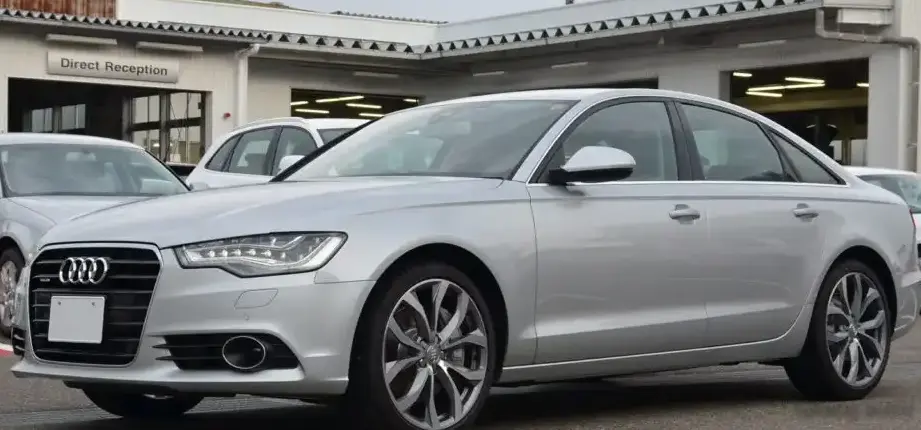
The Audi A6 Sedan (4G, C7) 2.0 TDI 177 hp Multitronic represents a significant iteration of Audi’s mid-size executive car, produced between May 2011 and 2014. This variant occupied a key position within the C7 generation A6 lineup, offering a balance between fuel efficiency, reasonable performance, and the convenience of an automatic transmission. It was primarily aimed at European markets where diesel engines and continuously variable transmissions (CVTs) were highly favored, though it was also available in other regions. The 4G chassis represented a substantial leap forward in technology and refinement for the A6, building upon the success of previous generations.
Technical Specifications
| Brand | Audi |
| Model | A6 |
| Generation | A6 Sedan (4G, C7) |
| Type (Engine) | 2.0 TDI (177 Hp) Multitronic |
| Start of production | May, 2011 |
| End of production | 2014 |
| Powertrain Architecture | Internal Combustion engine |
| Body type | Sedan |
| Seats | 5 |
| Doors | 4 |
| Fuel consumption (urban) | 6 l/100 km (39.2 US mpg, 47.1 UK mpg, 16.7 km/l) |
| Fuel consumption (extra urban) | 4.4 l/100 km (53.5 US mpg, 64.2 UK mpg, 22.7 km/l) |
| Fuel consumption (combined) | 5 l/100 km (47 US mpg, 56.5 UK mpg, 20 km/l) |
| CO2 emissions | 132 g/km |
| Fuel Type | Diesel |
| Acceleration 0 – 100 km/h | 8.2 sec |
| Acceleration 0 – 62 mph | 8.2 sec |
| Acceleration 0 – 60 mph | 7.8 sec |
| Maximum speed | 222 km/h (137.94 mph) |
| Emission standard | Euro 5 |
| Weight-to-power ratio | 9 kg/Hp, 111.7 Hp/tonne |
| Weight-to-torque ratio | 4.2 kg/Nm, 239.7 Nm/tonne |
| Power | 177 Hp @ 4200 rpm |
| Power per litre | 89.9 Hp/l |
| Torque | 380 Nm @ 1750-2500 rpm (280.27 lb.-ft. @ 1750-2500 rpm) |
| Engine layout | Front, Longitudinal |
| Engine Model/Code | CMGB, CGLC |
| Engine displacement | 1968 cm3 (120.09 cu. in.) |
| Number of cylinders | 4 |
| Engine configuration | Inline |
| Cylinder Bore | 81 mm (3.19 in.) |
| Piston Stroke | 95.5 mm (3.76 in.) |
| Compression ratio | 16:1 |
| Number of valves per cylinder | 4 |
| Fuel injection system | Diesel Commonrail |
| Engine aspiration | Turbocharger, Intercooler |
| Engine oil capacity | 5 l (5.28 US qt | 4.4 UK qt) |
| Kerb Weight | 1585 kg (3494.33 lbs.) |
| Max. weight | 2165 kg (4773.01 lbs.) |
| Max load | 580 kg (1278.68 lbs.) |
| Trunk (boot) space – minimum | 530 l (18.72 cu. ft.) |
| Trunk (boot) space – maximum | 995 l (35.14 cu. ft.) |
| Fuel tank capacity | 65 l (17.17 US gal | 14.3 UK gal) |
| Max. roof load | 100 kg (220.46 lbs.) |
| Permitted trailer load with brakes (8%) | 1800 kg (3968.32 lbs.) |
| Permitted trailer load with brakes (12%) | 1600 kg (3527.4 lbs.) |
| Permitted trailer load without brakes | 750 kg (1653.47 lbs.) |
| Permitted towbar download | 85 kg (187.39 lbs.) |
| Length | 4915 mm (193.5 in.) |
| Width | 1874 mm (73.78 in.) |
| Width including mirrors | 2086 mm (82.13 in.) |
| Height | 1468 mm (57.8 in.) |
| Wheelbase | 2912 mm (114.65 in.) |
| Front track | 1627 mm (64.06 in.) |
| Rear (Back) track | 1618 mm (63.7 in.) |
| Front overhang | 912 mm (35.91 in.) |
| Rear overhang | 1091 mm (42.95 in.) |
| Ride height (ground clearance) | 117 mm (4.61 in.) |
| Drag coefficient (Cd) | 0.26 |
| Minimum turning circle (turning diameter) | 11.9 m (39.04 ft.) |
| Drivetrain Architecture | The Internal combustion engine (ICE) drives the front wheels of the vehicle. |
| Drive wheel | Front wheel drive |
| Number of gears and type of gearbox | automatic transmission Multitronic |
| Front suspension | Independent multi-link suspension |
| Rear suspension | Independent on trapezoidal lever |
| Front brakes | Ventilated discs |
| Rear brakes | Disc |
| Assisting systems | ABS (Anti-lock braking system) |
| Steering type | Steering rack and pinion |
| Power steering | Electric Steering |
| Tires size | 225/60 R16 |
| Wheel rims size | 16 |
Powertrain & Engine Architecture
The heart of this A6 variant is the 2.0-liter inline-four cylinder diesel engine, designated CMGB or CGLC depending on specific production dates and minor revisions. This engine is a member of the Volkswagen Group’s modular engine family, known for its compact dimensions and efficiency. It utilizes a common rail direct injection system, delivering fuel at extremely high pressures for optimized combustion. A turbocharger with an intercooler is employed to boost power output, providing 177 horsepower at 4200 rpm and a substantial 380 Nm (280 lb-ft) of torque between 1750 and 2500 rpm. The engine features four valves per cylinder and a compression ratio of 16:1. The Multitronic transmission is a continuously variable transmission (CVT) offering smooth, stepless gear changes. Unlike traditional automatic transmissions with fixed gear ratios, the Multitronic uses a chain-driven system to provide an infinite number of ratios within its operating range, optimizing engine efficiency and responsiveness.
Driving Characteristics
The 2.0 TDI with the Multitronic transmission delivers a comfortable and refined driving experience. While not overtly sporty, the engine provides adequate acceleration, achieving 0-60 mph in approximately 7.8 seconds. The Multitronic transmission contributes to smooth acceleration and minimizes gear shift shock. However, some drivers find the CVT lacks the direct feel of a traditional automatic or manual gearbox. The engine’s strong low-end torque makes it well-suited for everyday driving and overtaking maneuvers. Compared to the more powerful 3.0 TDI variants, this 2.0 TDI offers significantly better fuel economy, but at the expense of outright performance. The Multitronic transmission is programmed to prioritize fuel efficiency, which can sometimes result in the engine holding lower gears for longer periods to maintain optimal revs.
Equipment & Trim Levels
The 2.0 TDI Multitronic typically came equipped with a generous level of standard features. These included automatic climate control, a multi-function steering wheel, power windows and mirrors, and an Audi Concert audio system. Upholstery was typically cloth, though leather options were available. Higher trim levels, such as SE or S-line, added features like sport seats, upgraded interior trim, and larger alloy wheels. Optional extras included a navigation system, parking sensors, a sunroof, and advanced driver assistance systems like adaptive cruise control.
Chassis & Braking
The C7 A6 features a sophisticated chassis design. The front suspension utilizes a multi-link setup for precise handling and ride comfort, while the rear suspension employs a trapezoidal link design. The 2.0 TDI models typically came equipped with ventilated front disc brakes and solid rear discs. Anti-lock braking system (ABS) was standard, along with electronic stability control (ESC). The suspension tuning was generally geared towards comfort, providing a smooth ride over various road surfaces. Stabilizer bars were fitted front and rear to reduce body roll during cornering.
Market Reception & Comparison
The Audi A6 2.0 TDI Multitronic was well-received in the European market, praised for its fuel efficiency, comfortable ride, and refined interior. Critics noted the CVT transmission’s smoothness but some found it less engaging than traditional gearboxes. Compared to the more powerful A6 variants, the 2.0 TDI offered a more affordable entry point into the A6 range, appealing to buyers prioritizing economy over outright performance. The 2.0 TDI generally proved to be more reliable than some of the more complex engine options, such as the 3.0 TDI with its diesel particulate filter (DPF) issues.
Legacy
The 2.0 TDI engine and Multitronic transmission combination proved to be relatively durable, though long-term reliability can be affected by maintenance history. The Multitronic transmission requires regular fluid changes to prevent premature wear. Today, these A6 models represent a good value on the used car market, offering a blend of luxury, comfort, and fuel efficiency. However, potential buyers should be aware of the potential maintenance costs associated with the Multitronic transmission and ensure a thorough inspection is conducted before purchase. The C7 A6, in general, is remembered as a technologically advanced and well-built executive car that set a high standard for its class.