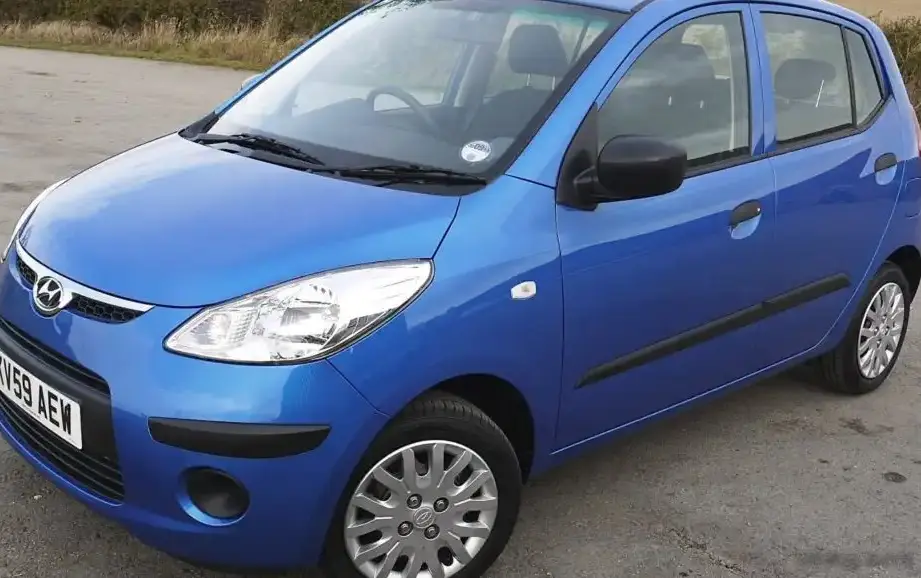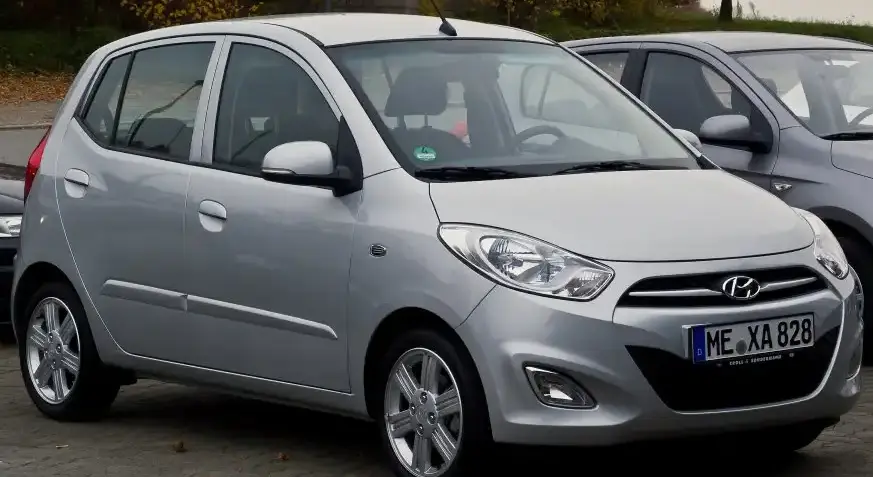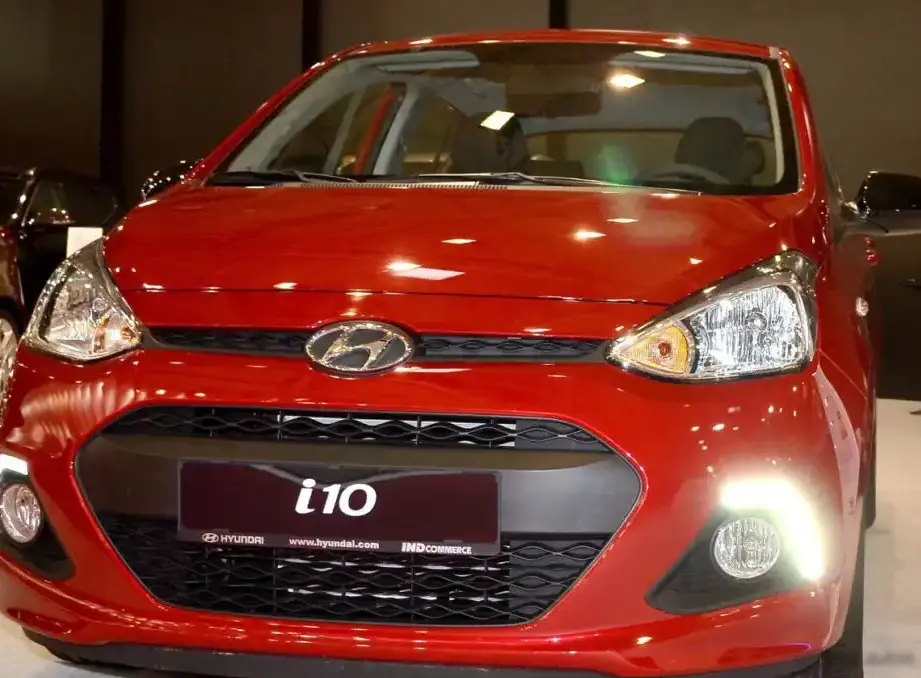
The Hyundai i10 II 1.25 16V (87 hp) represents a significant iteration in Hyundai’s strategy to offer affordable and practical city cars to the European market. Produced from 2013 to 2016, this variant occupied a crucial position within the second generation i10 (PA) lineup, which was built on the HA3 platform. It aimed to provide a balance between fuel efficiency, reasonable performance, and a relatively low price point, making it a popular choice for first-time car buyers and those seeking an economical runabout.
Technical Specifications
| Brand | Hyundai |
| Model | i10 |
| Generation | i10 II |
| Type (Engine) | 1.25 16V (87 Hp) |
| Start of production | 2013 |
| End of production | 2016 |
| Powertrain Architecture | Internal Combustion engine |
| Body type | Hatchback |
| Seats | 5 |
| Doors | 5 |
| Fuel consumption (urban) | 6.5 l/100 km (36.2 US mpg, 43.5 UK mpg, 15.4 km/l) |
| Fuel consumption (extra urban) | 4.1 l/100 km (57.4 US mpg, 68.9 UK mpg, 24.4 km/l) |
| Fuel consumption (combined) | 4.9 l/100 km (48 US mpg, 57.6 UK mpg, 20.4 km/l) |
| CO2 emissions | 114 g/km |
| Fuel Type | Petrol (Gasoline) |
| Acceleration 0 – 100 km/h | 12.3 sec |
| Acceleration 0 – 62 mph | 12.3 sec |
| Acceleration 0 – 60 mph | 11.7 sec |
| Maximum speed | 171 km/h (106.25 mph) |
| Emission standard | Euro 5 |
| Weight-to-power ratio | 10.8 kg/Hp |
| Weight-to-torque ratio | 7.8 kg/Nm |
| Power | 87 Hp @ 5500 rpm |
| Torque | 120 Nm @ 5500 rpm (88.51 lb.-ft. @ 5500 rpm) |
| Engine layout | Front, Transverse |
| Engine Model/Code | G4LA |
| Engine displacement | 1248 cm3 (76.16 cu. in.) |
| Number of cylinders | 4 |
| Engine configuration | Inline |
| Cylinder Bore | 71 mm (2.8 in.) |
| Piston Stroke | 78.8 mm (3.1 in.) |
| Compression ratio | 10.5:1 |
| Number of valves per cylinder | 4 |
| Fuel injection system | Multi-port manifold injection |
| Engine aspiration | Naturally aspirated engine |
| Valvetrain | DOHC |
| Engine oil capacity | 3.6 l (3.8 US qt | 3.17 UK qt) |
| Coolant capacity | 5.1 l (5.39 US qt | 4.49 UK qt) |
| Kerb Weight | 941 kg (2074.55 lbs.) |
| Max. weight | 1450 kg (3196.7 lbs.) |
| Max load | 509 kg (1122.15 lbs.) |
| Trunk (boot) space – minimum | 252 l (8.9 cu. ft.) |
| Trunk (boot) space – maximum | 1046 l (36.94 cu. ft.) |
| Fuel tank capacity | 40 l (10.57 US gal | 8.8 UK gal) |
| Length | 3665 mm (144.29 in.) |
| Width | 1660 mm (65.35 in.) |
| Height | 1500 mm (59.06 in.) |
| Wheelbase | 2385 mm (93.9 in.) |
| Front track | 1491 mm (58.7 in.) |
| Rear track | 1504 mm (59.21 in.) |
| Minimum turning circle | 9.6 m (31.5 ft.) |
| Drivetrain Architecture | Front wheel drive |
| Number of gears | 5 |
| Gearbox type | Manual transmission |
| Front suspension | Independent type McPherson |
| Rear suspension | Independent coil spring |
| Front brakes | Ventilated discs |
| Rear brakes | Disc |
| Assisting systems | ABS (Anti-lock braking system) |
| Steering type | Steering rack and pinion |
| Power steering | Electric Steering |
| Tires size | 155/70 R13; 175/65 R14; 185/55 R15 |
| Wheel rims size | 4.5J x 13; 5.5J x 14; 5.5J x 14; 6.0J x 15 |
INTRODUCTION
The Hyundai i10 II 1.25 16V (87 hp) was introduced as part of the second-generation i10, launched in 2013. This generation represented a significant step forward in terms of design, interior quality, and overall refinement compared to its predecessor. Positioned as the entry-level engine option within the i10 II range, it provided a cost-effective and fuel-efficient choice for buyers prioritizing practicality and low running costs. The 1.25-liter engine was paired with a five-speed manual transmission, although a four-speed automatic was also available, catering to a wider range of driver preferences. This model was primarily aimed at the European market, where demand for small, economical city cars is particularly high.
Powertrain & Engine Architecture
At the heart of the i10 II 1.25 16V is the Hyundai G4LA engine, a naturally aspirated, inline-four cylinder gasoline engine displacing 1248 cc. This engine utilizes a multi-point fuel injection system and a double overhead camshaft (DOHC) valvetrain with four valves per cylinder. The G4LA engine is known for its relatively simple design, contributing to its reliability and ease of maintenance. The 87 horsepower output is achieved at 5500 rpm, while peak torque of 120 Nm (88.51 lb-ft) arrives at the same engine speed. The five-speed manual transmission featured in this variant offers a fairly conventional gear ratio spread, optimized for fuel efficiency and urban driving. The automatic transmission, while offering convenience, was a four-speed unit, which impacted acceleration and fuel economy compared to the manual.
Driving Characteristics
The i10 II 1.25 16V with the manual transmission delivers adequate performance for city driving. Acceleration from 0 to 60 mph takes around 11.7 seconds, and the top speed is approximately 106 mph. While not particularly sporty, the engine provides sufficient power for navigating urban traffic and merging onto highways. The gear ratios are tuned for economy, meaning the engine needs to be revved to access its full potential. Compared to the more powerful 1.0-liter turbocharged engine offered in later i10 models, the 1.25-liter feels less responsive, especially when fully loaded. The automatic transmission further diminishes performance, resulting in slower acceleration and a less engaging driving experience. However, it provides a smoother and more convenient option for drivers prioritizing ease of use.
Equipment & Trim Levels
The i10 II 1.25 16V typically came equipped with a basic but functional set of features. Standard equipment generally included central locking, power steering, electric front windows, and an audio system with USB connectivity. Higher trim levels, such as Comfort or Style, added features like air conditioning, alloy wheels, and a more comprehensive audio system. Interior upholstery was typically cloth, with a simple and durable design. Optional extras included a panoramic sunroof, parking sensors, and a navigation system. The interior design prioritized practicality and space utilization, offering a surprisingly roomy cabin for a car of its size.
Chassis & Braking
The i10 II utilizes a McPherson strut front suspension and an independent coil spring rear suspension. This setup provides a comfortable ride quality, absorbing bumps and imperfections in the road effectively. The steering is light and easy to use, making it ideal for maneuvering in tight city streets. Braking duties are handled by ventilated discs at the front and solid discs at the rear. Anti-lock Braking System (ABS) was standard, enhancing safety and control during emergency braking situations. The relatively lightweight construction of the i10 II contributes to its nimble handling and efficient braking performance.
Market Reception & Comparison
The Hyundai i10 II 1.25 16V was generally well-received by automotive critics for its affordability, fuel efficiency, and practicality. It was often praised for offering a good value proposition compared to its competitors, such as the Fiat Panda, Volkswagen Up!, and Toyota Aygo. However, some critics noted that the engine lacked refinement and power, particularly when compared to more modern turbocharged alternatives. Fuel economy was a strong point, with combined figures averaging around 48 US mpg. Reliability was also considered to be good, with the G4LA engine proving to be durable and relatively trouble-free. Compared to the higher-spec i10 models, the 1.25-liter variant offered a more accessible price point, making it an attractive option for budget-conscious buyers.
Legacy
The Hyundai i10 II 1.25 16V remains a popular choice in the used car market due to its affordability, reliability, and low running costs. The G4LA engine is known for its longevity, and maintenance costs are generally low. While not the most exciting car to drive, it provides a practical and dependable mode of transportation for urban environments. The i10 II helped establish Hyundai as a serious contender in the European city car segment, paving the way for future models like the i10 III and the i20.