Technical Specifications
| Brand | Peugeot |
| Model | 2008 |
| Generation | 2008 II |
| Type (Engine) | 1.2 PureTech (155 Hp) Automatic |
| Start of production | 2019 |
| End of production | 2022 |
| Powertrain Architecture | Internal Combustion engine |
| Body type | SUV |
| Seats | 5 |
| Doors | 5 |
| Fuel consumption (urban) | 5.8 l/100 km (40.6 US mpg, 48.7 UK mpg, 17.2 km/l) |
| Fuel consumption (extra urban) | 4.5 l/100 km (52.3 US mpg, 62.8 UK mpg, 22.2 km/l) |
| Fuel consumption (combined) | 5 l/100 km (47 US mpg, 56.5 UK mpg, 20 km/l) |
| CO2 emissions | 114 g/km |
| Fuel Type | Petrol (Gasoline) |
| Acceleration 0 – 100 km/h | 8.2 sec |
| Acceleration 0 – 62 mph | 8.2 sec |
| Acceleration 0 – 60 mph | 7.8 sec |
| Maximum speed | 208 km/h (129.25 mph) |
| Emission standard | Euro 6d-TEMP |
| Weight-to-power ratio | 7.8 kg/Hp, 128.6 Hp/tonne |
| Weight-to-torque ratio | 5 kg/Nm, 199.2 Nm/tonne |
| Power | 155 Hp @ 5500 rpm |
| Power per litre | 129.3 Hp/l |
| Torque | 240 Nm @ 1750 rpm (177.01 lb.-ft. @ 1750 rpm) |
| Engine Model/Code | HNN EB2ADTX |
| Engine displacement | 1199 cm3 (73.17 cu. in.) |
| Number of cylinders | 3 |
| Engine configuration | Inline |
| Number of valves per cylinder | 4 |
| Fuel injection system | Direct injection |
| Engine aspiration | Turbocharger, Intercooler |
| Engine oil capacity | 3.5 l (3.7 US qt | 3.08 UK qt) |
| Kerb Weight | 1205 kg (2656.57 lbs.) |
| Max. weight | 1748 kg (3853.68 lbs.) |
| Max load | 543 kg (1197.11 lbs.) |
| Trunk (boot) space – minimum | 405 l (14.3 cu. ft.) |
| Trunk (boot) space – maximum | 1467 l (51.81 cu. ft.) |
| Fuel tank capacity | 44 l (11.62 US gal | 9.68 UK gal) |
| Permitted trailer load with brakes (12%) | 1200 kg (2645.55 lbs.) |
| Length | 4300 mm (169.29 in.) |
| Width | 1770 mm (69.69 in.) |
| Width with mirrors folded | 1815 mm (71.46 in.) |
| Width including mirrors | 1987 mm (78.23 in.) |
| Height | 1550 mm (61.02 in.) |
| Wheelbase | 2605 mm (102.56 in.) |
| Front track | 1540 mm (60.63 in.) |
| Rear (Back) track | 1540 mm (60.63 in.) |
| Front overhang | 870 mm (34.25 in.) |
| Rear overhang | 825 mm (32.48 in.) |
| Minimum turning circle (turning diameter) | 10.4 m (34.12 ft.) |
| Drivetrain Architecture | Front wheel drive |
| Number of gears and type of gearbox | 8 gears, automatic transmission |
| Front suspension | Independent type McPherson |
| Rear suspension | Elastic beam |
| Front brakes | Disc, 302 mm |
| Rear brakes | Disc, 249 mm |
| Assisting systems | ABS (Anti-lock braking system) |
| Tires size | 215/65 R16 H; 215/60 R17 H; 215/55 R18 H |
| Wheel rims size | 16; 17; 18 |
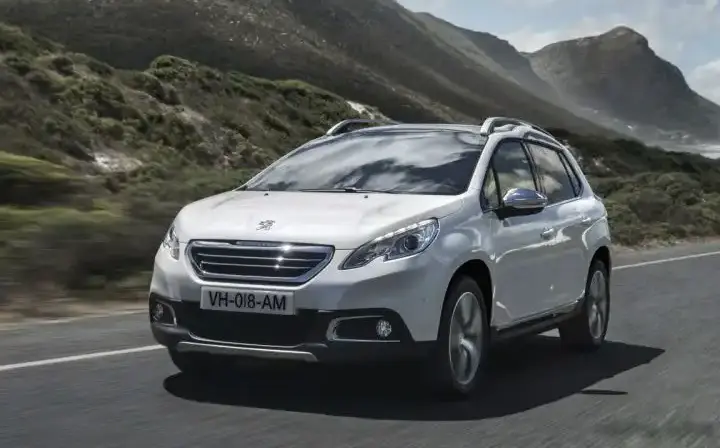
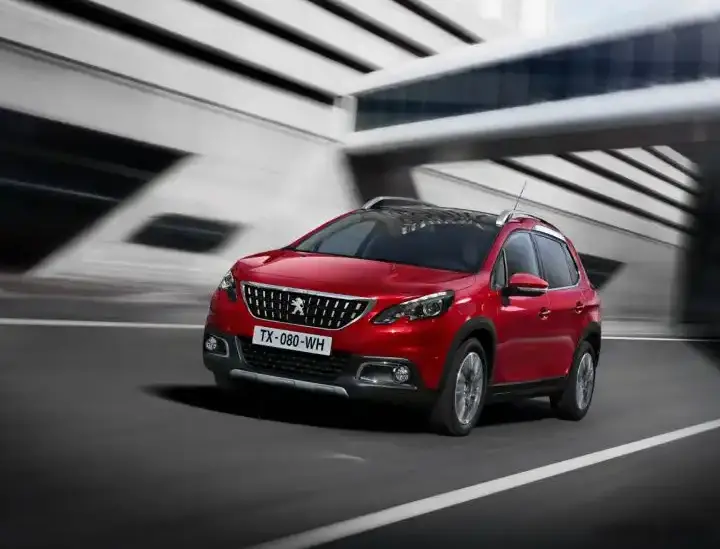
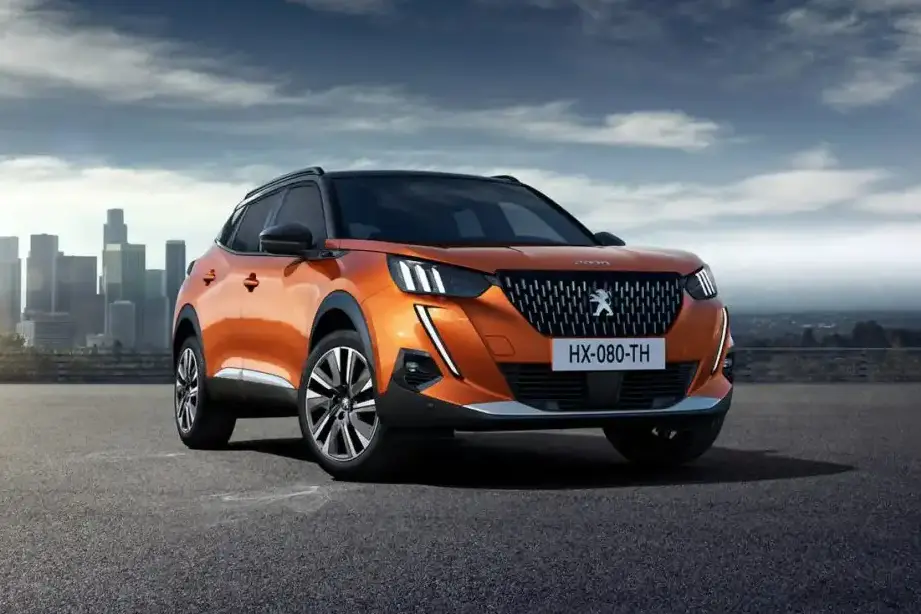
The Peugeot 2008 II 1.2 PureTech 155 Automatic, launched in 2019, represents the second generation of Peugeot’s popular subcompact SUV. Building upon the success of the first-generation 2008, this model aimed to offer a more sophisticated and technologically advanced package. The 1.2 PureTech 155 Automatic variant was positioned as a strong all-rounder, appealing to buyers seeking a comfortable, efficient, and well-equipped vehicle. It was a significant offering in the highly competitive European B-SUV segment, competing with models like the Volkswagen T-Roc, Renault Captur, and Nissan Juke. Production of this specific configuration continued through 2022, before being updated with newer engine options and technology.
Powertrain & Engine Architecture
At the heart of the 2008 II 1.2 PureTech 155 Automatic lies Peugeot’s HNN (EB2ADTX) 1.2-liter three-cylinder turbocharged gasoline engine. This engine is part of the PureTech family, known for its efficiency and responsiveness. The engine utilizes direct fuel injection, optimizing combustion and contributing to improved fuel economy. A single twin-scroll turbocharger, coupled with an intercooler, provides a boost in power and torque. The engine produces 155 horsepower at 5500 rpm and 240 Nm (177 lb-ft) of torque at 1750 rpm. This torque figure is particularly noteworthy for a small-displacement engine, providing good low-end grunt for everyday driving. The engine is paired with an Aisin-sourced eight-speed automatic transmission. This transmission offers smooth and quick shifts, contributing to a refined driving experience. The transmission is electronically controlled, adapting to driving conditions and driver input.
Driving Characteristics
The 1.2 PureTech 155 Automatic delivers a surprisingly capable driving experience. While not a performance-oriented variant, the engine provides adequate power for most driving situations. Acceleration from 0-60 mph takes approximately 7.8 seconds, making it competitive within its class. The eight-speed automatic transmission is well-matched to the engine, providing smooth gear changes and helping to keep the engine in its optimal power band. Compared to the lower-powered 1.2 PureTech variants, the 155 hp version offers a noticeable improvement in responsiveness, particularly when overtaking or climbing hills. Compared to a manual transmission equipped 2008, the automatic offers convenience, but some drivers may find it slightly less engaging. The gear ratios are tuned for a balance between fuel efficiency and performance, with taller gears for highway cruising and shorter gears for quicker acceleration.
Equipment & Trim Levels
The 1.2 PureTech 155 Automatic typically came equipped with a generous level of standard features. Depending on the specific trim level (Active, Allure, GT Line, GT), standard equipment included air conditioning, a touchscreen infotainment system with Apple CarPlay and Android Auto compatibility, Bluetooth connectivity, and a suite of safety features such as automatic emergency braking, lane departure warning, and speed limit recognition. Higher trim levels added features like a panoramic sunroof, leather upholstery, heated seats, and a more advanced infotainment system with navigation. Optional extras included a premium sound system, parking assist, and adaptive cruise control.
Chassis & Braking
The Peugeot 2008 II utilizes a McPherson strut front suspension and an elastic beam rear suspension. This setup provides a good balance between ride comfort and handling. The chassis is relatively lightweight, contributing to the vehicle’s agility. The front brakes are ventilated discs measuring 302mm, while the rear brakes are solid discs measuring 249mm. Anti-lock Braking System (ABS) with Electronic Brakeforce Distribution (EBD) is standard. The steering is electrically assisted, providing a light and precise feel. Stabilizer bars are fitted to both the front and rear axles to reduce body roll during cornering.
Market Reception & Comparison
The Peugeot 2008 II 1.2 PureTech 155 Automatic was generally well-received by automotive critics. It was praised for its stylish design, comfortable interior, and efficient powertrain. The automatic transmission was noted for its smoothness and responsiveness. Compared to the lower-powered 1.2 PureTech variants, the 155 hp version was considered a more compelling option for drivers who frequently travel on highways or carry passengers. Fuel economy was also a strong point, with combined fuel consumption figures around 5 liters per 100 kilometers (47 US mpg). Reliability reports have been mixed, with some owners reporting issues with the engine’s timing chain, although Peugeot has issued updates to address this concern.
Legacy
The Peugeot 2008 II 1.2 PureTech 155 Automatic remains a popular choice in the used car market. Its combination of style, efficiency, and practicality makes it an attractive option for buyers seeking a subcompact SUV. While the engine has been subject to some reliability concerns, regular maintenance and adherence to Peugeot’s recommended service intervals can help to mitigate these risks. The model helped solidify Peugeot’s position as a major player in the European SUV market and paved the way for future generations of the 2008.