Technical Specifications
| Brand | Jaguar |
| Model | F-type |
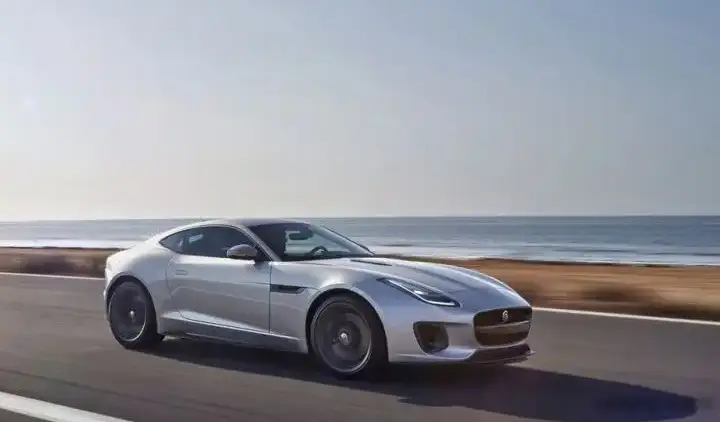
| Generation | F-type Coupe (facelift 2017) |
| Type (Engine) | P380 V6 (380 Hp) AWD Automatic |
| Start of production | 2019 year |
| End of production | 2020 year |
| Powertrain Architecture | Internal Combustion engine |
| Body type | Coupe |
| Seats | 2 |
| Doors | 2 |
| Fuel consumption (economy) – urban | 14.5 l/100 km (16.2 US mpg, 19.5 UK mpg, 6.9 km/l) |
| Fuel consumption (economy) – extra urban | 7.8 l/100 km (30.2 US mpg, 36.2 UK mpg, 12.8 km/l) |
| Fuel consumption (economy) – combined | 10.2 l/100 km (23.1 US mpg, 27.7 UK mpg, 9.8 km/l) |
| CO2 emissions | 233 g/km |
| Fuel Type | Petrol (Gasoline) |
| Acceleration 0 – 100 km/h | 5.1 sec |
| Acceleration 0 – 62 mph | 5.1 sec |
| Acceleration 0 – 60 mph | 4.8 sec |
| Maximum speed | 275 km/h (170.88 mph) |
| Emission standard | Euro 6d-Temp |
| Weight-to-power ratio | 4.2 kg/Hp, 237.6 Hp/tonne |
| Weight-to-torque ratio | 3.5 kg/Nm, 287.7 Nm/tonne |
| Power | 380 Hp @ 6500 rpm |
| Power per litre | 126.9 Hp/l |
| Torque | 460 Nm @ 3500-5500 rpm (339.28 lb.-ft. @ 3500-5500 rpm) |
| Engine layout | Front, Longitudinal |
| Engine Model/Code | 306PS |
| Engine displacement | 2995 cm3 (182.77 cu. in.) |
| Number of cylinders | 6 |
| Engine configuration | Inline |
| Cylinder Bore | 84.5 mm (3.33 in.) |
| Piston Stroke | 89 mm (3.5 in.) |
| Compression ratio | 10.5:1 |
| Number of valves per cylinder | 4 |
| Fuel injection system | Direct injection |
| Engine aspiration | Supercharger, Intercooler |
| Engine oil capacity | 6.5 l (6.87 US qt | 5.72 UK qt) |
| Coolant | 9.6 l (10.14 US qt | 8.45 UK qt) |
| Kerb Weight | 1599 kg (3525.19 lbs.) |
| Max. weight | 2150 kg (4739.94 lbs.) |
| Max load | 551 kg (1214.75 lbs.) |
| Trunk (boot) space – minimum | 310 l (10.95 cu. ft.) |
| Trunk (boot) space – maximum | 408 l (14.41 cu. ft.) |
| Fuel tank capacity | 70 l (18.49 US gal | 15.4 UK gal) |
| Length | 4482 mm (176.46 in.) |
| Width | 1923 mm (75.71 in.) |
| Width including mirrors | 2042 mm (80.39 in.) |
| Height | 1311 mm (51.61 in.) |
| Wheelbase | 2622 mm (103.23 in.) |
| Front track | 1597 mm (62.87 in.) |
| Rear (Back) track | 1649 mm (64.92 in.) |
| Ride height (ground clearance) | 100 mm (3.94 in.) |
| Minimum turning circle (turning diameter) | 11.8 m (38.71 ft.) |
| Drive wheel | All wheel drive (4×4) |
| Number of gears and type of gearbox | 8 gears, automatic transmission |
| Front brakes | Disc, 380 mm |
| Rear brakes | Disc, 325 mm |
| Assisting systems | ABS (Anti-lock braking system) |
| Tires size | 255/35 R20; 295/30 R20 |
| Wheel rims size | 9J x 20; 10.5J x 20 |
The Jaguar F-Type Coupe P380, launched as part of the 2017 facelift, represented a significant evolution of Jaguar’s sports car offering. Built on the aluminum-intensive platform (JX73), the F-Type aimed to deliver a compelling combination of British style, dynamic performance, and modern technology. The P380 trim, specifically, was introduced to provide a more accessible entry point into the F-Type range without sacrificing the core driving experience. Production spanned from 2019 to 2020, making it a relatively short-lived but important iteration of the F-Type lineage. It was designed to appeal to buyers seeking a sophisticated grand tourer with genuine sporting credentials.
Powertrain & Engine Architecture
At the heart of the P380 lies Jaguar Land Rover’s AJ306 engine, a 3.0-liter supercharged inline-six cylinder petrol engine. This engine, internally designated as the 306PS, utilizes a roots-type supercharger for immediate throttle response and a broad torque curve. Direct fuel injection ensures precise fuel delivery, maximizing efficiency and power output. The engine boasts a compression ratio of 10.5:1 and features four valves per cylinder, contributing to its high specific output. The eight-speed automatic transmission, sourced from ZF, is a crucial component of the P380’s drivetrain. This transmission offers smooth and rapid gear changes, enhancing both performance and comfort. The all-wheel-drive system, employing a multi-plate clutch, intelligently distributes torque between the front and rear axles, providing enhanced traction and stability, particularly in adverse weather conditions.
Driving Characteristics
The F-Type P380 delivers a refined yet engaging driving experience. The supercharged V6 provides ample power, with 380 horsepower and 460 Nm (339 lb-ft) of torque available across a wide rev range. Acceleration from 0-60 mph takes approximately 4.8 seconds, and the car reaches a top speed of 170.88 mph. The eight-speed automatic transmission is well-tuned, offering quick and seamless shifts. While not as brutally fast as the V8-powered R models, the P380 offers a more accessible and manageable power delivery, making it suitable for everyday driving. The all-wheel-drive system provides excellent grip and stability, inspiring confidence in various driving conditions. The steering is precise and well-weighted, providing good feedback to the driver.
Equipment & Trim Levels
The P380 trim came standard with a generous array of features, including leather upholstery, heated front seats, a premium sound system, and a touchscreen infotainment system. Standard exterior features included LED headlights, alloy wheels, and a rear spoiler. Optional extras included a panoramic sunroof, upgraded leather trim, adaptive cruise control, and a blind-spot monitoring system. The interior design emphasized luxury and driver focus, with a cockpit-style layout and high-quality materials. The dashboard featured a combination of analog gauges and digital displays, providing the driver with essential information at a glance.
Chassis & Braking
The F-Type Coupe utilizes an aluminum chassis, contributing to its relatively low weight and high structural rigidity. The suspension system consists of double wishbones at the front and rear, providing excellent handling and ride comfort. The P380 is equipped with disc brakes on all four wheels, providing ample stopping power. The front brakes measure 380mm in diameter, while the rear brakes measure 325mm. Anti-lock braking system (ABS) is standard, enhancing safety and control during emergency braking situations. The car’s suspension is tuned to provide a balance between sporty handling and comfortable ride quality.
Market Reception & Comparison
The F-Type P380 was generally well-received by automotive critics. It was praised for its stylish design, engaging driving dynamics, and comfortable interior. Compared to the four-cylinder models, the P380 offered a significant performance upgrade, while remaining more affordable than the V8-powered R variants. Fuel economy was respectable for a sports car, averaging around 23.1 US mpg in combined driving. Reliability was generally good, although some owners reported minor issues with the infotainment system. Compared to rivals such as the Porsche 911 and BMW M2, the F-Type P380 offered a unique blend of British style and performance.
Legacy
The Jaguar F-Type P380 has established itself as a desirable used sports car. Its combination of performance, luxury, and style continues to appeal to enthusiasts. The 3.0-liter supercharged V6 engine has proven to be relatively reliable, although regular maintenance is essential. The eight-speed automatic transmission is also known for its durability. As the F-Type continues to age, the P380 variant is likely to become increasingly collectible, particularly well-maintained examples with low mileage. It represents a sweet spot in the F-Type lineup, offering a compelling balance of performance, comfort, and value.