
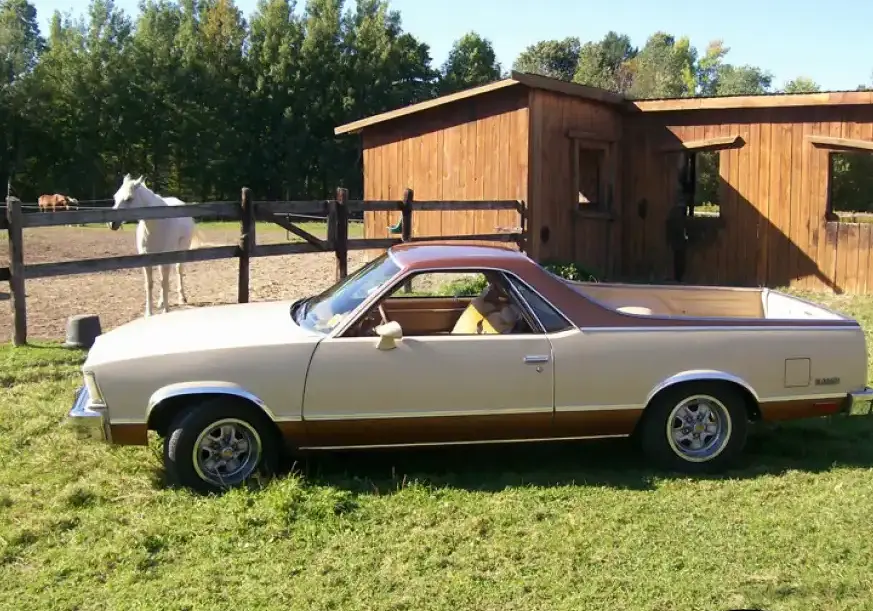
The Chevrolet Malibu El Camino, specifically the 5.0 V8 (155 hp) CAT variant, represents a unique and short-lived chapter in Chevrolet’s history. Produced for the 1980 and 1981 model years, this vehicle combined the traditional El Camino “sedan pickup” body style with the larger displacement V8 engine. It was positioned as a performance-oriented, yet practical, offering within the El Camino lineup, appealing to buyers who desired the utility of a pickup truck with the style of a coupe. This generation, based on the A-body platform, was a response to changing market demands and emissions regulations, resulting in a vehicle that differed significantly from its earlier, muscle-car focused predecessors.
Technical Specifications
| Brand | Chevrolet |
| Model | Malibu |
| Generation | Malibu El Camino (Sedan Pickup) |
| Type (Engine) | 5.0 V8 (155 Hp) CAT |
| Start of production | 1980 |
| End of production | 1981 |
| Powertrain Architecture | Internal Combustion engine |
| Body type | Pick-up |
| Seats | 3 |
| Doors | 2 |
| Fuel Type | Petrol (Gasoline) |
| Power | 155 Hp @ 4000 rpm |
| Power per litre | 31 Hp/l |
| Torque | 325 Nm @ 1600 rpm / 239.71 lb.-ft. @ 1600 rpm |
| Engine layout | Front, Longitudinal |
| Engine displacement | 5001 cm3 / 305.18 cu. in. |
| Number of cylinders | 8 |
| Engine configuration | V-engine |
| Cylinder Bore | 95 mm / 3.74 in. |
| Piston Stroke | 88.4 mm / 3.48 in. |
| Compression ratio | 8.6:1 |
| Number of valves per cylinder | 2 |
| Fuel injection system | Carburettor |
| Engine aspiration | Naturally aspirated engine |
| Valvetrain | OHV |
| Trunk (boot) space – maximum | 2033 l / 71.79 cu. ft. |
| Fuel tank capacity | 66 l / 17.44 US gal | 14.52 UK gal |
| Length | 5121 mm / 201.61 in. |
| Width | 1826 mm / 71.89 in. |
| Height | 1380 mm / 54.33 in. |
| Wheelbase | 2974 mm / 117.09 in. |
| Front track | 1486 mm / 58.5 in. |
| Rear (Back) track | 1467 mm / 57.76 in. |
| Front overhang | 915 mm / 36.02 in. |
| Rear overhang | 1232 mm / 48.5 in. |
| Ride height (ground clearance) | 136 mm / 5.35 in. |
| Approach angle | 23° |
| Departure angle | 16° |
| Ramp-over (brakeover) angle | 14° |
| Drivetrain Architecture | The Internal combustion engine (ICE) drives the rear wheels of the vehicle. |
| Drive wheel | Rear wheel drive |
| Number of gears and type of gearbox | 4 gears, manual transmission |
| Front suspension | Independent, type McPherson with coil spring and anti-roll bar |
| Rear suspension | dependent spring suspension, Transverse stabilizer, Trailing arm |
| Front brakes | Ventilated discs |
| Rear brakes | Drum |
| Steering type | Steering rack and pinion |
| Tires size | 205/75 R14 |
| Wheel rims size | 6.0J x 14 |
Powertrain & Engine Architecture
The heart of the 1980-1981 Malibu El Camino 5.0 V8 was the Chevrolet 305 cubic inch (5.0 liter) small-block V8 engine. This engine, designated with various codes depending on the specific calibration, was equipped with a two-barrel carburetor to meet increasingly stringent emissions standards. The engine featured a traditional overhead valve (OHV) valvetrain with two valves per cylinder. The 8.6:1 compression ratio was a compromise between performance and emissions control. The catalytic converter (“CAT” in the model designation) was a crucial component in reducing harmful exhaust emissions, mandated by federal regulations. The engine’s longitudinal front-engine layout and rear-wheel drive configuration were typical for American vehicles of this era. While the 155 horsepower output wasn’t groundbreaking, it provided adequate power for both everyday driving and light hauling.
Driving Characteristics
The 5.0 V8-equipped El Camino offered a noticeable step up in performance compared to the smaller six-cylinder engines available in the lineup. While not a high-performance machine in the classic muscle car sense, the V8 provided sufficient torque for confident acceleration and towing. The four-speed manual transmission allowed for driver control, but the gear ratios were geared more towards cruising than outright acceleration. The El Camino’s rear-wheel drive layout contributed to a balanced feel, although the relatively soft suspension tuning prioritized ride comfort over sharp handling. Compared to later fuel-injected V8s, the carbureted engine could exhibit some hesitation or flat spots during acceleration, and fuel economy was relatively modest for the time.
Equipment & Trim Levels
The Malibu El Camino 5.0 V8 typically came with a fairly basic level of equipment. Standard features included cloth upholstery, a basic AM radio, and manual windows and locks. Optional extras included air conditioning, a more powerful stereo system, and upgraded interior trim. The interior design was functional and straightforward, reflecting the vehicle’s focus on practicality. The dashboard layout was typical of early 1980s American cars, with a large instrument cluster and a relatively simple center console. The El Camino’s bed was a key feature, offering a versatile cargo-carrying solution.
Chassis & Braking
The El Camino’s chassis utilized an independent front suspension with McPherson struts and coil springs, providing a reasonably comfortable ride. The rear suspension employed a traditional leaf spring setup, which was robust and capable of handling moderate loads. Front disc brakes provided adequate stopping power, while rear drum brakes were standard. The steering system was a rack-and-pinion setup, offering responsive steering feel. The 205/75 R14 tires provided a good balance of ride comfort and handling. The relatively simple suspension design was cost-effective and reliable, but it didn’t offer the sophisticated handling characteristics of more modern vehicles.
Market Reception & Comparison
The 1980-1981 Malibu El Camino 5.0 V8 received mixed reviews from automotive critics. While the V8 engine was praised for its power and torque, the vehicle’s overall design was considered somewhat dated compared to newer models from other manufacturers. Fuel economy was a concern, particularly given the rising gasoline prices of the early 1980s. Compared to the six-cylinder El Caminos, the V8 offered a significant performance advantage, but at the cost of increased fuel consumption and a slightly higher price. The V8 version appealed to buyers who prioritized performance and towing capacity, while the six-cylinder models were more popular with those seeking a more economical and fuel-efficient option.
Legacy
The Chevrolet Malibu El Camino 5.0 V8 represents the final iteration of the El Camino before the model was discontinued. While it wasn’t a commercial success in the same vein as earlier El Caminos, it remains a popular choice among collectors and enthusiasts. The 305 V8 engine is known for its reliability and relative ease of maintenance, making it a relatively affordable classic car to own and operate. Today, well-maintained examples of the 1980-1981 El Camino 5.0 V8 are sought after by those who appreciate its unique blend of style, utility, and classic American V8 power. The vehicle serves as a reminder of a bygone era when automakers were grappling with the challenges of meeting emissions regulations while still delivering enjoyable driving experiences.
