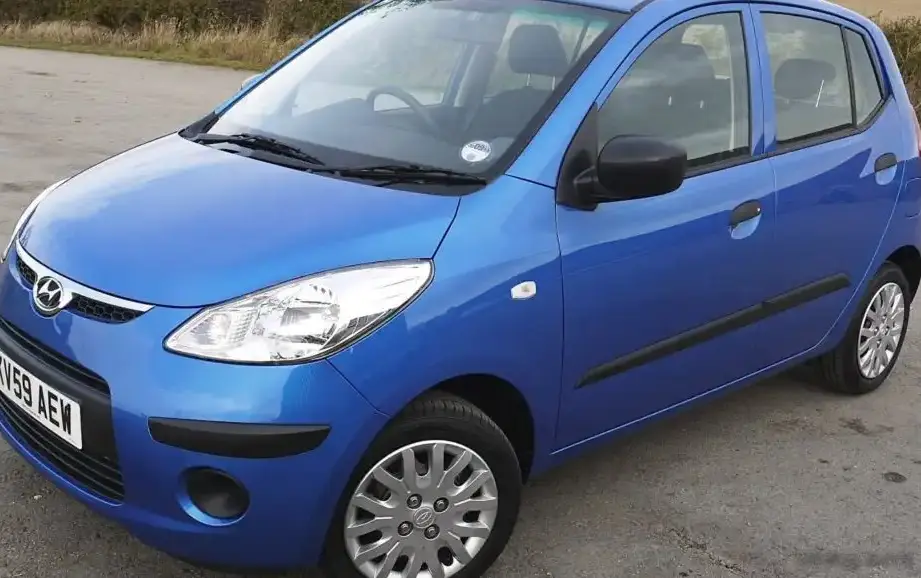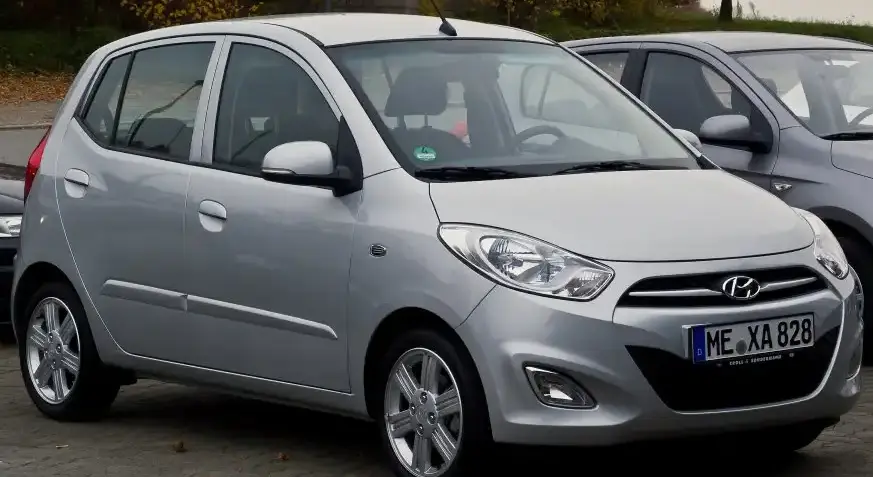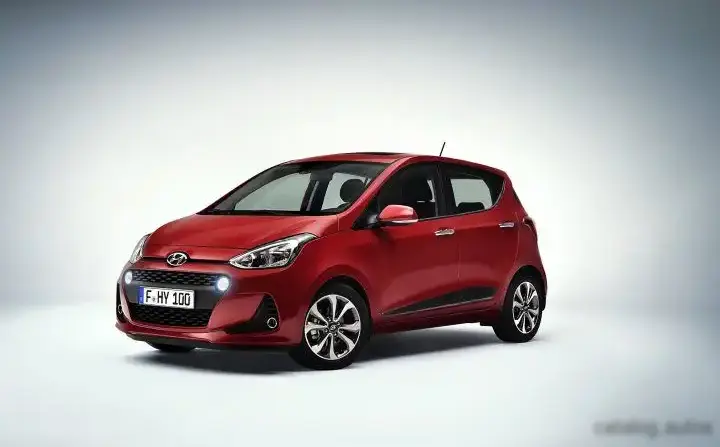
The Hyundai i10 II (facelift, introduced in 2016) 1.0-liter 67 horsepower automatic variant represented an entry-level offering within the second generation of Hyundai’s city car. Produced from 2016 until August 2018, this version of the i10 was primarily aimed at buyers seeking an affordable, easy-to-drive vehicle for urban environments. It occupied the lower end of the i10 range, positioned below the more powerful 1.2-liter engine options. The facelift brought styling updates and minor equipment revisions to the existing i10 II, which itself was based on the Hyundai ix10 platform, a subcompact MPV, adapted for hatchback duties. This model was particularly significant in the European market, where demand for small, fuel-efficient cars remained strong.
Technical Specifications
| Brand | Hyundai |
| Model | i10 |
| Generation | i10 II (facelift 2016) |
| Type (Engine) | 1.0 (67 Hp) Automatic |
| Start of production | 2016 |
| End of production | August, 2018 |
| Powertrain Architecture | Internal Combustion engine |
| Body type | Hatchback |
| Seats | 5 |
| Doors | 5 |
| Fuel consumption (urban) | 7.3 l/100 km (32.2 US mpg, 38.7 UK mpg, 13.7 km/l) |
| Fuel consumption (extra urban) | 4.8 l/100 km (49 US mpg, 58.9 UK mpg, 20.8 km/l) |
| Fuel consumption (combined) | 5.8 l/100 km (40.6 US mpg, 48.7 UK mpg, 17.2 km/l) |
| CO2 emissions | 134 g/km |
| Fuel Type | Petrol (Gasoline) |
| Acceleration 0 – 100 km/h | 16.8 sec |
| Acceleration 0 – 62 mph | 16.8 sec |
| Acceleration 0 – 60 mph | 16 sec |
| Maximum speed | 150 km/h (93.21 mph) |
| Emission standard | Euro 6 |
| Weight-to-power ratio | 15.3 kg/Hp, 65.2 Hp/tonne |
| Weight-to-torque ratio | 10.8 kg/Nm, 92.5 Nm/tonne |
| Power | 67 Hp @ 5500 rpm |
| Torque | 95 Nm @ 3500 rpm (70.07 lb.-ft. @ 3500 rpm) |
| Engine layout | Front, Transverse |
| Engine Model/Code | G3LA |
| Engine displacement | 998 cm3 (60.9 cu. in.) |
| Number of cylinders | 3 |
| Engine configuration | Inline |
| Cylinder Bore | 71 mm (2.8 in.) |
| Piston Stroke | 84 mm (3.31 in.) |
| Compression ratio | 10.5:1 |
| Number of valves per cylinder | 4 |
| Fuel injection system | Multi-port manifold injection |
| Engine aspiration | Naturally aspirated engine |
| Engine oil capacity | 3 l (3.17 US qt | 2.64 UK qt) |
| Kerb Weight | 1027 kg (2264.15 lbs.) |
| Max. weight | 1440 kg (3174.66 lbs.) |
| Max load | 413 kg (910.51 lbs.) |
| Trunk (boot) space – minimum | 252 l (8.9 cu. ft.) |
| Trunk (boot) space – maximum | 1046 l (36.94 cu. ft.) |
| Fuel tank capacity | 40 l (10.57 US gal | 8.8 UK gal) |
| Max. roof load | 60 kg (132.28 lbs.) |
| Length | 3665 mm (144.29 in.) |
| Width | 1660 mm (65.35 in.) |
| Height | 1500 mm (59.06 in.) |
| Wheelbase | 2385 mm (93.9 in.) |
| Front track | 1467 mm (57.76 in.) |
| Rear (Back) track | 1480 mm (58.27 in.) |
| Front overhang | 740 mm (29.13 in.) |
| Rear overhang | 540 mm (21.26 in.) |
| Ride height (ground clearance) | 149 mm (5.87 in.) |
| Drivetrain Architecture | Front wheel drive |
| Number of gears and type of gearbox | 4 gears, automatic transmission |
| Front suspension | Independent type McPherson |
| Rear suspension | independent torsion suspension |
| Front brakes | Ventilated discs |
| Rear brakes | Disc |
| Assisting systems | ABS (Anti-lock braking system) |
| Steering type | Steering rack and pinion |
| Power steering | Electric Steering |
| Tires size | 175/65 R14; 185/55 R15 |
| Wheel rims size | 5.5J x 14; 6.0J x 15 |
Powertrain & Engine Architecture
The heart of this i10 variant is the Hyundai G3LA, a 998cc inline-three cylinder petrol engine. This engine utilizes a multi-point fuel injection system and a naturally aspirated configuration. The G3LA engine, while simple in design, was engineered for efficiency and reliability. It features four valves per cylinder and a compression ratio of 10.5:1. The engine produces 67 horsepower at 5500 rpm and 95 Nm (70 lb-ft) of torque at 3500 rpm. Paired with this engine is a four-speed automatic transmission. This transmission, while providing convenience, was not known for its responsiveness or fuel efficiency compared to the available manual gearbox. The automatic transmission was designed for smooth operation rather than sporty performance.
Driving Characteristics
The 1.0-liter automatic i10 offered a decidedly unhurried driving experience. Acceleration from 0-60 mph took approximately 16 seconds, and top speed was limited to 93 mph. The four-speed automatic transmission contributed to a relatively high engine speed during acceleration, resulting in noticeable engine noise. Compared to the manual transmission version, the automatic suffered from a slight performance deficit due to the transmission’s inherent inefficiencies. However, the automatic provided a comfortable and easy-to-drive experience, particularly in congested urban traffic. The gear ratios were optimized for fuel economy rather than outright performance.
Equipment & Trim Levels
The 1.0-liter automatic i10 typically came with a basic level of equipment. Standard features generally included air conditioning, central locking, electric front windows, and a basic audio system with USB connectivity. Safety features included ABS brakes, airbags, and stability control. Higher trim levels, available as options, added features such as alloy wheels, a touchscreen infotainment system, and parking sensors. Interior upholstery was typically cloth, and the dashboard featured a simple, functional design. The focus was on providing essential features at an affordable price point.
Chassis & Braking
The i10 II utilized a McPherson strut front suspension and a torsion beam rear suspension. This setup provided a comfortable ride quality, although handling was not particularly sporty. The front brakes were ventilated discs, while the rear brakes were solid discs. The steering was electrically assisted, providing light and easy steering feel. The relatively light weight of the vehicle (around 1027 kg or 2264 lbs) helped to compensate for the modest engine power.
Market Reception & Comparison
The 1.0-liter automatic i10 was generally well-received as an affordable and practical city car. Critics praised its fuel efficiency and ease of use, but noted its lack of performance. Compared to the 1.2-liter versions, the 1.0-liter automatic offered lower running costs but significantly less power. The manual transmission version of the 1.0-liter engine provided better fuel economy and more engaging driving experience. However, the automatic appealed to buyers who prioritized convenience over performance.
Legacy
The Hyundai i10 II 1.0-liter automatic has proven to be a relatively reliable vehicle in the used car market. The G3LA engine is known for its durability, and the four-speed automatic transmission, while not sophisticated, is generally dependable. Common issues are typically limited to routine maintenance items. Today, these i10s represent an affordable and economical option for buyers seeking a small, practical city car. Their simplicity and low running costs continue to make them a popular choice, particularly for first-time car owners or those seeking a low-cost transportation solution.