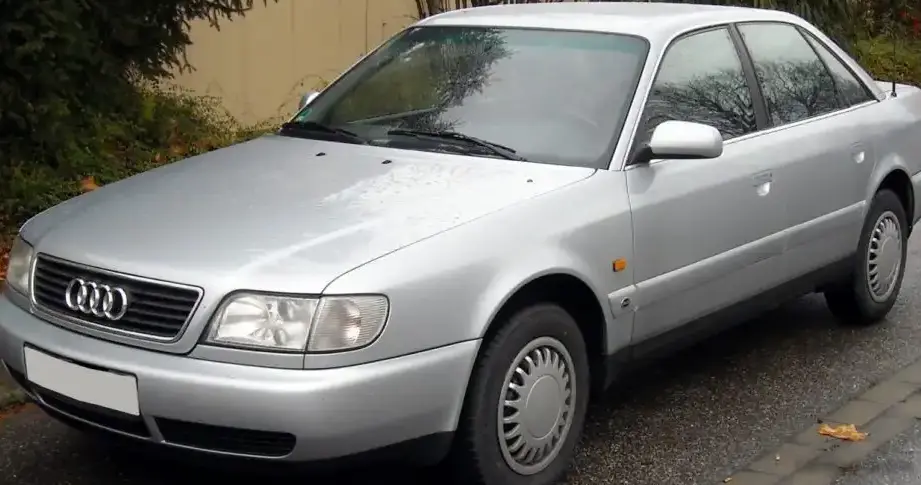
Technical Specifications
| Brand | Audi |
| Model | A6 |
| Generation | A6 Sedan (4G, C7) |
| Type (Engine) | 2.0 TFSI (220 Hp) quattro Tiptronic |
| Start of production | June, 2013 |
| End of production | 2015 |
| Powertrain Architecture | Internal Combustion engine |
| Body type | Sedan |
| Seats | 5 |
| Doors | 4 |
| Fuel consumption (economy) – urban (EPA) | 11.8 l/100 km (19.9 US mpg, 23.9 UK mpg, 8.5 km/l) |
| Fuel consumption (economy) – extra urban (EPA) | 8.1 l/100 km (29 US mpg, 34.9 UK mpg, 12.3 km/l) |
| Fuel consumption (economy) – combined (EPA) | 10.2 l/100 km (23.1 US mpg, 27.7 UK mpg, 9.8 km/l) |
| Fuel Type | Petrol (Gasoline) |
| Acceleration 0 – 60 mph | 6.6 sec |
| Maximum speed | 209 km/h (129.87 mph), Electronically limited |
| Emission standard | ULEV 2 |
| Weight-to-power ratio | 8.2 kg/Hp, 122.6 Hp/tonne |
| Weight-to-torque ratio | 5.1 kg/Nm, 195 Nm/tonne |
| Power | 220 Hp @ 4450-6000 rpm |
| Power per litre | 110.9 Hp/l |
| Torque | 350 Nm @ 1500-4300 rpm (258.15 lb.-ft. @ 1500-4300 rpm) |
| Engine layout | Front, Longitudinal |
| Engine Model/Code | EA888 / CAED |
| Engine displacement | 1984 cm3 (121.07 cu. in.) |
| Number of cylinders | 4 |
| Engine configuration | Inline |
| Cylinder Bore | 82.5 mm (3.25 in.) |
| Piston Stroke | 92.8 mm (3.65 in.) |
| Compression ratio | 9.6:1 |
| Number of valves per cylinder | 4 |
| Fuel injection system | Direct injection |
| Engine aspiration | Turbocharger, Intercooler |
| Valvetrain | DOHC |
| Engine oil capacity | 4.6 l (4.86 US qt | 4.05 UK qt) |
| Coolant | 10 l (10.57 US qt | 8.8 UK qt) |
| Kerb Weight | 1795 kg (3957.3 lbs.) |
| Trunk (boot) space – minimum | 530 l (18.72 cu. ft.) |
| Trunk (boot) space – maximum | 995 l (35.14 cu. ft.) |
| Fuel tank capacity | 75 l (19.81 US gal | 16.5 UK gal) |
| Length | 4925 mm (193.9 in.) |
| Width | 1875 mm (73.82 in.) |
| Width including mirrors | 2086 mm (82.13 in.) |
| Height | 1468 mm (57.8 in.) |
| Wheelbase | 2912 mm (114.65 in.) |
| Front track | 1627 mm (64.06 in.) |
| Rear (Back) track | 1618 mm (63.7 in.) |
| Drag coefficient (Cd) | 0.26 |
| Minimum turning circle (turning diameter) | 11.9 m (39.04 ft.) |
| Drivetrain Architecture | The Internal combustion engine (ICE) drives permanently the four wheels of the vehicle. |
| Drive wheel | All wheel drive (4×4) |
| Number of gears and type of gearbox | 8 gears, automatic transmission Tiptronic |
| Front suspension | Coil spring, Independent multi-link suspension, Transverse stabilizer |
| Rear suspension | Independent on trapezoidal lever, Transverse stabilizer, Coil spring |
| Front brakes | Ventilated discs, 345 mm |
| Rear brakes | Ventilated discs, 330 mm |
| Assisting systems | ABS (Anti-lock braking system) |
| Steering type | Steering rack and pinion |
| Power steering | Electric Steering |
| Tires size | 225/55 R17; 245/45 R18; 255/40 R19; 255/35 R20 |
| Wheel rims size | 8J x 17; 8J x 18; 8.5J x 19; 8.5J x 20 |
The Audi A6 Sedan (4G, C7) 2.0 TFSI quattro Tiptronic, produced from June 2013 to 2015, represents a compelling blend of performance, luxury, and technology within the mid-size executive car segment. Positioned as a mid-range offering within the C7 A6 lineup, it catered to buyers seeking all-wheel drive capability and the convenience of an automatic transmission without opting for the higher-performance or diesel variants. This model occupied a sweet spot, balancing spirited driving with everyday usability and fuel efficiency. It was a key component of Audi’s strategy to offer a diverse A6 range appealing to a broad customer base in both European and North American markets.
Powertrain & Engine Architecture
At the heart of the A6 2.0 TFSI quattro Tiptronic lies the EA888 engine, specifically the CAED variant. This 1.984-liter (121.07 cubic inches) inline-four cylinder engine utilizes direct fuel injection and a single turbocharger with an intercooler to deliver 220 horsepower at 4450-6000 rpm and 350 Nm (258.15 lb.-ft.) of torque between 1500-4300 rpm. The engine features a 9.6:1 compression ratio and a dual overhead camshaft (DOHC) valvetrain with four valves per cylinder. The direct injection system, a hallmark of Audi’s TFSI technology, allows for precise fuel delivery and improved combustion efficiency. Paired with this engine is Audi’s eight-speed Tiptronic automatic transmission. This transmission offers both fully automatic operation and manual gear selection via steering wheel-mounted paddles or the gear selector, providing drivers with a degree of control over the powertrain. The quattro all-wheel drive system distributes power between the front and rear axles as needed, enhancing traction and stability in various driving conditions.
Driving Characteristics
The 2.0 TFSI quattro Tiptronic A6 delivers a refined and capable driving experience. While not as overtly sporty as the higher-output variants, the 220 hp engine provides ample power for everyday driving and confident highway passing. The eight-speed Tiptronic transmission contributes to smooth and seamless gear changes, enhancing comfort. The quattro all-wheel drive system provides excellent grip, particularly in inclement weather. Compared to the six-speed manual transmission available on some A6 models, the Tiptronic offers greater convenience, especially in urban environments. However, the manual transmission generally provides slightly quicker acceleration and a more engaging driving experience. The gear ratios are tuned for a balance of fuel efficiency and performance, with taller gears for relaxed cruising and shorter gears for quicker acceleration.
Equipment & Trim Levels
The 2.0 TFSI quattro Tiptronic typically came well-equipped, reflecting Audi’s commitment to luxury and technology. Standard features often included leather upholstery, tri-zone automatic climate control, a multi-function steering wheel, and the Audi MMI infotainment system with a central display screen. Optional extras could include features like navigation, a premium sound system, heated front seats, and advanced driver-assistance systems such as adaptive cruise control and blind-spot monitoring. Trim levels varied by market, but generally offered packages that added cosmetic enhancements, such as different wheel designs and interior trim materials.
Chassis & Braking
The C7 A6 features a sophisticated chassis design. The front suspension utilizes a multi-link setup with coil springs and a transverse stabilizer bar, while the rear suspension employs an independent trapezoidal link design with coil springs and a stabilizer bar. This configuration provides a comfortable ride and precise handling. Braking duties are handled by ventilated disc brakes on all four wheels, with larger discs typically fitted to higher-trim models. The A6 is equipped with ABS (Anti-lock Braking System) and electronic stability control as standard safety features.
Market Reception & Comparison
The A6 2.0 TFSI quattro Tiptronic was generally well-received by automotive critics. It was praised for its comfortable ride, refined interior, and capable all-wheel drive system. Fuel economy was considered respectable for its class, although not class-leading. Compared to the 3.0-liter supercharged V6 models, the 2.0 TFSI offered a more affordable entry point into the A6 range, albeit with less outright performance. The 2.0 TDI diesel variants were often favored in Europe due to their superior fuel economy and lower running costs, but the TFSI offered a smoother and quieter driving experience.
Legacy
The EA888 engine, in its various iterations, has proven to be a robust and reliable powerplant. The eight-speed Tiptronic transmission has also demonstrated good long-term durability. However, like any complex modern vehicle, the A6 2.0 TFSI quattro Tiptronic can be susceptible to age-related issues, such as oil leaks, sensor failures, and wear and tear on suspension components. On the used car market, these models represent a good value proposition, offering a blend of luxury, performance, and technology at a relatively affordable price point. Regular maintenance and adherence to recommended service intervals are crucial for ensuring the continued reliability of this vehicle.