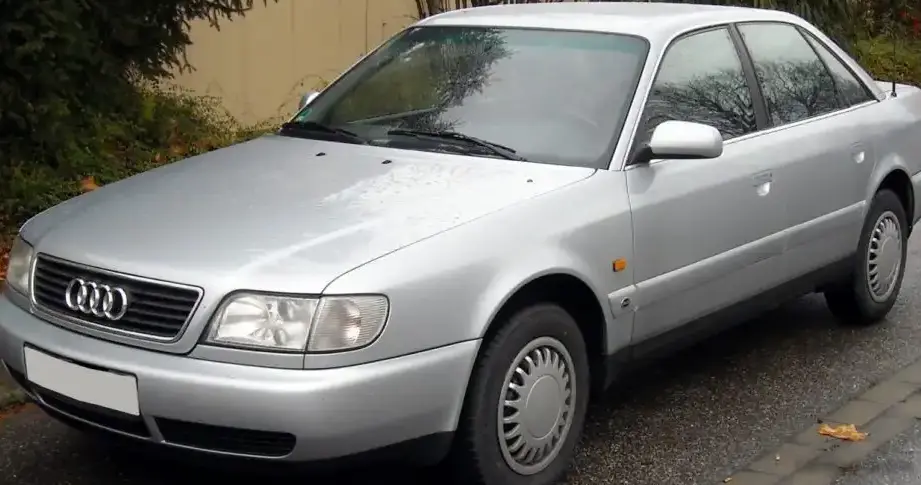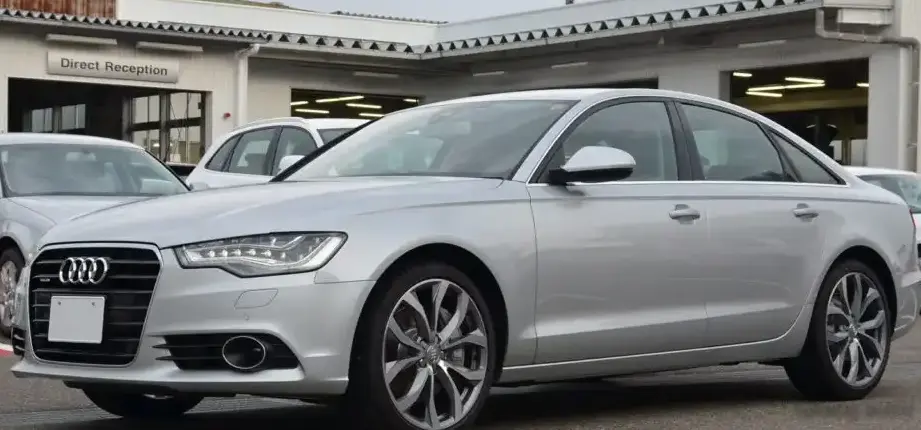
The Audi A6 Sedan (4G, C7) 2.0 TFSI Hybrid Tiptronic, produced from December 2011 to 2014, represented a significant step towards fuel efficiency within the luxury mid-size segment. Positioned as a mid-range offering within the C7 A6 lineup, this variant combined a turbocharged four-cylinder gasoline engine with a full hybrid electric system, paired exclusively with Audi’s eight-speed Tiptronic automatic transmission. It aimed to deliver a balance of performance and economy, appealing to buyers seeking a sophisticated driving experience without sacrificing practicality. The 4G chassis, a core component of the C7 generation, provided a foundation for advanced technology and a refined ride.
Technical Specifications
| Brand | Audi |
| Model | A6 |
| Generation | A6 Sedan (4G, C7) |
| Type (Engine) | 2.0 TFSI (245 Hp) Hybrid Tiptronic |
| Start of production | December, 2011 |
| End of production | 2014 |
| Powertrain Architecture | FHEV (Full Hybrid Electric Vehicle) |
| Body type | Sedan |
| Seats | 5 |
| Doors | 4 |
| Fuel consumption (urban) | 6.2 l/100 km (37.9 US mpg, 45.6 UK mpg, 16.1 km/l) |
| Fuel consumption (extra urban) | 6.2 l/100 km (37.9 US mpg, 45.6 UK mpg, 16.1 km/l) |
| Fuel consumption (combined) | 6.2 l/100 km (37.9 US mpg, 45.6 UK mpg, 16.1 km/l) |
| CO2 emissions | 145 g/km |
| Fuel Type | Petrol (Gasoline) |
| Acceleration 0 – 100 km/h | 7.5 sec |
| Acceleration 0 – 62 mph | 7.5 sec |
| Acceleration 0 – 60 mph | 7.1 sec |
| Maximum speed | 240 km/h (149.13 mph) |
| Emission standard | Euro 5 |
| Weight-to-power ratio | 7.2 kg/Hp, 138.4 Hp/tonne |
| Weight-to-torque ratio | 3.7 kg/Nm, 271.2 Nm/tonne |
| Gross battery capacity | 1.3 kWh |
| All-electric range | 3 km (1.86 mi) |
| Electric motor power | 54 Hp |
| System power | 245 Hp |
| System torque | 480 Nm (354.03 lb.-ft.) |
| Engine Power | 211 Hp @ 4300-6000 rpm |
| Engine Torque | 350 Nm @ 1500-4200 rpm (258.15 lb.-ft. @ 1500-4200 rpm) |
| Engine layout | Front, Longitudinal |
| Engine Model/Code | CHJA |
| Engine displacement | 1984 cm3 (121.07 cu. in.) |
| Number of cylinders | 4 |
| Engine configuration | Inline |
| Cylinder Bore | 82.5 mm (3.25 in.) |
| Piston Stroke | 92.8 mm (3.65 in.) |
| Compression ratio | 9.6:1 |
| Number of valves per cylinder | 4 |
| Fuel injection system | Direct injection |
| Engine aspiration | Turbocharger, Intercooler |
| Valvetrain | DOHC |
| Engine oil capacity | 4.6 l (4.86 US qt | 4.05 UK qt) |
| Kerb Weight | 1770 kg (3902.18 lbs.) |
| Max. weight | 2320 kg (5114.72 lbs.) |
| Max load | 550 kg (1212.54 lbs.) |
| Trunk (boot) space – minimum | 375 l (13.24 cu. ft.) |
| Fuel tank capacity | 73 l (19.28 US gal | 16.06 UK gal) |
| Max. roof load | 100 kg (220.46 lbs.) |
| Permitted trailer load with brakes (8%) | 1700 kg (3747.86 lbs.) |
| Permitted trailer load with brakes (12%) | 1500 kg (3306.93 lbs.) |
| Permitted trailer load without brakes | 750 kg (1653.47 lbs.) |
| Permitted towbar download | 85 kg (187.39 lbs.) |
| Length | 4915 mm (193.5 in.) |
| Width | 1874 mm (73.78 in.) |
| Width including mirrors | 2086 mm (82.13 in.) |
| Height | 1468 mm (57.8 in.) |
| Wheelbase | 2912 mm (114.65 in.) |
| Front track | 1627 mm (64.06 in.) |
| Rear (Back) track | 1618 mm (63.7 in.) |
| Front overhang | 912 mm (35.91 in.) |
| Rear overhang | 1091 mm (42.95 in.) |
| Drag coefficient (Cd) | 0.27 |
| Minimum turning circle (turning diameter) | 11.9 m (39.04 ft.) |
| Drive wheel | Front wheel drive |
| Number of gears and type of gearbox | 8 gears, automatic transmission Tiptronic |
| Front suspension | Independent multi-link suspension |
| Rear suspension | Independent on trapezoidal lever |
| Front brakes | Ventilated discs |
| Rear brakes | Ventilated discs |
| Assisting systems | ABS (Anti-lock braking system) |
| Steering type | Steering rack and pinion |
| Power steering | Electric Steering |
| Tires size | 225/50 R17 |
| Wheel rims size | 17 |
Powertrain & Engine Architecture
At the heart of the A6 2.0 TFSI Hybrid lies the CHJA engine, a 1.984-liter (121.07 cubic inches) inline-four cylinder gasoline engine. This engine utilizes direct fuel injection and is coupled with a single turbocharger and intercooler to produce 211 horsepower at 4300-6000 rpm and 350 Nm (258.15 lb.-ft.) of torque between 1500-4200 rpm. The hybrid system adds a 54 horsepower electric motor, bringing the total system output to 245 horsepower and 480 Nm (354.03 lb.-ft.) of combined torque. The electric motor is powered by a 1.3 kWh lithium-ion battery pack. The eight-speed Tiptronic automatic transmission, a staple of Audi’s premium models, manages power delivery. This transmission offers both fully automatic operation and manual gear selection via steering wheel-mounted paddles or the gear selector. The hybrid system allows for short periods of all-electric driving, up to 3 km (1.86 miles) at low speeds, contributing to improved fuel economy.
Driving Characteristics
The 2.0 TFSI Hybrid Tiptronic offered a refined and comfortable driving experience. While not as overtly sporty as the higher-output variants like the 3.0 TFSI, it provided adequate acceleration, achieving 0-60 mph in approximately 7.1 seconds. The electric motor provides instant torque, filling in gaps in the gasoline engine’s power delivery and resulting in smooth, responsive acceleration from a standstill. The Tiptronic transmission shifts smoothly and efficiently, although it can sometimes feel hesitant during quick downshifts. The hybrid system prioritizes fuel efficiency, and the car frequently operates in electric mode during city driving, resulting in impressive fuel economy figures. The steering is precise and well-weighted, and the suspension provides a comfortable ride, absorbing bumps and imperfections in the road surface effectively.
Equipment & Trim Levels
The A6 2.0 TFSI Hybrid Tiptronic typically came well-equipped, reflecting its position as a mid-range model. Standard features included leather upholstery, tri-zone automatic climate control, a multi-function steering wheel, and Audi’s MMI infotainment system with a central display screen. Optional extras included features such as a navigation system, a premium sound system, adaptive cruise control, and parking assistance systems. Interior trim options varied, with choices in wood, aluminum, or carbon fiber accents. Exterior features generally included alloy wheels, chrome trim, and xenon headlights.
Chassis & Braking
The C7 A6 utilized a sophisticated chassis design featuring an independent multi-link suspension at the front and an independent trapezoidal lever suspension at the rear. This setup provided a comfortable ride and precise handling. The 2.0 TFSI Hybrid model was equipped with ventilated disc brakes on all four wheels, providing ample stopping power. ABS (Anti-lock Braking System) was standard, enhancing safety and stability during emergency braking. The electric power steering system offered precise and responsive steering feel.
Market Reception & Comparison
The A6 2.0 TFSI Hybrid Tiptronic was generally well-received by automotive critics. It was praised for its fuel efficiency, comfortable ride, and refined interior. However, some reviewers noted that the hybrid system added complexity and weight, and that the performance was not as exhilarating as that of the higher-output models. Compared to the 2.0 TFSI without the hybrid system, the hybrid version offered significantly better fuel economy but came at a higher price. Compared to the 3.0 TFSI, it offered less power and performance but was more affordable and fuel-efficient. The 2.0 TDI diesel variants were also popular, offering excellent fuel economy and strong torque, but the hybrid model provided a more environmentally friendly alternative.
Legacy
The Audi A6 2.0 TFSI Hybrid Tiptronic represents an early foray into hybrid technology within the luxury sedan segment. While the hybrid system itself isn’t known for being particularly groundbreaking in terms of longevity, the core 2.0 TFSI engine and Tiptronic transmission have proven to be relatively reliable. On the used car market, these models are often sought after by buyers looking for a fuel-efficient and well-equipped luxury sedan. Maintenance costs can be slightly higher due to the complexity of the hybrid system, but overall, the A6 2.0 TFSI Hybrid remains a compelling option for those seeking a blend of performance, efficiency, and refinement.