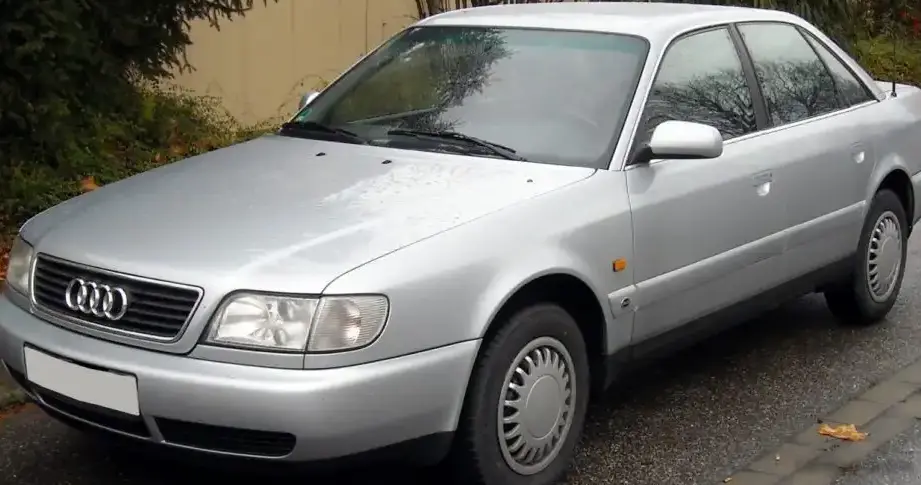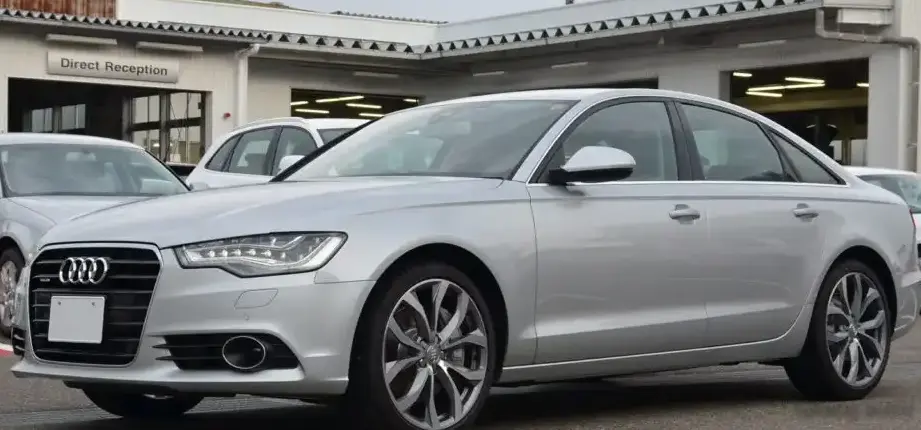
The Audi A6 Sedan (4G, C7) 2.8 FSI V6, produced from 2011 to 2014, represented a significant iteration of Audi’s mid-size executive car. Positioned within the C7 generation A6 lineup, this variant offered a balance between performance and efficiency, appealing to buyers seeking a more spirited driving experience than the base four-cylinder models, but without the higher price tag and running costs associated with the flagship 3.0-liter supercharged V6. It was a key model in the North American and European markets, where the A6 competed with the BMW 5 Series and Mercedes-Benz E-Class.
Technical Specifications
| Brand | Audi |
| Model | A6 |
| Generation | A6 Sedan (4G, C7) |
| Type (Engine) | 2.8 FSI V6 (204 Hp) |
| Start of production | 2011 |
| End of production | 2014 |
| Powertrain Architecture | Internal Combustion engine |
| Body type | Sedan |
| Seats | 5 |
| Doors | 4 |
| Fuel consumption (urban) | 10.5 l/100 km (22.4 US mpg, 26.9 UK mpg, 9.5 km/l) |
| Fuel consumption (extra urban) | 6 l/100 km (39.2 US mpg, 47.1 UK mpg, 16.7 km/l) |
| Fuel consumption (combined) | 7.7 l/100 km (30.5 US mpg, 36.7 UK mpg, 13 km/l) |
| CO2 emissions | 177 g/km |
| Fuel Type | Petrol (Gasoline) |
| Acceleration 0 – 100 km/h | 7.9 sec |
| Acceleration 0 – 62 mph | 7.9 sec |
| Acceleration 0 – 60 mph | 7.5 sec |
| Maximum speed | 242 km/h (150.37 mph) |
| Emission standard | Euro 5 |
| Weight-to-power ratio | 7.7 kg/Hp, 129.9 Hp/tonne |
| Weight-to-torque ratio | 5.6 kg/Nm, 178.3 Nm/tonne |
| Power | 204 Hp @ 5250-6250 rpm |
| Power per litre | 73.6 Hp/l |
| Torque | 280 Nm @ 3000-5000 rpm (206.52 lb.-ft. @ 3000-5000 rpm) |
| Engine layout | Front, Longitudinal |
| Engine Model/Code | CHVA, CNYA |
| Engine displacement | 2773 cm3 (169.22 cu. in.) |
| Number of cylinders | 6 |
| Engine configuration | V-engine |
| Cylinder Bore | 84.5 mm (3.33 in.) |
| Piston Stroke | 82.4 mm (3.24 in.) |
| Compression ratio | 12:1 |
| Number of valves per cylinder | 4 |
| Fuel injection system | Direct injection |
| Engine aspiration | Naturally aspirated engine |
| Valvetrain | DOHC |
| Engine oil capacity | 6.8 l (7.19 US qt | 5.98 UK qt) |
| Coolant | 12 l (12.68 US qt | 10.56 UK qt) |
| Kerb Weight | 1570 kg (3461.26 lbs.) |
| Max. weight | 2150 kg (4739.94 lbs.) |
| Max load | 580 kg (1278.68 lbs.) |
| Trunk (boot) space – minimum | 530 l (18.72 cu. ft.) |
| Trunk (boot) space – maximum | 995 l (35.14 cu. ft.) |
| Fuel tank capacity | 65 l (17.17 US gal | 14.3 UK gal) |
| Max. roof load | 100 kg (220.46 lbs.) |
| Permitted trailer load with brakes (8%) | 1900 kg (4188.78 lbs.) |
| Permitted trailer load without brakes | 750 kg (1653.47 lbs.) |
| Permitted towbar download | 85 kg (187.39 lbs.) |
| Length | 4915 mm (193.5 in.) |
| Width | 1874 mm (73.78 in.) |
| Width including mirrors | 2086 mm (82.13 in.) |
| Height | 1468 mm (57.8 in.) |
| Wheelbase | 2912 mm (114.65 in.) |
| Front track | 1627 mm (64.06 in.) |
| Rear (Back) track | 1618 mm (63.7 in.) |
| Front overhang | 912 mm (35.91 in.) |
| Rear overhang | 1091 mm (42.95 in.) |
| Drag coefficient (Cd) | 0.28 |
| Minimum turning circle (turning diameter) | 11.9 m (39.04 ft.) |
| Drivetrain Architecture | The Internal combustion engine (ICE) drives the front wheels of the vehicle. |
| Drive wheel | Front wheel drive |
| Number of gears and type of gearbox | 6 gears, manual transmission |
| Front suspension | Independent multi-link suspension |
| Rear suspension | Independent on trapezoidal lever |
| Front brakes | Ventilated discs |
| Rear brakes | Disc |
| Assisting systems | ABS (Anti-lock braking system) |
| Steering type | Steering rack and pinion |
| Power steering | Electric Steering |
| Tires size | 225/60 R16 |
| Wheel rims size | 7.5J x 16 |
Powertrain & Engine Architecture
The 2.8 FSI V6 engine, designated CHVA or CNYA depending on the specific market and production date, is a naturally aspirated 2.8-liter (2773 cc) V6. “FSI” stands for Fuel Stratified Injection, denoting Audi’s direct injection technology. This system injects fuel directly into the combustion chamber, allowing for more precise fuel control, improved efficiency, and increased power output. The engine features a double overhead camshaft (DOHC) valvetrain with four valves per cylinder, contributing to its responsive nature. The 12:1 compression ratio further enhances efficiency. The engine’s architecture is longitudinal, meaning it’s mounted lengthwise in the engine bay, driving the front wheels. While a six-speed manual transmission was standard, an eight-speed Tiptronic automatic transmission was a popular option. The automatic transmission offered smooth shifts and a more relaxed driving experience, though it did slightly impact acceleration compared to the manual.
Driving Characteristics
The 2.8 FSI V6 with the manual transmission provided a noticeably more engaging driving experience than the base 1.8-liter four-cylinder models. The 204 horsepower and 280 Nm (206.52 lb-ft) of torque offered brisk acceleration, with 0-60 mph times around 7.5 seconds. The automatic transmission, while convenient, added a slight delay in response. The engine’s powerband was relatively broad, providing usable torque throughout the rev range. However, it didn’t possess the low-end grunt of a turbocharged engine. Steering was precise and well-weighted, typical of Audi’s engineering standards. The A6’s suspension provided a comfortable ride, absorbing bumps effectively while maintaining good body control.
Equipment & Trim Levels
The 2.8 FSI V6 typically came equipped with a generous level of standard features. These included leather upholstery, tri-zone automatic climate control, a multi-function steering wheel, and Audi’s MMI infotainment system with a central display screen. Optional extras included navigation, a premium sound system (often Bang & Olufsen), parking sensors, and adaptive cruise control. Trim levels varied by market, but generally, the 2.8 FSI V6 sat in the mid-range of the A6 lineup, offering a step up in luxury and performance compared to the entry-level models.
Chassis & Braking
The C7 A6 utilized a sophisticated chassis design. The front suspension featured an independent multi-link setup, while the rear employed an independent trapezoidal link suspension. This configuration provided a good balance between ride comfort and handling precision. Brakes consisted of ventilated discs at the front and solid discs at the rear. Anti-lock braking system (ABS) was standard, ensuring safe and controlled stopping power. The A6’s chassis was relatively lightweight, contributing to its agile handling characteristics.
Market Reception & Comparison
Critics generally praised the A6 2.8 FSI V6 for its refined engine, comfortable ride, and well-appointed interior. It was seen as a strong competitor to the BMW 528i and Mercedes-Benz E350. Compared to the A6’s 2.0-liter TFSI four-cylinder, the 2.8 V6 offered significantly more power and a smoother driving experience, albeit with slightly lower fuel economy. The 3.0-liter supercharged V6 provided even more performance, but at a higher price point. Reliability was generally good, although some owners reported issues with the timing chain tensioner on earlier models.
Legacy
The Audi A6 C7 2.8 FSI V6 has proven to be a relatively reliable and durable vehicle. The 2.8-liter V6 engine, while not as common as the four-cylinder variants, is generally well-regarded for its longevity. On the used car market, these models represent a good value proposition, offering a blend of luxury, performance, and reliability. Regular maintenance, including oil changes and timing chain inspection, is crucial to ensure the continued health of the powertrain. The C7 A6 remains a popular choice for buyers seeking a comfortable and capable executive sedan.