
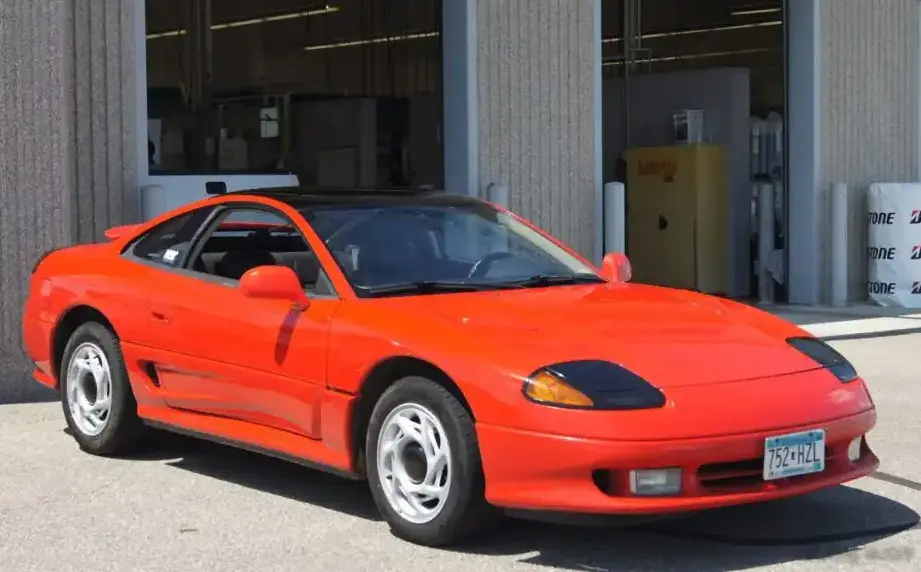
The Dodge Stealth 3.0, powered by a 166 horsepower engine and equipped with an automatic transmission, occupies a distinctive niche within Dodge’s model history. Produced between 1990 and 1996, this variant served as a mid-range offering in the broader Stealth lineup, balancing performance with affordability. The Stealth itself was born from the Diamond Star Motors (DSM) joint venture between Chrysler and Mitsubishi, sharing its platform and numerous components with the Mitsubishi 3000GT/GTO. This collaboration aimed to create competitive sports coupes for both the American and Japanese markets, with the Stealth representing Dodge’s interpretation of that vision, assembled in Illinois alongside its Mitsubishi sibling.
Technical Specifications
| Brand | Dodge |
| Model | Stealth |
| Generation | Stealth |
| Type (Engine) | 3.0 (166 Hp) Automatic |
| Start of production | 1990 |
| End of production | 1996 |
| Powertrain Architecture | Internal Combustion engine |
| Body type | Coupe |
| Seats | 4 |
| Doors | 2 |
| Fuel consumption (urban) | 14.7 l/100 km (16 US mpg, 19.2 UK mpg, 6.8 km/l) |
| Fuel consumption (extra urban) | 10.7 l/100 km (22 US mpg, 26.4 UK mpg, 9.3 km/l) |
| Fuel consumption (combined) | 13.1 l/100 km (18 US mpg, 21.6 UK mpg, 7.6 km/l) |
| Fuel Type | Petrol (Gasoline) |
| Maximum speed | 220 km/h (136.7 mph) |
| Weight-to-power ratio | 8.4 kg/Hp, 119.4 Hp/tonne |
| Weight-to-torque ratio | 5.5 kg/Nm, 180.6 Nm/tonne |
| Power | 166 Hp @ 5500 rpm |
| Power per litre | 55.9 Hp/l |
| Torque | 251 Nm @ 4000 rpm (185.13 lb.-ft. @ 4000 rpm) |
| Engine layout | Front, Transverse |
| Engine Model/Code | 6G72 |
| Engine displacement | 2972 cm3 (181.36 cu. in.) |
| Number of cylinders | 6 |
| Engine configuration | V-engine |
| Cylinder Bore | 91.1 mm (3.59 in.) |
| Piston Stroke | 76 mm (2.99 in.) |
| Compression ratio | 8.9:1 |
| Number of valves per cylinder | 2 |
| Fuel injection system | Multi-port manifold injection |
| Engine aspiration | Naturally aspirated engine |
| Valvetrain | OHC |
| Engine oil capacity | 4.3 l (4.54 US qt | 3.78 UK qt) |
| Coolant | 8 l (8.45 US qt | 7.04 UK qt) |
| Kerb Weight | 1390 kg (3064.43 lbs.) |
| Trunk (boot) space – minimum | 315 l (11.12 cu. ft.) |
| Trunk (boot) space – maximum | 440 l (15.54 cu. ft.) |
| Fuel tank capacity | 75 l (19.81 US gal | 16.5 UK gal) |
| Length | 4560 mm (179.53 in.) |
| Width | 1840 mm (72.44 in.) |
| Height | 1247 mm (49.09 in.) |
| Wheelbase | 2470 mm (97.24 in.) |
| Front track | 1560 mm (61.42 in.) |
| Rear (Back) track | 1580 mm (62.2 in.) |
| Drivetrain Architecture | The Internal combustion engine (ICE) drives the front wheels of the vehicle. |
| Drive wheel | Front wheel drive |
| Number of gears and type of gearbox | 4 gears, automatic transmission |
| Front suspension | Wishbone |
| Rear suspension | Several levers and rods |
| Front brakes | Ventilated discs |
| Rear brakes | Ventilated discs |
| Power steering | Hydraulic Steering |
| Tires size | 205/65 R15 |
| Wheel rims size | 15 |
Powertrain & Engine Architecture
The Dodge Stealth 3.0’s powerplant is the 6G72 engine, a 3.0-liter, naturally aspirated V6 developed by Mitsubishi. This engine employs a single overhead camshaft (SOHC) valvetrain with two valves per cylinder. The 6G72 utilizes multi-port fuel injection, precisely delivering fuel to each intake port to enhance combustion efficiency. The engine’s 8.9:1 compression ratio represented a balance between performance and compatibility with the fuel quality commonly available in the United States. Paired with this engine is a four-speed automatic transmission, engineered for smooth operation and ease of use. While lacking the sportiness of the available five-speed manual, it appealed to drivers prioritizing a comfortable driving experience. The transmission’s gear ratios were optimized for everyday driving, emphasizing acceleration from a stop and relaxed cruising over outright performance.
Driving Characteristics
The 3.0-liter engine generates 166 horsepower and 185 lb-ft of torque, providing adequate, though not thrilling, performance. Acceleration from 0 to 60 mph typically took around 8-9 seconds. Compared to the higher-performance Stealth R/T, equipped with a turbocharged engine, the 3.0 felt noticeably less powerful. However, it offered a more predictable and linear power delivery, making it easier to manage in typical driving scenarios. The automatic transmission, while smooth, did result in some power loss compared to the manual transmission options. The gear ratios were designed for reasonable acceleration, but downshifts could be somewhat sluggish, particularly during more aggressive driving. The front-wheel-drive configuration, standard for many vehicles of that era, limited the Stealth’s handling capabilities when compared to all-wheel-drive competitors.
Equipment & Trim Levels
The Dodge Stealth 3.0 generally came standard with features such as air conditioning, power windows and locks, and an AM/FM stereo system. Interior upholstery was typically cloth, with leather options available. The dashboard layout was straightforward, featuring clearly labeled gauges and user-friendly controls. Optional extras included a premium sound system, a sunroof, and upgraded wheel designs. The 3.0 trim level positioned itself as the entry point to the Stealth range, offering a more accessible price point than the higher-performance R/T and ES models. It targeted buyers who desired the Stealth’s styling and overall package but didn’t require the added cost and complexity of the turbocharged engines.
Chassis & Braking
The Dodge Stealth 3.0 employed a front-engine, front-wheel-drive layout. The suspension system consisted of an independent wishbone setup at the front and a multi-link arrangement at the rear, contributing to a comfortable ride quality. Braking was provided by ventilated disc brakes on all four wheels, offering sufficient stopping power for the vehicle’s weight and performance characteristics. Power steering was standard, simplifying maneuvering at low speeds. The 3.0 model typically featured a smaller stabilizer bar compared to the higher-performance trims, resulting in a softer ride but also increased body roll during cornering.
Market Reception & Comparison
Automotive critics generally regarded the Dodge Stealth 3.0 as a stylish and comfortable coupe, but its performance was often considered underwhelming in comparison to its competitors. Fuel economy was average for its class, achieving around 18 mpg in combined driving. Reliability was generally good, although some owners reported occasional issues with the automatic transmission over the long term. Compared to the Stealth R/T, the 3.0 offered a significant price advantage but lacked the exhilarating acceleration and handling of the turbocharged variant. Against rivals like the Toyota Supra and Mazda RX-7, the Stealth 3.0 presented a different appeal – a more comfortable and practical coupe with distinctive styling.
Legacy
The Dodge Stealth, and particularly the 3.0 variant, has cultivated a modest but dedicated following among automotive enthusiasts. The 6G72 engine is recognized for its durability and relative simplicity, making it a relatively straightforward engine to maintain. While not an iconic high-performance machine, the Stealth 3.0 offers a unique combination of style, comfort, and affordability in the used car market. Parts availability can be challenging, as many components are specific to the DSM vehicles. However, a committed community of owners and readily available online resources help to keep these cars operational. The Stealth represents a compelling chapter in automotive history, demonstrating the benefits and challenges of international collaboration and the enduring appeal of a well-designed coupe.
