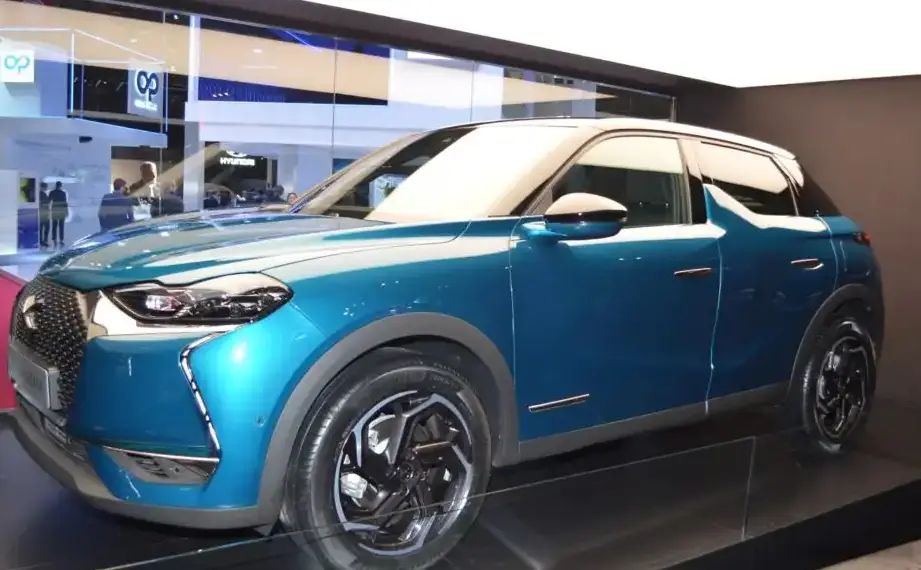
The DS 3 Crossback 1.5 BlueHDi Automatic, produced from October 2020 to 2022, represents a compelling entry in the premium subcompact crossover segment. Positioned as a mid-range offering within the broader DS 3 Crossback lineup, this variant combined a fuel-efficient diesel engine with the convenience of an eight-speed automatic transmission. It aimed to appeal to buyers seeking a stylish, comfortable, and economical vehicle for urban and occasional longer-distance driving. The DS 3 Crossback itself is built upon the Common Modular Platform (CMP) shared with other Stellantis brands like Peugeot and Opel/Vauxhall, representing a significant step forward in DS Automobiles’ ambition to establish itself as a distinct luxury brand.
Technical Specifications
| Brand | DS |
| Model | 3 |
| Generation | 3 Crossback |
| Type (Engine) | 1.5 BlueHDi (130 Hp) Automatic |
| Start of production | October, 2020 |
| End of production | 2022 |
| Powertrain Architecture | Internal Combustion engine |
| Body type | Crossover |
| Seats | 5 |
| Doors | 5 |
| Fuel consumption at Low speed (WLTP) | 5.3 l/100 km (44.4 US mpg, 53.3 UK mpg, 18.9 km/l) |
| Fuel consumption at Medium speed (WLTP) | 4.5 l/100 km (52.3 US mpg, 62.8 UK mpg, 22.2 km/l) |
| Fuel consumption at high speed (WLTP) | 4.2-4.3 l/100 km (56 – 54.7 US mpg, 67.3 – 65.7 UK mpg, 23.8 – 23.3 km/l) |
| Fuel consumption at very high speed (WLTP) | 5.3 l/100 km (44.4 US mpg, 53.3 UK mpg, 18.9 km/l) |
| Combined fuel consumption (WLTP) | 4.8 l/100 km (49 US mpg, 58.9 UK mpg, 20.8 km/l) |
| CO2 emissions (WLTP) | 126-127 g/km |
| Fuel consumption (economy) – urban (NEDC, WLTP equivalent) | 4.2 l/100 km (56 US mpg, 67.3 UK mpg, 23.8 km/l) |
| Fuel consumption (economy) – extra urban (NEDC, WLTP equivalent) | 3.6 l/100 km (65.3 US mpg, 78.5 UK mpg, 27.8 km/l) |
| Fuel consumption (economy) – combined (NEDC, WLTP equivalent) | 3.8 l/100 km (61.9 US mpg, 74.3 UK mpg, 26.3 km/l) |
| CO2 emissions (NEDC, WLTP equivalent) | 100 g/km |
| Fuel Type | Diesel |
| Acceleration 0 – 100 km/h | 9.9 sec |
| Acceleration 0 – 62 mph | 9.9 sec |
| Acceleration 0 – 60 mph | 9.4 sec |
| Maximum speed | 195 km/h (121.17 mph) |
| Emission standard | Euro 6.3 |
| Weight-to-power ratio | 9.3 kg/Hp, 107.9 Hp/tonne |
| Weight-to-torque ratio | 4 kg/Nm, 249 Nm/tonne |
| Power | 130 Hp @ 3750 rpm |
| Power per litre | 86.7 Hp/l |
| Torque | 300 Nm @ 1750 rpm (221.27 lb.-ft. @ 1750 rpm) |
| Engine layout | Front, Transverse |
| Engine Model/Code | YHZ DV5RC |
| Engine displacement | 1499 cm3 (91.47 cu. in.) |
| Number of cylinders | 4 |
| Engine configuration | Inline |
| Number of valves per cylinder | 4 |
| Fuel injection system | Diesel Commonrail |
| Engine aspiration | Turbocharger, Intercooler |
| Engine oil capacity | 4 l (4.23 US qt | 3.52 UK qt) |
| Kerb Weight | 1205 kg (2656.57 lbs.) |
| Max. weight | 1735 kg (3825.02 lbs.) |
| Max load | 530 kg (1168.45 lbs.) |
| Trunk (boot) space – minimum | 350 l (12.36 cu. ft.) |
| Trunk (boot) space – maximum | 1050 l (37.08 cu. ft.) |
| Fuel tank capacity | 41 l (10.83 US gal | 9.02 UK gal) |
| AdBlue tank | 15 l (3.96 US gal | 3.3 UK gal) |
| Permitted trailer load with brakes (12%) | 1200 kg (2645.55 lbs.) |
| Length | 4118 mm (162.13 in.) |
| Width | 1791 mm (70.51 in.) |
| Width with mirrors folded | 1802 mm (70.94 in.) |
| Width including mirrors | 1988 mm (78.27 in.) |
| Height | 1534 mm (60.39 in.) |
| Wheelbase | 2558 mm (100.71 in.) |
| Front track | 1548 mm (60.94 in.) |
| Rear (Back) track | 1557 mm (61.3 in.) |
| Front overhang | 860 mm (33.86 in.) |
| Rear overhang | 700 mm (27.56 in.) |
| Ride height (ground clearance) | 170 mm (6.69 in.) |
| Minimum turning circle (turning diameter) | 10.7 m (35.1 ft.) |
| Drivetrain Architecture | The Internal combustion engine (ICE) drives the front wheels of the vehicle. |
| Drive wheel | Front wheel drive |
| Number of gears and type of gearbox | 8 gears, automatic transmission |
| Front suspension | Independent, type McPherson with coil spring and anti-roll bar |
| Rear suspension | Independent multi-link spring suspension with stabilizer |
| Front brakes | Ventilated discs, 302×26 mm |
| Rear brakes | Disc, 249×10 mm |
| Assisting systems | ABS (Anti-lock braking system) |
| Steering type | Steering rack and pinion |
| Power steering | Electric Steering |
| Tires size | 215/60 R17 H; 215/55 R18 V |
| Wheel rims size | 17; 18 |
Powertrain & Engine Architecture
The heart of the DS 3 Crossback 1.5 BlueHDi Automatic is the YHZ DV5RC engine, a 1.5-liter inline four-cylinder diesel. This engine is part of the PSA Group’s (now Stellantis) BlueHDi family, known for its focus on efficiency and reduced emissions. It utilizes a common-rail direct fuel injection system, delivering fuel at extremely high pressure for optimized combustion. A turbocharger with an intercooler further enhances performance by forcing more air into the cylinders. The engine produces 130 horsepower at 3750 rpm and 300 Nm (221 lb-ft) of torque at 1750 rpm. This torque figure is particularly noteworthy, providing strong low-end pulling power. The engine also incorporates a particulate filter to minimize soot emissions, meeting stringent Euro 6.3 emission standards. Paired with the engine is an eight-speed automatic transmission, providing smooth and efficient gear changes. This transmission is designed to optimize fuel economy and provide a comfortable driving experience.
Driving Characteristics
The 1.5 BlueHDi Automatic offers a relaxed and refined driving experience. While not overtly sporty, the 130 hp engine and eight-speed automatic provide adequate performance for everyday driving. Acceleration from 0-60 mph takes approximately 9.4 seconds, and the top speed is 195 km/h (121 mph). The automatic transmission is well-tuned, offering seamless shifts and contributing to the car’s overall smoothness. Compared to the lower-powered diesel variants, the 130 hp version feels noticeably more responsive, particularly when overtaking or climbing hills. However, it doesn’t match the performance of the petrol-powered models. The gear ratios are optimized for fuel efficiency, meaning the engine doesn’t rev excessively at highway speeds. The front-wheel-drive configuration provides predictable handling, although it lacks the all-weather capability of an all-wheel-drive system.
Equipment & Trim Levels
The DS 3 Crossback 1.5 BlueHDi Automatic typically came well-equipped, reflecting its positioning as a premium subcompact crossover. Standard features often included a touchscreen infotainment system with Apple CarPlay and Android Auto compatibility, automatic climate control, rear parking sensors, and a suite of safety features such as automatic emergency braking and lane departure warning. Interior upholstery was typically a combination of cloth and leatherette, with options for full leather available. Higher trim levels offered additional features such as a panoramic sunroof, premium audio system, and advanced driver-assistance systems like adaptive cruise control and blind-spot monitoring. Exterior styling elements, such as unique alloy wheel designs and chrome accents, also differentiated the various trim levels.
Chassis & Braking
The DS 3 Crossback utilizes an independent suspension system on both the front and rear axles. The front suspension employs a McPherson strut design with a coil spring and anti-roll bar, while the rear features a multi-link setup with a stabilizer bar. This configuration provides a good balance between ride comfort and handling. Braking duties are handled by ventilated discs on the front wheels and solid discs on the rear. The car is equipped with ABS (Anti-lock Braking System) and electronic stability control as standard safety features. The steering is electrically assisted, providing light and precise control.
Market Reception & Comparison
The DS 3 Crossback 1.5 BlueHDi Automatic was generally well-received by automotive critics. It was praised for its stylish design, comfortable interior, and fuel-efficient engine. However, some reviewers noted that the rear seat space was somewhat limited compared to some competitors. Compared to the petrol-powered versions of the DS 3 Crossback, the 1.5 BlueHDi offered significantly better fuel economy, making it an attractive option for drivers who cover long distances. The automatic transmission was also a popular choice, providing a more convenient driving experience than the manual gearbox. Against rivals like the Audi Q2 and Mini Countryman, the DS 3 Crossback offered a compelling combination of style, comfort, and value.
Legacy
The 1.5 BlueHDi engine has proven to be a reliable and durable powertrain in other Stellantis vehicles. While long-term reliability data specifically for the DS 3 Crossback 1.5 BlueHDi Automatic is still emerging, the engine’s established track record suggests it should provide years of dependable service with proper maintenance. On the used car market, these models are generally sought after for their fuel efficiency and comfortable driving experience. Regular servicing, including oil changes and filter replacements, is crucial to maintaining the engine’s performance and longevity. The DS 3 Crossback, in general, represents a significant step forward for the DS Automobiles brand, establishing it as a credible competitor in the premium compact crossover segment.