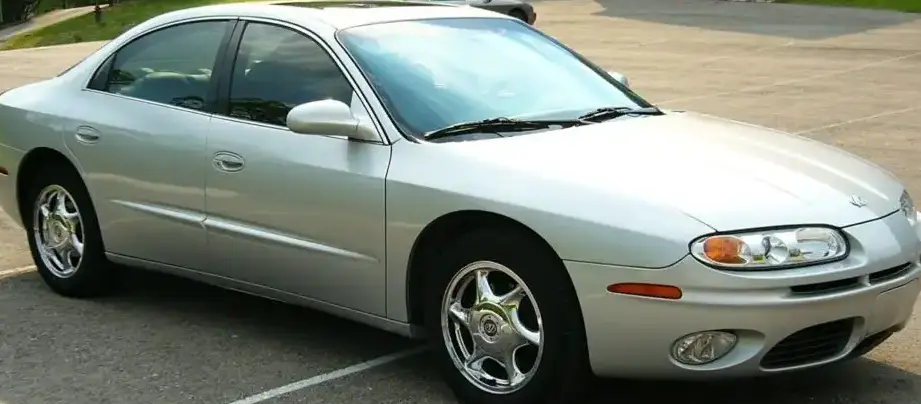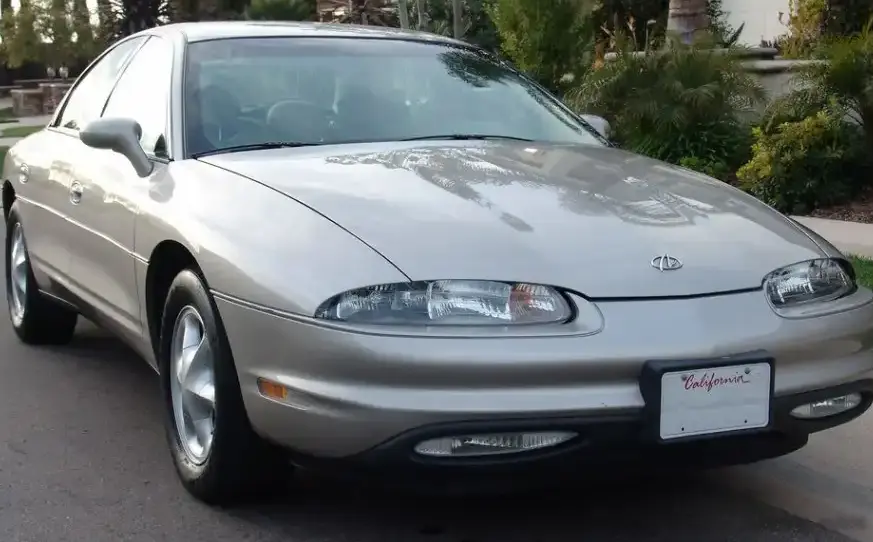
The Oldsmobile Aurora, launched in January 1994, represented a significant departure for the division of General Motors. Positioned as a premium, near-luxury sedan, the Aurora aimed to revitalize Oldsmobile’s image and compete with established players like Buick and Chrysler. The first generation, internally designated as the Aurora I, spanned production through June 1999 and was built on GM’s G-body platform, a front-wheel-drive architecture shared with other GM vehicles of the era. This article focuses specifically on the Aurora I equipped with the 4.0-liter V8 engine producing 253 horsepower, paired with a four-speed automatic transmission – a configuration that represented the top-of-the-line offering for the model.
Technical Specifications
| Brand | Oldsmobile |
| Model | Aurora |
| Generation | Aurora I |
| Engine Type | 4.0 V8 32V (253 Hp) |
| Start of Production | January, 1994 |
| End of Production | June, 1999 |
| Powertrain Architecture | Internal Combustion Engine |
| Body Type | Sedan |
| Seats | 4 |
| Doors | 4 |
| Fuel Consumption (Urban) | 13.8 l/100 km (17 US mpg, 20.5 UK mpg) |
| Fuel Consumption (Extra Urban) | 9.1 l/100 km (25.8 US mpg, 31 UK mpg) |
| Fuel Type | Petrol (Gasoline) |
| 0-100 km/h | 8.5 sec |
| 0-62 mph | 8.5 sec |
| 0-60 mph | 8.1 sec |
| Maximum Speed | 217 km/h (134.84 mph) |
| Weight-to-Power Ratio | 7.1 kg/Hp |
| Weight-to-Torque Ratio | 5.1 kg/Nm |
| Power | 253 Hp @ 5600 rpm |
| Torque | 352 Nm @ 4000 rpm (259.62 lb.-ft. @ 4000 rpm) |
| Engine Layout | Front, Transverse |
| Engine Model/Code | L47 |
| Engine Displacement | 3995 cm3 (243.79 cu. in.) |
| Number of Cylinders | 8 |
| Engine Configuration | V-engine |
| Cylinder Bore | 87 mm (3.43 in.) |
| Piston Stroke | 84 mm (3.31 in.) |
| Compression Ratio | 10.3:1 |
| Valves per Cylinder | 4 |
| Fuel Injection System | Multi-port Manifold Injection |
| Engine Aspiration | Naturally Aspirated |
| Engine Oil Capacity | 6.6 l (6.97 US qt, 5.81 UK qt) |
| Coolant Capacity | 12 l (12.68 US qt, 10.56 UK qt) |
| Kerb Weight | 1795 kg (3957.3 lbs) |
| Trunk Space (Minimum) | 457 l (16.14 cu. ft.) |
| Fuel Tank Capacity | 76 l (20.08 US gal, 16.72 UK gal) |
| Length | 5218 mm (205.43 in.) |
| Width | 1891 mm (74.45 in.) |
| Height | 1407 mm (55.39 in.) |
| Wheelbase | 2890 mm (113.78 in.) |
| Front Track | 1588 mm (62.52 in.) |
| Rear Track | 1589 mm (62.56 in.) |
| Drivetrain | Front Wheel Drive |
| Number of Gears | 4 |
| Gearbox Type | Automatic Transmission |
| Front Suspension | Wishbone |
| Rear Suspension | Trailing Arm |
| Front Brakes | Ventilated Discs |
| Rear Brakes | Discs |
| Assisting Systems | ABS (Anti-lock Braking System) |
| Steering Type | Steering Rack and Pinion |
| Power Steering | Hydraulic |
| Tire Size | 235/60 R16 S |
Powertrain & Engine Architecture
The heart of this Aurora variant was the 4.0-liter (3995 cc) L47 V8 engine. This engine was a significant achievement for Oldsmobile, being one of the first production North American engines to utilize a dual overhead camshaft (DOHC) design with four valves per cylinder. This configuration, combined with multi-port fuel injection, allowed for a relatively high output of 253 horsepower and 352 lb-ft of torque. The engine block was cast aluminum, contributing to weight savings. The four-speed 4T60 automatic transmission was specifically tuned to handle the V8’s power output and provide smooth shifts. While not known for being particularly sporty, the transmission was reliable and well-suited to the Aurora’s intended grand touring character.
Driving Characteristics
The 4.0L V8 and automatic transmission combination delivered a comfortable and refined driving experience. Acceleration to 60 mph was achieved in approximately 8.1 seconds, respectable for the mid-1990s, but noticeably slower than the manual transmission equipped models. The automatic transmission’s gear ratios were geared towards cruising comfort rather than outright performance. Power delivery was smooth and linear, making the Aurora easy to drive in everyday situations. Compared to the later 3.5L short-block V6 models, the V8 offered significantly more torque, resulting in stronger acceleration and a more confident feel when passing or merging onto highways. However, the V8’s fuel economy was considerably lower than the V6 alternatives.
Equipment & Trim Levels
The 4.0L V8/automatic Aurora represented the highest trim level available. Standard features included leather upholstery, power-adjustable front seats, a premium sound system, automatic climate control, and alloy wheels. Optional extras included a sunroof, upgraded audio systems, and traction control. The interior design was generally considered luxurious for its time, with a focus on comfort and ergonomics. The dashboard featured a clean, uncluttered layout with easy-to-read gauges.
Chassis & Braking
The Aurora I utilized an independent front suspension with wishbones and a trailing arm rear suspension. This setup provided a comfortable ride, although it wasn’t particularly sporty in handling. The braking system consisted of ventilated discs at the front and solid discs at the rear. Anti-lock brakes (ABS) were standard equipment. The steering was rack-and-pinion with hydraulic power assistance, providing a light and responsive feel.
Market Reception & Comparison
Critics generally praised the Aurora for its smooth ride, quiet interior, and powerful engine. However, some criticized its somewhat bland styling and front-wheel-drive configuration, which didn’t appeal to enthusiasts seeking a more engaging driving experience. Compared to the V6-powered Auroras, the V8 model offered a noticeable performance advantage but came at the cost of increased fuel consumption and a higher price tag. The V8 was also more complex and potentially more expensive to maintain. Against competitors like the Buick Park Avenue and Chrysler LHS, the Aurora offered a similar level of luxury and refinement, but often at a slightly higher price point.
Legacy
The Oldsmobile Aurora I 4.0L V8 automatic, while not a massive sales success, remains a fondly remembered vehicle for those who appreciate its blend of luxury, performance, and technological innovation. The L47 V8 engine proved to be relatively reliable, although regular maintenance is crucial to prevent issues such as oil leaks and sensor failures. Today, well-maintained examples are becoming increasingly collectible, appealing to enthusiasts seeking a unique and comfortable classic American sedan. The Aurora’s advanced features and smooth powertrain continue to impress, solidifying its place as a noteworthy chapter in Oldsmobile’s history.