
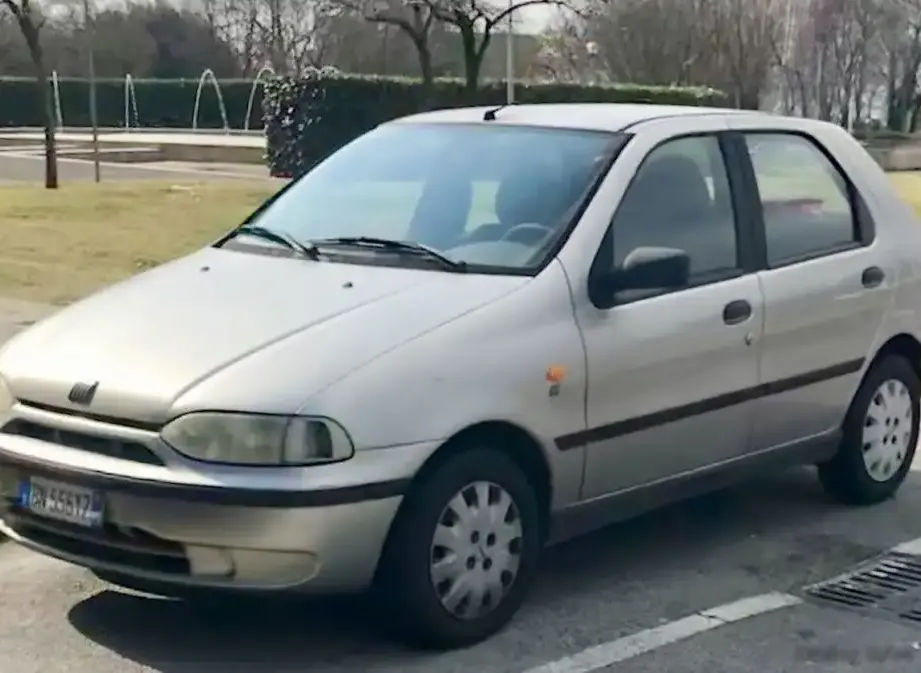
The Fiat Palio 1.0 i, produced between 1996 and 2002, represents the entry-level variant of the 178 series Palio. This model, available in both 3-door and 5-door hatchback configurations, was primarily aimed at the value-conscious buyer in European and South American markets. It served as a foundational offering within the Palio range, positioned below the more powerful 1.6-liter versions and, later, diesel options. The Palio itself was a significant model for Fiat, intended to replace the aging Uno and provide a modern, competitive subcompact car.
Technical Specifications
| Brand | Fiat |
| Model | Palio |
| Generation | Palio (178) |
| Type (Engine) | 1.0 i (55 Hp) |
| Start of production | 1996 |
| End of production | 2002 |
| Powertrain Architecture | Internal Combustion engine |
| Body type | Hatchback |
| Seats | 5 |
| Doors | 3-5 |
| Fuel Type | Petrol (Gasoline) |
| Acceleration 0 – 100 km/h | 16.3 sec |
| Acceleration 0 – 62 mph | 16.3 sec |
| Acceleration 0 – 60 mph | 15.5 sec |
| Maximum speed | 150 km/h (93.21 mph) |
| Weight-to-power ratio | 16.5 kg/Hp, 60.8 Hp/tonne |
| Weight-to-torque ratio | 10.9 kg/Nm, 91.7 Nm/tonne |
| Power | 55 Hp @ 5500 rpm |
| Power per litre | 55.1 Hp/l |
| Torque | 83 Nm @ 2500 rpm (61.22 lb.-ft. @ 2500 rpm) |
| Engine layout | Front, Transverse |
| Engine displacement | 999 cm3 (60.96 cu. in.) |
| Number of cylinders | 4 |
| Engine configuration | Inline |
| Cylinder Bore | 70 mm (2.76 in.) |
| Piston Stroke | 64.9 mm (2.56 in.) |
| Compression ratio | 9.5:1 |
| Number of valves per cylinder | 2 |
| Fuel injection system | Single-point injection |
| Engine aspiration | Naturally aspirated engine |
| Kerb Weight | 905 kg (1995.18 lbs.) |
| Max. weight | 1305 kg (2877.03 lbs.) |
| Max load | 400 kg (881.85 lbs.) |
| Trunk (boot) space – minimum | 280 l (9.89 cu. ft.) |
| Trunk (boot) space – maximum | 920 l (32.49 cu. ft.) |
| Fuel tank capacity | 48 l (12.68 US gal | 10.56 UK gal) |
| Length | 3740 mm (147.24 in.) |
| Width | 1614 mm (63.54 in.) |
| Height | 1445 mm (56.89 in.) |
| Wheelbase | 2360 mm (92.91 in.) |
| Front track | 1388 mm (54.65 in.) |
| Rear (Back) track | 1378 mm (54.25 in.) |
| Drivetrain Architecture | The Internal combustion engine (ICE) drives the front wheels of the vehicle. |
| Drive wheel | Front wheel drive |
| Number of gears and type of gearbox | 5 gears, manual transmission |
| Front suspension | Spring Strut |
| Rear suspension | Trailing arm |
| Front brakes | Disc |
| Rear brakes | Drum |
| Steering type | Steering rack and pinion |
| Tires size | 155/75 R13 |
Powertrain & Engine Architecture
The heart of the Palio 1.0 i is the Fiat 178A.046 engine, a 999cc inline-four cylinder unit. This engine utilizes a single overhead camshaft (SOHC) design with two valves per cylinder. Fuel delivery is managed by a single-point fuel injection system, a relatively simple and cost-effective technology for the time. This system, while not as efficient or responsive as multi-point injection, contributed to the vehicle’s affordability. The engine’s modest output of 55 horsepower at 5500 rpm and 83 Nm (61.22 lb-ft) of torque at 2500 rpm reflects its focus on fuel economy rather than outright performance. The engine’s relatively high compression ratio of 9.5:1 helped to extract reasonable power from its small displacement. The engine was paired exclusively with a five-speed manual transmission in most markets, designed to maximize fuel efficiency and provide adequate acceleration.
Driving Characteristics
The Palio 1.0 i’s driving experience is best described as utilitarian. Acceleration is slow, taking approximately 16.3 seconds to reach 100 km/h (62 mph). The engine feels strained when pushed hard, and overtaking maneuvers require careful planning. The five-speed manual transmission is well-matched to the engine’s characteristics, offering a reasonable spread of gears. The gear ratios are optimized for fuel economy, with taller gearing in the upper ranges. Compared to the 1.6-liter Palio, the 1.0 i feels significantly underpowered, but it offers a lighter steering feel and a more nimble handling experience in city driving. The suspension, tuned for comfort, provides a reasonably smooth ride, although it can feel somewhat wallowy on uneven surfaces.
Equipment & Trim Levels
The Palio 1.0 i was typically offered with a basic level of equipment. Standard features generally included power steering, central locking, and a basic audio system. Interior upholstery was typically cloth, with a simple dashboard layout. Optional extras included air conditioning, power windows, and upgraded audio systems. The trim level was often designated as “Base” or “Economy,” reflecting its position as the entry point to the Palio range. Safety features were limited, typically consisting of seatbelts and a basic braking system. The focus was on providing a functional and affordable vehicle, rather than luxury or advanced features.
Chassis & Braking
The Palio 1.0 i utilizes a front-wheel-drive layout with a relatively simple chassis design. The front suspension consists of MacPherson strut springs, while the rear suspension employs a trailing arm setup. This configuration provides a balance between ride comfort and handling. The braking system features disc brakes on the front wheels and drum brakes on the rear wheels. This configuration was common for vehicles in this price segment during the late 1990s and early 2000s. The steering is rack and pinion, providing a reasonably direct and responsive feel. The tires are typically 155/75 R13, chosen for their balance of affordability and grip.
Market Reception & Comparison
The Palio 1.0 i was generally well-received as an affordable and practical city car. Critics praised its fuel efficiency and ease of driving, but noted its lack of power and basic interior. Compared to competitors such as the Renault Clio and Peugeot 206, the Palio 1.0 i offered a lower price point but lacked the refinement and performance of those models. The 1.6-liter Palio offered a significant performance upgrade, but at a higher cost. The diesel versions of the Palio provided even better fuel economy, but were generally more expensive to purchase and maintain. The 1.0 i appealed to buyers who prioritized affordability and fuel efficiency over performance and features.
Legacy
The Fiat Palio 1.0 i, while not a performance icon, remains a relatively reliable and affordable used car option. The 1.0-liter engine is known for its durability, although it can be prone to oil leaks as it ages. The single-point fuel injection system is relatively simple to maintain, but may require occasional cleaning or replacement. The Palio’s simple construction and readily available parts contribute to its affordability. Today, these vehicles are often found in the hands of first-time car owners or those seeking a cheap and cheerful runabout. While not highly sought after by collectors, the Palio 1.0 i represents a significant chapter in Fiat’s history and a testament to the enduring appeal of affordable, practical transportation.
