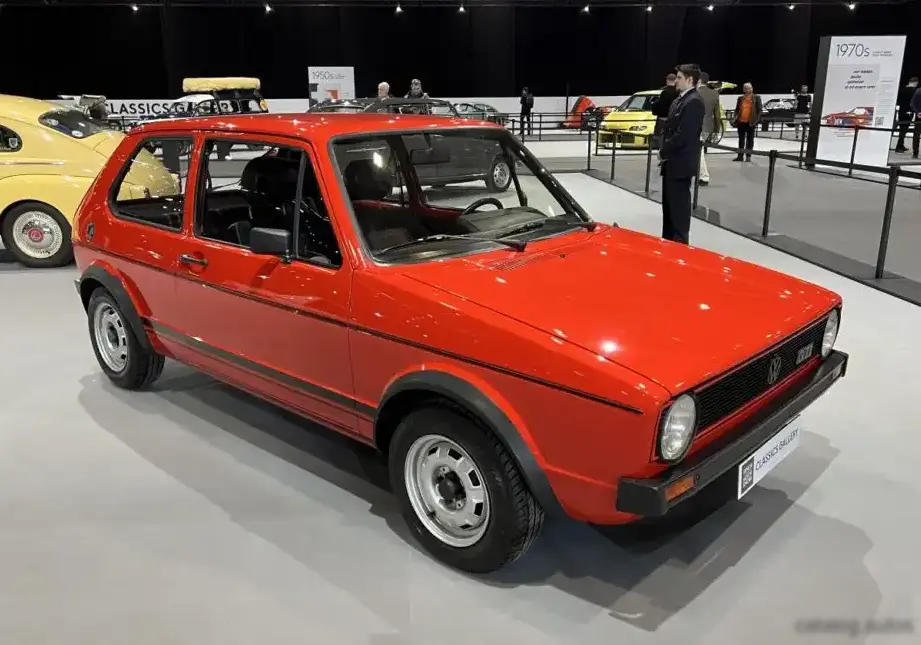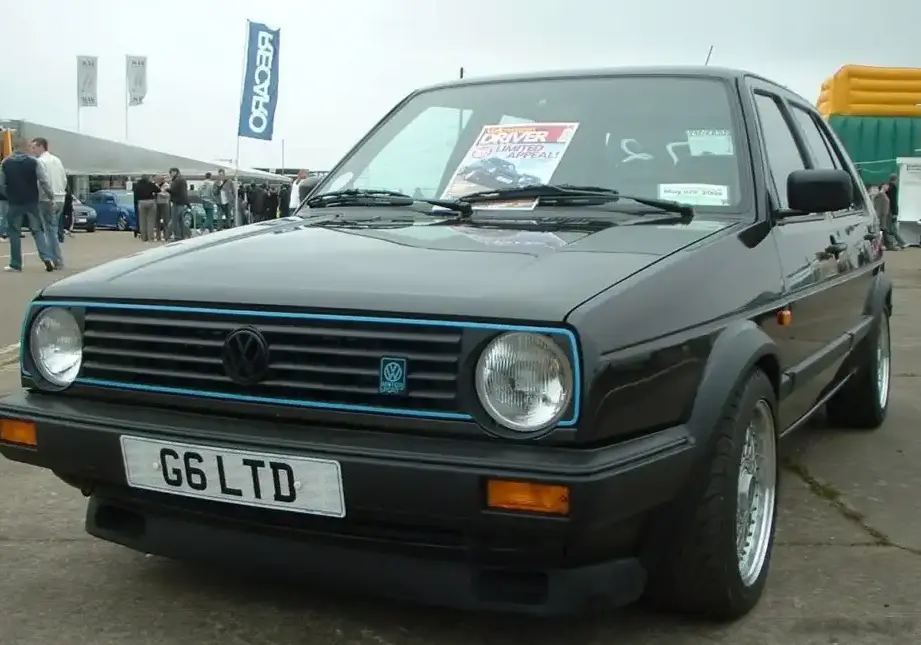
The Volkswagen Golf Mk2, produced from 1983 to 1992, represented a significant evolution of the original Golf, offering improved aerodynamics, a more refined interior, and a wider range of engine options. The 1.3-liter (55 hp) variant with a 4-speed manual transmission, particularly the facelifted models from 1987 onwards, occupied the entry-level position in the Golf II lineup. This model was primarily aimed at buyers seeking affordable, economical transportation, and was a common sight on European roads during its production run. While not exported to the United States, the Golf II was a cornerstone of Volkswagen’s success in Europe.
Technical Specifications
| Brand | Volkswagen |
| Model | Golf |
| Generation | Golf II (5-door, facelift 1987) |
| Type (Engine) | 1.3 (55 Hp) Manual 4-speed |
| Start of production | 1987 |
| End of production | 1991 |
| Powertrain Architecture | Internal Combustion engine |
| Body type | Hatchback |
| Seats | 5 |
| Doors | 5 |
| Fuel consumption (urban) | 8.7 l/100 km (27 US mpg, 32.5 UK mpg, 11.5 km/l) |
| Fuel consumption (extra urban) | 5.9 l/100 km (39.9 US mpg, 47.9 UK mpg, 16.9 km/l) |
| Fuel Type | Petrol (Gasoline) |
| Acceleration 0 – 100 km/h | 16.7 sec |
| Acceleration 0 – 62 mph | 16.7 sec |
| Acceleration 0 – 60 mph | 15.9 sec |
| Maximum speed | 151 km/h (93.83 mph) |
| Weight-to-power ratio | 16.5 kg/Hp, 60.4 Hp/tonne |
| Weight-to-torque ratio | 9.4 kg/Nm, 106.6 Nm/tonne |
| Power | 55 Hp @ 5200 rpm |
| Power per litre | 43.2 Hp/l |
| Torque | 97 Nm @ 3000 rpm (71.54 lb.-ft. @ 3000 rpm) |
| Engine layout | Front, Transverse |
| Engine Model/Code | NZ |
| Engine displacement | 1272 cm3 (77.62 cu. in.) |
| Number of cylinders | 4 |
| Engine configuration | Inline |
| Cylinder Bore | 75 mm (2.95 in.) |
| Piston Stroke | 72 mm (2.83 in.) |
| Compression ratio | 9.5:1 |
| Number of valves per cylinder | 2 |
| Fuel injection system | Multi-port manifold injection |
| Engine aspiration | Naturally aspirated engine |
| Valvetrain | SOHC |
| Engine oil capacity | 3.5 l (3.7 US qt | 3.08 UK qt) |
| Coolant capacity | 6.3 l (6.66 US qt | 5.54 UK qt) |
| Kerb Weight | 910 kg (2006.21 lbs.) |
| Max. weight | 1370 kg (3020.33 lbs.) |
| Max load | 460 kg (1014.13 lbs.) |
| Trunk (boot) space – minimum | 330 l (11.65 cu. ft.) |
| Trunk (boot) space – maximum | 1145 l (40.44 cu. ft.) |
| Fuel tank capacity | 55 l (14.53 US gal | 12.1 UK gal) |
| Permitted trailer load with brakes (12%) | 800 kg (1763.7 lbs.) |
| Permitted trailer load without brakes | 460 kg (1014.13 lbs.) |
| Length | 3985-4040 mm (156.89 – 159.06 in.) |
| Width | 1665 mm (65.55 in.) |
| Height | 1415 mm (55.71 in.) |
| Wheelbase | 2475 mm (97.44 in.) |
| Front track | 1427 mm (56.18 in.) |
| Rear track | 1422 mm (55.98 in.) |
| Drag coefficient (Cd) | 0.34 |
| Minimum turning circle | 10.5 m (34.45 ft.) |
| Drivetrain Architecture | Front wheel drive |
| Number of gears | 4 |
| Gearbox type | Manual transmission |
| Front suspension | Independent type McPherson |
| Rear suspension | Elastic beam |
| Front brakes | Disc |
| Rear brakes | Drum |
| Steering type | Steering rack and pinion |
| Tires size | 155/65 R13 |
| Wheel rims size | 5J x 13 |
INTRODUCTION
The Volkswagen Golf Mk2 1.3, particularly the 5-door hatchback with the facelift introduced in 1987, represented the entry point into the Golf II range. Produced between 1987 and 1991, this variant was designed for buyers prioritizing fuel efficiency and affordability. It sat below the more powerful 1.6 and 1.8-liter models, as well as the diesel options, in the Golf II hierarchy. The facelift brought subtle cosmetic changes, including revised grilles and bumpers, and improvements to interior trim. This model was a mainstay of European city streets, offering practical transportation for families and individuals alike.
Powertrain & Engine Architecture
The heart of the Golf II 1.3 was the NZ engine code, a 1272cc inline four-cylinder engine. This engine featured a single overhead camshaft (SOHC) valvetrain with two valves per cylinder. Fuel delivery was handled by a multi-port fuel injection system, a significant upgrade over the carbureted engines found in earlier Golfs. The NZ engine produced 55 horsepower at 5200 rpm and 97 Nm (71.54 lb-ft) of torque at 3000 rpm. The engine’s relatively low compression ratio of 9.5:1 allowed it to run on lower octane fuel, further contributing to its affordability. The 4-speed manual transmission was a standard feature, chosen for its simplicity and cost-effectiveness. While an automatic transmission was available on some Golf II models, it was less common with the 1.3-liter engine due to the performance limitations.
Driving Characteristics
The Golf II 1.3 with a 4-speed manual transmission offered modest performance. Acceleration from 0 to 60 mph took around 15.9 seconds, and the top speed was approximately 93.83 mph. The engine felt somewhat underpowered, especially when fully loaded or tackling hills. The 4-speed gearbox had relatively widely spaced ratios, meaning the engine often needed to be revved to maintain momentum. Compared to the 1.6 or 1.8-liter Golf II models, the 1.3 felt noticeably slower and less refined. However, the light clutch and easy-to-shift gearbox made it a relatively forgiving car to drive, particularly for novice drivers. The focus was on usability and economy rather than outright performance.
Equipment & Trim Levels
The Golf II 1.3 typically came with a basic level of equipment. Standard features included cloth upholstery, a simple dashboard layout, and manual windows and door locks. Power steering and central locking were generally optional extras. The interior was functional and durable, prioritizing practicality over luxury. The facelifted models often featured slightly improved interior trim materials and a more modern dashboard design. Optional extras included a sunroof, upgraded stereo system, and alloy wheels. The trim level was generally considered the base model, appealing to buyers on a budget.
Chassis & Braking
The Golf II 1.3 utilized a McPherson strut front suspension and an elastic beam rear suspension. This setup provided a comfortable ride, although it wasn’t particularly sporty. The front brakes were discs, while the rear brakes were drums, a common configuration for this class of vehicle at the time. The steering was a rack and pinion system, offering reasonable precision. The 155/65 R13 tires provided adequate grip for everyday driving. The suspension was tuned for comfort and stability, rather than aggressive handling.
Market Reception & Comparison
The Golf II 1.3 was generally well-received as an affordable and reliable family car. Critics praised its fuel efficiency and practicality, but noted its lack of performance. Compared to the more powerful Golf II variants, the 1.3 offered significantly lower running costs but at the expense of driving enjoyment. The 1.6-liter model offered a noticeable performance improvement for a relatively small price increase, making it a popular alternative. The diesel models were favored by those prioritizing fuel economy above all else. However, the 1.3-liter model remained a popular choice for buyers on a tight budget.
Legacy
The Golf II 1.3, while not the most exciting variant in the lineup, proved to be a durable and reliable car. The NZ engine is known for its longevity, and many examples are still on the road today. In the used car market, these models are often sought after by enthusiasts looking for a classic Volkswagen at an affordable price. While maintenance costs are relatively low, finding replacement parts can sometimes be challenging due to the car’s age. The Golf II 1.3 represents a significant chapter in Volkswagen’s history, embodying the brand’s commitment to producing practical, affordable, and well-engineered vehicles.