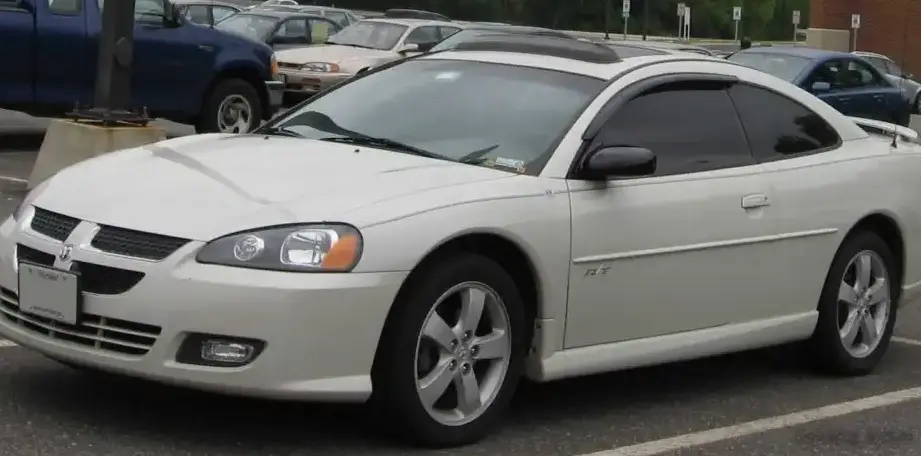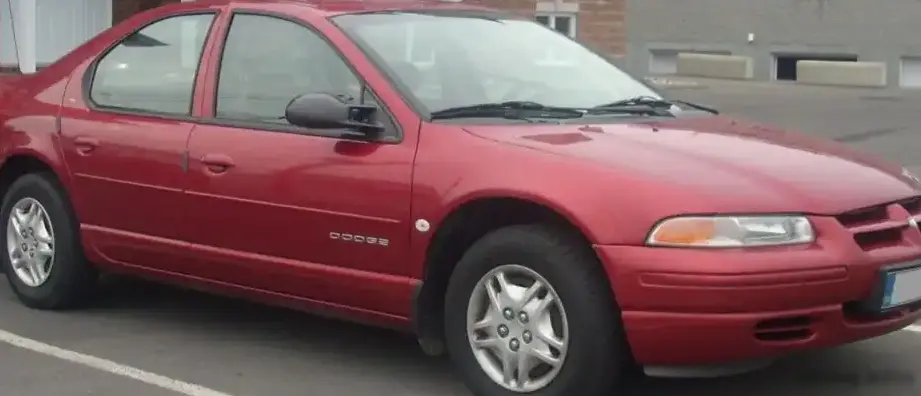
The Dodge Stratus I 2.0, produced between 1995 and 2001, represented Dodge’s entry into the mid-size sedan market, aiming to provide an affordable and practical vehicle for families and commuters. Positioned as a mainstream offering within the Stratus lineup, the 2.0-liter variant served as the base engine option, offering a balance between fuel economy and acceptable performance. It was part of the first generation (1995-2000) of the Stratus, built on the JA platform, which it shared with the Chrysler Cirrus and Plymouth Breeze. This generation aimed to modernize Dodge’s sedan offerings and compete with established rivals like the Honda Accord and Toyota Camry.
Technical Specifications
| Brand | Dodge |
| Model | Stratus |
| Generation | Stratus I |
| Type (Engine) | 2.0 (133 Hp) |
| Start of production | 1995 |
| End of production | 2001 |
| Powertrain Architecture | Internal Combustion engine |
| Body type | Sedan |
| Seats | 5 |
| Doors | 4 |
| Fuel consumption (urban) | 9.4 l/100 km (25 US mpg) |
| Fuel consumption (extra urban) | 6.5 l/100 km (36.2 US mpg) |
| Fuel Type | Petrol (Gasoline) |
| Maximum speed | 180 km/h (111.85 mph) |
| Weight-to-power ratio | 10.2 kg/Hp |
| Weight-to-torque ratio | 7.7 kg/Nm |
| Power | 133 Hp @ 5850 rpm |
| Power per litre | 66.6 Hp/l |
| Torque | 175 Nm @ 5000 rpm (129.07 lb.-ft. @ 5000 rpm) |
| Engine layout | Front, Transverse |
| Engine displacement | 1996 cm3 (121.8 cu. in.) |
| Number of cylinders | 4 |
| Engine configuration | Inline |
| Cylinder Bore | 87.5 mm (3.44 in.) |
| Piston Stroke | 83 mm (3.27 in.) |
| Compression ratio | 9.8:1 |
| Number of valves per cylinder | 2 |
| Fuel injection system | Multi-port manifold injection |
| Engine aspiration | Naturally aspirated engine |
| Valvetrain | OHC |
| Engine oil capacity | 4.25 l (4.49 US qt | 3.74 UK qt) |
| Kerb Weight | 1355 kg (2987.26 lbs.) |
| Trunk (boot) space (minimum) | 445 l (15.72 cu. ft.) |
| Fuel tank capacity | 60 l (15.85 US gal | 13.2 UK gal) |
| Length | 4725 mm (186.02 in.) |
| Width | 1822 mm (71.73 in.) |
| Height | 1320 mm (51.97 in.) |
| Wheelbase | 2743 mm (107.99 in.) |
| Front track | 1528 mm (60.16 in.) |
| Rear track | 1528 mm (60.16 in.) |
| Drivetrain Architecture | Front wheel drive |
| Number of gears and type of gearbox | 5 gears, manual transmission |
| Front suspension | Double wishbone |
| Rear suspension | Coil spring |
| Front brakes | Ventilated discs |
| Rear brakes | Drum |
| Assisting systems | ABS (Anti-lock braking system) |
| Steering type | Steering rack and pinion |
| Power steering | Hydraulic Steering |
| Tires size | 195/70 R14 |
Powertrain & Engine Architecture
The heart of the Stratus I 2.0 was the 2.0-liter inline-four cylinder engine, internally designated as the 420A. This engine featured a single overhead camshaft (OHC) design, operating two valves per cylinder. Fuel delivery was managed by a multi-port fuel injection system, providing a reasonable balance of efficiency and performance for its time. The engine produced 133 horsepower at 5850 rpm and 175 Nm (129 lb-ft) of torque at 5000 rpm. The 5-speed manual transmission was the standard offering, providing drivers with direct control over the engine’s power. The engine’s design prioritized reliability and affordability over outright performance, making it a suitable choice for the Stratus’s target demographic.
Driving Characteristics
The 2.0-liter Stratus offered adequate, but not exhilarating, performance. Acceleration was modest, with a 0-60 mph time estimated around 10-11 seconds. The 5-speed manual transmission allowed drivers to keep the engine in its optimal power band, but the engine lacked the low-end torque found in larger displacement engines. Compared to the optional 2.4-liter engine, the 2.0-liter felt noticeably less powerful, especially when fully loaded with passengers or cargo. The gear ratios were tuned for fuel efficiency, resulting in a somewhat relaxed driving experience. Handling was typical for a front-wheel-drive sedan of its era – predictable and safe, but not particularly sporty.
Equipment & Trim Levels
The base Stratus 2.0 typically came equipped with standard features such as air conditioning, power steering, an AM/FM radio, and cloth upholstery. Higher trim levels, like the ES and LX, added features like power windows and locks, cruise control, upgraded audio systems, and alloy wheels. Optional extras included a sunroof, leather upholstery, and a CD player. The interior design was functional and straightforward, prioritizing practicality over luxury. The dashboard layout was clean and easy to use, with clearly labeled controls.
Chassis & Braking
The Stratus I utilized a front-wheel-drive layout with a double wishbone suspension in the front and a coil spring suspension in the rear. This suspension setup provided a comfortable ride, absorbing bumps and imperfections in the road reasonably well. The front brakes were ventilated discs, offering adequate stopping power, while the rear brakes were drums. Anti-lock braking system (ABS) was available, enhancing safety by preventing wheel lockup during hard braking. The chassis was designed to provide a stable and predictable driving experience, prioritizing safety and comfort over sporty handling.
Market Reception & Comparison
The Dodge Stratus I 2.0 was generally well-received as an affordable and practical mid-size sedan. Critics praised its spacious interior, comfortable ride, and reasonable fuel economy. However, the 2.0-liter engine was often criticized for its lack of power, particularly when compared to competitors like the Honda Accord and Toyota Camry. The 2.4-liter engine offered a significant performance upgrade, but came at a higher price point. In terms of reliability, the Stratus I 2.0 proved to be reasonably dependable, although some owners reported issues with the cooling system and electrical components. Fuel economy was a strong point, averaging around 25 mpg in the city and 36 mpg on the highway.
Legacy
The Dodge Stratus I 2.0, while not a standout performer, played an important role in establishing Dodge as a competitor in the mid-size sedan market. The 2.0-liter engine, while not known for its longevity, proved to be relatively reliable with proper maintenance. Today, the Stratus I 2.0 can be found in the used car market at very affordable prices. Its simplicity and affordability make it an attractive option for budget-conscious buyers or those seeking a basic and reliable transportation. However, potential buyers should be aware of the potential for age-related issues, such as rust and worn suspension components. The Stratus I laid the groundwork for subsequent generations of the Stratus, which continued to evolve and improve upon its predecessor’s strengths.