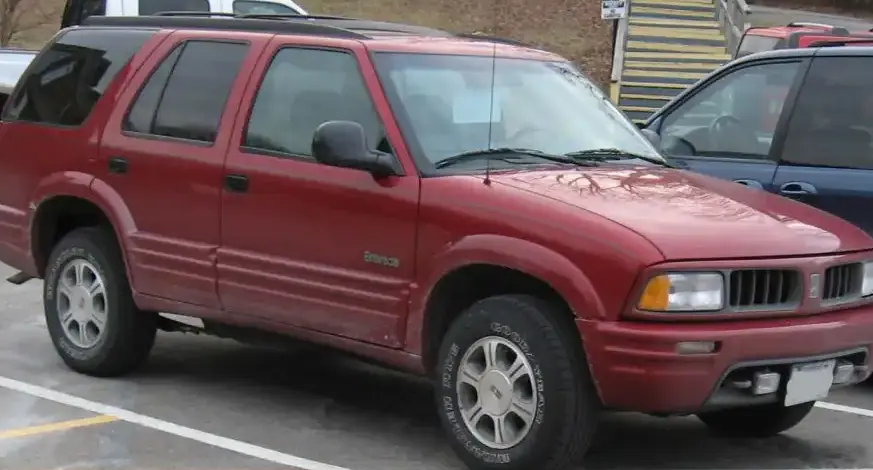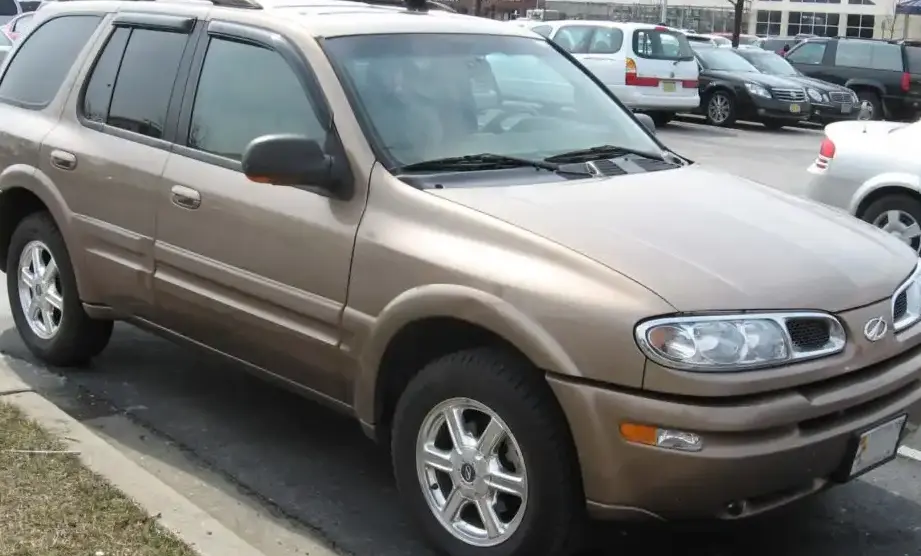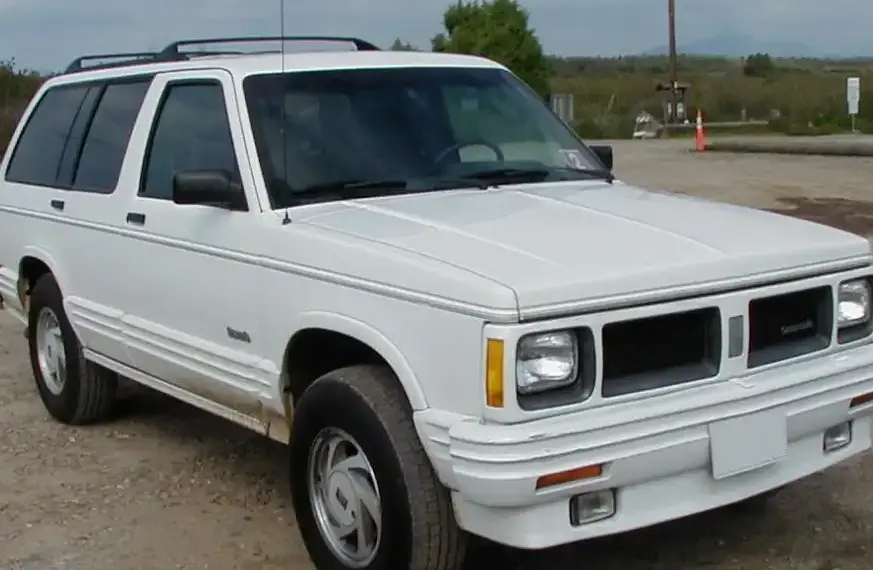
The Oldsmobile Bravada, specifically the variant equipped with the 4.3-liter V6 engine producing 203 horsepower, was a mid-size SUV produced from 1990 to 1995. It represented Oldsmobile’s entry into the burgeoning SUV market, leveraging the General Motors APV platform shared with the Chevrolet Blazer and GMC Jimmy. This first-generation Bravada distinguished itself with a more upscale interior and a focus on comfort, aiming to attract buyers seeking a more refined SUV experience. The 4.3L V6/Automatic combination positioned the Bravada as a solid, all-around performer, suitable for both daily driving and light-duty towing.
Technical Specifications
| Brand | Oldsmobile |
| Model | Bravada |
| Generation | Bravada (First Generation) |
| Type (Engine) | 4.3 V6 (203 Hp) |
| Start of production | 1990 |
| End of production | 1995 |
| Powertrain Architecture | Internal Combustion Engine |
| Body type | SUV |
| Seats | 5 |
| Doors | 5 |
| Fuel consumption (urban) | 22 l/100 km (10.7 US mpg) |
| Fuel consumption (extra urban) | 11 l/100 km (21.4 US mpg) |
| Fuel Type | Petrol (Gasoline) |
| Maximum speed | 180 km/h (111.85 mph) |
| Weight-to-power ratio | 8.9 kg/Hp |
| Weight-to-torque ratio | 5.1 kg/Nm |
| Power | 203 Hp @ 4500 rpm |
| Power per litre | 47.2 Hp/l |
| Torque | 353 Nm @ 3600 rpm (260.36 lb.-ft. @ 3600 rpm) |
| Engine layout | Front, Longitudinal |
| Engine Model/Code | Vortec |
| Engine displacement | 4300 cm3 (262.4 cu. in.) |
| Number of cylinders | 6 |
| Engine configuration | V-engine |
| Cylinder Bore | 101.6 mm (4 in.) |
| Piston Stroke | 88.4 mm (3.48 in.) |
| Compression ratio | 9.3:1 |
| Number of valves per cylinder | 2 |
| Fuel injection system | Single-point injection |
| Engine aspiration | Naturally aspirated |
| Engine oil capacity | 4.3 l (4.54 US qt | 3.78 UK qt) |
| Coolant capacity | 11.1 l (11.73 US qt | 9.77 UK qt) |
| Kerb Weight | 1815 kg (4001.39 lbs.) |
| Max. weight | 2315 kg (5103.7 lbs.) |
| Max load | 500 kg (1102.31 lbs.) |
| Trunk (boot) space – minimum | 1000 l (35.31 cu. ft.) |
| Trunk (boot) space – maximum | 2100 l (74.16 cu. ft.) |
| Fuel tank capacity | 76 l (20.08 US gal | 16.72 UK gal) |
| Length | 4540 mm (178.74 in.) |
| Width | 1660 mm (65.35 in.) |
| Height | 1660 mm (65.35 in.) |
| Wheelbase | 2720 mm (107.09 in.) |
| Front track | 1410 mm (55.51 in.) |
| Rear track | 1375 mm (54.13 in.) |
| Drive wheel | All wheel drive (4×4) |
| Number of gears | 4 |
| Gearbox type | Automatic transmission |
| Front suspension | Coil spring |
| Rear suspension | Coil spring |
| Front brakes | Ventilated discs |
| Rear brakes | Disc |
| Assisting systems | ABS (Anti-lock braking system) |
| Steering type | Steering rack and pinion |
| Power steering | Hydraulic |
| Tires size | 235/75 R15 |
Powertrain & Engine Architecture
The heart of this Bravada variant was the 4.3-liter (262 cubic inch) Vortec V6 engine. This engine, designated as the LB4, was a staple of GM’s truck and SUV lineup during the early 1990s. It featured a 90-degree V-configuration, two valves per cylinder, and a single-point fuel injection system. While not the most technologically advanced fuel delivery system by modern standards, it proved reliable and relatively easy to maintain. The engine’s robust bottom end and relatively simple design contributed to its longevity. The 4L60 four-speed automatic transmission was the sole transmission option for this configuration. This transmission was known for its smooth shifting and durability, though it could be prone to issues if not properly maintained. The transmission’s gear ratios were optimized for both on-road comfort and moderate towing capacity.
Driving Characteristics
The 4.3L V6 and 4L60 automatic combination delivered adequate, but not exhilarating, performance. Acceleration was reasonable for its time, with a 0-60 mph time estimated around 9-10 seconds. The automatic transmission, while smooth, did sap some power compared to the available five-speed manual transmission offered with other engine options. The torque curve was relatively flat, providing decent pulling power for everyday driving and light towing. However, passing maneuvers at highway speeds required careful planning. Compared to the more powerful 6.3L V8 option, the 4.3L felt noticeably less responsive. The all-wheel-drive system provided enhanced traction in inclement weather, making it a capable vehicle for a variety of conditions.
Equipment & Trim Levels
The Bravada, even in its base form with the 4.3L engine, offered a fairly generous level of standard equipment. This included features like air conditioning, power windows and locks, a tilt steering wheel, and an AM/FM stereo. Upholstery was typically cloth, with optional leather available as an upgrade. Higher trim levels added features such as a premium sound system, upgraded interior trim, and alloy wheels. The Bravada aimed for a more luxurious feel than its Chevrolet Blazer and GMC Jimmy counterparts, and this was reflected in the available options and interior appointments.
Chassis & Braking
The Bravada utilized a body-on-frame construction, typical of SUVs of that era. The suspension consisted of coil springs at all four corners, providing a comfortable ride. Front brakes were ventilated discs, while rear brakes were solid discs. An anti-lock braking system (ABS) was standard, enhancing safety. The chassis was designed to handle the added weight and demands of off-road driving, though the Bravada was primarily intended for on-road use. Stabilizer bars were included at both the front and rear to reduce body roll during cornering.
Market Reception & Comparison
The 1990-1995 Oldsmobile Bravada was generally well-received by critics as a comfortable and capable SUV. The 4.3L V6/Automatic combination was praised for its smoothness and reliability, but some reviewers noted its lack of outright power compared to the V8 option. Fuel economy was average for the class, with EPA estimates around 15 mpg city and 20 mpg highway. Compared to the Blazer and Jimmy, the Bravada offered a more refined interior and a slightly higher price point. The 4.3L variant was positioned as the entry-level model, appealing to buyers who prioritized comfort and fuel efficiency over raw performance.
Legacy
The 4.3L Vortec V6 engine, paired with the 4L60 transmission, proved to be a durable and reliable powertrain combination. Many Bravadas equipped with this setup have remained on the road for decades, a testament to their robust construction. While not particularly sought after by collectors, these vehicles represent a significant piece of Oldsmobile’s history and the early days of the SUV boom. In the used car market, these Bravadas are often found at affordable prices, making them a viable option for those seeking a classic SUV with reasonable reliability and a comfortable ride. Regular maintenance, including fluid changes and timely repairs, is crucial to keeping these vehicles running smoothly.