
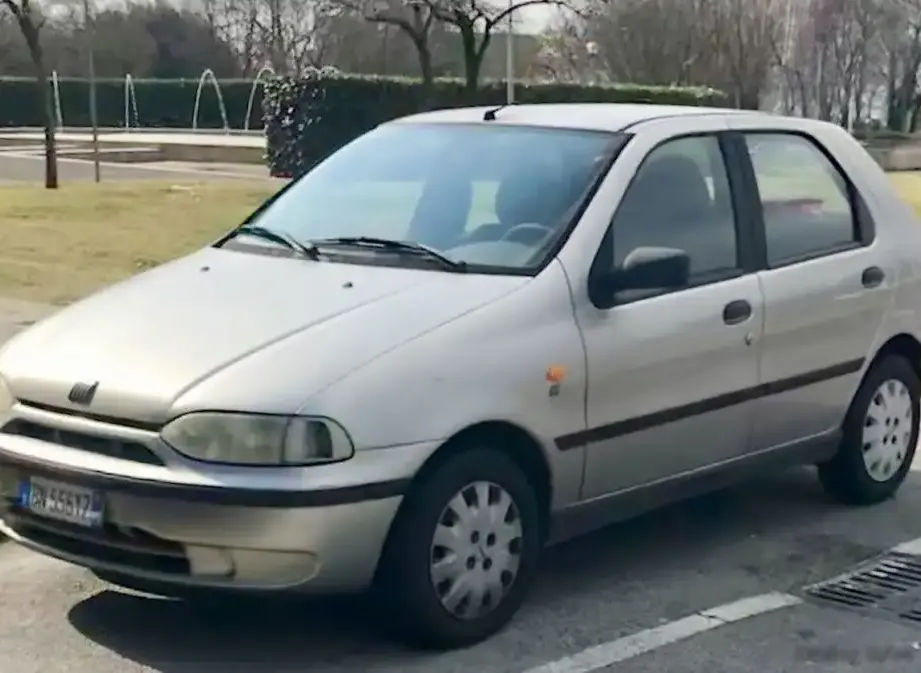
The Fiat Palio 1.4 i (71 hp) represents an entry-level variant of the Palio (178) series, produced between 1996 and 2002. Positioned as a practical and affordable subcompact, the Palio was designed to compete in the burgeoning European and Latin American small car markets. This specific 1.4-liter engine and five-speed manual transmission combination served as the foundation of the Palio range, offering a balance of economy and usability. The 178 project was a significant undertaking for Fiat, aiming to create a modern, versatile platform that could be adapted to various body styles and markets.
Technical Specifications
| Brand | Fiat |
| Model | Palio |
| Generation | Palio (178) |
| Type (Engine) | 1.4 i (71 Hp) |
| Start of production | 1996 |
| End of production | 2002 |
| Powertrain Architecture | Internal Combustion engine |
| Body type | Hatchback |
| Seats | 5 |
| Doors | 3-5 |
| Fuel Type | Petrol (Gasoline) |
| Maximum speed | 164 km/h (101.9 mph) |
| Weight-to-power ratio | 13.2 kg/Hp, 75.9 Hp/tonne |
| Weight-to-torque ratio | 8.7 kg/Nm, 115.5 Nm/tonne |
| Power | 71 Hp @ 6000 rpm |
| Power per litre | 51.7 Hp/l |
| Torque | 108 Nm @ 3000 rpm (79.66 lb.-ft. @ 3000 rpm) |
| Engine layout | Front, Transverse |
| Engine Model/Code | 178B2016 |
| Engine displacement | 1372 cm3 (83.72 cu. in.) |
| Number of cylinders | 4 |
| Engine configuration | Inline |
| Cylinder Bore | 80.5 mm (3.17 in.) |
| Piston Stroke | 67.4 mm (2.65 in.) |
| Compression ratio | 9.2:1 |
| Number of valves per cylinder | 2 |
| Fuel injection system | Multi-port manifold injection |
| Engine aspiration | Naturally aspirated engine |
| Engine oil capacity | 2.6 l (2.75 US qt | 2.29 UK qt) |
| Coolant | 6.9 l (7.29 US qt | 6.07 UK qt) |
| Kerb Weight | 935 kg (2061.32 lbs.) |
| Max. weight | 1335 kg (2943.17 lbs.) |
| Max load | 400 kg (881.85 lbs.) |
| Trunk (boot) space – minimum | 280 l (9.89 cu. ft.) |
| Trunk (boot) space – maximum | 920 l (32.49 cu. ft.) |
| Fuel tank capacity | 48 l (12.68 US gal | 10.56 UK gal) |
| Length | 3735 mm (147.05 in.) |
| Width | 1614 mm (63.54 in.) |
| Height | 1445 mm (56.89 in.) |
| Wheelbase | 2360 mm (92.91 in.) |
| Front track | 1388 mm (54.65 in.) |
| Rear (Back) track | 1378 mm (54.25 in.) |
| Drivetrain Architecture | The Internal combustion engine (ICE) drives the front wheels of the vehicle. |
| Drive wheel | Front wheel drive |
| Number of gears and type of gearbox | 5 gears, manual transmission |
| Front suspension | Spring Strut |
| Rear suspension | Trailing arm |
| Front brakes | Disc |
| Rear brakes | Drum |
| Steering type | Steering rack and pinion |
| Tires size | 175/70 R13 |
Powertrain & Engine Architecture
The heart of the Palio 1.4 i is the 178B2016 engine, a 1.4-liter inline-four cylinder gasoline engine. This engine utilizes a naturally aspirated configuration with two valves per cylinder and a compression ratio of 9.2:1. Fuel delivery is managed by a multi-port fuel injection system, a common setup for vehicles of this era, providing adequate fuel atomization for efficient combustion. The engine’s relatively simple valvetrain design contributes to its reliability and ease of maintenance. The 71 horsepower output at 6000 rpm and 108 Nm (79.66 lb-ft) of torque at 3000 rpm were typical figures for engines of this displacement in the mid-1990s. The engine is transversely mounted, a space-saving configuration common in front-wheel-drive vehicles. The five-speed manual transmission was the standard offering, providing a reasonable spread of gears for both city driving and highway cruising.
Driving Characteristics
The Palio 1.4 i, with its 71 hp and manual transmission, offered a modest but usable driving experience. Acceleration was not its strong suit, with a 0-60 mph time estimated around 13-14 seconds. However, the engine proved to be reasonably responsive in everyday driving situations. The five-speed gearbox allowed drivers to keep the engine in its optimal power band, making overtaking maneuvers possible with some planning. Compared to higher-spec Palio models equipped with larger engines (like the 1.6-liter), the 1.4 i felt noticeably less powerful. The manual transmission provided a more engaging driving experience than the optional automatic transmission available on some Palio trims. The gear ratios were tuned for economy, prioritizing fuel efficiency over outright performance.
Equipment & Trim Levels
The base-level Palio 1.4 i typically came equipped with basic amenities. Standard features generally included power steering, central locking, and a basic instrument cluster. Interior upholstery was typically cloth, with a functional but spartan design. Optional extras included air conditioning, power windows, and an upgraded audio system. Trim levels varied depending on the market, but the 1.4 i generally represented the entry point to the Palio range. Higher trim levels added features like alloy wheels, body-colored bumpers, and more luxurious interior appointments.
Chassis & Braking
The Palio 1.4 i utilized a relatively simple chassis design. Front suspension consisted of MacPherson strut coil springs, while the rear employed a trailing arm setup. This configuration provided a reasonable balance of ride comfort and handling. Braking duties were handled by disc brakes at the front and drum brakes at the rear. The braking system was adequate for the vehicle’s weight and performance, but lacked the stopping power of more advanced systems found on higher-end vehicles. The Palio’s relatively lightweight construction (around 935 kg or 2061 lbs) helped to mitigate the limitations of the braking system.
Market Reception & Comparison
The Fiat Palio 1.4 i was generally well-received as an affordable and practical small car. Critics praised its fuel efficiency and ease of driving, but noted its lack of outright performance. Compared to rivals like the Renault Clio and Peugeot 206, the Palio offered a competitive price point but lacked the refinement and driving dynamics of those models. The 1.4-liter engine provided acceptable fuel economy, making it a popular choice for budget-conscious buyers. The Palio’s reliability was generally considered average for its class, with some reports of minor electrical issues.
Legacy
The Fiat Palio, and specifically the 1.4 i variant, remains a common sight on the roads of Europe and Latin America. The 178B2016 engine proved to be reasonably durable, and many examples are still in service today. In the used car market, the Palio 1.4 i is valued for its affordability and low running costs. While not a performance icon, it represents a practical and reliable choice for those seeking a basic, economical mode of transportation. The Palio’s success helped to establish Fiat as a major player in the global small car market, paving the way for future models like the Punto.
