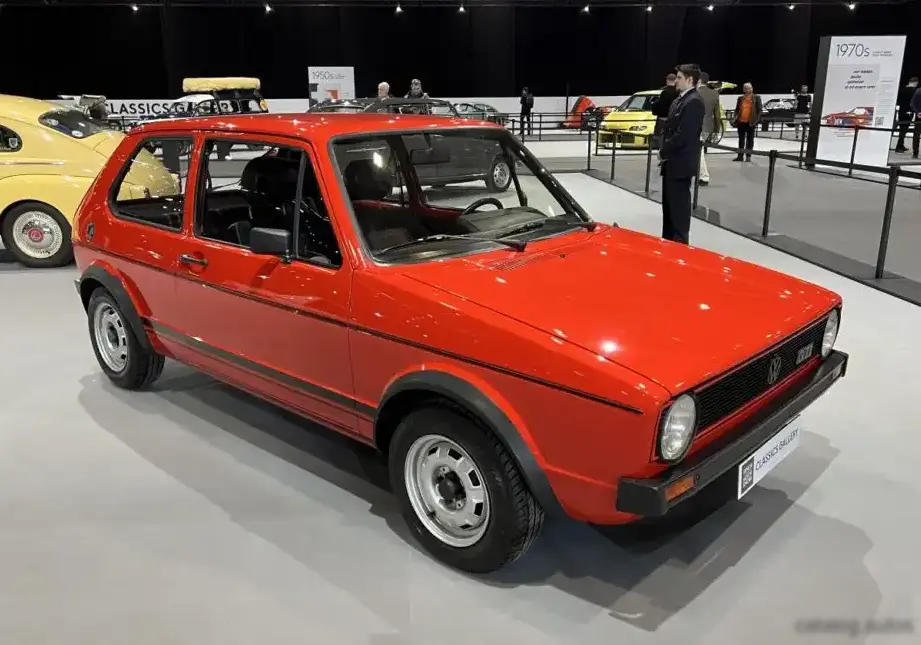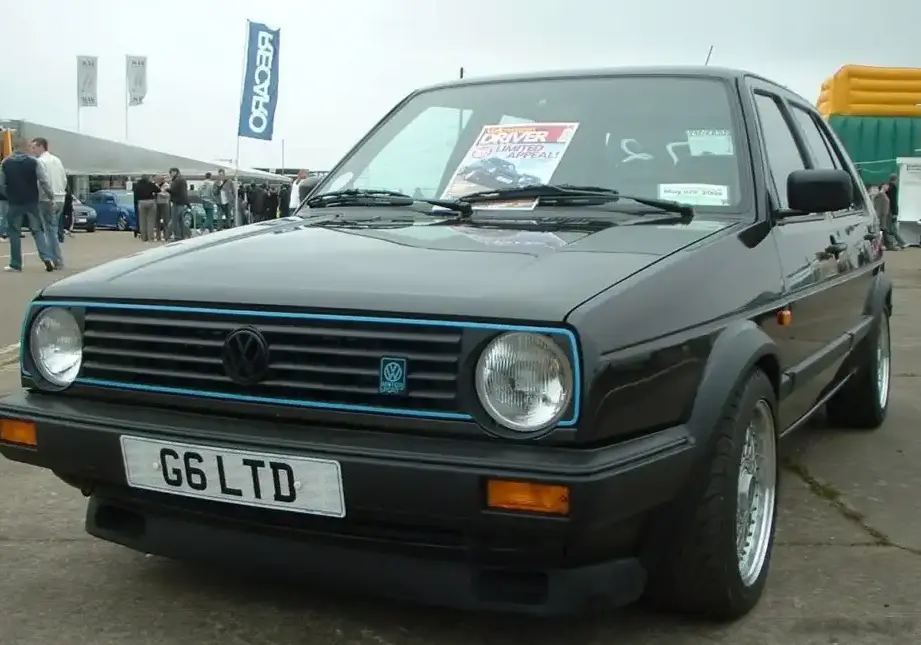
The Volkswagen Golf II 1.6 Automatic, produced from 1987 to 1991, represented an entry-level offering within the comprehensively updated Golf II range – often referred to as the facelift model (1987 onwards). This five-door hatchback, powered by a 1.6-liter gasoline engine paired with a three-speed automatic transmission, was aimed at buyers prioritizing ease of use and affordability over outright performance. It occupied a crucial position in the Golf II lineup, serving as a more accessible alternative to the sportier GTI and diesel-powered variants. The Golf II itself was a pivotal model for Volkswagen, building upon the success of the original Golf (Mk1) and solidifying the company’s reputation for building practical, reliable, and well-engineered compact cars. This variant was primarily sold in European markets, where automatic transmissions were less common than manual gearboxes, making it a relatively niche offering even within the Golf II range.
Technical Specifications
| Brand | Volkswagen |
| Model | Golf |
| Generation | Golf II (5-door, facelift 1987) |
| Type (Engine) | 1.6 (70 Hp) Automatic |
| Start of production | 1987 |
| End of production | 1991 |
| Powertrain Architecture | Internal Combustion engine |
| Body type | Hatchback |
| Seats | 5 |
| Doors | 5 |
| Fuel consumption (urban) | 9.8 l/100 km (24 US mpg, 28.8 UK mpg, 10.2 km/l) |
| Fuel consumption (extra urban) | 7.2 l/100 km (32.7 US mpg, 39.2 UK mpg, 13.9 km/l) |
| Fuel Type | Petrol (Gasoline) |
| Acceleration 0 – 100 km/h | 16.4 sec |
| Acceleration 0 – 62 mph | 16.4 sec |
| Acceleration 0 – 60 mph | 15.6 sec |
| Maximum speed | 157 km/h (97.56 mph) |
| Weight-to-power ratio | 13.3 kg/Hp, 75.3 Hp/tonne |
| Weight-to-torque ratio | 7.9 kg/Nm, 126.9 Nm/tonne |
| Power | 70 Hp @ 5200 rpm |
| Power per litre | 43.9 Hp/l |
| Torque | 118 Nm @ 2700 rpm (87.03 lb.-ft. @ 2700 rpm) |
| Engine layout | Front, Transverse |
| Engine Model/Code | PN |
| Engine displacement | 1595 cm3 (97.33 cu. in.) |
| Number of cylinders | 4 |
| Engine configuration | Inline |
| Cylinder Bore | 81 mm (3.19 in.) |
| Piston Stroke | 77.4 mm (3.05 in.) |
| Compression ratio | 9:1 |
| Number of valves per cylinder | 2 |
| Fuel injection system | Carburettor |
| Engine aspiration | Naturally aspirated engine |
| Valvetrain | SOHC |
| Engine oil capacity | 4 l (4.23 US qt | 3.52 UK qt) |
| Coolant | 4.5 l (4.76 US qt | 3.96 UK qt) |
| Kerb Weight | 930 kg (2050.3 lbs.) |
| Max. weight | 1420 kg (3130.56 lbs.) |
| Max load | 490 kg (1080.27 lbs.) |
| Trunk (boot) space – minimum | 330 l (11.65 cu. ft.) |
| Trunk (boot) space – maximum | 1145 l (40.44 cu. ft.) |
| Fuel tank capacity | 55 l (14.53 US gal | 12.1 UK gal) |
| Permitted trailer load with brakes (12%) | 1000 kg (2204.62 lbs.) |
| Permitted trailer load without brakes | 470 kg (1036.17 lbs.) |
| Length | 3985-4040 mm (156.89 – 159.06 in.) |
| Width | 1665 mm (65.55 in.) |
| Height | 1415 mm (55.71 in.) |
| Wheelbase | 2475 mm (97.44 in.) |
| Front track | 1427 mm (56.18 in.) |
| Rear (Back) track | 1422 mm (55.98 in.) |
| Drag coefficient (Cd) | 0.34 |
| Minimum turning circle (turning diameter) | 10.5 m (34.45 ft.) |
| Drivetrain Architecture | The Internal combustion engine (ICE) drives the front wheels of the vehicle. |
| Drive wheel | Front wheel drive |
| Number of gears and type of gearbox | 3 gears, automatic transmission |
| Front suspension | Independent type McPherson |
| Rear suspension | Elastic beam |
| Front brakes | Disc |
| Rear brakes | Drum |
| Steering type | Steering rack and pinion |
| Tires size | 175/70 R13 |
| Wheel rims size | 5.5J x 13 |
Powertrain & Engine Architecture
The heart of the Golf II 1.6 Automatic is the PN engine, a 1595cc inline four-cylinder gasoline engine. This engine utilized a single overhead camshaft (SOHC) valvetrain with two valves per cylinder. Unlike the later fuel-injected Golf models, the 1.6 PN engine employed a carburetor for fuel delivery, a cost-saving measure that contributed to its lower price point. The carburetor, while simpler than fuel injection, resulted in slightly lower fuel efficiency and less precise throttle response. The engine produced 70 horsepower at 5200 rpm and 118 Nm (87 lb-ft) of torque at 2700 rpm. Paired with this engine was a three-speed automatic transmission. This transmission, while providing convenience, was not known for its responsiveness or efficiency. The gear ratios were optimized for fuel economy and smooth cruising rather than spirited acceleration.
Driving Characteristics
The driving experience in the Golf II 1.6 Automatic was characterized by its relaxed and undemanding nature. Acceleration was modest, taking approximately 16.4 seconds to reach 62 mph (100 km/h). The three-speed automatic transmission contributed to a noticeable lack of urgency, especially when attempting to overtake or climb hills. Compared to the five-speed manual versions of the Golf II, or the more powerful GTI models, the 1.6 Automatic felt significantly slower. However, for drivers prioritizing comfort and ease of use, the automatic transmission provided a smooth and convenient driving experience. The relatively low power output and automatic gearbox made it a suitable choice for urban driving and shorter journeys.
Equipment & Trim Levels
The 1.6 Automatic trim level typically included basic features such as cloth upholstery, a simple dashboard layout, and manual windows and door locks. Power steering was often an optional extra. The interior was functional and durable, reflecting the Golf II’s focus on practicality. Optional extras could include a sunroof, upgraded stereo system, and central locking. The standard equipment level was relatively sparse compared to higher-spec Golf II models, but it provided a comfortable and functional environment for everyday driving.
Chassis & Braking
The Golf II 1.6 Automatic utilized a McPherson strut front suspension and an elastic beam rear suspension. This suspension setup provided a reasonable balance between ride comfort and handling. The front brakes were disc brakes, while the rear brakes were drum brakes – a common configuration for entry-level models of the time. The braking performance was adequate for normal driving conditions, but lacked the stopping power of the GTI models with their larger brakes. The steering was a rack and pinion system, providing reasonably precise steering feel.
Market Reception & Comparison
The Golf II 1.6 Automatic received mixed reviews. Critics acknowledged its affordability and ease of use, but often criticized its lack of performance and the sluggishness of the automatic transmission. Compared to the manual versions of the 1.6 engine, the automatic variant offered significantly reduced fuel economy and slower acceleration. The GTI models, with their more powerful engines and sport-tuned suspensions, were widely regarded as a more engaging driving experience. However, the 1.6 Automatic appealed to a specific segment of buyers who prioritized convenience and affordability over performance.
Legacy
The Golf II 1.6 Automatic, while not the most sought-after variant of the Golf II range, remains a relatively reliable and affordable classic car. The PN engine is known for its durability, although carburetor maintenance can be required over time. Today, these cars are increasingly appreciated by enthusiasts for their simplicity and affordability. Parts availability is generally good, making them relatively easy to maintain. While not a performance icon, the Golf II 1.6 Automatic represents a significant chapter in Volkswagen’s history and a testament to the enduring appeal of the Golf model.