
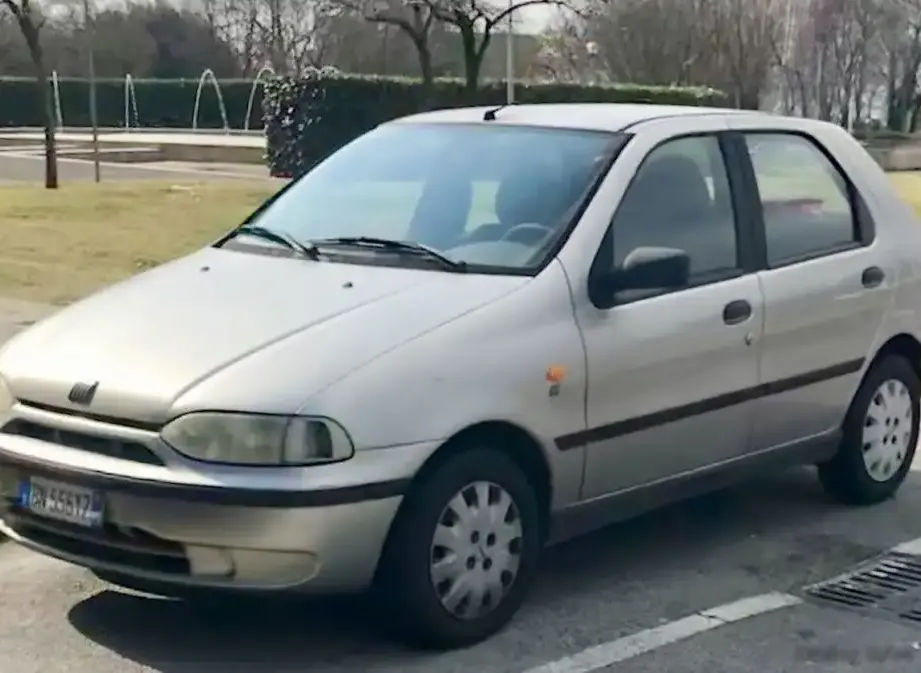
The Fiat Palio 1.5 i (76 hp) represents an entry-level variant of the Palio (178) series, produced between 1996 and 2002. Positioned as a practical and affordable subcompact, the Palio was Fiat’s attempt to gain a stronger foothold in the increasingly competitive European and Latin American small car markets. This specific 1.5-liter engine and five-speed manual transmission combination served as the foundation of the Palio range, offering a balance between economy and usability. The Palio itself was a significant model for Fiat, representing a move towards more modern design and engineering compared to its predecessors like the Uno.
Technical Specifications
| Brand | Fiat |
| Model | Palio |
| Generation | Palio (178) |
| Type (Engine) | 1.5 i (76 Hp) |
| Start of production | 1996 |
| End of production | 2002 |
| Powertrain Architecture | Internal Combustion engine |
| Body type | Hatchback |
| Seats | 5 |
| Doors | 3-5 |
| Fuel consumption (urban) | 8.3 l/100 km (28.3 US mpg) |
| Fuel consumption (extra urban) | 5.9 l/100 km (39.9 US mpg) |
| Fuel Type | Petrol (Gasoline) |
| Acceleration 0 – 100 km/h | 12.8 sec |
| Acceleration 0 – 62 mph | 12.8 sec |
| Acceleration 0 – 60 mph | 12.2 sec |
| Maximum speed | 165 km/h (102.53 mph) |
| Weight-to-power ratio | 12.2 kg/Hp |
| Weight-to-torque ratio | 7.8 kg/Nm |
| Power | 76 Hp @ 5000 rpm |
| Power per litre | 50.8 Hp/l |
| Torque | 119 Nm @ 2750 rpm (87.77 lb.-ft. @ 2750 rpm) |
| Engine layout | Front, Transverse |
| Engine displacement | 1497 cm3 (91.35 cu. in.) |
| Number of cylinders | 4 |
| Engine configuration | Inline |
| Cylinder Bore | 76 mm (2.99 in.) |
| Piston Stroke | 82.5 mm (3.25 in.) |
| Compression ratio | 9.35:1 |
| Number of valves per cylinder | 2 |
| Fuel injection system | Multi-port manifold injection |
| Engine aspiration | Naturally aspirated |
| Kerb Weight | 925 kg (2039.28 lbs.) |
| Max. weight | 1325 kg (2921.12 lbs.) |
| Max load | 400 kg (881.85 lbs.) |
| Trunk (boot) space – minimum | 280 l (9.89 cu. ft.) |
| Trunk (boot) space – maximum | 920 l (32.49 cu. ft.) |
| Fuel tank capacity | 50 l (13.21 US gal | 11 UK gal) |
| Length | 3735 mm (147.05 in.) |
| Width | 1614 mm (63.54 in.) |
| Height | 1445 mm (56.89 in.) |
| Wheelbase | 2360 mm (92.91 in.) |
| Front track | 1388 mm (54.65 in.) |
| Rear track | 1378 mm (54.25 in.) |
| Drivetrain Architecture | Front wheel drive |
| Number of gears | 5 |
| Gearbox type | Manual transmission |
| Front suspension | Spring Strut |
| Rear suspension | Trailing arm |
| Front brakes | Disc |
| Rear brakes | Drum |
| Steering type | Steering rack and pinion |
| Power steering | Hydraulic |
| Tires size | 175/70 R13 |
Powertrain & Engine Architecture
The heart of the Palio 1.5 i is the Fiat 164A.1.000 series engine, a naturally aspirated, inline-four cylinder gasoline engine displacing 1497 cc. This engine utilized a multi-port fuel injection system, a relatively common setup for the time, providing adequate fuel delivery for efficient combustion. The engine featured a single overhead camshaft (SOHC) operating two valves per cylinder. This configuration prioritized simplicity and cost-effectiveness over outright performance. The 1.5-liter engine produced 76 horsepower at 5000 rpm and 119 Nm (87.77 lb-ft) of torque at 2750 rpm. The five-speed manual transmission was the standard offering for this variant, providing a reasonable spread of gears for both city driving and highway cruising. The transmission was chosen for its durability and affordability, aligning with the Palio’s overall value proposition.
Driving Characteristics
The Palio 1.5 i, with its 76 hp output, wasn’t designed for exhilarating acceleration. Zero to 60 mph took approximately 12.2 seconds, and top speed was around 102.53 mph. However, the engine’s torque delivery at lower revs made it reasonably tractable for everyday driving. The five-speed manual transmission allowed drivers to keep the engine in its optimal power band, although frequent shifting was often necessary, especially when overtaking. Compared to higher-spec Palio models equipped with larger engines (like the 1.6-liter), the 1.5 i felt noticeably less powerful. The manual transmission offered a more engaging driving experience than the optional automatic transmission available on some Palio trims, providing better control and responsiveness. The gear ratios were tuned for economy, rather than outright performance.
Equipment & Trim Levels
The 1.5 i Palio typically served as the entry point to the Palio range. Standard equipment generally included basic features such as power steering, central locking, and a basic audio system. Interior upholstery was typically cloth, and the dashboard featured a functional, if somewhat spartan, design. Optional extras included air conditioning, power windows, and upgraded audio systems. Trim levels varied depending on the market, but the 1.5 i generally represented the most basic specification. The focus was on providing essential transportation at an affordable price point.
Chassis & Braking
The Palio 178 utilized a relatively simple chassis design. Front suspension consisted of MacPherson strut coil springs, while the rear employed a trailing arm setup. This configuration provided a reasonable balance between ride comfort and handling. Braking was typically accomplished with disc brakes on the front wheels and drum brakes on the rear. The braking system was adequate for the car’s weight and performance, but lacked the stopping power of more sophisticated setups found on higher-spec models. The Palio’s relatively lightweight construction (around 925 kg or 2039 lbs) helped to mitigate the limitations of the braking system.
Market Reception & Comparison
The Palio 1.5 i was generally well-received as a practical and affordable small car. Critics praised its fuel efficiency and ease of driving, but noted its lack of outright performance. Compared to rivals like the Renault Clio and Peugeot 206, the Palio offered a more budget-friendly option, but often lacked the refinement and driving dynamics of its competitors. The 1.5 i’s fuel economy was a strong point, achieving around 39.9 US mpg on the extra-urban cycle. Reliability was generally good, although some owners reported issues with the fuel injection system and electrical components. Compared to the more powerful Palio 1.6, the 1.5 i offered significantly lower running costs, making it a popular choice for budget-conscious buyers.
Legacy
The Fiat Palio 1.5 i remains a relatively common sight on the used car market, particularly in Europe and Latin America. The 164A.1.000 engine is known for its durability, although regular maintenance is essential to prevent issues. Parts availability is generally good, and the car’s simple mechanical design makes it relatively easy to repair. While not a particularly exciting vehicle, the Palio 1.5 i represents a solid and dependable choice for those seeking an affordable and economical small car. Its enduring presence on the road is a testament to its practicality and reliability.
