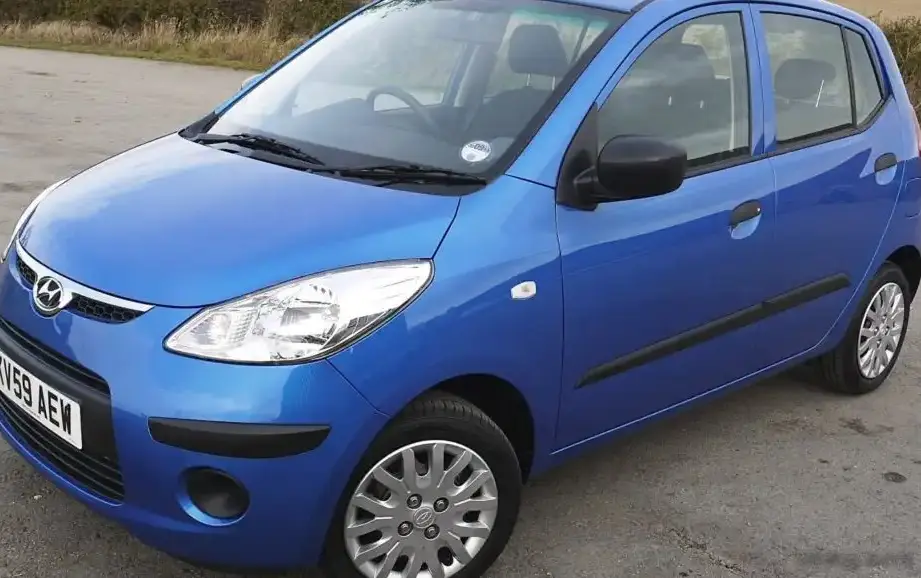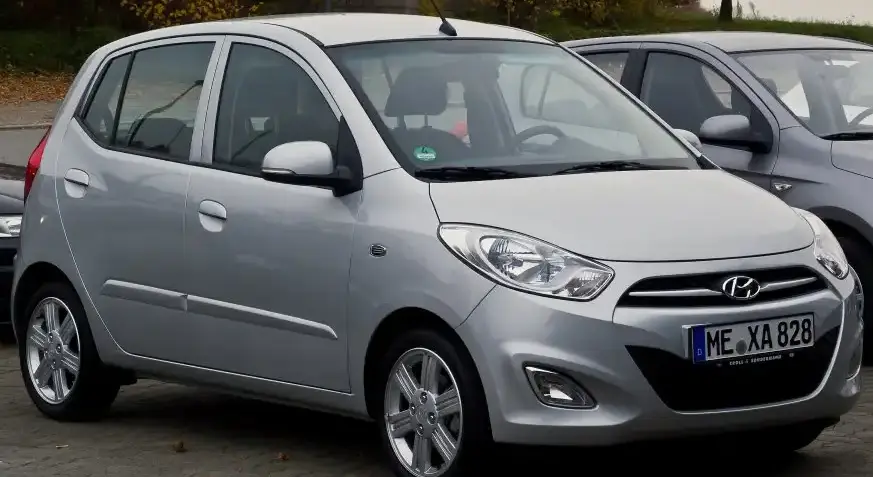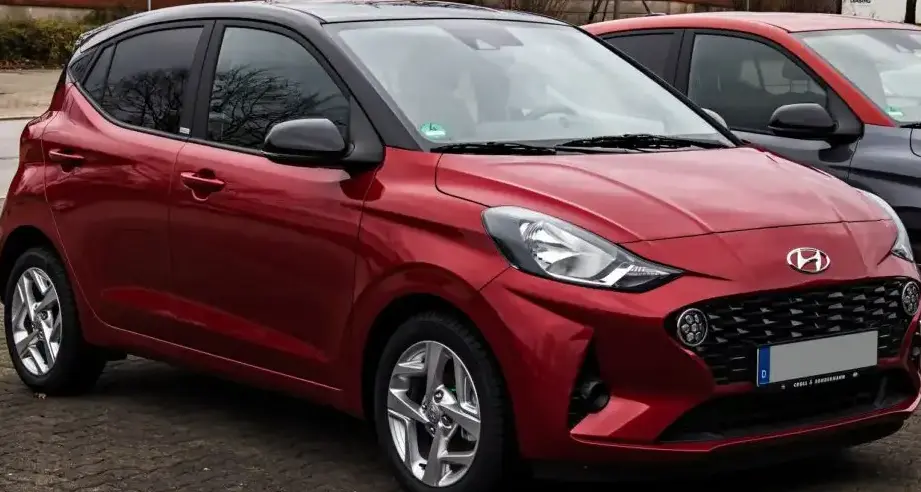
The Hyundai i10 III 1.2 MPi (84 hp) represents an entry-level offering within the third generation of Hyundai’s city car, the i10. Produced from August 2019 through April 2023, this variant played a significant role in Hyundai’s European and Asian markets, offering an affordable and practical A-segment hatchback. It’s positioned as the base engine option for the i10 III, targeting buyers prioritizing fuel efficiency and low running costs over outright performance. The i10 III itself is built on the HA3 platform, a dedicated small car architecture designed for maneuverability and interior space optimization.
Technical Specifications
| Brand | Hyundai |
| Model | i10 |
| Generation | i10 III |
| Type (Engine) | 1.2 MPi (84 Hp) |
| Start of production | August, 2019 |
| End of production | April, 2023 |
| Powertrain Architecture | Internal Combustion engine |
| Body type | Hatchback |
| Seats | 4-5 |
| Doors | 5 |
| Fuel consumption (combined) | 5.3 l/100 km |
| Fuel consumption (US mpg) | 44.4 US mpg |
| Fuel consumption (UK mpg) | 53.3 UK mpg |
| Fuel consumption (km/l) | 18.9 km/l |
| CO2 emissions | 121 g/km |
| Fuel Type | Petrol (Gasoline) |
| Acceleration 0 – 100 km/h | 12.6 sec |
| Acceleration 0 – 62 mph | 12.6 sec |
| Acceleration 0 – 60 mph | 12 sec |
| Maximum speed | 171 km/h (106.25 mph) |
| Emission standard | Euro 6d-TEMP |
| Power | 84 Hp @ 6000 rpm |
| Power per litre | 70.2 Hp/l |
| Torque | 118 Nm @ 4200 rpm (87.03 lb.-ft. @ 4200 rpm) |
| Engine layout | Front, Transverse |
| Engine Model/Code | G4LF |
| Engine displacement | 1197 cm3 (73.05 cu. in.) |
| Number of cylinders | 4 |
| Engine configuration | Inline |
| Cylinder Bore | 71 mm (2.8 in.) |
| Piston Stroke | 75.6 mm (2.98 in.) |
| Compression ratio | 11:1 |
| Number of valves per cylinder | 4 |
| Fuel injection system | Multi-port manifold injection |
| Engine aspiration | Naturally aspirated engine |
| Valvetrain | DOHC |
| Engine oil capacity | 3.4 l (3.59 US qt | 2.99 UK qt) |
| Coolant capacity | 4.77 l (5.04 US qt | 4.2 UK qt) |
| Trunk (boot) space – minimum | 252 l (8.9 cu. ft.) |
| Fuel tank capacity | 36 l (9.51 US gal | 7.92 UK gal) |
| Length | 3670 mm (144.49 in.) |
| Width | 1680 mm (66.14 in.) |
| Height | 1480 mm (58.27 in.) |
| Wheelbase | 2425 mm (95.47 in.) |
| Front track | 1467-1479 mm (57.76 – 58.23 in.) |
| Rear track | 1478-1490 mm (58.19 – 58.66 in.) |
| Front overhang | 705 mm (27.76 in.) |
| Rear overhang | 540 mm (21.26 in.) |
| Ride height (ground clearance) | 149 mm (5.87 in.) |
| Minimum turning circle | 10.0 m (32.81 ft.) |
| Drivetrain Architecture | Front wheel drive |
| Number of gears | 5 gears, manual transmission |
| Front suspension | Independent type McPherson |
| Rear suspension | Torsion |
| Front brakes | Ventilated discs, 252 mm |
| Rear brakes | Disc, 234 mm |
| Assisting systems | ABS (Anti-lock braking system) |
| Tires size | 175/65 R14; 185/55 R15; 195/45 R16 |
| Wheel rims size | 14; 15; 16 |
Powertrain & Engine Architecture
The i10 III 1.2 MPi utilizes Hyundai’s G4LF engine, a naturally aspirated 1.2-liter inline-four cylinder gasoline engine. This engine is a member of Hyundai-Kia’s Gamma family, known for its compact size and relatively simple design. The ‘MPi’ designation indicates the use of a multi-point fuel injection system, where fuel is injected into the intake ports just before the intake valves. This system is favored for its cost-effectiveness and reliability, though it generally offers less precise fuel control than direct injection systems. The engine features a double overhead camshaft (DOHC) valvetrain with four valves per cylinder, contributing to improved breathing and efficiency. The compression ratio is set at 11:1. The 5-speed manual transmission paired with this engine is a standard unit, chosen for its durability and affordability. It’s a conventional gearbox with synchromesh on all forward gears and reverse.
Driving Characteristics
The 84 hp output and 118 Nm (87 lb-ft) of torque translate to modest, but adequate, performance for urban driving. Acceleration from 0-60 mph takes around 12 seconds, and top speed is approximately 106 mph. The engine feels best suited to lower speeds, providing sufficient power for navigating city streets and merging into traffic. Compared to higher-output versions of the i10 III, such as those with more powerful engines, the 1.2 MPi feels noticeably less responsive, particularly when fully loaded or climbing hills. The 5-speed manual transmission is well-matched to the engine’s characteristics, with gear ratios optimized for fuel economy and drivability. The gear change is light and precise, making it easy to navigate through the gears.
Equipment & Trim Levels
The 1.2 MPi typically served as the entry point to the i10 III range. Standard equipment generally included air conditioning, central locking, power-adjustable front windows, and a basic audio system with USB connectivity. Safety features such as ABS, Electronic Stability Control (ESC), and multiple airbags were also standard. Higher trim levels, such as SE and Premium, added features like alloy wheels, a touchscreen infotainment system with Apple CarPlay and Android Auto compatibility, rear parking sensors, and heated front seats. Interior upholstery was typically cloth, with a simple and functional dashboard layout.
Chassis & Braking
The i10 III utilizes a McPherson strut front suspension and a torsion beam rear suspension. This setup provides a good balance between ride comfort and handling, suitable for city driving. The front brakes are ventilated discs, providing adequate stopping power, while the rear brakes are solid discs. The steering is electrically assisted, offering light and precise control. The relatively lightweight nature of the i10 III contributes to its nimble handling characteristics.
Market Reception & Comparison
The Hyundai i10 III 1.2 MPi was generally well-received by automotive critics as a practical and affordable city car. It was praised for its fuel efficiency, comfortable ride, and generous standard equipment. However, some reviewers noted its lack of outright performance and relatively basic interior compared to some competitors. Compared to other engines in the i10 III lineup, the 1.2 MPi offered the best fuel economy but the slowest acceleration. It was positioned as a more economical alternative to the more powerful engines, appealing to buyers prioritizing cost savings over performance.
Legacy
The G4LF 1.2 MPi engine has proven to be a reliable and durable powertrain. Long-term reliability reports suggest that it is generally trouble-free, with relatively low maintenance costs. In the used car market, the i10 III 1.2 MPi remains a popular choice for budget-conscious buyers seeking a practical and economical city car. Its affordability, fuel efficiency, and reputation for reliability continue to make it a compelling option in the A-segment.