
Technical Specifications
| Brand | Fiat |
| Model | Palio |
| Generation | Palio (178) |
| Type (Engine) | 1.7 TD (69 Hp) |
| Start of production | 1996 |
| End of production | 2002 |
| Powertrain Architecture | Internal Combustion engine |
| Body type | Hatchback |
| Seats | 5 |
| Doors | 3-5 |
| Fuel consumption (urban) | 8.6 l/100 km (27.4 US mpg) |
| Fuel consumption (extra urban) | 5.1 l/100 km (46.1 US mpg) |
| Fuel consumption (combined) | 6.5 l/100 km (36.2 US mpg) |
| Fuel Type | Diesel |
| Acceleration 0 – 100 km/h | 14.9 sec |
| Acceleration 0 – 62 mph | 14.9 sec |
| Acceleration 0 – 60 mph | 14.2 sec |
| Maximum speed | 164 km/h (101.9 mph) |
| Weight-to-power ratio | 16.1 kg/Hp |
| Weight-to-torque ratio | 8.3 kg/Nm |
| Power | 69 Hp @ 4500 rpm |
| Torque | 134 Nm @ 2500 rpm (98.83 lb.-ft. @ 2500 rpm) |
| Engine layout | Front, Transverse |
| Engine Model/Code | 176 A3.000 |
| Engine displacement | 1698 cm3 (103.62 cu. in.) |
| Number of cylinders | 4 |
| Engine configuration | Inline |
| Cylinder Bore | 82.6 mm (3.25 in.) |
| Piston Stroke | 79.2 mm (3.12 in.) |
| Compression ratio | 20.3:1 |
| Number of valves per cylinder | 2 |
| Fuel injection system | Precombustion chamber injection |
| Engine aspiration | Turbocharger |
| Engine oil capacity | 4.8 l (5.07 US qt | 4.22 UK qt) |
| Coolant capacity | 7.1 l (7.5 US qt | 6.25 UK qt) |
| Kerb Weight | 1110 kg (2447.13 lbs.) |
| Max. weight | 1510 kg (3328.98 lbs.) |
| Max load | 400 kg (881.85 lbs.) |
| Trunk (boot) space – minimum | 280 l (9.89 cu. ft.) |
| Trunk (boot) space – maximum | 920 l (32.49 cu. ft.) |
| Fuel tank capacity | 48 l (12.68 US gal | 10.56 UK gal) |
| Length | 3740 mm (147.24 in.) |
| Width | 1614 mm (63.54 in.) |
| Height | 1445 mm (56.89 in.) |
| Wheelbase | 2360 mm (92.91 in.) |
| Front track | 1388 mm (54.65 in.) |
| Rear track | 1378 mm (54.25 in.) |
| Drivetrain | Front wheel drive |
| Number of gears | 5 |
| Gearbox type | Manual transmission |
| Front suspension | Spring Strut |
| Rear suspension | Trailing arm |
| Front brakes | Disc |
| Rear brakes | Drum |
| Steering type | Steering rack and pinion |
| Power steering | Hydraulic |
| Tires size | 175/70 R13 |
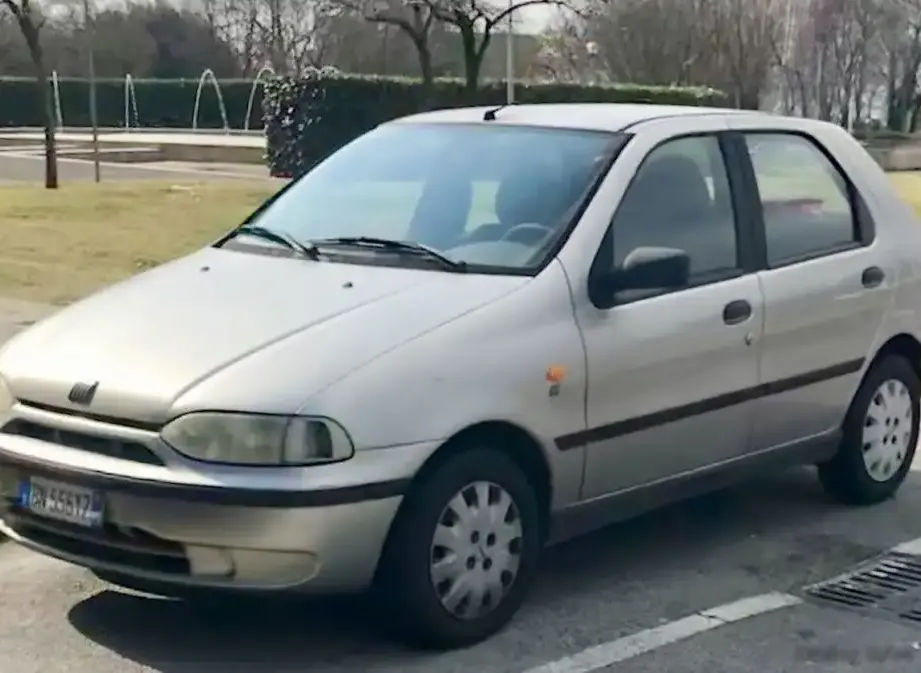
The Fiat Palio 1.7 TD, launched in 1996, was a key component of Fiat’s strategy to modernize its small car offerings. Built on the 178 platform, which also underpinned the Siena sedan, the Palio aimed to provide a more contemporary and spacious alternative to the aging Uno. The 1.7 TD variant specifically targeted buyers seeking economical transportation, leveraging the benefits of a turbocharged diesel engine. Positioned as a mid-range option within the Palio lineup, it offered a step up in performance from the smaller petrol engines while remaining more affordable than the higher-specification models. Production continued until 2002, with the Palio undergoing a facelift in 1998 to enhance its appeal.
Powertrain & Engine Architecture
The heart of the Palio 1.7 TD is the 176 A3.000 engine, a 1.7-liter inline-four cylinder diesel. This engine utilizes a precombustion chamber injection system, a common technology for diesel engines of that era. This system involves injecting fuel into a precombustion chamber connected to the main cylinder, promoting more complete combustion and reducing emissions. The engine is turbocharged, which significantly boosts power output compared to naturally aspirated diesel engines of similar displacement. The turbocharger provides 69 horsepower at 4500 rpm and 134 Nm (98.83 lb.-ft.) of torque at 2500 rpm. The Palio 1.7 TD was exclusively offered with a five-speed manual transmission, designed to efficiently manage the engine’s torque curve and maximize fuel economy. The transmission’s gear ratios were tuned for everyday driving, prioritizing fuel efficiency over outright acceleration.
Driving Characteristics
The Palio 1.7 TD offered a distinctly different driving experience compared to its petrol-powered siblings. While not particularly quick – 0-60 mph took around 14.2 seconds – the engine’s torque provided reasonable pulling power for overtaking and navigating hilly terrain. The turbocharger did introduce a degree of turbo lag, meaning there was a slight delay between pressing the accelerator and feeling the full power delivery. However, once the turbo spooled up, the engine provided a steady and usable surge of power. Compared to the 1.2 or 1.4-liter petrol versions, the 1.7 TD felt more relaxed at highway speeds, requiring less frequent gear changes. The manual transmission, while not particularly sporty, was precise and easy to use.
Equipment & Trim Levels
The Palio 1.7 TD typically came equipped with a fairly basic level of standard equipment, reflecting its position as a value-oriented model. Features generally included power steering, central locking, and a basic audio system. Interior upholstery was typically cloth, with a durable and practical design. Optional extras included air conditioning, electric windows, and alloy wheels. Higher trim levels, often denoted by “ELX” or similar designations, added more comfort and convenience features. The dashboard layout was functional and straightforward, prioritizing ease of use over aesthetic flair.
Chassis & Braking
The Palio 1.7 TD utilized a relatively simple chassis design. Front suspension consisted of MacPherson strut springs, while the rear employed a trailing arm setup. This configuration provided a comfortable ride quality, although it wasn’t particularly sporty. Braking was handled by disc brakes on the front wheels and drum brakes on the rear. The braking system was adequate for everyday driving, but lacked the stopping power of more advanced setups. The Palio’s relatively light weight – around 1110 kg (2447 lbs) – helped to mitigate the limitations of the braking system.
Market Reception & Comparison
The Palio 1.7 TD was generally well-received by critics as a practical and economical small car. Its fuel efficiency was a major selling point, particularly in Europe where diesel fuel was often cheaper than petrol. Compared to the petrol-powered Palio variants, the 1.7 TD offered superior fuel economy and better torque, making it a more suitable choice for long-distance driving. However, it was criticized for its relatively slow acceleration and the presence of turbo lag. Compared to competitors like the Renault Clio Diesel and Peugeot 206 HDi, the Palio 1.7 TD offered a competitive price point and a spacious interior.
Legacy
The Fiat Palio 1.7 TD has proven to be a relatively reliable vehicle, with many examples still on the road today. The 176 A3.000 diesel engine is known for its durability, although it can be prone to issues with the turbocharger and fuel injection system if not properly maintained. In the used car market, the Palio 1.7 TD remains an affordable option for those seeking a practical and economical vehicle. Its simple mechanical design makes it relatively easy and inexpensive to repair, further adding to its appeal. While it may not offer the refinement or performance of more modern cars, the Palio 1.7 TD represents a solid and dependable choice for budget-conscious buyers.
