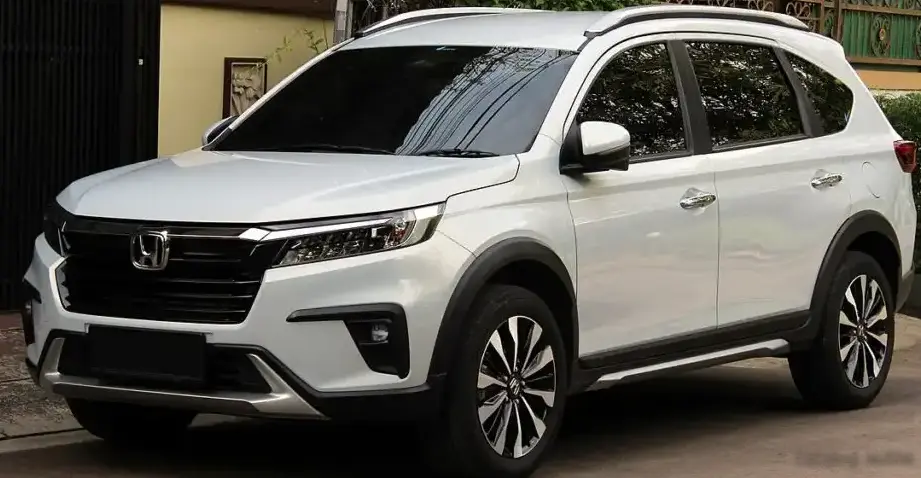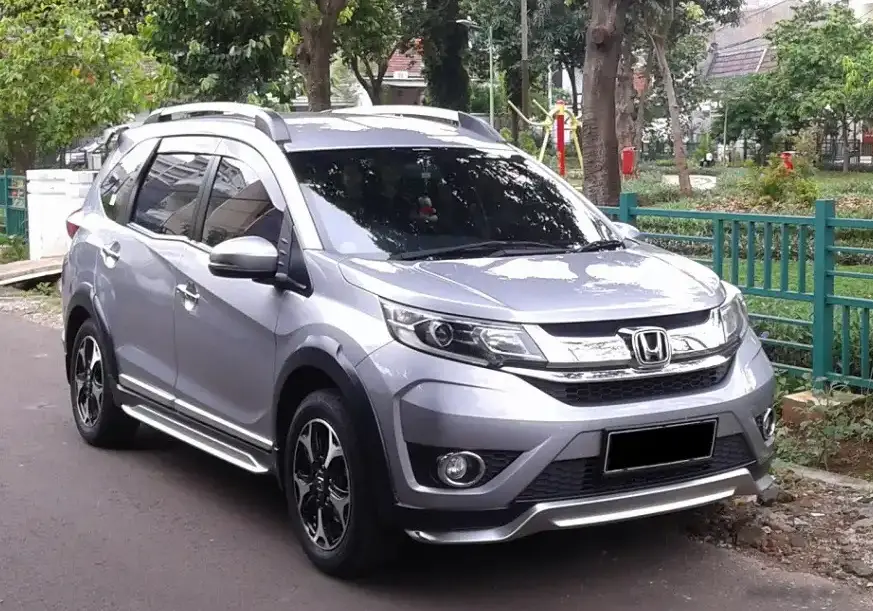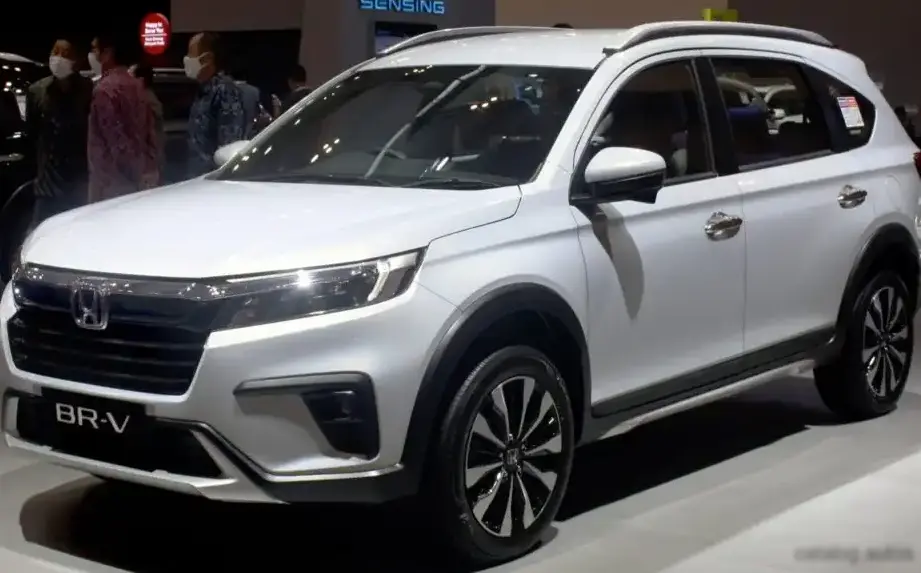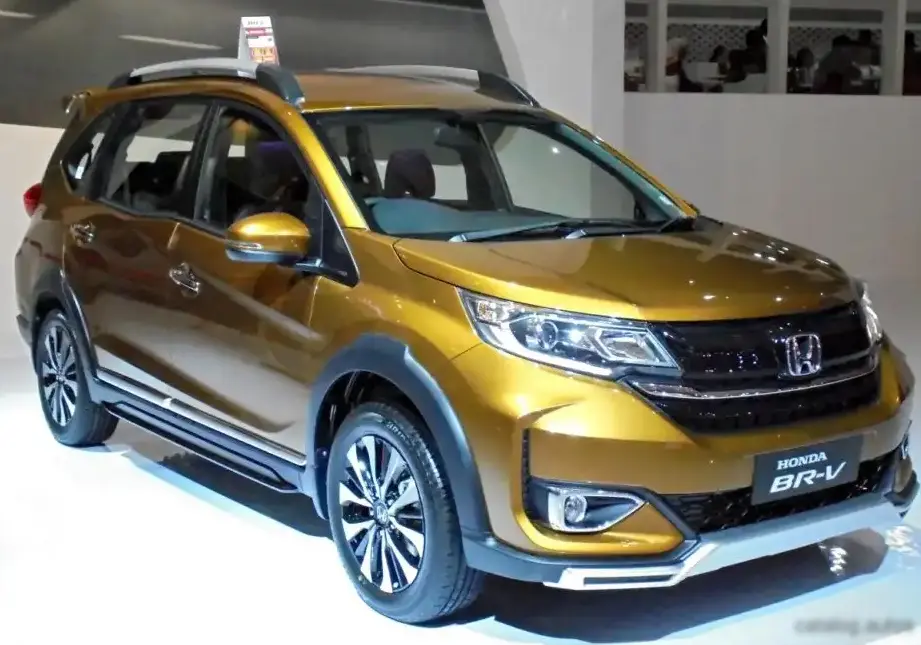
The Honda BR-V I (facelift 2019) 1.5 i-VTEC (120 Hp) CVT represents a significant iteration of Honda’s entry into the compact SUV market, particularly aimed at emerging economies and family-oriented buyers. Introduced in April 2019 and continuing through December 2021, this variant occupied a crucial position within the BR-V lineup, offering a balance between affordability, practicality, and fuel efficiency. It’s built on the versatile Global Small Car platform, shared with other Honda models, and distinguished itself with its seven-passenger seating capacity – a relatively uncommon feature in this segment. The facelift brought styling updates and refinements to the original BR-V, enhancing its appeal.
Technical Specifications
| Brand | Honda |
| Model | BR-V |
| Generation | BR-V I (facelift 2019) |
| Type (Engine) | 1.5 i-VTEC (120 Hp) CVT |
| Start of production | April, 2019 |
| End of production | December, 2021 |
| Powertrain Architecture | Internal Combustion engine |
| Body type | SUV |
| Seats | 7 |
| Doors | 5 |
| Fuel consumption (combined) | 6.4 l/100 km (36.8 US mpg, 44.1 UK mpg, 15.6 km/l) |
| Fuel Type | Petrol (Gasoline) |
| Acceleration 0 – 100 km/h | 12.2 sec |
| Acceleration 0 – 62 mph | 12.2 sec |
| Acceleration 0 – 60 mph | 11.6 sec |
| Maximum speed | 160 km/h (99.42 mph) |
| Weight-to-power ratio | 10.5 kg/Hp, 95.2 Hp/tonne |
| Weight-to-torque ratio | 8.7 kg/Nm, 115.1 Nm/tonne |
| Power | 120 Hp @ 6600 rpm |
| Power per litre | 80.2 Hp/l |
| Torque | 145 Nm @ 4600 rpm (106.95 lb.-ft. @ 4600 rpm) |
| Engine layout | Front, Transverse |
| Engine Model/Code | L15Z1 |
| Engine displacement | 1497 cm3 (91.35 cu. in.) |
| Number of cylinders | 4 |
| Engine configuration | Inline |
| Number of valves per cylinder | 4 |
| Fuel injection system | Multi-port manifold injection |
| Engine aspiration | Naturally aspirated engine |
| Valvetrain | SOHC, i-VTEC |
| Engine oil capacity | 3.6 l (3.8 US qt | 3.17 UK qt) |
| Coolant capacity | 3.9 l (4.12 US qt | 3.43 UK qt) |
| Kerb Weight | 1260-1269 kg (2777.82 – 2797.67 lbs.) |
| Trunk (boot) space – minimum | 223-539 l (7.88 – 19.03 cu. ft.) |
| Length | 4451-4457 mm (175.24 – 175.47 in.) |
| Width | 1735 mm (68.31 in.) |
| Height | 1677 mm (66.02 in.) |
| Wheelbase | 2662 mm (104.8 in.) |
| Front track | 1500 mm (59.06 in.) |
| Rear (Back) track | 1500 mm (59.06 in.) |
| Ride height (ground clearance) | 200 mm (7.87 in.) |
| Minimum turning circle | 11.2 m (36.75 ft.) |
| Drivetrain Architecture | The Internal combustion engine (ICE) drives the front wheels of the vehicle. |
| Drive wheel | Front wheel drive |
| Number of gears and type of gearbox | automatic transmission CVT |
| Front suspension | Independent type McPherson |
| Rear suspension | Torsion |
| Front brakes | Ventilated discs |
| Rear brakes | Drum |
| Assisting systems | ABS (Anti-lock braking system) |
| Steering type | Steering rack and pinion |
| Power steering | Electric Steering |
| Tires size | 195/60 R16 |
| Wheel rims size | 16 |
INTRODUCTION
The Honda BR-V I, particularly the facelifted 2019 model with the 1.5-liter i-VTEC engine and Continuously Variable Transmission (CVT), was primarily targeted towards emerging markets in Asia, South America, and Africa. It offered a compelling package for families needing affordable, spacious transportation. The BR-V aimed to bridge the gap between smaller hatchbacks and larger, more expensive SUVs. The 2019 facelift brought subtle but noticeable improvements to the exterior styling, including a revised front grille and bumper, as well as interior enhancements. This variant was positioned as a mid-range offering within the BR-V lineup, providing a good balance of features and price.
Powertrain & Engine Architecture
At the heart of the BR-V 1.5 i-VTEC CVT lies the L15Z1 engine, a 1.5-liter inline-four cylinder gasoline engine. This engine utilizes Honda’s well-regarded i-VTEC (Intelligent Variable Valve Timing and Lift Electronic Control) technology, which optimizes valve timing and lift for improved performance and fuel efficiency across a wider range of engine speeds. The engine employs a multi-point fuel injection system, delivering fuel directly to the intake ports. The L15Z1 is a naturally aspirated engine, meaning it doesn’t rely on turbocharging or supercharging for power. The CVT transmission is a key component of this variant, offering smooth, stepless gear changes and contributing to improved fuel economy. Unlike traditional automatic transmissions with fixed gear ratios, a CVT uses a belt and pulley system to provide an infinite number of gear ratios within its operating range. This allows the engine to operate at its most efficient RPM for any given speed and load.
Driving Characteristics
The 120 horsepower and 145 Nm (107 lb-ft) of torque produced by the 1.5L i-VTEC engine, coupled with the CVT, results in adequate, but not exhilarating, performance. Acceleration from 0-60 mph takes around 11.6 seconds, and top speed is limited to 99.42 mph. The CVT transmission prioritizes fuel efficiency over outright acceleration, meaning the engine tends to hold at higher RPMs during acceleration, which can feel somewhat “droning” to drivers accustomed to traditional automatics. Compared to a manual transmission version (if available in certain markets), the CVT sacrifices some responsiveness for smoother operation. Compared to higher-spec BR-V models with more powerful engines, this variant feels noticeably less potent, particularly when fully loaded with passengers and cargo. However, the CVT’s smooth operation makes it well-suited for urban driving and long highway journeys.
Equipment & Trim Levels
The 2019 facelifted BR-V 1.5 i-VTEC CVT typically came equipped with standard features such as air conditioning, power windows, power door locks, and a basic audio system with Bluetooth connectivity. Safety features generally included dual front airbags, ABS (Anti-lock Braking System), and EBD (Electronic Brakeforce Distribution). Higher trim levels offered additional features like alloy wheels, a touchscreen infotainment system, a rearview camera, and automatic climate control. Interior upholstery was typically cloth, with a functional and durable design. Optional extras often included roof rails, fog lights, and upgraded audio systems.
Chassis & Braking
The BR-V utilizes a front-wheel-drive layout with an independent McPherson strut suspension in the front and a torsion beam suspension in the rear. This suspension setup provides a comfortable ride quality, although it’s not particularly sporty. The front brakes are ventilated discs, offering good stopping power, while the rear brakes are drums, a cost-saving measure common in this segment. The electric power steering provides light and easy steering, making it convenient for maneuvering in tight spaces. The ride height of 200mm (7.87 inches) provides adequate ground clearance for navigating rough roads and uneven surfaces.
Market Reception & Comparison
The BR-V 1.5 i-VTEC CVT was generally well-received in its target markets, praised for its spaciousness, affordability, and fuel efficiency. Critics noted that the engine performance was adequate but not exceptional, and the CVT transmission could feel somewhat unrefined. Compared to other compact SUVs in the same price range, the BR-V offered a compelling combination of features and practicality. Its seven-passenger seating capacity was a significant selling point, setting it apart from many competitors. Fuel economy figures of around 36.8 US mpg were competitive for its class. Reliability was generally considered good, consistent with Honda’s reputation for building durable vehicles.
Legacy
The Honda BR-V 1.5 i-VTEC CVT has proven to be a relatively reliable powertrain in the used car market. The L15Z1 engine is known for its durability, and the CVT transmission, while sometimes criticized for its feel, has generally held up well over time with proper maintenance. These vehicles represent a good value proposition for buyers seeking an affordable and spacious family vehicle. Common maintenance items include regular oil changes, CVT fluid changes, and brake pad replacements. The BR-V’s practicality and affordability continue to make it a popular choice in many emerging markets, and its legacy as a versatile and reliable family SUV endures.