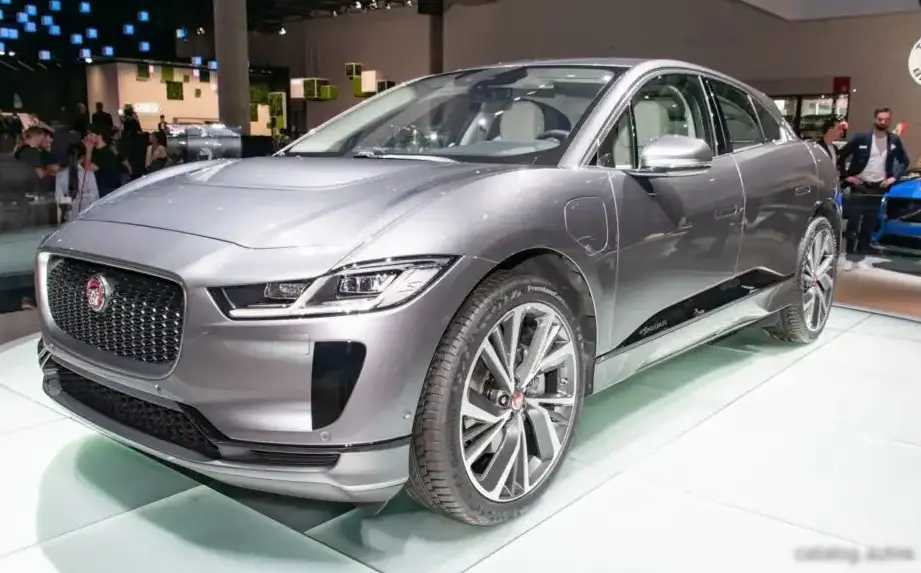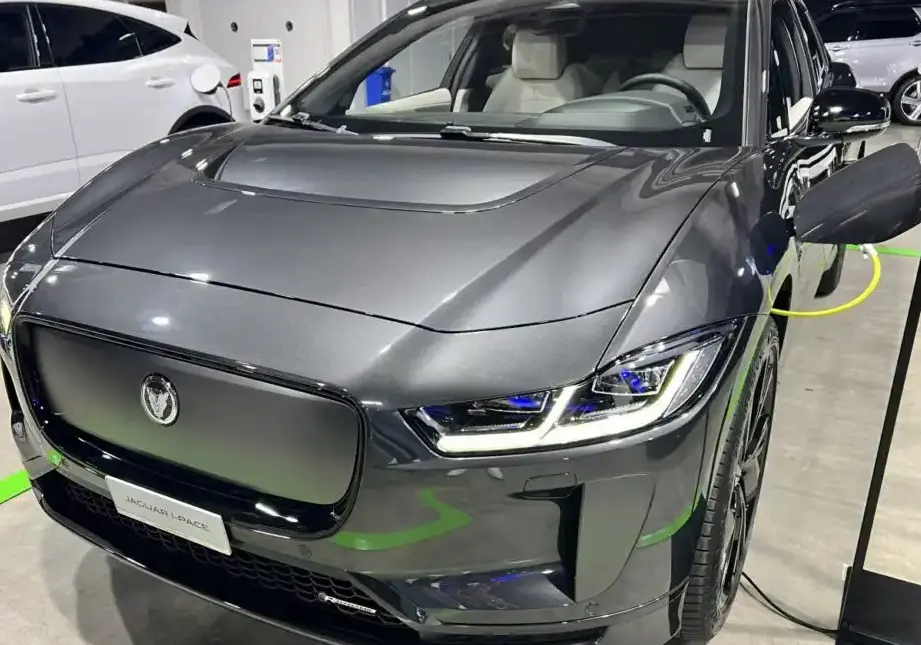
The Jaguar I-Pace, specifically the EV400 90 kWh (400 Hp) AWD variant introduced with the 2023 facelift, represents Jaguar’s significant entry into the all-electric luxury crossover market. Production began in January 2023, building upon the initial I-Pace launched in 2018. This updated model aimed to refine the original’s strengths – its performance, handling, and spacious interior – while addressing earlier criticisms regarding range and technology. The EV400 trim sat at the top of the I-Pace lineup, offering the highest performance and longest range within the model range. It was positioned as a direct competitor to vehicles like the Porsche Taycan Cross Turismo, Audi e-tron, and Tesla Model Y Performance.
Technical Specifications
| Brand | Jaguar |
| Model | I-Pace |
| Generation | I-Pace (facelift 2023) |
| Type (Engine) | EV400 90 kWh (400 Hp) AWD |
| Start of production | January, 2023 |
| Powertrain Architecture | BEV (Electric Vehicle) |
| Body type | SUV, Crossover |
| Seats | 5 |
| Doors | 5 |
| Fuel Type | Electricity |
| Acceleration 0 – 100 km/h | 4.8 sec |
| Acceleration 0 – 62 mph | 4.8 sec |
| Acceleration 0 – 60 mph | 4.5 sec |
| Maximum speed | 200 km/h (124.27 mph) |
| Weight-to-power ratio | 5.3 kg/Hp, 187.5 Hp/tonne |
| Weight-to-torque ratio | 3.1 kg/Nm, 326.3 Nm/tonne |
| Gross battery capacity | 90 kWh |
| Net (usable) battery capacity | 84.7 kWh |
| Battery technology | Lithium-ion (Li-Ion) |
| Battery location | Below the floor |
| All-electric range (WLTP) | 408-470 km (253.52 – 292.04 mi) |
| Average Energy consumption (WLTP) | 22-25.2 kWh/100 km (35.41 – 40.56 kWh/100 mi) |
| MPGe | 95 – 83 |
| km/kWh | 4.5 – 4 |
| mi/kWh | 2.8 – 2.5 |
| Electric motor 1 power | 200 Hp |
| Electric motor 1 Torque | 348 Nm (256.67 lb.-ft.) |
| Electric motor 1 location | Front axle, Transverse |
| Electric motor 1 type | Synchronous |
| Electric motor 2 power | 200 Hp |
| Electric motor 2 Torque | 348 Nm (256.67 lb.-ft.) |
| Electric motor 2 location | Rear axle, Transverse |
| Electric motor 2 type | Synchronous |
| System power | 400 Hp |
| System torque | 696 Nm (513.34 lb.-ft.) |
| Kerb Weight | 2133 kg (4702.46 lbs.) |
| Max. weight | 2670 kg (5886.34 lbs.) |
| Max load | 537 kg (1183.88 lbs.) |
| Trunk (boot) space – minimum | 656 l (23.17 cu. ft.) |
| Trunk (boot) space – maximum | 1453 l (51.31 cu. ft.) |
| Max. roof load | 75 kg (165.35 lbs.) |
| Permitted trailer load with brakes (12%) | 750 kg (1653.47 lbs.) |
| Permitted trailer load without brakes | 750 kg (1653.47 lbs.) |
| Permitted towbar download | 45 kg (99.21 lbs.) |
| Length | 4682 mm (184.33 in.) |
| Width with mirrors folded | 2011 mm (79.17 in.) |
| Width including mirrors | 2139 mm (84.21 in.) |
| Height | 1566 mm (61.65 in.) |
| Wheelbase | 2990 mm (117.72 in.) |
| Front track | 1641-1643 mm (64.61 – 64.69 in.) |
| Rear (Back) track | 1660-1662 mm (65.35 – 65.43 in.) |
| Ride height (ground clearance) | 174 mm (6.85 in.) |
| Drag coefficient (Cd) | 0.29 |
| Minimum turning circle (turning diameter) | 12.75 m (41.83 ft.) |
| Drivetrain Architecture | One electric motor drives the front wheels, one electric motor drives the rear wheels. |
| Drive wheel | All wheel drive (4×4) |
| Number of gears and type of gearbox | 1 gears, automatic transmission |
| Front suspension | Double wishbone, Air Suspension – Optional |
| Rear suspension | Independent multi-link suspension, Air Suspension – Optional |
| Front brakes | Ventilated discs, 350 mm |
| Rear brakes | Ventilated discs, 325 mm |
| Steering type | Steering rack and pinion |
| Power steering | Electric Steering |
| Wheel rims size | 18; 19; 20; 22 |
Powertrain & Engine Architecture
The I-Pace EV400 utilizes a dual-motor, all-wheel-drive (AWD) powertrain. Each axle is driven by a permanent magnet synchronous electric motor, producing 200 horsepower and 348 Nm (256.67 lb.-ft.) of torque individually. Combined, the system delivers a total output of 400 horsepower and 696 Nm (513.34 lb.-ft.) of torque. The 90 kWh lithium-ion battery pack is mounted low in the vehicle’s floor, contributing to a low center of gravity and improved handling. The battery employs a sophisticated thermal management system to maintain optimal operating temperatures. The single-speed automatic transmission is inherent to electric vehicle design, providing seamless acceleration. The I-Pace features a sophisticated energy recovery system, allowing for adjustable regenerative braking to recapture energy during deceleration.
Driving Characteristics
The I-Pace EV400 delivers brisk acceleration, achieving 0-60 mph in approximately 4.5 seconds. The instant torque characteristic of electric motors provides strong off-the-line performance. The AWD system ensures excellent traction in various weather conditions. While the single-speed transmission simplifies the driving experience, it lacks the gear changes found in traditional internal combustion engine vehicles. The low center of gravity contributes to confident cornering, and the optional air suspension (available on higher trims) further enhances ride comfort and handling. Compared to the base I-Pace models, the EV400 offers a noticeably more engaging driving experience due to its increased power output.
Equipment & Trim Levels
The EV400 trim typically included a high level of standard equipment. This included premium leather upholstery, a panoramic sunroof, a 16-speaker Meridian sound system, and a suite of advanced driver-assistance systems (ADAS) such as adaptive cruise control, lane keep assist, and automatic emergency braking. Optional extras included the air suspension, upgraded wheel designs, and various interior trim options. The infotainment system features a dual-touchscreen setup, providing control over vehicle functions and navigation.
Chassis & Braking
The I-Pace utilizes a double-wishbone front suspension and an independent multi-link rear suspension. The optional air suspension provides adjustable ride height and damping settings. The braking system consists of ventilated discs on all four wheels, with 350mm discs at the front and 325mm discs at the rear. The ABS (Anti-lock braking system) and electronic stability control systems enhance safety and control. The steering is electric power-assisted, providing precise and responsive handling.
Market Reception & Comparison
The Jaguar I-Pace EV400 was generally well-received by automotive critics, praised for its performance, handling, and luxurious interior. However, some reviewers noted the relatively limited range compared to newer electric vehicles. Fuel economy, expressed as MPGe, ranged from 83 to 95, and energy consumption was between 22 and 25.2 kWh per 100 kilometers. Compared to the base I-Pace models, the EV400 offered a significant performance upgrade, justifying its higher price point. Against competitors like the Porsche Taycan Cross Turismo, the I-Pace offered a more accessible price point, while the Tesla Model Y Performance provided longer range and a more extensive charging network.
Legacy
The Jaguar I-Pace was a pivotal model for Jaguar, marking its first foray into the electric vehicle market. The EV400 variant, with its enhanced performance and range, solidified the I-Pace’s position as a competitive luxury electric crossover. While the I-Pace has faced increasing competition from newer EVs, it remains a desirable vehicle in the used car market, appreciated for its distinctive styling, engaging driving dynamics, and luxurious interior. The powertrain has proven relatively reliable, with most reported issues relating to the infotainment system and software glitches, which Jaguar has addressed through over-the-air updates.