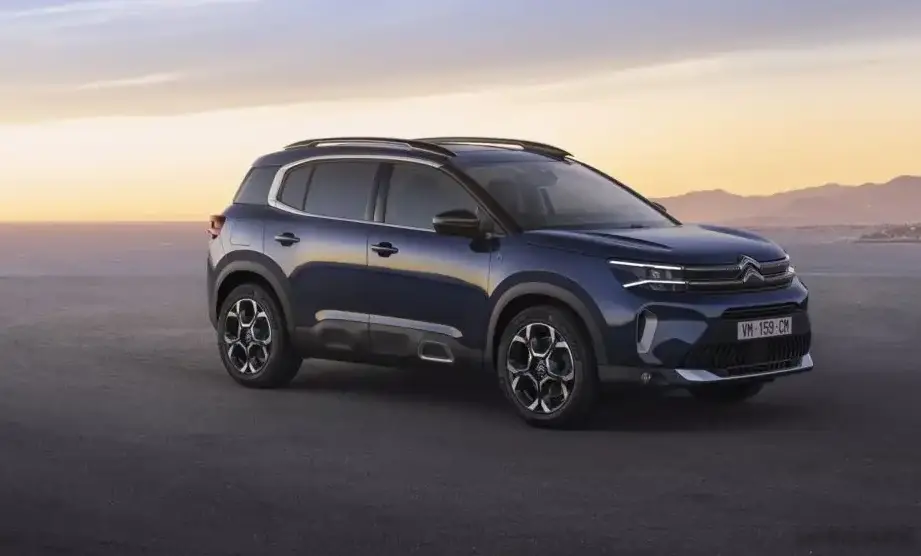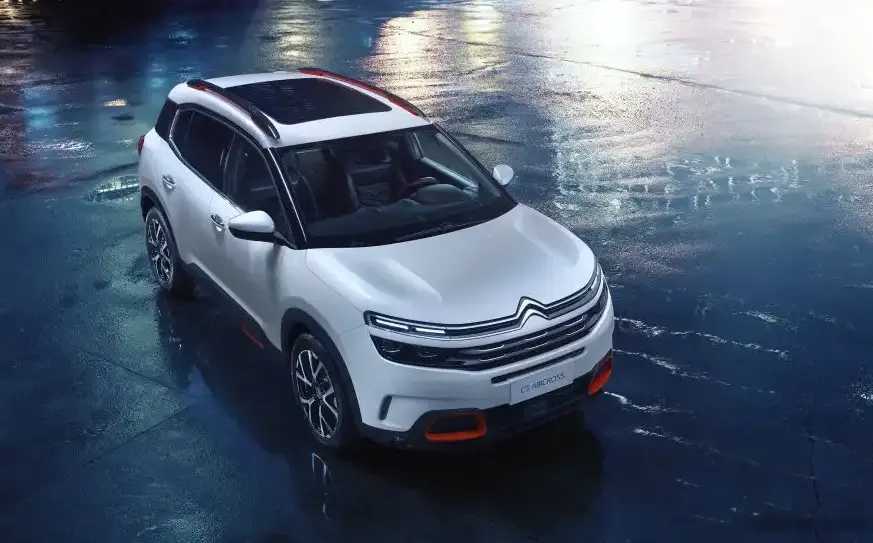
The Citroen C5 Aircross, launched in 2017, represented a significant step for Citroen into the increasingly popular compact SUV segment. The Phase I model, produced from 2018 to February 2022, offered a range of engine and trim options. Among these, the 1.2 PureTech 131 horsepower (hp) variant with a six-speed manual transmission occupied a key position as an entry-level offering, balancing affordability with the C5 Aircross’s signature comfort and distinctive styling. This version was particularly important in European markets where smaller displacement, fuel-efficient engines are highly valued.
Technical Specifications
| Brand | Citroen |
| Model | C5 Aircross |
| Generation | C5 Aircross I (Phase I, 2017) |
| Type (Engine) | 1.2 PureTech (131 Hp) S&S |
| Start of production | 2018 |
| End of production | February, 2022 |
| Powertrain Architecture | Internal Combustion engine |
| Body type | SUV |
| Seats | 5 |
| Doors | 5 |
| Fuel consumption at Low speed (WLTP) | 8.1-8.2 l/100 km (29 – 28.7 US mpg, 34.9 – 34.4 UK mpg, 12.3 – 12.2 km/l) |
| Fuel consumption at Medium speed (WLTP) | 6.4-6.6 l/100 km (36.8 – 35.6 US mpg, 44.1 – 42.8 UK mpg, 15.6 – 15.2 km/l) |
| Fuel consumption at high speed (WLTP) | 5.7-5.9 l/100 km (41.3 – 39.9 US mpg, 49.6 – 47.9 UK mpg, 17.5 – 16.9 km/l) |
| Fuel consumption at very high speed (WLTP) | 6.9-7.2 l/100 km (34.1 – 32.7 US mpg, 40.9 – 39.2 UK mpg, 14.5 – 13.9 km/l) |
| Combined fuel consumption (WLTP) | 6.6-6.8 l/100 km (35.6 – 34.6 US mpg, 42.8 – 41.5 UK mpg, 15.2 – 14.7 km/l) |
| CO2 emissions (WLTP) | 148-153 g/km |
| Fuel consumption (economy) – urban (NEDC) | 6.0-6.1 l/100 km (39.2 – 38.6 US mpg, 47.1 – 46.3 UK mpg, 16.7 – 16.4 km/l) |
| Fuel consumption (economy) – extra urban (NEDC) | 4.7- 4.9 l/100 km (50 – 48 US mpg, 60.1 – 57.6 UK mpg, 21.3 – 20.4 km/l) |
| Fuel consumption (economy) – combined (NEDC) | 5.2-5.3 l/100 km (45.2 – 44.4 US mpg, 54.3 – 53.3 UK mpg, 19.2 – 18.9 km/l) |
| CO2 emissions (NEDC) | 119 g/km |
| Fuel Type | Petrol (Gasoline) |
| Acceleration 0 – 100 km/h | 10.5 sec |
| Acceleration 0 – 62 mph | 10.5 sec |
| Acceleration 0 – 60 mph | 10 sec (Calculated) |
| Maximum speed | 195 km/h (121.17 mph) |
| Emission standard | Euro 6d-TEMP |
| Weight-to-power ratio | 10.7 kg/Hp, 93.3 Hp/tonne |
| Weight-to-torque ratio | 6.1 kg/Nm, 163.8 Nm/tonne |
| Power | 131 Hp @ 5500 rpm |
| Power per litre | 109.3 Hp/l |
| Torque | 230 Nm @ 1750 rpm (169.64 lb.-ft. @ 1750 rpm) |
| Engine layout | Front, Transverse |
| Engine Model/Code | HNS EB2ADTS |
| Engine displacement | 1199 cm3 (73.17 cu. in.) |
| Number of cylinders | 3 |
| Engine configuration | Inline |
| Cylinder Bore | 75 mm (2.95 in.) |
| Piston Stroke | 90.5 mm (3.56 in.) |
| Compression ratio | 10.5:1 |
| Number of valves per cylinder | 4 |
| Fuel injection system | Direct injection |
| Engine aspiration | Turbocharger, Intercooler |
| Engine oil capacity | 3.5 l (3.7 US qt | 3.08 UK qt) |
| Kerb Weight | 1404 kg (3095.29 lbs.) |
| Max. weight | 1940 kg (4276.97 lbs.) |
| Max load | 536 kg (1181.68 lbs.) |
| Trunk (boot) space – minimum | 580 l (20.48 cu. ft.) |
| Trunk (boot) space – maximum | 1630 l (57.56 cu. ft.) |
| Fuel tank capacity | 53 l (14 US gal | 11.66 UK gal) |
| Permitted trailer load with brakes (12%) | 1350 kg (2976.24 lbs.) |
| Permitted trailer load without brakes | 739 kg (1629.22 lbs.) |
| Length | 4500 mm (177.17 in.) |
| Width with mirrors folded | 1969 mm (77.52 in.) |
| Width including mirrors | 2099 mm (82.64 in.) |
| Height | 1689 mm (66.5 in.) |
| Wheelbase | 2730 mm (107.48 in.) |
| Front track | 1579-1601 mm (62.17 – 63.03 in.) |
| Rear (Back) track | 1608-1630 mm (63.31 – 64.17 in.) |
| Front overhang | 917 mm (36.1 in.) |
| Rear overhang | 853 mm (33.58 in.) |
| Ride height (ground clearance) | 230 mm (9.06 in.) |
| Minimum turning circle | 10.7 m (35.1 ft.) |
| Drivetrain Architecture | Front wheel drive |
| Number of gears and type of gearbox | 6 gears, manual transmission |
| Front suspension | Independent type McPherson |
| Rear suspension | Semi-independent, coil spring |
| Front brakes | Ventilated discs |
| Rear brakes | Disc |
INTRODUCTION
The Citroen C5 Aircross 1.2 PureTech 131 hp, launched in 2018, was a key component of Citroen’s strategy to expand its presence in the competitive compact SUV market. Built on the EMP2 platform (also known as the 1HX0/A3 platform), the C5 Aircross aimed to differentiate itself through a focus on comfort, practicality, and bold styling. The 1.2 PureTech engine, part of Citroen’s PureTech family of turbocharged petrol engines, was offered as a more accessible entry point into the range, appealing to buyers prioritizing fuel efficiency and lower running costs. This variant sat below the more powerful 1.6 PureTech and diesel options in the lineup.
Powertrain & Engine Architecture
The heart of this C5 Aircross variant is the HNS EB2ADTS 1.2-liter three-cylinder turbocharged petrol engine. This engine is part of Peugeot-Citroen’s (PSA Group, now Stellantis) PureTech engine family, known for its efficiency and surprisingly strong performance for its size. The engine utilizes direct fuel injection, optimizing combustion and contributing to improved fuel economy. It also features a turbocharger with an intercooler, which helps to increase power output by forcing more air into the cylinders. The engine produces 131 hp at 5500 rpm and 230 Nm (169.64 lb.-ft.) of torque at 1750 rpm. The six-speed manual transmission was standard on this model, offering a balance between fuel efficiency and driver engagement. The Start & Stop system further enhances fuel economy by automatically shutting off the engine when the vehicle is stationary.
Driving Characteristics
The 1.2 PureTech engine, while not offering blistering performance, provides adequate power for everyday driving. Acceleration from 0-100 km/h (0-62 mph) takes around 10.5 seconds. The engine feels responsive at lower speeds, thanks to the turbocharger, but can feel somewhat strained when accelerating hard or when fully loaded. The six-speed manual transmission is well-matched to the engine’s characteristics, allowing drivers to keep the engine in its optimal power band. Compared to the more powerful 1.6 PureTech variant, the 1.2 feels less eager to accelerate, but offers significantly better fuel economy. The gear ratios are tuned for efficiency, prioritizing comfortable cruising over outright performance. The C5 Aircross’s suspension, a key selling point, provides a comfortable ride, absorbing bumps and imperfections in the road effectively, even with the lighter engine.
Equipment & Trim Levels
The 1.2 PureTech 131 hp variant typically came with a respectable level of standard equipment. This included features such as air conditioning, a touchscreen infotainment system with Apple CarPlay and Android Auto compatibility, Bluetooth connectivity, and a suite of safety features including automatic emergency braking, lane departure warning, and speed limit recognition. Interior upholstery was typically cloth, with a focus on durability and comfort. Optional extras included features such as a panoramic sunroof, leather upholstery, a more advanced infotainment system with navigation, and parking sensors. Trim levels varied depending on the market, but generally offered progressive upgrades in terms of features and aesthetics.
Chassis & Braking
The C5 Aircross features a McPherson strut front suspension and a semi-independent coil spring rear suspension. This setup prioritizes ride comfort and stability. The front brakes are ventilated discs, providing good stopping power, while the rear brakes are discs. ABS (Anti-lock Braking System) is standard, enhancing safety during emergency braking situations. The C5 Aircross’s suspension is tuned to provide a smooth and comfortable ride, even on uneven surfaces. The vehicle’s relatively lightweight construction, compared to some of its competitors, contributes to its agile handling.
Market Reception & Comparison
The Citroen C5 Aircross 1.2 PureTech 131 hp was generally well-received by critics as a practical and comfortable SUV. Reviewers praised its distinctive styling, spacious interior, and comfortable ride. However, some criticized the engine’s lack of outright power, particularly when compared to larger-displacement engines or diesel alternatives. In terms of fuel economy, the 1.2 PureTech variant offered a significant advantage over the 1.6 PureTech, making it an attractive option for buyers prioritizing running costs. Compared to competitors such as the Nissan Qashqai and Peugeot 3008, the C5 Aircross offered a unique blend of comfort and affordability.
Legacy
The 1.2 PureTech engine, while initially praised for its efficiency, has experienced some reliability concerns related to the timing chain. However, these issues are not exclusive to the C5 Aircross and have been addressed in later iterations of the engine. On the used car market, the C5 Aircross 1.2 PureTech 131 hp represents a good value proposition, offering a comfortable and practical SUV at an affordable price point. Regular maintenance and adherence to recommended service intervals are crucial to ensure the long-term reliability of this powertrain. The C5 Aircross, as a whole, has established itself as a popular and distinctive SUV, and the 1.2 PureTech variant remains a viable option for buyers seeking a fuel-efficient and comfortable vehicle.