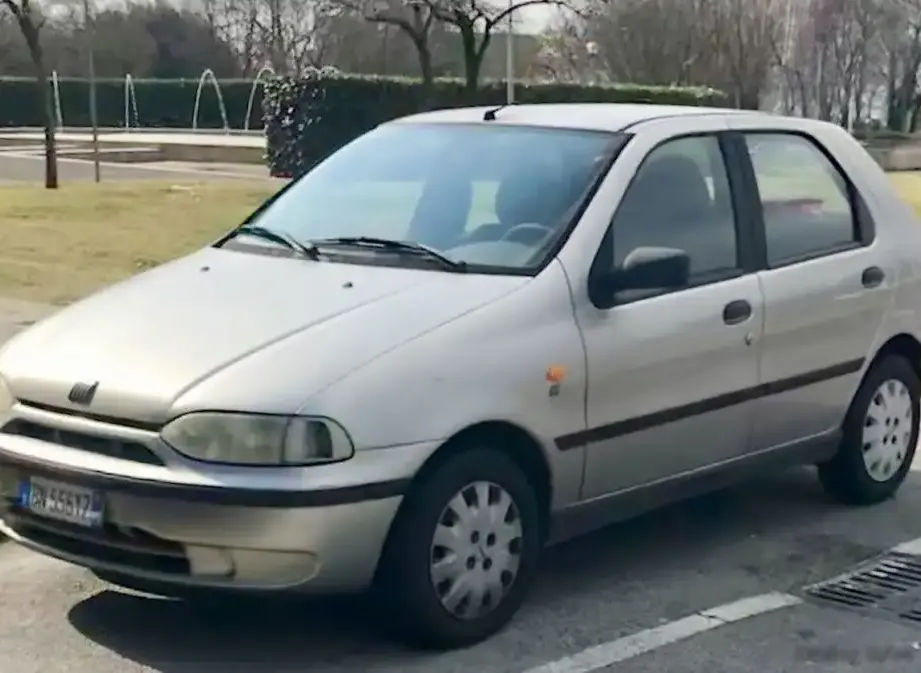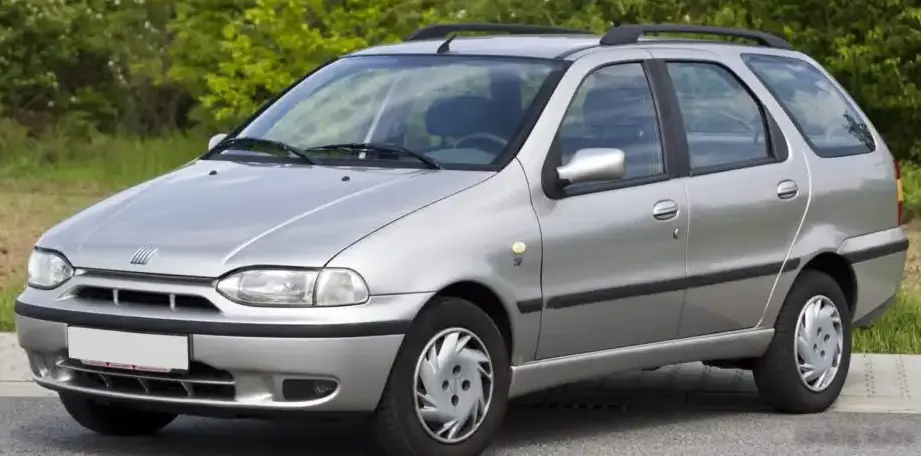
The Fiat Palio Weekend 1.2 16V (80 hp) was a station wagon variant of the popular Palio, produced between 2002 and 2003. Part of the 178 project series, it represented a practical and affordable option within the broader Palio range, primarily aimed at the European and South American markets. This specific configuration, combining the 1.2-liter 16-valve engine with a five-speed manual transmission, occupied the entry-level position in the Weekend lineup, prioritizing fuel efficiency and accessibility over outright performance. It was designed to appeal to families and individuals needing a versatile vehicle for everyday use and light cargo hauling.
Technical Specifications
| Brand | Fiat |
| Model | Palio |
| Generation | Palio Weekend (178) |
| Type (Engine) | 1.2 16V (80 Hp) |
| Start of production | 2002 |
| End of production | 2003 |
| Powertrain Architecture | Internal Combustion engine |
| Body type | Station wagon (estate) |
| Seats | 5 |
| Doors | 5 |
| Fuel consumption (urban) | 9.2 l/100 km (25.6 US mpg) |
| Fuel consumption (extra urban) | 5.4 l/100 km (43.6 US mpg) |
| Fuel Type | Petrol (Gasoline) |
| Acceleration 0 – 100 km/h | 13.2 sec |
| Acceleration 0 – 62 mph | 13.2 sec |
| Acceleration 0 – 60 mph | 12.5 sec |
| Maximum speed | 167 km/h (103.77 mph) |
| Weight-to-power ratio | 13.5 kg/Hp |
| Weight-to-torque ratio | 9.5 kg/Nm |
| Power | 80 Hp @ 5000 rpm |
| Power per litre | 64.4 Hp/l |
| Torque | 114 Nm @ 4000 rpm (84.08 lb.-ft. @ 4000 rpm) |
| Engine layout | Front, Transverse |
| Engine Model/Code | 178 D6.011 |
| Engine displacement | 1242 cm3 (75.79 cu. in.) |
| Number of cylinders | 4 |
| Engine configuration | Inline |
| Cylinder Bore | 70.8 mm (2.79 in.) |
| Piston Stroke | 78.9 mm (3.11 in.) |
| Compression ratio | 10.6:1 |
| Number of valves per cylinder | 4 |
| Fuel injection system | Multi-port manifold injection |
| Engine aspiration | Naturally aspirated engine |
| Valvetrain | DOHC |
| Engine oil capacity | 2.8 l (2.96 US qt | 2.46 UK qt) |
| Coolant capacity | 6 l (6.34 US qt | 5.28 UK qt) |
| Kerb Weight | 1080 kg (2380.99 lbs.) |
| Max. weight | 1620 kg (3571.49 lbs.) |
| Max load | 540 kg (1190.5 lbs.) |
| Trunk (boot) space – minimum | 460 l (16.24 cu. ft.) |
| Trunk (boot) space – maximum | 1540 l (54.38 cu. ft.) |
| Fuel tank capacity | 51 l (13.47 US gal | 11.22 UK gal) |
| Length | 4130 mm (162.6 in.) |
| Width | 1626 mm (64.02 in.) |
| Height | 1475 mm (58.07 in.) |
| Wheelbase | 2423 mm (95.39 in.) |
| Front track | 1388 mm (54.65 in.) |
| Rear track | 1385 mm (54.53 in.) |
| Drivetrain Architecture | Front wheel drive |
| Number of gears | 5 |
| Gearbox type | Manual transmission |
| Front suspension | Spring Strut |
| Rear suspension | Trailing arm |
| Front brakes | Disc |
| Rear brakes | Drum |
| Assisting systems | ABS (Anti-lock braking system) |
| Steering type | Steering rack and pinion |
| Power steering | Hydraulic Steering |
| Tires size | 175/70 R14 |
Powertrain & Engine Architecture
The heart of the Palio Weekend 1.2 16V was the 178 D6.011 engine, a 1.2-liter inline-four cylinder gasoline engine. This engine featured a double overhead camshaft (DOHC) valvetrain operating four valves per cylinder, contributing to its relatively high output for its displacement. It utilized a multi-point fuel injection system, delivering fuel directly to each intake port for improved combustion efficiency. The 16-valve configuration, combined with a compression ratio of 10.6:1, allowed the engine to produce 80 horsepower at 5000 rpm and 114 Nm (84 lb-ft) of torque at 4000 rpm. The engine was transversely mounted in the front of the vehicle, driving the front wheels. The five-speed manual transmission provided a balance between fuel economy and usable acceleration. Gear ratios were tuned for everyday driving, with a focus on maximizing fuel efficiency rather than providing sporty performance.
Driving Characteristics
The 1.2 16V engine, paired with the manual transmission, delivered adequate, though not exhilarating, performance. Acceleration from 0 to 60 mph took approximately 12.5 seconds, and the top speed was around 103.77 mph. The engine felt somewhat strained at higher speeds or when fully loaded. The five-speed gearbox allowed for reasonable control, but the relatively low horsepower meant frequent downshifting was necessary when overtaking or climbing hills. Compared to the more powerful 1.6-liter versions of the Palio Weekend, the 1.2 offered significantly less performance. However, it provided a smoother and more economical driving experience, particularly in urban environments. The manual transmission offered more driver engagement than the optional automatic transmission available on other Palio trims.
Equipment & Trim Levels
The 1.2 16V Palio Weekend typically came with a basic level of equipment, reflecting its position as the entry-level trim. Standard features generally included power steering, central locking, and an AM/FM radio. Interior upholstery was typically cloth, and the dashboard featured a functional, if somewhat basic, design. Optional extras included air conditioning, power windows, and upgraded audio systems. The interior space was a key selling point, offering ample room for passengers and cargo, especially with the rear seats folded down. The Weekend’s defining feature was its extended cargo area compared to the standard Palio hatchback.
Chassis & Braking
The Palio Weekend 1.2 16V utilized a relatively simple chassis design. Front suspension consisted of MacPherson strut coil springs, while the rear employed a trailing arm setup. This configuration provided a comfortable ride, but handling was not particularly sporty. The braking system featured disc brakes on the front wheels and drum brakes on the rear. Anti-lock Braking System (ABS) was often included as standard equipment, enhancing safety. The suspension was tuned for comfort and practicality, prioritizing ride quality over aggressive cornering. Stabilizer bars were present, but were relatively thin compared to those found on higher-performance Palio models.
Market Reception & Comparison
The Fiat Palio Weekend 1.2 16V was generally well-received as an affordable and practical station wagon. Critics praised its spacious interior, fuel efficiency, and reasonable price. However, the engine’s lack of power was a common criticism. Compared to the 1.6-liter versions, the 1.2 offered significantly lower performance, but it also boasted better fuel economy. The 1.2 was often seen as a sensible choice for buyers prioritizing practicality and running costs over driving excitement. It competed with other small station wagons in the European and South American markets, such as the Renault Clio Estate and the Peugeot 206 SW.
Legacy
The 178 series Palio Weekend, including the 1.2 16V variant, established a reputation for reliability and affordability. The 178 D6.011 engine, while not known for its high performance, proved to be a durable and relatively easy to maintain powerplant. In the used car market, these Palio Weekends are often sought after as inexpensive and practical transportation. Common maintenance issues include wear and tear on suspension components and potential problems with the fuel injection system. However, parts availability is generally good, and the relatively simple mechanical design makes it accessible for DIY repairs. The Palio Weekend 1.2 16V remains a testament to Fiat’s ability to produce affordable and functional vehicles for a broad range of consumers.