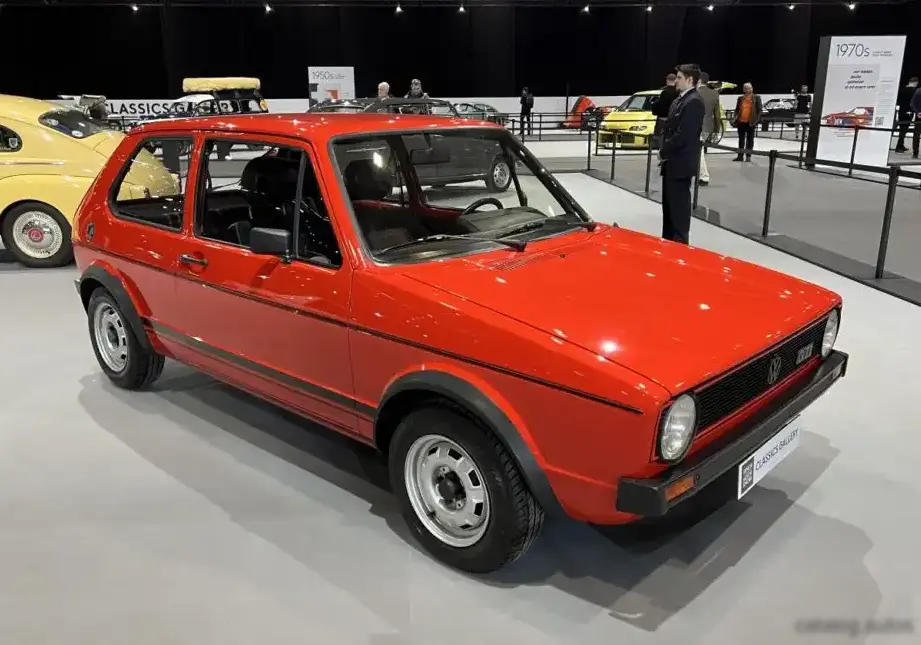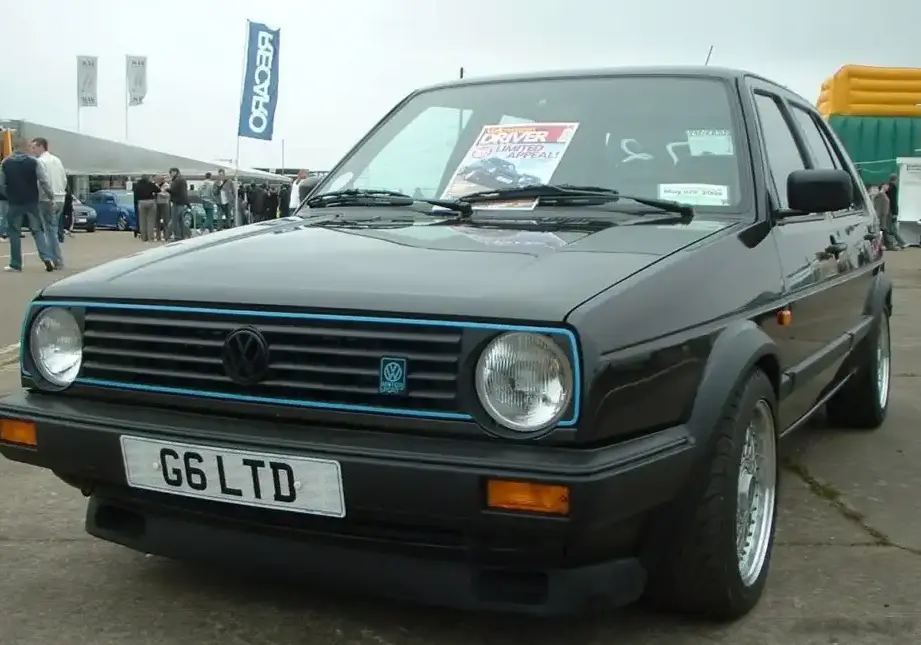
The Volkswagen Golf Mk2, produced from 1983 to 1992, represented a significant evolution of the original Golf, offering improved refinement, space, and technology. Within the Mk2 range, the 1.8-liter (98 horsepower) Syncro model, specifically the facelifted version introduced in 1987 and continuing through 1991, occupied a unique position. This variant combined the practicality of the five-door hatchback body style with Volkswagen’s sophisticated Syncro all-wheel-drive system, offering enhanced traction and stability. It was positioned as a more capable, all-weather alternative to the standard front-wheel-drive Golf models, appealing to buyers in regions with inclement weather or those seeking added security.
Technical Specifications
| Brand | Volkswagen |
| Model | Golf |
| Generation | Golf II (5-door, facelift 1987) |
| Type (Engine) | 1.8 (98 Hp) Syncro |
| Start of production | 1988 |
| End of production | 1991 |
| Powertrain Architecture | Internal Combustion engine |
| Body type | Hatchback |
| Seats | 5 |
| Doors | 5 |
| Fuel consumption (urban) | 11.7 l/100 km (20.1 US mpg, 24.1 UK mpg, 8.5 km/l) |
| Fuel consumption (extra urban) | 6.8 l/100 km (34.6 US mpg, 41.5 UK mpg, 14.7 km/l) |
| Fuel Type | Petrol (Gasoline) |
| Acceleration 0 – 100 km/h | 11.3 sec |
| Acceleration 0 – 62 mph | 11.3 sec |
| Acceleration 0 – 60 mph | 10.7 sec |
| Maximum speed | 180 km/h (111.85 mph) |
| Weight-to-power ratio | 11.3 kg/Hp, 88.7 Hp/tonne |
| Weight-to-torque ratio | 7.7 kg/Nm, 129.4 Nm/tonne |
| Power | 98 Hp @ 5400 rpm |
| Power per litre | 55 Hp/l |
| Torque | 143 Nm @ 3000 rpm (105.47 lb.-ft. @ 3000 rpm) |
| Engine layout | Front, Transverse |
| Engine Model/Code | 1P |
| Engine displacement | 1781 cm3 (108.68 cu. in.) |
| Number of cylinders | 4 |
| Engine configuration | Inline |
| Cylinder Bore | 81 mm (3.19 in.) |
| Piston Stroke | 86.4 mm (3.4 in.) |
| Compression ratio | 10:1 |
| Number of valves per cylinder | 2 |
| Fuel injection system | Multi-port manifold injection |
| Engine aspiration | Naturally aspirated engine |
| Valvetrain | SOHC |
| Engine oil capacity | 4 l (4.23 US qt, 3.52 UK qt) |
| Coolant capacity | 6.3 l (6.66 US qt, 5.54 UK qt) |
| Kerb Weight | 1105 kg (2436.11 lbs.) |
| Max. weight | 1570 kg (3461.26 lbs.) |
| Max load | 465 kg (1025.15 lbs.) |
| Trunk (boot) space – minimum | 230 l (8.12 cu. ft.) |
| Trunk (boot) space – maximum | 1030 l (36.37 cu. ft.) |
| Fuel tank capacity | 55 l (14.53 US gal, 12.1 UK gal) |
| Permitted trailer load with brakes (12%) | 1500 kg (3306.93 lbs.) |
| Permitted trailer load without brakes | 560 kg (1234.59 lbs.) |
| Permitted towbar download | 75 kg (165.35 lbs.) |
| Length | 3985 mm (156.89 in.) |
| Width | 1665-1680 mm (65.55 – 66.14 in.) |
| Height | 1415 mm (55.71 in.) |
| Wheelbase | 2475 mm (97.44 in.) |
| Front track | 1427 mm (56.18 in.) |
| Rear track | 1432 mm (56.38 in.) |
| Drag coefficient (Cd) | 0.34 |
| Minimum turning circle | 10.5 m (34.45 ft.) |
| Drivetrain Architecture | All wheel drive (4×4) |
| Drive wheel | All wheel drive (4×4) |
| Number of gears | 5 gears, manual transmission |
| Front suspension | Independent type McPherson, Transverse stabilizer |
| Rear suspension | Transverse stabilizer, Trailing arm |
| Front brakes | Disc |
| Rear brakes | Drum |
| Assisting systems | ABS (Anti-lock braking system) |
| Steering type | Steering rack and pinion |
| Tires size | 175/70 R13; 185/60 R14 |
| Wheel rims size | 5.5J x 13; 6J x 14 |
INTRODUCTION
The Volkswagen Golf Mk2 1.8 Syncro (facelift, 1987-1991) was a key variant in the second-generation Golf lineup. Introduced as part of the mid-cycle refresh in 1987 (designated 1HX0/A3 internally), it combined the proven mechanicals of the Golf Mk2 with Volkswagen’s Syncro all-wheel-drive system. This system, utilizing a viscous coupling, provided on-demand power to the rear wheels, enhancing traction in slippery conditions. The 1.8-liter engine, producing 98 horsepower, offered a balance between performance and fuel economy, making it a practical choice for everyday driving. This model was primarily sold in Europe, where the demand for all-wheel-drive vehicles was higher due to the frequent occurrence of snow and ice.
Powertrain & Engine Architecture
The heart of the Golf Mk2 1.8 Syncro was the 1781cc inline-four cylinder engine, designated the 1P engine code. This engine featured a single overhead camshaft (SOHC) valvetrain operating two valves per cylinder. Fuel delivery was handled by Bosch multi-port fuel injection, contributing to improved efficiency and reduced emissions compared to earlier carbureted engines. The engine’s 10:1 compression ratio and relatively simple design contributed to its reliability. The Syncro system itself was a part-time all-wheel-drive system. Under normal driving conditions, the engine’s power was directed to the front wheels. However, when the front wheels began to lose traction, a viscous coupling automatically engaged, sending power to the rear wheels. This system didn’t offer a locking differential, but it provided a significant improvement in grip on loose surfaces. The transmission was a five-speed manual, chosen for its efficiency and driver engagement. While an automatic transmission was available on other Golf Mk2 models, it wasn’t offered with the Syncro drivetrain.
Driving Characteristics
The 1.8-liter engine, producing 98 horsepower, provided adequate performance for everyday driving. Acceleration from 0 to 60 mph took around 10.7 seconds, and the top speed was approximately 112 mph. While not a sports car, the Golf Mk2 1.8 Syncro offered a smooth and refined driving experience. The Syncro system noticeably improved handling and stability, particularly on wet or snowy roads. The all-wheel-drive system reduced understeer and provided a more secure feeling when cornering. The five-speed manual transmission allowed drivers to keep the engine in its optimal power band, providing responsive acceleration. Compared to the more powerful GTI models, the 1.8 Syncro prioritized fuel efficiency and usability over outright performance. It also offered a more comfortable ride than the sport-tuned GTI.
Equipment & Trim Levels
The Golf Mk2 1.8 Syncro typically came with a reasonable level of standard equipment. This included power steering, central locking, and a basic stereo system. Interior upholstery was typically cloth, with a durable and practical design. The dashboard layout was functional and straightforward, with easy-to-read gauges. Optional extras included a sunroof, electric windows, and upgraded stereo systems. The Syncro models often featured unique badging to distinguish them from other Golf variants. The interior trim levels were generally aligned with other Golf Mk2 models, offering a range of colors and materials to choose from.
Chassis & Braking
The Golf Mk2 1.8 Syncro utilized an independent McPherson strut suspension at the front, providing a comfortable ride and good handling. The rear suspension employed a trailing arm setup with a transverse stabilizer bar, further enhancing stability. The braking system consisted of disc brakes at the front and drum brakes at the rear. While the drum brakes at the rear were a cost-saving measure, they provided adequate stopping power for the vehicle’s weight and performance. Anti-lock braking system (ABS) was available as an option, further improving braking performance and safety.
Market Reception & Comparison
The Golf Mk2 1.8 Syncro was generally well-received by automotive critics. It was praised for its all-weather capability, comfortable ride, and practical interior. However, some critics noted that the 1.8-liter engine lacked the punch of the GTI models. Compared to the front-wheel-drive Golf 1.8, the Syncro offered significantly improved traction and handling. It was also more expensive than the standard model, reflecting the added cost of the all-wheel-drive system. In terms of fuel economy, the Syncro was slightly less efficient than the front-wheel-drive version due to the added weight and drivetrain complexity. However, the difference was not substantial.
Legacy
The Golf Mk2 1.8 Syncro remains a popular classic car among Volkswagen enthusiasts. The 1P engine is known for its reliability and relatively simple maintenance requirements. The Syncro system, while not as sophisticated as modern all-wheel-drive systems, is generally durable and dependable. Today, these cars are sought after for their unique combination of practicality, all-weather capability, and classic Volkswagen charm. Finding well-maintained examples can be challenging, as many have been subjected to years of use and potential neglect. However, the Golf Mk2 1.8 Syncro continues to offer a rewarding driving experience and a connection to Volkswagen’s rich automotive heritage.