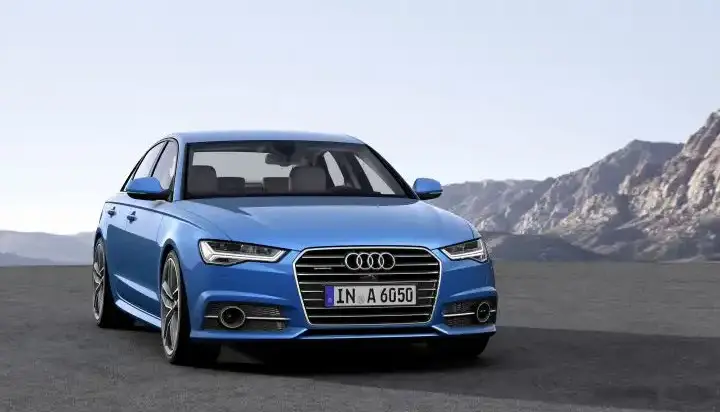
The Audi A6 Sedan (4G, C7 facelift) 2.0 TDI ultra, produced from 2014 to 2016, represented a key offering in Audi’s mid-size executive car lineup. Positioned as a fuel-efficient variant within the C7 generation, which underwent a significant facelift in 2014, this model aimed to balance performance with economy. It catered to buyers seeking a comfortable and technologically advanced sedan with lower running costs than the more powerful engine options. The “ultra” designation signified Audi’s efforts to optimize efficiency through weight reduction and engine tuning. This variant primarily served the European market, where diesel engines and fuel economy are highly valued, though limited numbers were available in other regions.
Technical Specifications
| Brand | Audi |
| Model | A6 |
| Generation | A6 Sedan (4G, C7 facelift 2014) |
| Type (Engine) | 2.0 TDI ultra (150 Hp) S tronic |
| Start of production | 2014 |
| End of production | 2016 |
| Powertrain Architecture | Internal Combustion engine |
| Body type | Sedan |
| Seats | 5 |
| Doors | 4 |
| Fuel consumption (urban) | 4.7 l/100 km (50 US mpg, 60.1 UK mpg, 21.3 km/l) |
| Fuel consumption (extra urban) | 3.9 l/100 km (60.3 US mpg, 72.4 UK mpg, 25.6 km/l) |
| Fuel consumption (combined) | 4.2 l/100 km (56 US mpg, 67.3 UK mpg, 23.8 km/l) |
| CO2 emissions | 109 g/km |
| Fuel Type | Diesel |
| Acceleration 0 – 100 km/h | 9.6 sec |
| Acceleration 0 – 62 mph | 9.6 sec |
| Acceleration 0 – 60 mph | 9.1 sec |
| Maximum speed | 214 km/h (132.97 mph) |
| Emission standard | Euro 6 |
| Weight-to-power ratio | 11.1 kg/Hp, 90.4 Hp/tonne |
| Weight-to-torque ratio | 4.7 kg/Nm, 210.8 Nm/tonne |
| Power | 150 Hp @ 3000-4200 rpm |
| Power per litre | 76.2 Hp/l |
| Torque | 350 Nm @ 1500-3000 rpm (258.15 lb.-ft. @ 1500-3000 rpm) |
| Maximum engine speed | 4500 rpm |
| Engine layout | Front, Longitudinal |
| Engine Model/Code | CSUD, DDCB |
| Engine displacement | 1968 cm3 (120.09 cu. in.) |
| Number of cylinders | 4 |
| Engine configuration | Inline |
| Cylinder Bore | 81 mm (3.19 in.) |
| Piston Stroke | 95.5 mm (3.76 in.) |
| Compression ratio | 16.2:1 |
| Number of valves per cylinder | 4 |
| Fuel injection system | Diesel Commonrail |
| Engine aspiration | Turbocharger, Intercooler |
| Valvetrain | DOHC |
| Engine oil capacity | 4.7 l (4.97 US qt | 4.14 UK qt) |
| Coolant | 12 l (12.68 US qt | 10.56 UK qt) |
| Kerb Weight | 1660 kg (3659.67 lbs.) |
| Max. weight | 2240 kg (4938.35 lbs.) |
| Max load | 580 kg (1278.68 lbs.) |
| Trunk (boot) space – minimum | 530 l (18.72 cu. ft.) |
| Trunk (boot) space – maximum | 995 l (35.14 cu. ft.) |
| Fuel tank capacity | 73 l (19.28 US gal | 16.06 UK gal) |
| Max. roof load | 100 kg (220.46 lbs.) |
| Permitted trailer load with brakes (8%) | 2000 kg (4409.25 lbs.) |
| Permitted trailer load with brakes (12%) | 1800 kg (3968.32 lbs.) |
| Permitted trailer load without brakes | 750 kg (1653.47 lbs.) |
| Permitted towbar download | 85 kg (187.39 lbs.) |
| Length | 4933 mm (194.21 in.) |
| Width | 1874 mm (73.78 in.) |
| Width including mirrors | 2086 mm (82.13 in.) |
| Height | 1455-1468 mm (57.28 – 57.8 in.) |
| Wheelbase | 2912 mm (114.65 in.) |
| Front track | 1627 mm (64.06 in.) |
| Rear (Back) track | 1618 mm (63.7 in.) |
| Front overhang | 930 mm (36.61 in.) |
| Rear overhang | 1091 mm (42.95 in.) |
| Drag coefficient (Cd) | 0.26 |
| Minimum turning circle (turning diameter) | 11.9 m (39.04 ft.) |
| Drivetrain Architecture | The Internal combustion engine (ICE) drives the front wheels of the vehicle. |
| Drive wheel | Front wheel drive |
| Number of gears and type of gearbox | 7 gears, automatic transmission S tronic |
| Front suspension | Independent multi-link suspension |
| Rear suspension | Independent on trapezoidal lever |
| Front brakes | Ventilated discs |
| Rear brakes | Disc |
| Assisting systems | ABS (Anti-lock braking system) |
| Steering type | Steering rack and pinion |
| Power steering | Electric Steering |
| Tires size | 225/55 R17 |
| Wheel rims size | 8J x 17 |
Powertrain & Engine Architecture
The heart of the A6 2.0 TDI ultra is the 1968cc inline-four cylinder diesel engine, identified by engine codes CSUD or DDCB. This engine is a member of the Volkswagen Group’s modular engine family. It features a common rail direct injection system, delivering fuel at extremely high pressure for optimized combustion. A single turbocharger with an intercooler provides forced induction, boosting power and torque. The engine utilizes a double overhead camshaft (DOHC) valvetrain with four valves per cylinder, enhancing breathing and efficiency. The high compression ratio of 16.2:1 is typical for diesel engines, contributing to thermal efficiency. The S tronic 7-speed dual-clutch transmission is a key component, offering rapid and smooth gear changes. This transmission is known for its efficiency and responsiveness compared to traditional automatic transmissions.
Driving Characteristics
The 150 horsepower and 350 Nm (258 lb-ft) of torque delivered by the 2.0 TDI ultra engine provide adequate performance for everyday driving. Acceleration from 0 to 60 mph takes approximately 9.1 seconds, and the top speed is 133 mph. While not a sports-oriented setup, the engine offers a broad torque band, making it responsive in most driving situations. The S tronic transmission contributes to a smooth driving experience, with quick shifts and minimal torque interruption. Compared to the more powerful 3.0 TDI variants, the 2.0 TDI ultra feels less urgent in acceleration, but it excels in fuel economy. The gear ratios are tuned for efficiency, prioritizing comfortable cruising over outright performance. The front-wheel-drive configuration provides good traction in normal conditions, but can exhibit torque steer under hard acceleration.
Equipment & Trim Levels
The A6 2.0 TDI ultra typically came equipped with a generous level of standard features. These included Audi’s Multi Media Interface (MMI) infotainment system with a central display screen, automatic climate control, power-adjustable front seats, and a leather-wrapped steering wheel. Safety features such as ABS, electronic stability control, and multiple airbags were standard. Optional extras included features like a navigation system, premium sound system, panoramic sunroof, and advanced driver-assistance systems such as adaptive cruise control and lane departure warning. Interior upholstery was typically cloth or a combination of cloth and leather, with various color options available. Trim levels varied slightly depending on the market, but generally offered progressive upgrades in terms of luxury and technology.
Chassis & Braking
The A6 2.0 TDI ultra utilizes an independent multi-link suspension at the front and an independent trapezoidal link suspension at the rear, providing a comfortable and controlled ride. The suspension is tuned to balance comfort and handling, offering a good compromise for everyday driving. Front brakes are ventilated discs, while rear brakes are solid discs. ABS (Anti-lock Braking System) is standard, enhancing braking performance and stability. The steering is a rack-and-pinion system with electric power assistance, providing precise and responsive steering feel. Stabilizer bars are fitted to both the front and rear axles to reduce body roll during cornering.
Market Reception & Comparison
The Audi A6 2.0 TDI ultra was generally well-received by automotive critics for its fuel efficiency and comfortable ride. It was praised for offering a good balance of performance and economy, making it an attractive option for buyers prioritizing running costs. Compared to the more powerful A6 variants, the 2.0 TDI ultra offered significantly better fuel economy, but at the expense of some performance. It competed with other mid-size executive sedans such as the BMW 520d and Mercedes-Benz E200 CDI, offering a similar blend of luxury, technology, and efficiency. Reliability reports suggest that the 2.0 TDI engine is generally robust, but regular maintenance is crucial to prevent issues with the diesel particulate filter (DPF) and injection system.
Legacy
The A6 2.0 TDI ultra has established itself as a reliable and fuel-efficient used car option. The 2.0 TDI engine, when properly maintained, is known for its longevity. However, potential buyers should be aware of the potential for DPF issues, particularly if the vehicle has primarily been used for short journeys. The S tronic transmission is generally reliable, but requires regular fluid changes to ensure smooth operation. Today, these models represent a good value proposition for buyers seeking a comfortable and well-equipped executive sedan with low running costs. The “ultra” designation remains a recognizable indicator of Audi’s commitment to efficiency and fuel economy.