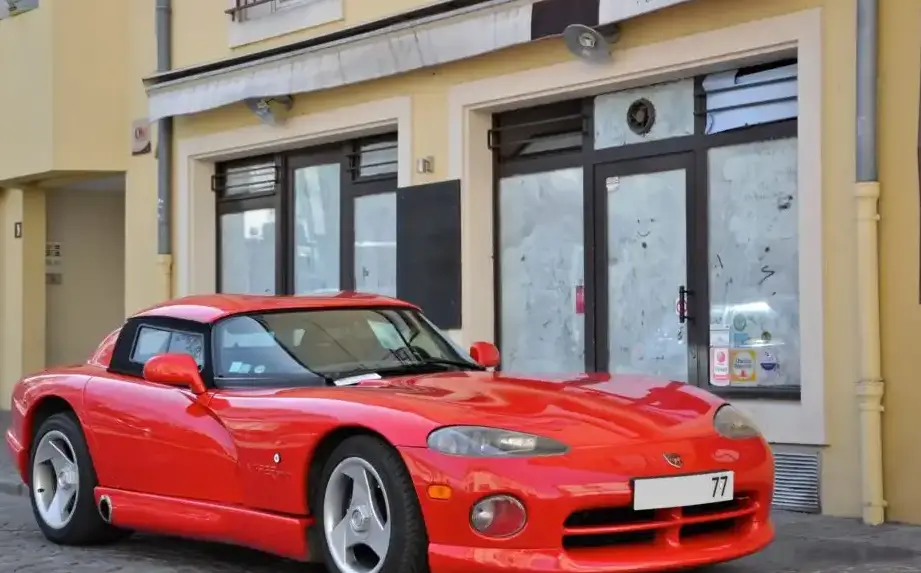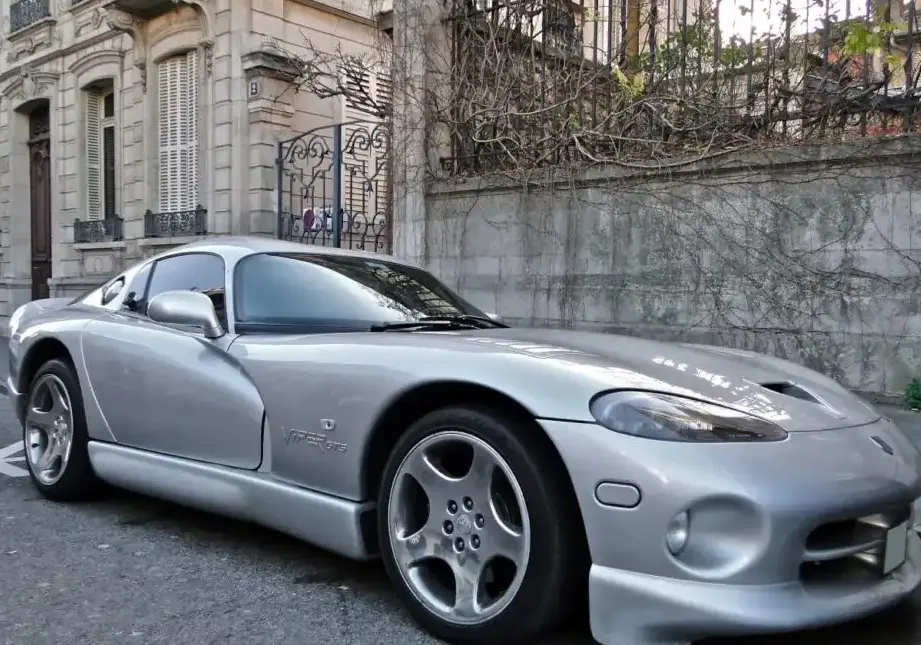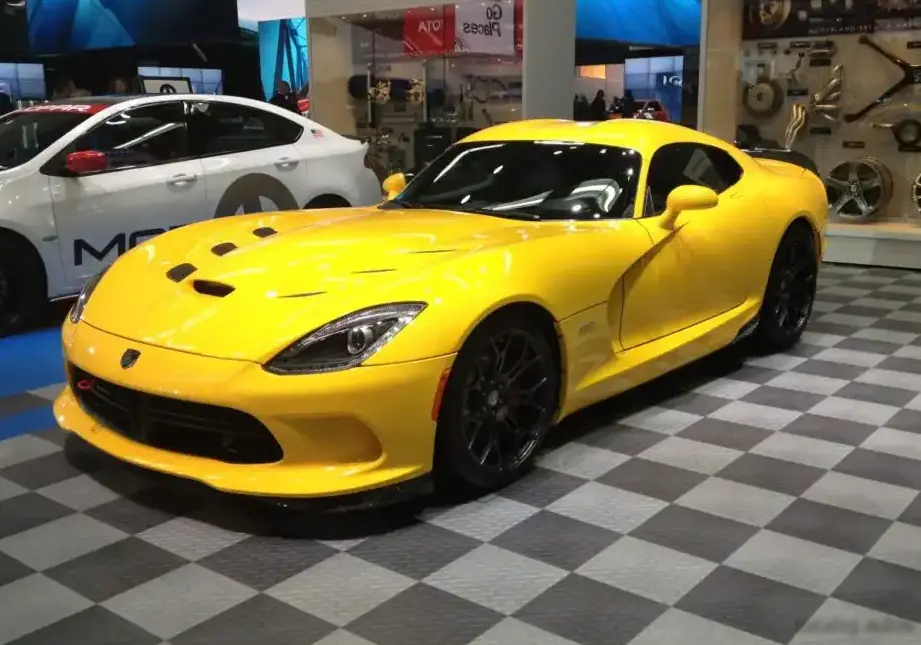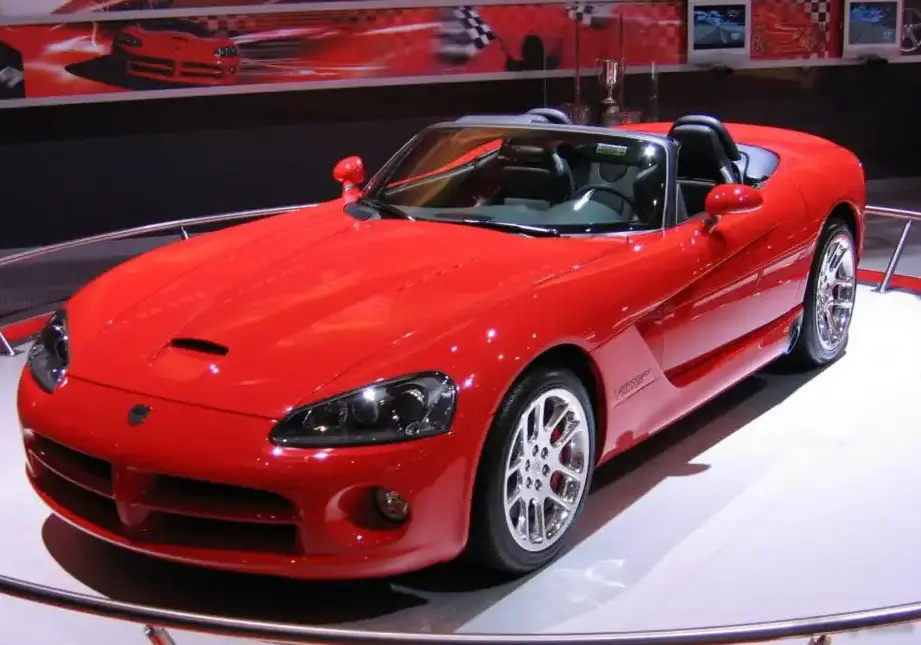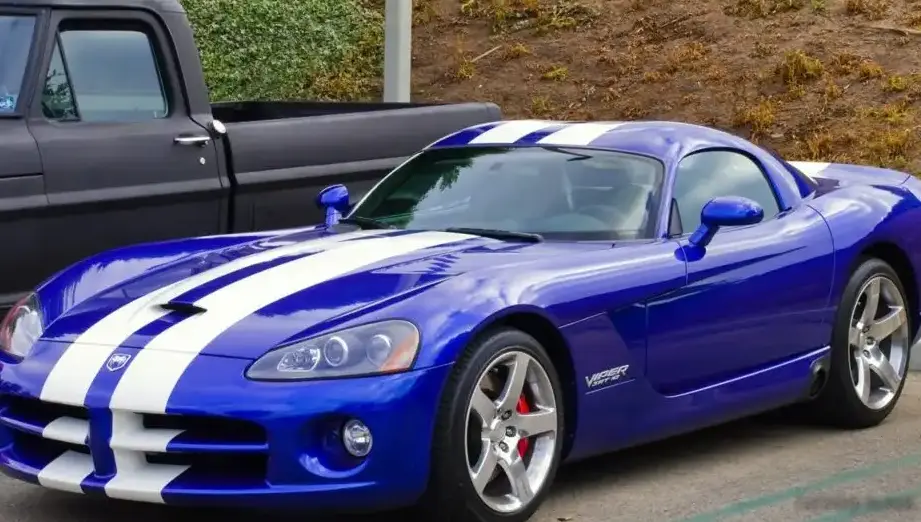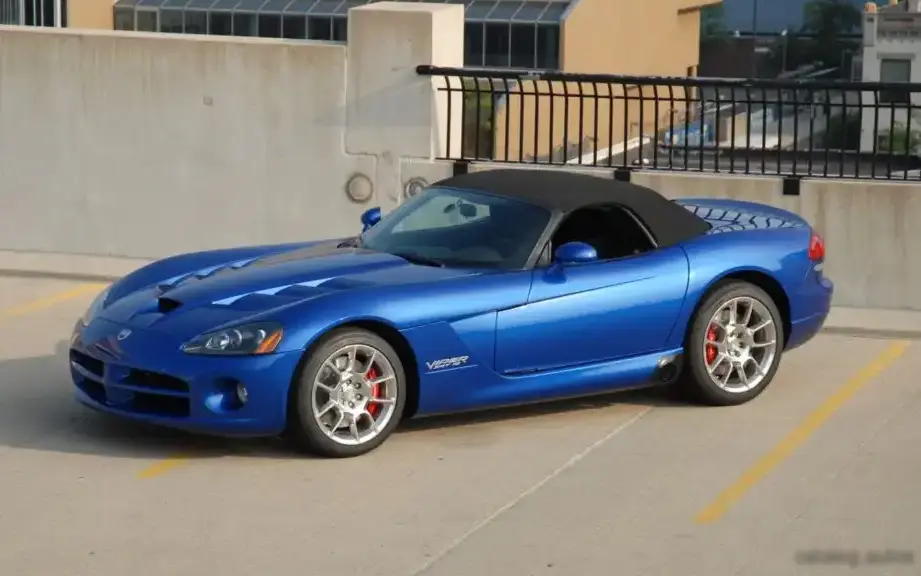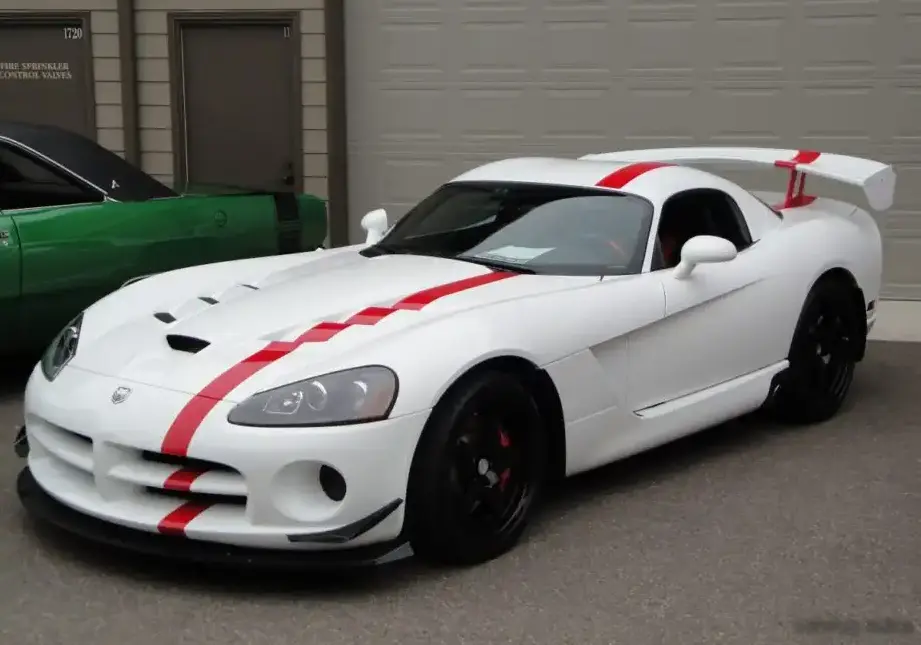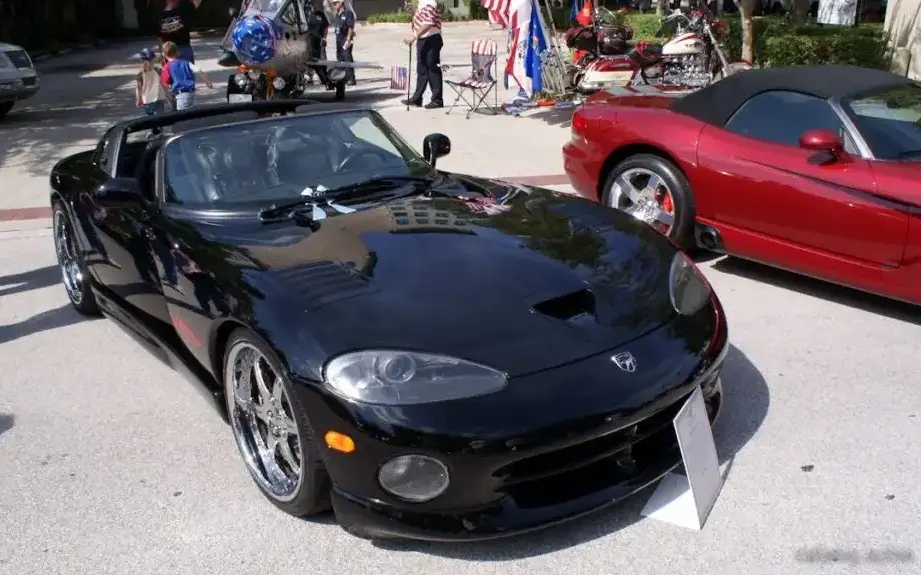
The Dodge Viper SR II Convertible, produced from 1995 to 1997, represented a significant evolution of the original Viper RT/10. Positioned as the more refined and accessible version of the raw, first-generation Viper, the SR II aimed to broaden the car’s appeal while retaining its core performance characteristics. It was built on the same basic chassis as the original, but incorporated numerous improvements in terms of interior comfort, build quality, and structural rigidity. The SR II continued the Viper’s role as Dodge’s halo car, a statement of American performance and a direct competitor to European sports cars like the Porsche 911 and Chevrolet Corvette.
Technical Specifications
| Brand | Dodge |
| Model | Viper |
| Generation | Viper SR II Convertible |
| Type (Engine) | 8.0 V10 (420 Hp) |
| Start of production | 1995 |
| End of production | 1997 |
| Powertrain Architecture | Internal Combustion engine |
| Body type | Targa |
| Seats | 2 |
| Doors | 2 |
| Fuel consumption (economy) – urban | 25 l/100 km (9.4 US mpg, 11.3 UK mpg, 4 km/l) |
| Fuel consumption (economy) – extra urban | 15.2 l/100 km (15.5 US mpg, 18.6 UK mpg, 6.6 km/l) |
| Fuel consumption (economy) – combined | 16.8 l/100 km (14 US mpg, 16.8 UK mpg, 6 km/l) |
| Fuel Type | Petrol (Gasoline) |
| Acceleration 0 – 100 km/h | 4.5 sec |
| Acceleration 0 – 62 mph | 4.5 sec |
| Acceleration 0 – 60 mph | 4.3 sec |
| Weight-to-power ratio | 3.8 kg/Hp, 264.5 Hp/tonne |
| Weight-to-torque ratio | 2.4 kg/Nm, 416.2 Nm/tonne |
| Power | 420 Hp @ 5200 rpm |
| Power per litre | 52.6 Hp/l |
| Torque | 661 Nm @ 3600 rpm (487.53 lb.-ft. @ 3600 rpm) |
| Engine layout | Front, Longitudinal |
| Engine displacement | 7990 cm3 (487.58 cu. in.) |
| Number of cylinders | 10 |
| Engine configuration | V-engine |
| Cylinder Bore | 101.6 mm (4 in.) |
| Piston Stroke | 98.5 mm (3.88 in.) |
| Compression ratio | 9.1:1 |
| Number of valves per cylinder | 2 |
| Fuel injection system | Multi-port manifold injection |
| Engine aspiration | Naturally aspirated engine |
| Engine oil capacity | 8 l (8.45 US qt | 7.04 UK qt) |
| Coolant | 15.2 l (16.06 US qt | 13.37 UK qt) |
| Kerb Weight | 1588 kg (3500.94 lbs.) |
| Trunk (boot) space – maximum | 334 l (11.8 cu. ft.) |
| Fuel tank capacity | 72 l (19.02 US gal | 15.84 UK gal) |
| Length | 4448 mm (175.12 in.) |
| Width | 1924 mm (75.75 in.) |
| Height | 1117 mm (43.98 in.) |
| Wheelbase | 2444 mm (96.22 in.) |
| Front track | 1514 mm (59.61 in.) |
| Rear (Back) track | 1538 mm (60.55 in.) |
| Drivetrain Architecture | The Internal combustion engine (ICE) drives the rear wheels of the vehicle. |
| Drive wheel | Rear wheel drive |
| Number of gears and type of gearbox | 6 gears, manual transmission |
| Front suspension | Double wishbone |
| Rear suspension | Coil spring |
| Front brakes | Ventilated discs |
| Rear brakes | Ventilated discs |
| Assisting systems | ABS (Anti-lock braking system), Hydraulic Steering |
| Tires size | 275/40 R17; 335/35 R17 |
Powertrain & Engine Architecture
The heart of the Viper SR II was its 8.0-liter V10 engine, internally designated as the engine code. This naturally aspirated powerplant was a significant departure from the V8 engines commonly found in American muscle cars. The engine featured cast iron block and aluminum cylinder heads, with two valves per cylinder operated by a single overhead camshaft per bank. Fuel delivery was handled by a multi-port fuel injection system, providing precise control over the air-fuel mixture. The 9.1:1 compression ratio contributed to the engine’s robust power output. The engine produced 420 horsepower at 5,200 rpm and a substantial 661 Nm (487.53 lb-ft) of torque at 3,600 rpm. The only transmission option was a robust, heavy-duty 6-speed manual gearbox, designed to handle the engine’s immense power. This transmission was a key element in the Viper’s driving experience, demanding skill and precision from the driver.
Driving Characteristics
The Viper SR II Convertible offered a visceral and engaging driving experience. The large-displacement V10 delivered a broad torque curve, providing strong acceleration throughout the rev range. While the 4.3-second 0-60 mph time was impressive for the era, the Viper wasn’t simply about straight-line speed. The manual transmission required deliberate shifts, and the lack of electronic driver aids meant that the driver was fully responsible for controlling the car’s power. The relatively long wheelbase and wide track contributed to good stability, but the car still demanded respect and attention. Compared to later Vipers with more sophisticated suspension systems and electronic controls, the SR II felt more raw and connected to the road. The manual transmission, while rewarding, also meant that the car was less forgiving than automatic-equipped sports cars.
Equipment & Trim Levels
The SR II Convertible offered a step up in refinement compared to the original Viper. Standard features included leather upholstery, air conditioning, power windows and locks, and a premium sound system. The interior, while still minimalist, was more thoughtfully designed and better finished than the spartan cabin of the RT/10. Optional extras included a hardtop, upgraded audio systems, and various cosmetic enhancements. The SR II didn’t offer a wide range of trim levels; it was largely focused on providing a more comfortable and refined experience without sacrificing performance. The focus was on the driving experience, and luxury features were kept to a minimum.
Chassis & Braking
The Viper SR II Convertible utilized a tubular steel chassis, providing a strong and lightweight foundation. The suspension consisted of double wishbones at the front and a coil spring setup at the rear. Ventilated disc brakes were fitted to all four wheels, providing ample stopping power. Anti-lock brakes (ABS) were standard, enhancing safety and control. The car’s relatively low curb weight of 1588 kg (3500.94 lbs) contributed to its agile handling. The suspension was tuned for performance, prioritizing handling and stability over ride comfort. The rear track was slightly wider than the front, further enhancing stability.
Market Reception & Comparison
The Dodge Viper SR II Convertible was generally well-received by automotive critics. It was praised for its powerful engine, engaging driving experience, and improved refinement compared to the original Viper. However, some critics noted its lack of electronic driver aids and its demanding driving characteristics. Fuel economy, at 14 US mpg combined, was predictably poor. Compared to the base Viper RT/10, the SR II offered a more comfortable and refined experience, making it a more appealing option for drivers who wanted a sports car they could use on a daily basis. Compared to the Chevrolet Corvette, the Viper offered more raw power and a more visceral driving experience, but the Corvette was generally considered to be more user-friendly and practical.
Legacy
The Dodge Viper SR II Convertible remains a highly sought-after collectible car. Its combination of raw power, engaging driving dynamics, and relatively limited production numbers has made it a favorite among enthusiasts. The 8.0-liter V10 engine is known for its durability and reliability, although maintenance can be expensive. The manual transmission is also generally considered to be robust and reliable. Today, well-maintained SR II Convertibles command high prices on the used car market, reflecting their status as a modern classic. The SR II represents a pivotal moment in the Viper’s history, bridging the gap between the raw, uncompromising original and the more sophisticated Vipers that followed.