
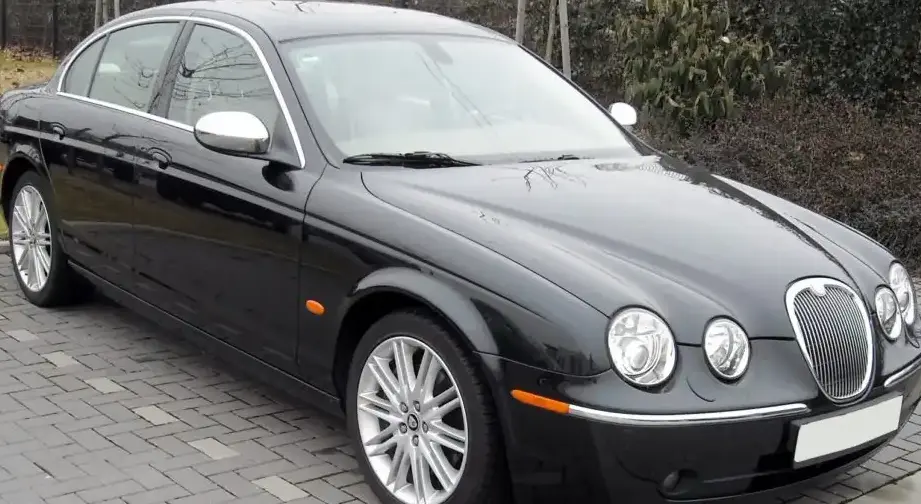
The Jaguar S-Type (CCX) 3.0 i V6 24V, producing 238 horsepower, represents a significant iteration of Jaguar’s mid-size luxury sedan. Produced from 1998 through 2007, this variant occupied a key position within the S-Type range, offering a balance between performance and refinement. It was designed to appeal to buyers seeking a traditional Jaguar experience with modern conveniences. The CCX designation refers to the model’s internal platform code, signifying its place within Jaguar’s lineage of rear-wheel-drive sedans. This generation aimed to recapture the spirit of the classic Jaguar saloons while incorporating contemporary engineering and design.
Technical Specifications
| Brand | Jaguar |
| Model | S-type |
| Generation | S-type (CCX) |
| Type (Engine) | 3.0 i V6 24V (238 Hp) |
| Start of production | 1998 |
| End of production | 2007 |
| Powertrain Architecture | Internal Combustion engine |
| Body type | Sedan |
| Seats | 5 |
| Doors | 4 |
| Fuel consumption (urban) | 16.5 l/100 km (14.3 US mpg) |
| Fuel consumption (extra urban) | 8.1 l/100 km (29 US mpg) |
| Fuel consumption (combined) | 11.2 l/100 km (21 US mpg) |
| Fuel Type | Petrol (Gasoline) |
| Acceleration 0 – 100 km/h | 7.6 sec |
| Acceleration 0 – 62 mph | 7.6 sec |
| Acceleration 0 – 60 mph | 7.2 sec |
| Maximum speed | 233 km/h (144.78 mph) |
| Weight-to-power ratio | 7.2 kg/Hp |
| Weight-to-torque ratio | 5.8 kg/Nm |
| Power | 238 Hp @ 6800 rpm |
| Torque | 293 Nm @ 4500 rpm (216.11 lb.-ft. @ 4500 rpm) |
| Engine layout | Front, Longitudinal |
| Engine Model/Code | AJ30 |
| Engine displacement | 2967 cm3 (181.06 cu. in.) |
| Number of cylinders | 6 |
| Engine configuration | V-engine |
| Cylinder Bore | 89 mm (3.5 in.) |
| Piston Stroke | 79.5 mm (3.13 in.) |
| Compression ratio | 10.5:1 |
| Number of valves per cylinder | 4 |
| Fuel injection system | Multi-port manifold injection |
| Engine aspiration | Naturally aspirated engine |
| Valvetrain | DOHC |
| Engine oil capacity | 6.4 l (6.76 US qt | 5.63 UK qt) |
| Coolant capacity | 10.4 l (10.99 US qt | 9.15 UK qt) |
| Kerb Weight | 1705 kg (3758.88 lbs.) |
| Max. weight | 2175 kg (4795.05 lbs.) |
| Max load | 470 kg (1036.17 lbs.) |
| Trunk (boot) space – minimum | 370 l (13.07 cu. ft.) |
| Trunk (boot) space – maximum | 810 l (28.6 cu. ft.) |
| Fuel tank capacity | 68 l (17.96 US gal | 14.96 UK gal) |
| Length | 4861 mm (191.38 in.) |
| Width | 1819 mm (71.61 in.) |
| Height | 1441 mm (56.73 in.) |
| Wheelbase | 2909 mm (114.53 in.) |
| Front track | 1537 mm (60.51 in.) |
| Rear (Back) track | 1544 mm (60.79 in.) |
| Drivetrain Architecture | Rear wheel drive |
| Drive wheel | Rear wheel drive |
| Number of gears | 5 gears, manual transmission |
| Front suspension | Double wishbone |
| Rear suspension | Double wishbone |
| Front brakes | Ventilated discs |
| Rear brakes | Ventilated discs |
| Assisting systems | ABS (Anti-lock braking system) |
| Steering type | Steering rack and pinion |
| Power steering | Hydraulic Steering |
| Tires size | 225/55 R16 W |
INTRODUCTION
The Jaguar S-Type 3.0 i V6 24V, launched in 1998, marked a departure from the previous S-Type models, embracing a more contemporary design language while retaining the brand’s commitment to luxury and driving pleasure. It was built on the Jaguar X200 platform, also known as the CCX platform, and represented a significant investment by Ford, who owned Jaguar at the time. The 3.0-liter V6 engine was positioned as a mid-range offering, slotting between the entry-level 2.5-liter V6 and the more powerful 4.0-liter V8 models. This variant aimed to provide a compelling combination of performance, fuel efficiency, and affordability within the S-Type lineup.
Powertrain & Engine Architecture
At the heart of the S-Type 3.0 i lies the AJ30 V6 engine. This 2,967 cc (181.06 cu. in.) engine features a 60-degree V-configuration, four valves per cylinder, and a double overhead camshaft (DOHC) valvetrain. The engine utilizes a multi-port fuel injection system, delivering fuel directly to each intake port for optimized combustion. The AJ30 engine is naturally aspirated, relying on atmospheric pressure for air intake. The engine produces 238 horsepower at 6,800 rpm and 293 Nm (216.11 lb-ft) of torque at 4,500 rpm. The engine’s design prioritized smooth power delivery and refinement, characteristic of Jaguar’s engineering philosophy. The 3.0L engine was paired with a 5-speed automatic transmission, designed to provide smooth and comfortable gear changes. This transmission was a crucial component in delivering the S-Type’s refined driving experience.
Driving Characteristics
The S-Type 3.0 i V6 Automatic offered a comfortable and composed driving experience. While not as overtly sporty as the V8-powered models, the 3.0-liter engine provided adequate power for everyday driving and highway cruising. Acceleration from 0 to 60 mph took approximately 7.2 seconds, and the car had a top speed of 144.78 mph. The automatic transmission, while smooth, could feel somewhat hesitant during quick acceleration compared to the available manual transmission. The gear ratios were tuned for fuel efficiency and comfort rather than outright performance. The rear-wheel-drive configuration contributed to balanced handling, although it lacked the agility of some of its competitors. Overall, the driving experience was geared towards providing a relaxed and refined journey.
Equipment & Trim Levels
The S-Type 3.0 i typically came equipped with a respectable level of standard features. These included leather upholstery, power-adjustable front seats, climate control, a premium sound system, and alloy wheels. Optional extras included a sunroof, navigation system, upgraded audio, and wood veneer trim. Trim levels varied depending on the market, but generally, the 3.0 i occupied a mid-range position, offering a step up in luxury and features compared to the base 2.5-liter model. The interior design emphasized classic Jaguar aesthetics with a modern touch, featuring wood accents and comfortable seating.
Chassis & Braking
The S-Type 3.0 i utilized a double wishbone suspension system at both the front and rear, providing a comfortable ride and good handling characteristics. The suspension was tuned to prioritize ride quality over outright sportiness. Braking duties were handled by ventilated disc brakes on all four wheels, providing adequate stopping power. An Anti-lock Braking System (ABS) was standard, enhancing safety and control during emergency braking situations. The chassis was designed to provide a stable and predictable driving experience, contributing to the S-Type’s overall refinement.
Market Reception & Comparison
The S-Type 3.0 i V6 was generally well-received by automotive critics. It was praised for its comfortable ride, refined interior, and smooth engine. However, some critics noted that the automatic transmission could feel sluggish at times, and the car lacked the dynamic sharpness of some of its European rivals. Compared to the 2.5-liter model, the 3.0 i offered a noticeable performance improvement. Compared to the 4.0-liter V8, it provided a more fuel-efficient option without sacrificing too much in terms of luxury or comfort. Fuel economy was rated at around 21 US mpg combined, which was reasonable for a luxury sedan of its size and class.
Legacy
The Jaguar S-Type 3.0 i V6 24V has proven to be a relatively reliable vehicle, although, like all cars of its age, it requires regular maintenance. The AJ30 engine is generally considered to be durable, but potential issues can include timing chain tensioner wear and oil leaks. The automatic transmission is also generally reliable, but fluid changes are crucial for maintaining its performance. Today, the S-Type 3.0 i represents an affordable entry point into Jaguar ownership, offering a classic British luxury experience at a reasonable price. It remains a popular choice among enthusiasts who appreciate its elegant styling, comfortable ride, and refined driving characteristics. Well-maintained examples are increasingly sought after by collectors and Jaguar aficionados.
