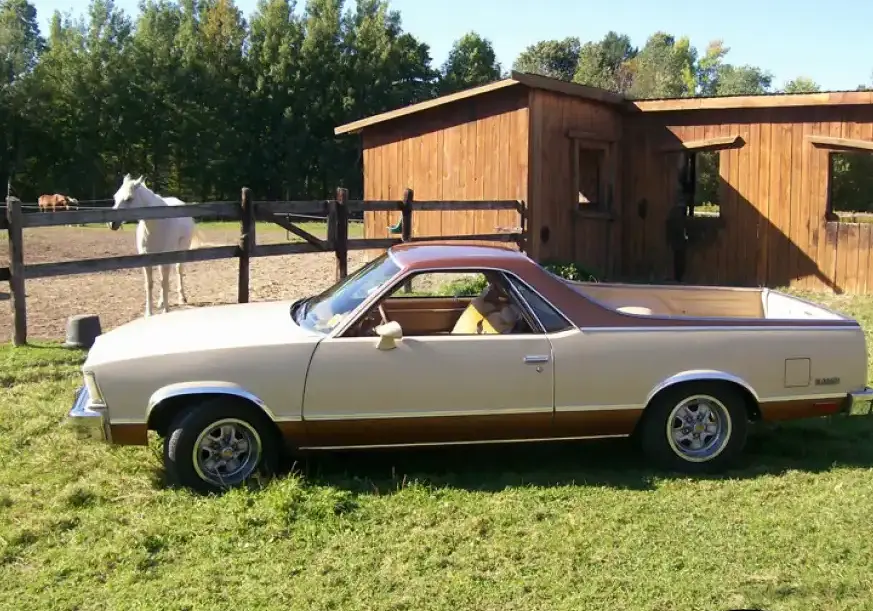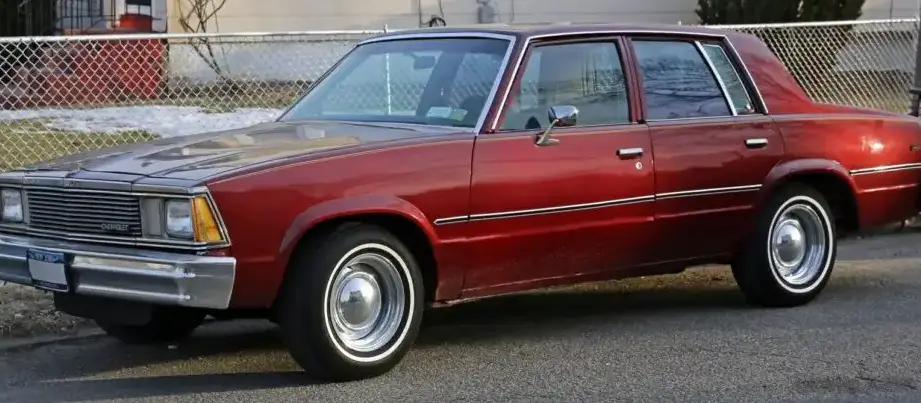
The Chevrolet Malibu IV Sedan, produced for the 1979 and 1980 model years, represented a downsized iteration of Chevrolet’s popular mid-size offering. Positioned as a more fuel-efficient alternative to the larger, traditional full-size sedans, the Malibu IV was built on the A-body platform, shared with other GM vehicles like the Oldsmobile Cutlass and Pontiac Grand Prix. Within the Malibu IV lineup, the 5.0 V8 (155 hp) with a three-speed automatic transmission represented a mid-range offering, balancing performance with relative affordability. It aimed to provide a comfortable and spacious family sedan experience, albeit with a focus on the American preference for V8 power, even in the era of increasing fuel economy concerns.
Technical Specifications
| Brand | Chevrolet |
| Model | Malibu |
| Generation | Malibu IV Sedan |
| Type (Engine) | 5.0 V8 (155 Hp) CAT Automatic |
| Start of production | 1979 |
| End of production | 1980 |
| Powertrain Architecture | Internal Combustion engine |
| Body type | Sedan |
| Seats | 6 |
| Doors | 4 |
| Fuel Type | Petrol (Gasoline) |
| Weight-to-power ratio | 9.5 kg/Hp, 104.8 Hp/tonne |
| Weight-to-torque ratio | 4.6 kg/Nm, 219.7 Nm/tonne |
| Power | 155 Hp @ 4000 rpm |
| Power per litre | 31 Hp/l |
| Torque | 325 Nm @ 1600 rpm, 239.71 lb.-ft. @ 1600 rpm |
| Engine layout | Front, Longitudinal |
| Engine displacement | 5001 cm3, 305.18 cu. in. |
| Number of cylinders | 8 |
| Engine configuration | V-engine |
| Cylinder Bore | 95 mm, 3.74 in. |
| Piston Stroke | 88.4 mm, 3.48 in. |
| Compression ratio | 8.6:1 |
| Number of valves per cylinder | 2 |
| Fuel injection system | Carburettor |
| Engine aspiration | Naturally aspirated engine |
| Valvetrain | OHV |
| Kerb Weight | 1479 kg, 3260.64 lbs |
| Trunk (boot) space – maximum | 470 l, 16.6 cu. ft. |
| Fuel tank capacity | 68 l, 17.96 US gal | 14.96 UK gal |
| Length | 4895 mm, 192.72 in. |
| Width | 1816 mm, 71.5 in. |
| Height | 1354 mm, 53.31 in. |
| Wheelbase | 2745 mm, 108.07 in. |
| Front track | 1486 mm, 58.5 in. |
| Rear (Back) track | 1467 mm, 57.76 in. |
| Front overhang | 915 mm, 36.02 in. |
| Rear overhang | 1235 mm, 48.62 in. |
| Ride height (ground clearance) | 137 mm, 5.39 in. |
| Minimum turning circle (turning diameter) | 12.2 m, 40.03 ft. |
| Approach angle | 23° |
| Departure angle | 16° |
| Ramp-over (brakeover) angle | 14° |
| Drivetrain Architecture | The Internal combustion engine (ICE) drives the rear wheels of the vehicle. |
| Drive wheel | Rear wheel drive |
| Number of gears and type of gearbox | 3 gears, automatic transmission |
| Front suspension | Independent, type McPherson with coil spring and anti-roll bar |
| Rear suspension | dependent spring suspension, Transverse stabilizer, Trailing arm |
| Front brakes | Ventilated discs |
| Rear brakes | Drum |
| Steering type | Steering rack and pinion |
| Tires size | 185/75 R14 |
| Wheel rims size | 6.0J x 14 |
Powertrain & Engine Architecture
The heart of this Malibu variant was Chevrolet’s 305 cubic inch (5.0 liter) small-block V8 engine. Designated with the ‘Q’ code, this engine was equipped with a two-barrel carburetor and catalytic converter, reflecting the growing emphasis on emissions control during the late 1970s. The overhead valve (OHV) configuration was a traditional design, prioritizing simplicity and reliability over outright performance. While the 155 horsepower output was modest by contemporary standards, it provided adequate power for comfortable cruising and occasional passing maneuvers. The engine’s torque peak of 325 Nm (239.71 lb-ft) at a relatively low 1600 rpm contributed to its usability in everyday driving. The three-speed Turbo-Hydramatic automatic transmission was a staple of GM vehicles for decades, known for its smooth operation and durability. However, it wasn’t particularly geared for maximizing fuel efficiency or acceleration.
Driving Characteristics
The 155 hp V8 and automatic transmission combination delivered a driving experience focused on comfort and ease of use. Acceleration was adequate, but not brisk, with 0-60 mph times estimated around 10-11 seconds. The automatic transmission’s gear ratios were optimized for cruising, resulting in a relaxed driving experience on the highway. Compared to the available manual transmission or the more powerful V6 options, this setup felt less responsive. The automatic’s shift points were programmed for smoothness rather than performance, and kick-down for passing required a deliberate application of the throttle. The rear-wheel-drive configuration provided a balanced feel, but the relatively soft suspension tuning prioritized ride comfort over handling precision.
Equipment & Trim Levels
The Malibu IV offered a range of standard features, including cloth upholstery, a basic AM radio, and full wheel covers. The 5.0 V8 automatic trim typically included features like power steering, power brakes, and an upgraded interior trim compared to the base models. Optional extras included air conditioning, cruise control, a stereo radio, and upgraded interior fabrics. The Malibu’s interior was designed with practicality in mind, offering a spacious cabin for passengers and a reasonably sized trunk. The dashboard layout was straightforward and functional, with clearly marked gauges and controls.
Chassis & Braking
The Malibu IV utilized a body-on-frame construction, a common practice for American sedans of the era. The front suspension featured independent McPherson struts with coil springs and an anti-roll bar, while the rear suspension employed a traditional leaf spring setup with a transverse stabilizer. This configuration provided a comfortable ride, but didn’t offer the same level of handling precision as more modern independent rear suspension designs. Braking duties were handled by ventilated discs at the front and drum brakes at the rear. While adequate for normal driving conditions, the braking system lacked the stopping power and modulation of more advanced systems.
Market Reception & Comparison
The 1979-1980 Chevrolet Malibu IV with the 5.0 V8 and automatic transmission received mixed reviews. Critics praised its comfortable ride and spacious interior, but noted its relatively modest performance and fuel economy. Compared to the six-cylinder Malibu variants, the V8 offered more power but at the cost of increased fuel consumption. Against competitors like the Ford Fairmont and Dodge Aries, the Malibu IV offered a more traditional American driving experience, with a focus on comfort and V8 power. However, the Fairmont and Aries were generally considered to be more fuel-efficient and modern in their design.
Legacy
The Chevrolet Malibu IV, particularly the 5.0 V8 automatic variant, represents a transitional period in American automotive history. It was one of the last rear-wheel-drive, body-on-frame sedans offered by Chevrolet, bridging the gap between the traditional American full-size cars and the more modern, front-wheel-drive designs that would dominate the 1980s. The 305 small-block V8 engine proved to be remarkably durable and reliable, and many examples are still on the road today. However, due to its age and relatively modest performance, the 1979-1980 Malibu IV is not a particularly sought-after classic car. It remains a representative example of late 1970s American automotive engineering, offering a glimpse into a time when V8 power and comfortable cruising were highly valued.