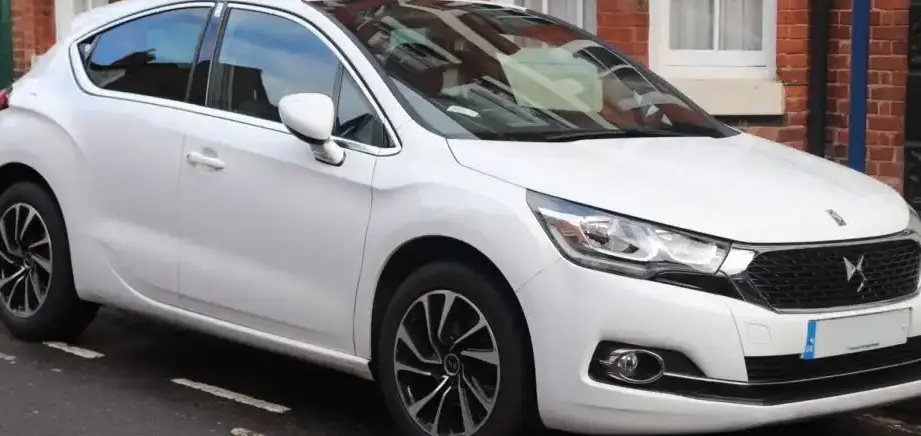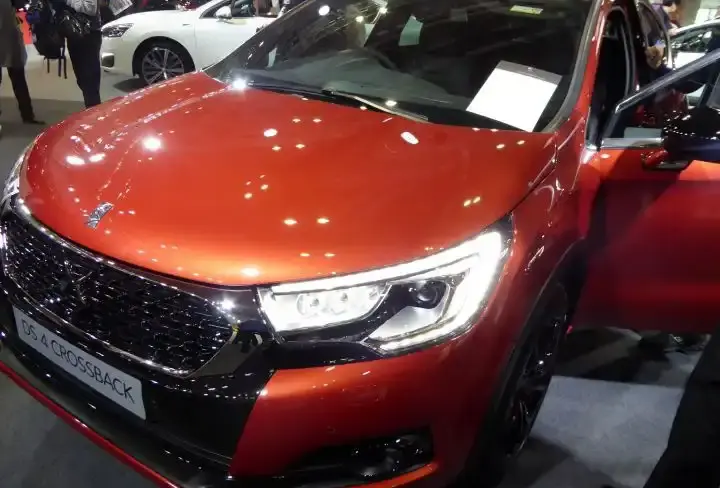
The DS 4 Crossback 2.0 BlueHDi (180 Hp) Stop&Start Automatic was a premium compact crossover produced by the French manufacturer DS Automobiles between 2015 and 2018. Positioned as a more rugged and sophisticated alternative to the standard DS 4 hatchback, the Crossback featured increased ground clearance, distinctive styling cues, and a focus on comfort and technology. This particular variant, powered by a 2.0-liter BlueHDi diesel engine paired with a six-speed automatic transmission, represented a mid-to-high trim level within the Crossback range, appealing to buyers seeking a blend of performance, efficiency, and refinement. It was primarily marketed in Europe, where diesel engines remained popular due to favorable taxation and fuel economy.
Technical Specifications
| Brand | DS |
| Model | 4 |
| Generation | 4 Crossback |
| Type (Engine) | 2.0 BlueHDi (180 Hp) Stop&Start Automatic |
| Start of production | 2015 |
| End of production | 2018 |
| Powertrain Architecture | Internal Combustion engine |
| Body type | Crossover |
| Seats | 5 |
| Doors | 5 |
| Fuel consumption (urban) | 5.2-5.3 l/100 km (45.2 – 44.4 US mpg) |
| Fuel consumption (extra urban) | 3.8-3.9 l/100 km (61.9 – 60.3 US mpg) |
| Fuel consumption (combined) | 4.3-4.4 l/100 km (54.7 – 53.5 US mpg) |
| CO2 emissions | 113-115 g/km |
| Fuel Type | Diesel |
| Acceleration 0 – 100 km/h | 9.3 sec |
| Acceleration 0 – 62 mph | 9.3 sec |
| Acceleration 0 – 60 mph | 8.8 sec |
| Maximum speed | 205-217 km/h (127.38 – 134.84 mph) |
| Emission standard | Euro 6 |
| Weight-to-power ratio | 7.9 kg/Hp |
| Weight-to-torque ratio | 3.6 kg/Nm |
| Power | 180 Hp @ 3750 rpm |
| Torque | 400 Nm @ 2000 rpm (295.02 lb.-ft. @ 2000 rpm) |
| Engine layout | Front, Transverse |
| Engine Model/Code | AHW DW10FC |
| Engine displacement | 1997 cm3 (121.86 cu. in.) |
| Number of cylinders | 4 |
| Engine configuration | Inline |
| Cylinder Bore | 85 mm (3.35 in.) |
| Piston Stroke | 88 mm (3.46 in.) |
| Number of valves per cylinder | 4 |
| Fuel injection system | Diesel Commonrail |
| Engine aspiration | Turbocharger, Intercooler |
| Engine oil capacity | 5 l (5.28 US qt | 4.4 UK qt) |
| Kerb Weight | 1420-1510 kg (3130.56 – 3328.98 lbs.) |
| Max. weight | 1975 kg (4354.13 lbs.) |
| Max load | 465-555 kg (1025.15 – 1223.57 lbs.) |
| Trunk (boot) space – minimum | 359 l (12.68 cu. ft.) |
| Fuel tank capacity | 60 l (15.85 US gal | 13.2 UK gal) |
| Permitted trailer load with brakes (12%) | 1550 kg (3417.17 lbs.) |
| Permitted trailer load without brakes | 745 kg (1642.44 lbs.) |
| Permitted towbar download | 75 kg (165.35 lbs.) |
| Length | 4284 mm (168.66 in.) |
| Width | 1810 mm (71.26 in.) |
| Width including mirrors | 2052 mm (80.79 in.) |
| Height | 1529-1535 mm (60.2 – 60.43 in.) |
| Wheelbase | 2612 mm (102.83 in.) |
| Front track | 1532 mm (60.31 in.) |
| Rear (Back) track | 1527 mm (60.12 in.) |
| Front overhang | 933 mm (36.73 in.) |
| Rear overhang | 739 mm (29.09 in.) |
| Minimum turning circle | 10.7 m (35.1 ft.) |
| Drivetrain Architecture | Front wheel drive |
| Number of gears and type of gearbox | 6 gears, automatic transmission |
| Front suspension | Independent type McPherson |
| Rear suspension | Semi-independent, coil spring |
| Front brakes | Ventilated discs |
| Rear brakes | Disc |
| Tires size | 215/55 R17; 225/45 R18; 225/40 R19 |
| Wheel rims size | 17; 18; 19 |
Powertrain & Engine Architecture
At the heart of the DS 4 Crossback 2.0 BlueHDi was the DW10FC engine, a 2.0-liter inline-four cylinder diesel engine developed by PSA Peugeot Citroën (later Groupe PSA, now Stellantis). This engine, often referred to by its internal codes AHW, was a mainstay of the PSA diesel lineup for many years. It featured a common-rail direct fuel injection system, delivering fuel at extremely high pressure for optimized combustion. A turbocharger with an intercooler boosted power output to 180 horsepower at 3750 rpm and 400 Nm (295 lb-ft) of torque at 2000 rpm. The engine also incorporated a Stop&Start system to improve fuel economy in urban driving conditions. The six-speed automatic transmission, sourced from Aisin, was chosen for its smoothness and efficiency. It featured a torque converter and offered both manual and automatic shifting modes.
Driving Characteristics
The 2.0 BlueHDi engine provided a good balance of performance and fuel economy for the DS 4 Crossback. Acceleration from 0 to 60 mph took approximately 8.8 seconds, and the car felt adequately powered for highway cruising and overtaking. The automatic transmission shifted smoothly, although it wasn’t particularly sporty. Compared to the lower-powered 1.6 BlueHDi variants, the 2.0-liter engine offered noticeably more punch, especially when fully loaded. However, it didn’t possess the outright performance of the petrol-powered DS 4 models. The raised ride height of the Crossback, while improving off-road capability, did result in slightly more body roll in corners compared to the standard DS 4.
Equipment & Trim Levels
The DS 4 Crossback 2.0 BlueHDi Automatic typically came well-equipped, reflecting its position as a premium model. Standard features included automatic climate control, a touchscreen infotainment system with navigation, Bluetooth connectivity, rear parking sensors, and cruise control. Higher trim levels added features such as leather upholstery, panoramic sunroof, xenon headlights, and a more advanced driver-assistance system. Interior upholstery was typically a mix of cloth and leather, with a focus on providing a comfortable and luxurious cabin environment. The dashboard layout was modern and stylish, with a focus on ergonomics.
Chassis & Braking
The DS 4 Crossback utilized a McPherson strut front suspension and a semi-independent coil spring rear suspension. This setup provided a comfortable ride quality, absorbing bumps and imperfections in the road surface effectively. The Crossback’s increased ground clearance, compared to the standard DS 4, allowed it to handle rougher terrain with greater ease. Braking duties were handled by ventilated discs at the front and solid discs at the rear. Anti-lock Braking System (ABS) and Electronic Stability Control (ESC) were standard safety features.
Market Reception & Comparison
The DS 4 Crossback 2.0 BlueHDi Automatic was generally well-received by automotive critics. It was praised for its comfortable ride, refined engine, and stylish interior. However, some reviewers noted that the infotainment system could be complex to use and that the car wasn’t as engaging to drive as some of its rivals. Compared to other diesel-powered crossovers in its class, such as the Volkswagen Tiguan and the Nissan Qashqai, the DS 4 Crossback offered a more luxurious and distinctive experience. Fuel economy was a strong point, with combined figures averaging around 54.7 mpg. Reliability was generally good, although some owners reported minor issues with the electronic systems.
Legacy
The DS 4 Crossback 2.0 BlueHDi Automatic remains a relatively common sight on European roads today. The DW10FC engine is known for its durability and longevity, provided it is properly maintained. The automatic transmission has also proven to be reliable. In the used car market, these models offer a good value proposition for buyers seeking a comfortable, efficient, and well-equipped crossover. While the DS brand has evolved since the Crossback’s production run, this model represents an important step in the brand’s development and its attempt to establish itself as a premium automotive manufacturer.