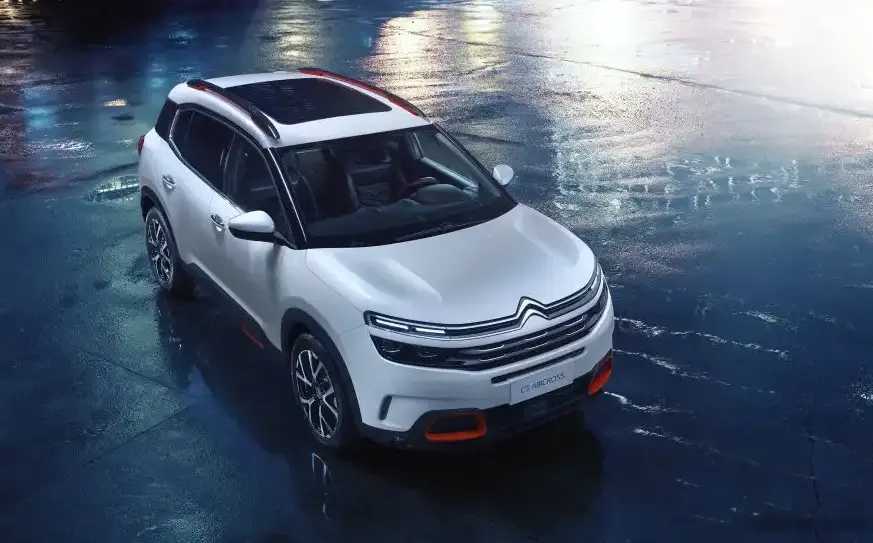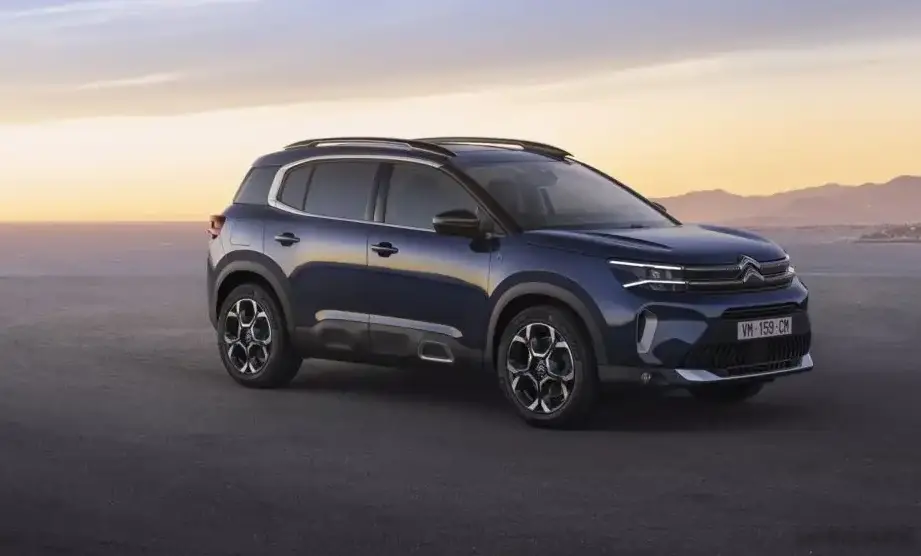
The Citroen C5 Aircross I (Phase II), specifically the 1.2 PureTech 145 hp Mild Hybrid e-DCS variant, represents a mid-life refresh of Citroen’s popular compact SUV. Introduced in 2022 for the 2025 model year, this version aimed to enhance fuel efficiency and reduce emissions while maintaining the C5 Aircross’s core strengths – comfort and practicality. Positioned as a mainstream offering within the C5 Aircross range, it slotted in below the more powerful petrol and diesel options, targeting buyers prioritizing economy and a smoother driving experience. Production of this specific configuration was relatively short-lived, spanning from April 2025 to July 2025, reflecting Citroen’s ongoing powertrain strategy shifts.
Technical Specifications
| Brand | Citroen |
| Model | C5 Aircross |
| Generation | C5 Aircross I (Phase II, 2022) |
| Type (Engine) | 1.2 (145 Hp) Mild Hybrid e-DCS |
| Start of production | April, 2025 |
| End of production | July, 2025 |
| Powertrain Architecture | MHEV (Mild Hybrid Electric Vehicle) |
| Body type | SUV |
| Seats | 5 |
| Doors | 5 |
| Fuel consumption at Low speed (WLTP) | 4.9-5.0 l/100 km (48 – 47 US mpg) |
| Fuel consumption at Medium speed (WLTP) | 5.4-5.5 l/100 km (43.6 – 42.8 US mpg) |
| Fuel consumption at high speed (WLTP) | 5.0-5.2 l/100 km (47 – 45.2 US mpg) |
| Fuel consumption at very high speed (WLTP) | 6.7-6.8 l/100 km (35.1 – 34.6 US mpg) |
| Combined fuel consumption (WLTP) | 5.7-5.8 l/100 km (41.3 – 40.6 US mpg) |
| CO2 emissions (WLTP) | 128-129 g/km |
| Fuel Type | Petrol (Gasoline) |
| Acceleration 0 – 100 km/h | 10.2 sec |
| Acceleration 0 – 62 mph | 10.2 sec |
| Acceleration 0 – 60 mph | 9.7 sec |
| Maximum speed | 200 km/h (124.27 mph) |
| Emission standard | Euro 6e |
| Weight-to-power ratio | 10.6 kg/Hp |
| Weight-to-torque ratio | 6.7 kg/Nm |
| Gross battery capacity | 0.876 kWh |
| Battery voltage | 48 V |
| Battery technology | Lithium-ion (Li-Ion) |
| Electric motor power | 21 Hp @ 4264 rpm |
| Electric motor Torque | 51 Nm @ 750-2499 rpm (37.62 lb.-ft.) |
| System power | 145 Hp |
| System torque | 230 Nm @ 1750 rpm (169.64 lb.-ft.) |
| Power | 136 Hp @ 5500 rpm |
| Torque | 230 Nm @ 1750 rpm (169.64 lb.-ft.) |
| Engine layout | Front, Transverse |
| Engine Model/Code | HN09 |
| Engine displacement | 1199 cm3 (73.17 cu. in.) |
| Number of cylinders | 3 |
| Engine configuration | Inline |
| Number of valves per cylinder | 4 |
| Fuel injection system | Direct injection |
| Engine oil capacity | 3.5 l (3.7 US qt | 3.08 UK qt) |
| Kerb Weight | 1531-1638 kg (3375.28 – 3611.17 lbs.) |
| Max. weight | 2050 kg (4519.48 lbs.) |
| Max load | 412-519 kg (908.3 – 1144.2 lbs.) |
| Trunk (boot) space – minimum | 580 l (20.48 cu. ft.) |
| Trunk (boot) space – maximum | 1630 l (57.56 cu. ft.) |
| Fuel tank capacity | 53 l (14 US gal | 11.66 UK gal) |
| Permitted trailer load with brakes (12%) | 1250 kg (2755.78 lbs.) |
| Permitted trailer load without brakes | 750 kg (1653.47 lbs.) |
| Permitted towbar download | 70 kg (154.32 lbs.) |
| Length | 4500 mm (177.17 in.) |
| Width | 1859 mm (73.19 in.) |
| Width with mirrors folded | 1969 mm (77.52 in.) |
| Width including mirrors | 2099 mm (82.64 in.) |
| Height | 1688-1695 mm (66.46 – 66.73 in.) |
| Wheelbase | 2730 mm (107.48 in.) |
| Front track | 1579-1601 mm (62.17 – 63.03 in.) |
| Rear (Back) track | 1608-1630 mm (63.31 – 64.17 in.) |
| Front overhang | 917 mm (36.1 in.) |
| Rear overhang | 853 mm (33.58 in.) |
| Drivetrain Architecture | Front wheel drive. MHEV. ICE and electric motor drive front wheels. |
| Drive wheel | Front wheel drive |
| Number of gears and type of gearbox | 6 gears, automatic transmission e-DCS |
| Front suspension | Independent type McPherson |
| Rear suspension | Elastic beam |
| Front brakes | Disc |
| Rear brakes | Disc |
| Assisting systems | ABS (Anti-lock braking system) |
| Steering type | Steering rack and pinion |
| Power steering | Electric Steering |
| Tires size | 225/55 R18 91V |
| Wheel rims size | 18 |
Powertrain & Engine Architecture
At the heart of this C5 Aircross variant lies the PSA Group’s (now Stellantis) 1.2 PureTech three-cylinder petrol engine, designated HN09. This engine benefits from a mild-hybrid system, incorporating a 48V battery and an electric motor. The engine itself features direct fuel injection and a turbocharger with an intercooler, producing 136 horsepower at 5500 rpm and 230 Nm (169.64 lb-ft) of torque at 1750 rpm. The electric motor adds a further 21 hp and 51 Nm (37.62 lb-ft) of torque, boosting the total system output to 145 hp and 230 Nm. The e-DCS (electric Dual-Clutch System) six-speed automatic transmission manages power delivery. This transmission integrates the electric motor, allowing for regenerative braking and electric assistance during acceleration. The mild-hybrid system doesn’t allow for fully electric driving, but it aids in smoothing out the stop-start function and improving overall fuel economy.
Driving Characteristics
The 1.2 PureTech 145 hp Mild Hybrid e-DCS offers a comfortable and refined driving experience, prioritizing fuel efficiency over outright performance. Acceleration from 0-100 km/h (0-62 mph) takes around 10.2 seconds. While not particularly quick, the electric motor assistance provides a noticeable boost during initial acceleration, making it feel more responsive in urban driving conditions. The e-DCS transmission shifts smoothly, contributing to a relaxed driving experience. Compared to the more powerful petrol and diesel variants, this version feels less eager to accelerate, especially when fully loaded. The gear ratios are tuned for economy, meaning the engine can feel strained when climbing hills or overtaking at higher speeds. However, the mild-hybrid system helps to mitigate this by providing extra torque when needed.
Equipment & Trim Levels
The C5 Aircross 1.2 PureTech 145 hp Mild Hybrid e-DCS typically came equipped with a generous level of standard features. These included a touchscreen infotainment system with Apple CarPlay and Android Auto compatibility, automatic climate control, rear parking sensors, and a suite of safety features such as lane departure warning and automatic emergency braking. Interior upholstery was generally cloth, with options for leather upgrades. Higher trim levels offered additional features like a panoramic sunroof, adaptive cruise control, and a more advanced infotainment system. The dashboard layout was consistent across the range, featuring a clean and modern design.
Chassis & Braking
The C5 Aircross utilizes a McPherson strut front suspension and an elastic beam rear suspension. This setup prioritizes ride comfort, which is a hallmark of the C5 Aircross. The suspension effectively absorbs bumps and imperfections in the road, providing a smooth and controlled ride. Braking duties are handled by disc brakes on all four wheels, providing adequate stopping power. ABS (Anti-lock Braking System) is standard. The weight of this variant, ranging from 1531 to 1638 kg (3375.28 – 3611.17 lbs.), is relatively moderate, contributing to the car’s manageable handling characteristics.
Market Reception & Comparison
The C5 Aircross 1.2 PureTech 145 hp Mild Hybrid e-DCS was generally well-received by critics for its fuel efficiency and comfortable ride. However, some reviewers noted its lack of outright performance compared to more powerful alternatives. Compared to the 1.6 PureTech petrol and 2.0 BlueHDi diesel variants, this version offered lower running costs but less dynamic driving experience. Fuel economy figures of 5.7-5.8 l/100 km (41.3 – 40.6 US mpg) were competitive within its segment. Reliability reports suggest that the 1.2 PureTech engine, while generally reliable, has been subject to some issues with the timing chain, requiring periodic inspection and potential replacement.
Legacy
The Citroen C5 Aircross 1.2 PureTech 145 hp Mild Hybrid e-DCS represents an important step in Citroen’s transition towards electrified powertrains. While its production run was brief, it demonstrated the potential of mild-hybrid technology to improve fuel efficiency and reduce emissions. On the used car market, these models offer a compelling value proposition for buyers seeking a comfortable, practical, and economical SUV. The longevity of the powertrain will depend on regular maintenance, particularly monitoring the timing chain. As with any used vehicle, a thorough inspection is recommended before purchase.