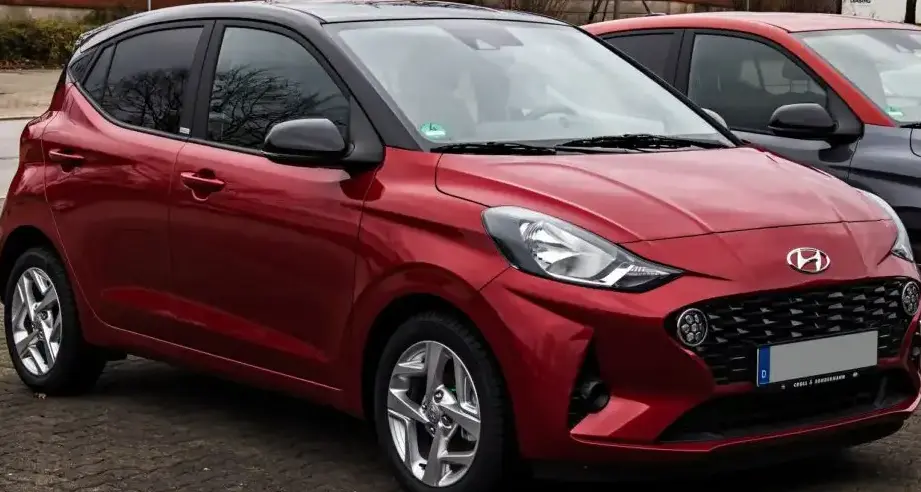
The Hyundai i10 III N Line 1.0 T-GDi, produced from June 2020 to April 2023, represents a sporty iteration of the third-generation i10 city car. Positioned as the performance-oriented trim within the i10 lineup, it aimed to attract buyers seeking a more engaging driving experience without sacrificing the practicality and affordability the i10 is known for. This variant utilizes Hyundai’s Smartstream engine family and is exclusively offered with a five-speed manual transmission, distinguishing it from the standard i10 models which offered automatic options. The N Line trim was Hyundai’s first foray into a sporty sub-brand for its smallest models, previewing design elements and performance enhancements that would later be seen on larger N models.
Technical Specifications
| Brand | Hyundai |
| Model | i10 |
| Generation | i10 III |
| Type | N Line 1.0 T-GDi (100 Hp) |
| Start of production | June, 2020 |
| End of production | April, 2023 |
| Powertrain Architecture | Internal Combustion engine |
| Body type | Hatchback |
| Seats | 4-5 |
| Doors | 5 |
| Fuel Type | Petrol (Gasoline) |
| Power | 100 Hp |
| Torque | 172 Nm / 126.86 lb.-ft. |
| Engine layout | Front, Transverse |
| Engine Model/Code | Smartstream / G3LE |
| Number of cylinders | 3 |
| Engine configuration | Inline |
| Fuel injection system | Direct injection |
| Engine aspiration | Turbocharger, Intercooler |
| Engine oil capacity | 3.6 l / 3.8 US qt | 3.17 UK qt |
| Coolant | 4.5 l / 4.76 US qt | 3.96 UK qt |
| Trunk (boot) space – minimum | 252 l / 8.9 cu. ft. |
| Fuel tank capacity | 36 l / 9.51 US gal | 7.92 UK gal |
| Length | 3675 mm / 144.69 in. |
| Width | 1680 mm / 66.14 in. |
| Height | 1483 mm / 58.39 in. |
| Wheelbase | 2425 mm / 95.47 in. |
| Front track | 1467 mm / 57.76 in. |
| Rear (Back) track | 1478 mm / 58.19 in. |
| Front overhang | 710 mm / 27.95 in. |
| Rear overhang | 540 mm / 21.26 in. |
| Ride height (ground clearance) | 152 mm / 5.98 in. |
| Minimum turning circle (turning diameter) | 10.0 m / 32.81 ft. |
| Drivetrain Architecture | The Internal combustion engine (ICE) drives the front wheels of the vehicle. |
| Drive wheel | Front wheel drive |
| Number of gears and type of gearbox | 5 gears, manual transmission |
| Front suspension | Independent type McPherson |
| Rear suspension | Torsion |
| Assisting systems | ABS (Anti-lock braking system) |
| Tires size | 195/45 R16 |
| Wheel rims size | 16 |
Powertrain & Engine Architecture
The i10 N Line is powered by Hyundai’s 1.0-liter Smartstream G3LE three-cylinder turbocharged engine. This engine, part of Hyundai’s new generation of powertrains, features direct fuel injection and a single-scroll turbocharger with an intercooler. The engine produces 100 horsepower and 172 Nm (126.86 lb.-ft.) of torque. The Smartstream engine is designed for improved thermal efficiency and reduced friction, contributing to better fuel economy and lower emissions. The engine utilizes a timing chain, reducing maintenance compared to timing belts. The five-speed manual transmission was specifically chosen for the N Line to provide a more driver-focused experience. The gear ratios are tuned for responsive acceleration, although they are not dramatically different from those found in other i10 models. The engine management system is calibrated to prioritize responsiveness and a more engaging driving feel, with a slightly more aggressive throttle map compared to the standard i10.
Driving Characteristics
The i10 N Line offers a noticeably more spirited driving experience than the standard i10. While not a high-performance vehicle, the turbocharger provides a useful boost in power, particularly in the mid-range. Acceleration is brisk for a city car, and the manual transmission allows for greater control over the engine’s power delivery. The steering is slightly heavier and more direct than in the standard i10, providing a more connected feel. The suspension is also tuned for a firmer ride, reducing body roll in corners. However, this comes at the expense of some ride comfort. Compared to other i10 variants, the N Line feels more agile and responsive, making it more enjoyable to drive on winding roads. The five-speed gearbox is precise and easy to use, enhancing the overall driving experience. The first gear is relatively short, aiding in quick acceleration from a standstill, while the fifth gear is geared for comfortable highway cruising, although engine noise is more pronounced at higher speeds. The turbo lag is minimal, providing a relatively linear power delivery throughout the rev range.
Equipment & Trim Levels
The N Line trim level adds several sporty styling cues and features to the standard i10. Exterior enhancements include a unique front grille with a red accent line, a rear diffuser, and side skirts. The interior features sport seats with red stitching, a leather-wrapped steering wheel, and aluminum pedals. Standard equipment includes a 8-inch touchscreen infotainment system with Apple CarPlay and Android Auto compatibility, a rearview camera, and automatic emergency braking. Optional extras included a sunroof, and premium sound system. The N Line trim was positioned as the mid-range offering, bridging the gap between the base i10 and any potential special editions. It included features typically found on higher-spec standard i10 models, such as power windows and remote central locking, as standard equipment. The interior trim materials, while still budget-conscious, were of a higher quality than those found in the base i10.
Chassis & Braking
The i10 N Line utilizes a McPherson strut front suspension and a torsion beam rear suspension. The suspension components are slightly stiffer than those found in the standard i10, contributing to the firmer ride and reduced body roll. The braking system consists of disc brakes on the front wheels and drum brakes on the rear wheels. The ABS (Anti-lock Braking System) is standard. The 16-inch alloy wheels are fitted with 195/45 R16 tires, providing good grip and handling. The chassis is reinforced in key areas to improve rigidity and handling performance. The steering system is hydraulically assisted, providing a direct and responsive feel. The brake pedal feel is firm and progressive, offering good control during braking maneuvers. The rear drum brakes, while adequate for the vehicle’s weight and performance, are a cost-saving measure compared to rear disc brakes.
Market Reception & Comparison
The i10 N Line was generally well-received by automotive critics. Reviewers praised its sporty styling, engaging driving experience, and affordable price. However, some critics noted that the engine could feel strained at higher speeds and that the ride was a bit firm for everyday use. Compared to other city cars in its class, the i10 N Line offered a compelling combination of performance, practicality, and value. It was often compared to the Suzuki Ignis Sport and the Volkswagen up! GTI, offering a similar level of performance and features at a competitive price point. Fuel economy was comparable to other i10 variants, averaging around 5.0-5.5 liters per 100 kilometers (47-51 mpg). The N Line’s appeal was particularly strong among younger buyers looking for a stylish and fun-to-drive city car. It offered a more distinctive alternative to the more mainstream city car offerings.
Legacy
The Hyundai i10 III N Line represents an important step in Hyundai’s development of its N performance brand. It demonstrated the company’s commitment to offering sporty and engaging vehicles at an affordable price point. The 1.0 T-GDi engine and five-speed manual transmission proved to be a reliable combination, with few reported issues. On the used car market, the i10 N Line holds its value well, particularly among buyers seeking a fun and practical city car. Its sporty styling and engaging driving experience continue to appeal to a wide range of drivers. The N Line trim paved the way for more comprehensive N models, establishing a design language and performance ethos that would be carried over to larger Hyundai vehicles. It showed Hyundai was serious about offering performance options across its entire model range, not just in its larger, more expensive cars.