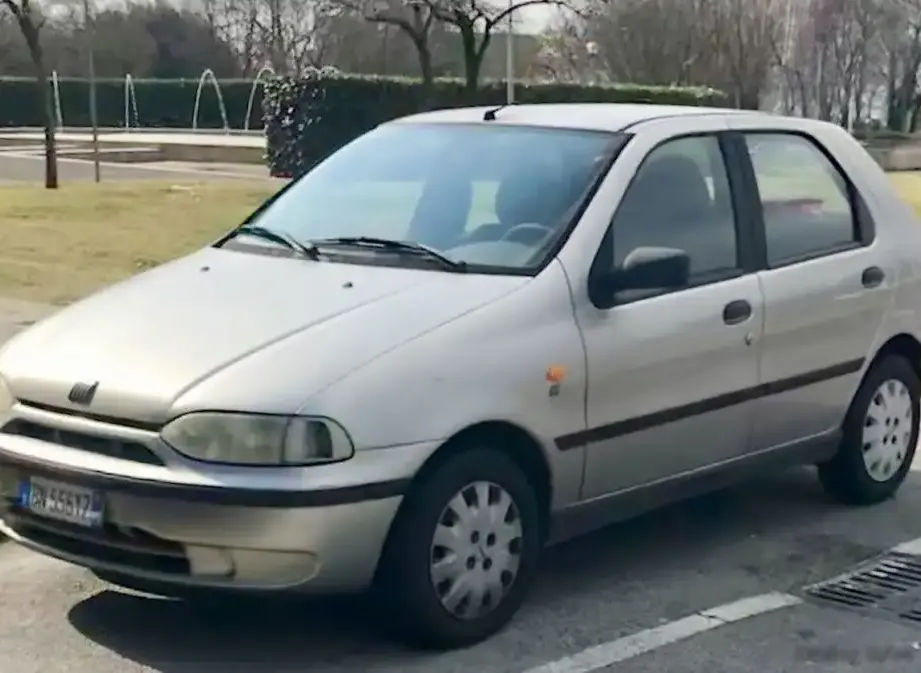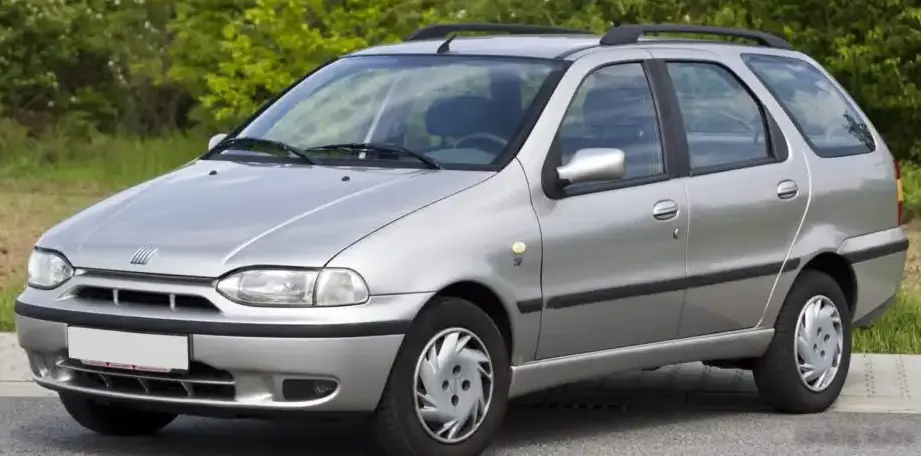
The Fiat Palio Weekend 1.9 D, produced between 1997 and 2002, was a practical and economical station wagon aimed at buyers seeking a versatile vehicle for both family and commercial use. Part of the Project 178 family, which also included the Palio hatchback and sedan, the Weekend offered increased cargo capacity without sacrificing the Palio’s affordability and relatively compact footprint. This particular variant, powered by a 1.9-liter diesel engine producing 63 horsepower, represented an entry-level option within the Weekend lineup, prioritizing fuel efficiency and low running costs over outright performance. It was primarily sold in European and South American markets, where diesel engines were – and continue to be – popular for their economy.
Technical Specifications
| Brand | Fiat |
| Model | Palio |
| Generation | Palio Weekend (178) |
| Type (Engine) | 1.9 D (63 Hp) |
| Start of production | 1997 |
| End of production | 2002 |
| Powertrain Architecture | Internal Combustion engine |
| Body type | Station wagon (estate) |
| Seats | 5 |
| Doors | 5 |
| Fuel consumption (urban) | 8.2 l/100 km (28.7 US mpg, 34.4 UK mpg, 12.2 km/l) |
| Fuel consumption (extra urban) | 4.7 l/100 km (50 US mpg, 60.1 UK mpg, 21.3 km/l) |
| Fuel consumption (combined) | 5.2 l/100 km (45.2 US mpg, 54.3 UK mpg, 19.2 km/l) |
| Fuel Type | Diesel |
| Acceleration 0 – 100 km/h | 10.2 sec |
| Acceleration 0 – 62 mph | 10.2 sec |
| Acceleration 0 – 60 mph | 9.7 sec |
| Maximum speed | 186 km/h (115.58 mph) |
| Weight-to-power ratio | 17.4 kg/Hp, 57.5 Hp/tonne |
| Weight-to-torque ratio | 9.3 kg/Nm, 107.8 Nm/tonne |
| Power | 63 Hp @ 4500 rpm |
| Power per litre | 33 Hp/l |
| Torque | 118 Nm @ 2500 rpm (87.03 lb.-ft. @ 2500 rpm) |
| Engine layout | Front, Transverse |
| Engine Model/Code | 223 A6.000 |
| Engine displacement | 1910 cm3 (116.56 cu. in.) |
| Number of cylinders | 4 |
| Engine configuration | Inline |
| Cylinder Bore | 82 mm (3.23 in.) |
| Piston Stroke | 90.4 mm (3.56 in.) |
| Compression ratio | 20.3:1 |
| Number of valves per cylinder | 2 |
| Fuel injection system | Precombustion chamber injection |
| Engine aspiration | Naturally aspirated |
| Engine oil capacity | 4.3 l (4.54 US qt | 3.78 UK qt) |
| Coolant capacity | 7 l (7.4 US qt | 6.16 UK qt) |
| Kerb Weight | 1095 kg (2414.06 lbs.) |
| Max. weight | 1690 kg (3725.81 lbs.) |
| Max load | 595 kg (1311.75 lbs.) |
| Trunk (boot) space – minimum | 460 l (16.24 cu. ft.) |
| Trunk (boot) space – maximum | 1540 l (54.38 cu. ft.) |
| Fuel tank capacity | 51 l (13.47 US gal | 11.22 UK gal) |
| Length | 4130 mm (162.6 in.) |
| Width | 1626 mm (64.02 in.) |
| Height | 1475 mm (58.07 in.) |
| Wheelbase | 2423 mm (95.39 in.) |
| Front track | 1388 mm (54.65 in.) |
| Rear track | 1385 mm (54.53 in.) |
| Drivetrain | Front wheel drive |
| Number of gears | 5 |
| Gearbox type | Manual transmission |
| Front suspension | Spring Strut |
| Rear suspension | Trailing arm |
| Front brakes | Disc |
| Rear brakes | Drum |
| Steering type | Steering rack and pinion |
| Power steering | Hydraulic |
| Tires size | 175/65 R14 |
Powertrain & Engine Architecture
The heart of the Palio Weekend 1.9 D was the 223 A6.000 engine, a 1910cc inline-four cylinder diesel. This engine utilized a precombustion chamber injection system, a common design for diesel engines of the era. This system involved injecting fuel into a small pre-chamber within the cylinder head, where it partially combusted before igniting the main charge. This design aided in smoother combustion and reduced engine noise compared to direct injection systems. The engine featured two valves per cylinder and a relatively low compression ratio of 20.3:1. The 63 horsepower output was achieved at 4500 rpm, while peak torque of 118 Nm (87 lb-ft) was delivered at 2500 rpm. The engine was transversely mounted in the front of the vehicle, driving the front wheels. The five-speed manual transmission was the only gearbox option available with this engine, prioritizing fuel economy and simplicity.
Driving Characteristics
The 1.9 D variant of the Palio Weekend was not designed for spirited driving. Its 63 horsepower and relatively high weight (1095 kg / 2414 lbs) resulted in modest acceleration – approximately 10.2 seconds to 62 mph. However, the engine’s torque characteristics made it reasonably tractable for everyday driving. The five-speed gearbox was well-matched to the engine’s powerband, allowing for comfortable cruising at highway speeds. Compared to the more powerful gasoline-powered Palio Weekend variants, the 1.9 D offered significantly better fuel economy, but at the expense of performance. The manual transmission provided a more engaging driving experience than an automatic would have, but also required more driver involvement.
Equipment & Trim Levels
The 1.9 D trim level of the Palio Weekend was generally considered the base model. Standard equipment typically included basic steel wheels, cloth upholstery, a simple dashboard layout, and manual windows and door locks. Power steering was often included, but air conditioning and central locking were usually optional extras. The interior was functional and durable, prioritizing practicality over luxury. Optional extras could include upgraded audio systems, alloy wheels, and body-colored bumpers.
Chassis & Braking
The Palio Weekend 1.9 D utilized a relatively simple chassis design. The front suspension consisted of MacPherson strut coil springs, while the rear suspension employed a trailing arm setup. This configuration provided a comfortable ride, but wasn’t particularly sporty. The braking system featured disc brakes on the front wheels and drum brakes on the rear. Hydraulic power steering was standard, making maneuvering in tight spaces easier. Tire size was typically 175/65 R14.
Market Reception & Comparison
The Palio Weekend 1.9 D was well-received in markets where diesel engines were popular, particularly in Europe and South America. Critics praised its fuel efficiency and low running costs, making it an attractive option for budget-conscious buyers. However, its lack of power and relatively basic interior were often noted. Compared to the gasoline-powered Palio Weekend variants, the 1.9 D offered superior fuel economy but significantly less performance. It competed with other small diesel station wagons, such as the Peugeot 206 SW and the Renault Clio Estate.
Legacy
The Fiat Palio Weekend 1.9 D has proven to be a relatively reliable vehicle, particularly the engine itself. The 223 A6.000 diesel is known for its durability and longevity, although maintenance is crucial to prevent issues. In the used car market today, these vehicles are often sought after by those looking for an affordable and economical workhorse. Parts availability can be a concern in some regions, but the Palio’s widespread popularity means that many components are still readily available. While not a performance icon, the Palio Weekend 1.9 D remains a testament to Fiat’s ability to produce practical and affordable vehicles for a broad range of customers.