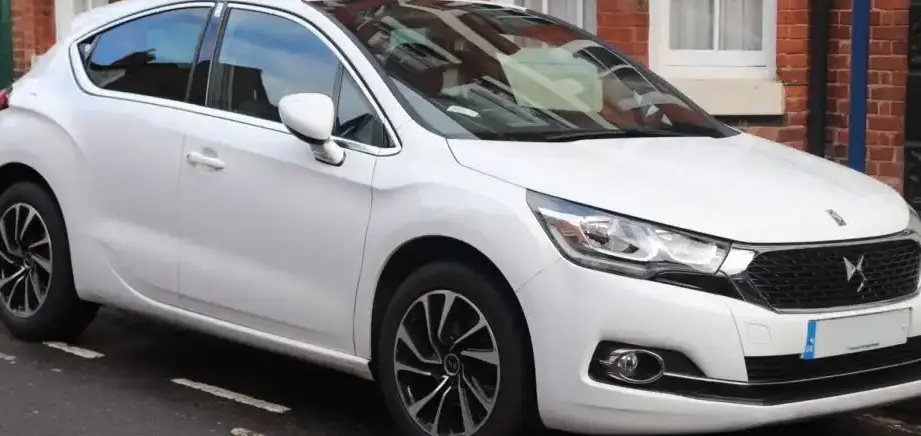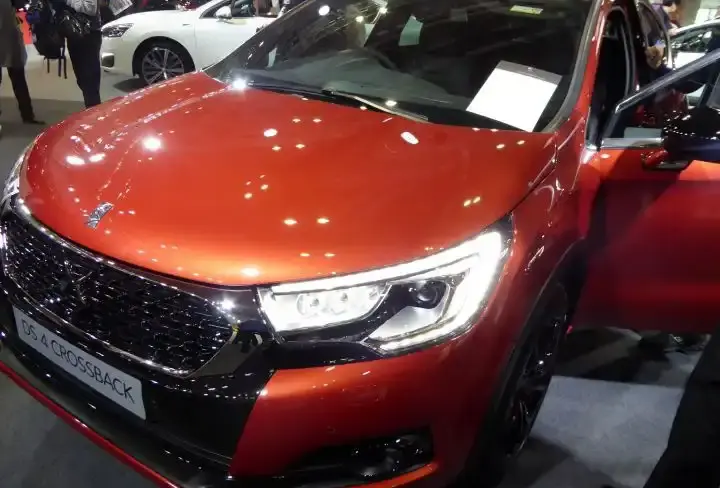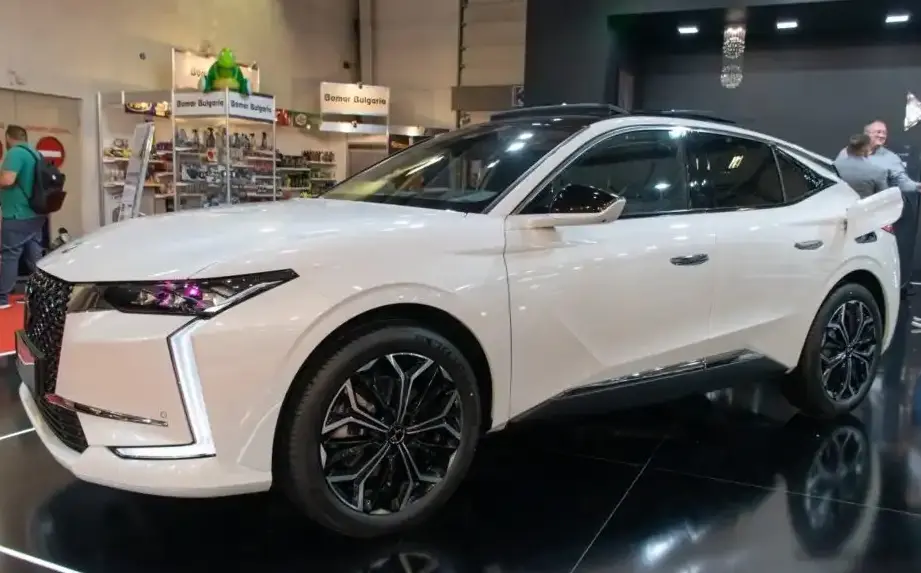
The DS 4 II 1.2 (136 Hp) Hybrid e-DCS is a compact crossover introduced by the French luxury automaker DS Automobiles in April 2024, with production concluding in March 2025. This variant represents a mid-range offering within the second generation DS 4 lineup, built upon the Stellantis EMP2 platform. It combines a 1.2-liter turbocharged three-cylinder gasoline engine with a 48-volt mild hybrid system, aiming to balance fuel efficiency with acceptable performance. The e-DCS (electric Dual Clutch System) transmission is a key feature, offering automated gear changes and contributing to the vehicle’s overall refinement.
Technical Specifications
| Brand | DS |
| Model | 4 |
| Generation | 4 II |
| Type (Engine) | 1.2 (136 Hp) Hybrid e-DCS |
| Start of production | April, 2024 |
| End of production | March, 2025 |
| Powertrain Architecture | MHEV (Mild Hybrid Electric Vehicle) |
| Body type | Crossover |
| Seats | 5 |
| Doors | 5 |
| Fuel consumption at Low speed (WLTP) | 4.4 l/100 km (53.5 US mpg, 64.2 UK mpg, 22.7 km/l) |
| Fuel consumption at Medium speed (WLTP) | 4.8 l/100 km (49 US mpg, 58.9 UK mpg, 20.8 km/l) |
| Fuel consumption at high speed (WLTP) | 4.6 l/100 km (51.1 US mpg, 61.4 UK mpg, 21.7 km/l) |
| Fuel consumption at very high speed (WLTP) | 6.2 l/100 km (37.9 US mpg, 45.6 UK mpg, 16.1 km/l) |
| Combined fuel consumption (WLTP) | 5.2 l/100 km (45.2 US mpg, 54.3 UK mpg, 19.2 km/l) |
| CO2 emissions (WLTP) | 117 g/km |
| Fuel Type | Petrol (Gasoline) |
| Acceleration 0 – 100 km/h | 9.4 sec |
| Acceleration 0 – 62 mph | 9.4 sec |
| Acceleration 0 – 60 mph | 8.9 sec |
| Maximum speed | 203 km/h (126.14 mph) |
| Emission standard | Euro 6.4 |
| Weight-to-power ratio | 10.7 kg/Hp, 93.5 Hp/tonne |
| Weight-to-torque ratio | 6.3 kg/Nm, 158.2 Nm/tonne |
| Gross battery capacity | 0.88 kWh |
| Battery voltage | 48 V |
| Battery technology | Lithium nickel manganese cobalt oxides (Li-NMC) |
| Battery location | Below the floor, under the front seats |
| Electric motor power | 21 Hp |
| Electric motor Torque | 51 Nm (37.62 lb.-ft.) |
| Electric motor location | Integrated into the transmission |
| Power | 136 Hp |
| Power per litre | 113.4 Hp/l |
| Torque | 230 Nm @ 1750 rpm (169.64 lb.-ft. @ 1750 rpm) |
| Engine layout | Front, Transverse |
| Engine displacement | 1199 cm3 (73.17 cu. in.) |
| Number of cylinders | 3 |
| Engine configuration | Inline |
| Number of valves per cylinder | 4 |
| Fuel injection system | Multi-port manifold injection |
| Engine aspiration | Turbocharger, Intercooler |
| Engine oil capacity | 3.5 l (3.7 US qt | 3.08 UK qt) |
| Kerb Weight | 1454 kg (3205.52 lbs.) |
| Max. weight | 1990 kg (4387.2 lbs.) |
| Max load | 536 kg (1181.68 lbs.) |
| Trunk (boot) space – minimum | 390 l (13.77 cu. ft.) |
| Trunk (boot) space – maximum | 1240 l (43.79 cu. ft.) |
| Length | 4400 mm (173.23 in.) |
| Width | 1866 mm (73.46 in.) |
| Width including mirrors | 2061 mm (81.14 in.) |
| Height | 1490 mm (58.66 in.) |
| Wheelbase | 2675 mm (105.31 in.) |
| Front overhang | 925 mm (36.42 in.) |
| Rear overhang | 800 mm (31.5 in.) |
| Drivetrain Architecture | Front wheel drive. MHEV. ICE and electric motor drive the front wheels. |
| Drive wheel | Front wheel drive |
| Number of gears and type of gearbox | 6 gears, automatic transmission e-DCS |
| Front suspension | Independent, type McPherson with coil spring and anti-roll bar |
| Rear suspension | Semi-independent, coil spring |
| Front brakes | Ventilated discs |
| Rear brakes | Disc |
| Tires size | 205/55 R19 V |
| Wheel rims size | 19 |
Powertrain & Engine Architecture
At the heart of the DS 4 II 1.2 Hybrid e-DCS lies the PSA (now Stellantis) EP1.2FBN engine, a 1.2-liter turbocharged inline-three cylinder gasoline engine. This engine utilizes multi-point fuel injection and a single-scroll turbocharger with an intercooler to deliver 136 horsepower. The engine’s architecture is designed for efficiency, featuring a relatively high compression ratio and optimized combustion chamber design. The mild hybrid system incorporates a 48-volt electric motor and a small battery pack (0.88 kWh) located under the front seats. This system provides a power boost during acceleration and enables start-stop functionality for improved fuel economy. The e-DCS six-speed automatic transmission is a dual-clutch unit, offering quick and smooth gear changes. It’s specifically tuned to work in conjunction with the mild hybrid system, optimizing power delivery and efficiency.
Driving Characteristics
The DS 4 II 1.2 Hybrid e-DCS offers a comfortable and refined driving experience. The 136 hp output provides adequate performance for everyday driving, with a 0-60 mph acceleration time of approximately 8.9 seconds. The mild hybrid system provides a noticeable boost during initial acceleration, helping to overcome the slight turbo lag inherent in smaller displacement engines. The e-DCS transmission shifts smoothly and responsively, contributing to a relaxed driving experience. Compared to higher-output DS 4 variants, such as those with more powerful gasoline engines, this version prioritizes fuel economy over outright performance. The gear ratios are optimized for efficiency, resulting in a slightly less engaging driving experience for those seeking a more sporty feel.
Equipment & Trim Levels
The DS 4 II 1.2 Hybrid e-DCS typically comes well-equipped, reflecting DS Automobiles’ focus on luxury and technology. Standard features often include a touchscreen infotainment system with Apple CarPlay and Android Auto compatibility, a digital instrument cluster, automatic climate control, and a suite of advanced driver-assistance systems (ADAS) such as lane keeping assist, automatic emergency braking, and adaptive cruise control. Interior upholstery typically consists of high-quality cloth or leatherette materials, with options for full leather available. Optional extras may include a premium sound system, a panoramic sunroof, and upgraded interior trim materials. The trim level positioning places this variant as a solid mid-range offering, providing a good balance of features and value.
Chassis & Braking
The DS 4 II utilizes a McPherson strut front suspension and a semi-independent coil spring rear suspension. This setup is tuned to provide a comfortable ride while maintaining reasonable handling characteristics. The chassis is reinforced to provide rigidity and minimize body roll. The braking system consists of ventilated discs at the front and solid discs at the rear, providing adequate stopping power for the vehicle’s weight and performance. Anti-lock braking system (ABS) and electronic stability control (ESC) are standard features, enhancing safety and control.
Market Reception & Comparison
The DS 4 II 1.2 Hybrid e-DCS has been generally well-received by automotive critics, who praise its stylish design, comfortable ride, and fuel efficiency. However, some reviewers have noted that the 1.2-liter engine can feel strained under hard acceleration, and the mild hybrid system provides only a modest performance boost. Compared to other DS 4 variants, this version offers the best fuel economy but sacrifices some performance. It competes with other compact crossovers in the premium segment, such as the Audi Q3, BMW X1, and Mercedes-Benz GLA.
Legacy
The EP1.2FBN engine has proven to be a reliable and durable powerplant in various PSA/Stellantis vehicles. The mild hybrid system adds a layer of complexity, but early indications suggest that it is also relatively reliable. As a used car, the DS 4 II 1.2 Hybrid e-DCS is expected to hold its value reasonably well, thanks to its stylish design, comfortable ride, and fuel efficiency. Regular maintenance, including oil changes and adherence to the manufacturer’s recommended service intervals, will be crucial to ensuring the long-term reliability of this powertrain.