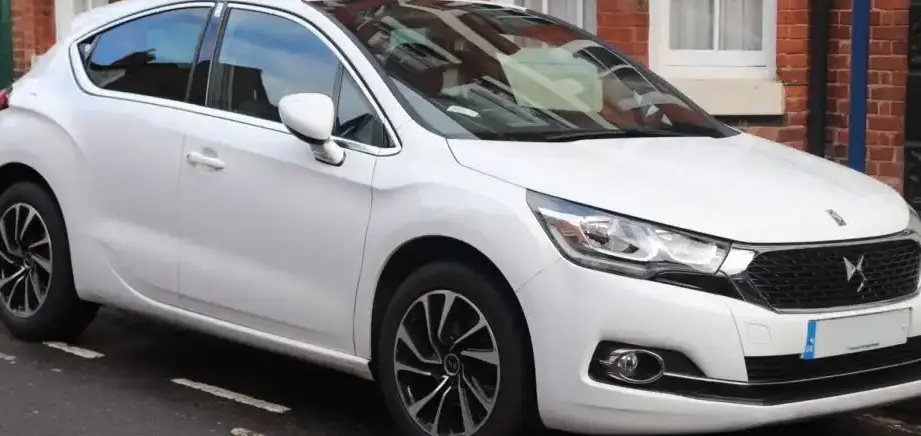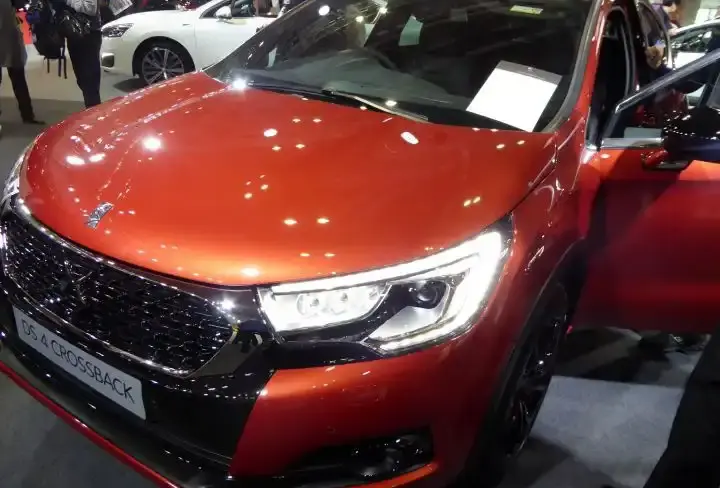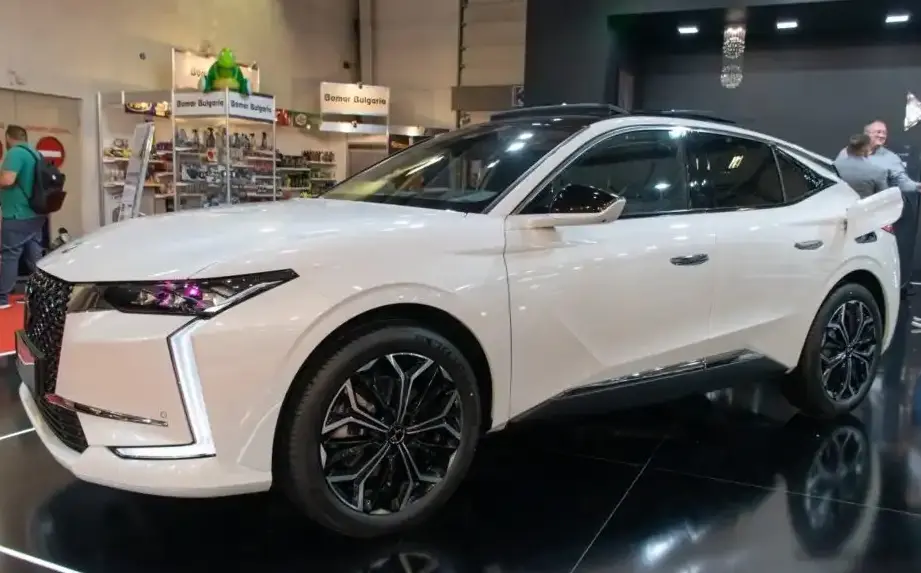
The DS 4 II 1.5 BlueHDi (130 hp) Automatic is a front-wheel-drive crossover produced by the French manufacturer DS Automobiles between May 2021 and June 2024. Positioned as a mid-range offering within the second generation DS 4 lineup, it aimed to provide a balance between fuel efficiency, reasonable performance, and comfort. This variant utilized a diesel engine paired with an eight-speed automatic transmission, catering to buyers seeking a refined driving experience and lower running costs. It was part of the larger PSA Group’s (now Stellantis) EMP2 platform strategy, shared with models like the Peugeot 308 and Opel Astra.
Technical Specifications
| Brand | DS |
| Model | 4 |
| Generation | 4 II |
| Type (Engine) | 1.5 BlueHDi (130 Hp) Automatic |
| Start of production | May, 2021 |
| End of production | June, 2024 |
| Powertrain Architecture | Internal Combustion engine |
| Body type | Crossover |
| Seats | 5 |
| Doors | 5 |
| Fuel consumption at Low speed (WLTP) | 5.5-5.7 l/100 km (42.8 – 41.3 US mpg, 51.4 – 49.6 UK mpg, 18.2 – 17.5 km/l) |
| Fuel consumption at Medium speed (WLTP) | 4.6-4.8 l/100 km (51.1 – 49 US mpg, 61.4 – 58.9 UK mpg, 21.7 – 20.8 km/l) |
| Fuel consumption at high speed (WLTP) | 4.1-4.2 l/100 km (57.4 – 56 US mpg, 68.9 – 67.3 UK mpg, 24.4 – 23.8 km/l) |
| Fuel consumption at very high speed (WLTP) | 5.1-5.3 l/100 km (46.1 – 44.4 US mpg, 55.4 – 53.3 UK mpg, 19.6 – 18.9 km/l) |
| Combined fuel consumption (WLTP) | 4.8-4.9 l/100 km (49 – 48 US mpg, 58.9 – 57.6 UK mpg, 20.8 – 20.4 km/l) |
| CO2 emissions (WLTP) | 125-129 g/km |
| Fuel consumption (economy) – urban (NEDC, WLTP equivalent) | 4.2 l/100 km (56 US mpg, 67.3 UK mpg, 23.8 km/l) |
| Fuel consumption (economy) – extra urban (NEDC, WLTP equivalent) | 3.5 l/100 km (67.2 US mpg, 80.7 UK mpg, 28.6 km/l) |
| Fuel consumption (economy) – combined (NEDC, WLTP equivalent) | 3.8 l/100 km (61.9 US mpg, 74.3 UK mpg, 26.3 km/l) |
| CO2 emissions (NEDC, WLTP equivalent) | 100 g/km |
| Fuel Type | Diesel |
| Acceleration 0 – 100 km/h | 10.9 sec |
| Acceleration 0 – 62 mph | 10.9 sec |
| Acceleration 0 – 60 mph | 10.4 sec |
| Maximum speed | 203 km/h (126.14 mph) |
| Emission standard | Euro 6.3 |
| Weight-to-power ratio | 10.9 kg/Hp, 91.9 Hp/tonne |
| Weight-to-torque ratio | 4.7 kg/Nm, 212.2 Nm/tonne |
| Power | 130 Hp @ 3750 rpm |
| Power per litre | 86.7 Hp/l |
| Torque | 300 Nm @ 1750 rpm (221.27 lb.-ft. @ 1750 rpm) |
| Engine layout | Front, Transverse |
| Engine Model/Code | YHZ DV5RC |
| Engine displacement | 1499 cm3 (91.47 cu. in.) |
| Number of cylinders | 4 |
| Engine configuration | Inline |
| Number of valves per cylinder | 4 |
| Fuel injection system | Diesel Commonrail |
| Engine aspiration | Turbocharger, Intercooler |
| Engine oil capacity | 4 l (4.23 US qt | 3.52 UK qt) |
| Kerb Weight | 1414 kg (3117.34 lbs.) |
| Max. weight | 2000 kg (4409.25 lbs.) |
| Max load | 586 kg (1291.91 lbs.) |
| Trunk (boot) space – minimum | 430 l (15.19 cu. ft.) |
| Fuel tank capacity | 53 l (14 US gal | 11.66 UK gal) |
| AdBlue tank | 15 l (3.96 US gal | 3.3 UK gal) |
| Permitted trailer load with brakes (12%) | 1500 kg (3306.93 lbs.) |
| Length | 4400 mm (173.23 in.) |
| Width | 1866 mm (73.46 in.) |
| Width including mirrors | 2061 mm (81.14 in.) |
| Height | 1490 mm (58.66 in.) |
| Wheelbase | 2675 mm (105.31 in.) |
| Front track | 1600 mm (62.99 in.) |
| Rear (Back) track | 1605 mm (63.19 in.) |
| Front overhang | 925 mm (36.42 in.) |
| Rear overhang | 800 mm (31.5 in.) |
| Ride height (ground clearance) | 189 mm (7.44 in.) |
| Minimum turning circle (turning diameter) | 10.82 m (35.5 ft.) |
| Drivetrain Architecture | The Internal combustion engine (ICE) drives the front wheels of the vehicle. |
| Drive wheel | Front wheel drive |
| Number of gears and type of gearbox | 8 gears, automatic transmission |
| Front suspension | Independent, type McPherson with coil spring and anti-roll bar |
| Rear suspension | Semi-independent, coil spring |
| Front brakes | Ventilated discs, 304×28 mm |
| Rear brakes | Disc, 268×12 mm |
| Assisting systems | ABS (Anti-lock braking system) |
| Steering type | Steering rack and pinion |
| Power steering | Electric Steering |
| Tires size | 215/65 R17 99V; 205/55 R19 97V; 245/40 R20 99V |
| Wheel rims size | 17; 19; 20 |
INTRODUCTION
The DS 4 II 1.5 BlueHDi 130 Automatic, launched in 2021, represents DS Automobiles’ attempt to carve out a niche in the competitive compact crossover segment. Built on the EMP2 platform, it shares its underpinnings with other Stellantis vehicles, but distinguishes itself through its distinctive styling and focus on comfort and technology. This particular variant, powered by a 1.5-liter diesel engine producing 130 horsepower and paired with an eight-speed automatic transmission, was intended to appeal to buyers prioritizing fuel economy and a relaxed driving experience. It occupied a middle ground in the DS 4 II range, offering more performance than the lower-powered diesel options but remaining more accessible than the petrol-powered models.
Powertrain & Engine Architecture
At the heart of the DS 4 II 1.5 BlueHDi 130 Automatic lies the DV5RC engine, a 1.5-liter inline-four cylinder diesel engine. This engine is part of the BlueHDi family, incorporating advanced technologies to reduce emissions and improve efficiency. It utilizes a common-rail direct fuel injection system, delivering fuel at extremely high pressure for optimized combustion. A turbocharger with an intercooler further enhances performance by forcing more air into the cylinders. The engine produces 130 hp at 3750 rpm and 300 Nm (221 lb-ft) of torque at 1750 rpm. The eight-speed automatic transmission, sourced from Aisin, provides smooth and efficient gear changes. This transmission is known for its responsiveness and contributes to the vehicle’s overall refinement. The engine also features a particulate filter to minimize soot emissions, complying with stringent Euro 6.3 emission standards.
Driving Characteristics
The DS 4 II 1.5 BlueHDi 130 Automatic delivers a comfortable and composed driving experience. While not overtly sporty, the engine provides adequate power for everyday driving situations. Acceleration from 0 to 60 mph takes around 10.4 seconds, and the top speed is 126 mph. The eight-speed automatic transmission is well-matched to the engine, offering smooth shifts and keeping the engine within its optimal power band. Compared to the more powerful petrol variants, the diesel model offers better fuel economy and a wider torque curve, making it more effortless to drive in urban environments and on long journeys. However, it lacks the outright punch of the higher-output engines. The gear ratios are tuned for efficiency, prioritizing fuel savings over rapid acceleration.
Equipment & Trim Levels
The DS 4 II 1.5 BlueHDi 130 Automatic typically came equipped with a generous level of standard features. These included a touchscreen infotainment system with Apple CarPlay and Android Auto compatibility, automatic climate control, and a suite of advanced driver-assistance systems (ADAS) such as lane-keeping assist, automatic emergency braking, and adaptive cruise control. Interior upholstery was typically cloth, with options for leather upgrades. Higher trim levels offered additional features such as a premium sound system, panoramic sunroof, and heated seats. The dashboard design was modern and minimalist, with a focus on digital displays and intuitive controls.
Chassis & Braking
The DS 4 II utilizes a McPherson strut front suspension and a semi-independent coil spring rear suspension. This setup provides a good balance between ride comfort and handling. The front brakes are ventilated discs measuring 304x28mm, while the rear brakes are solid discs measuring 268x12mm. ABS (Anti-lock Braking System) is standard, ensuring safe and controlled braking in various conditions. The suspension is tuned to prioritize comfort, absorbing bumps and imperfections in the road surface effectively. Stabilizer bars are fitted to both the front and rear axles to reduce body roll during cornering.
Market Reception & Comparison
The DS 4 II 1.5 BlueHDi 130 Automatic received generally positive reviews, with critics praising its comfortable ride, refined interior, and fuel efficiency. However, some reviewers noted that the diesel engine could be somewhat noisy and that the performance was not as exhilarating as some of its rivals. Compared to the petrol-powered DS 4 models, the diesel variant offered significantly better fuel economy, making it a more attractive option for high-mileage drivers. Against competitors like the Audi Q3 and BMW X1, the DS 4 offered a more distinctive design and a more affordable price point, but lacked the brand prestige of its German rivals.
Legacy
The 1.5 BlueHDi engine has proven to be a reliable and durable powertrain in other Stellantis vehicles. While long-term reliability data specifically for the DS 4 II 1.5 BlueHDi 130 Automatic is still emerging, the engine’s established track record suggests it should provide years of dependable service with proper maintenance. On the used car market, these models are generally well-regarded for their fuel efficiency and comfortable ride. However, potential buyers should be aware of the potential for diesel particulate filter (DPF) issues, particularly if the vehicle has been primarily used for short journeys. Overall, the DS 4 II 1.5 BlueHDi 130 Automatic represents a solid and practical choice for buyers seeking a stylish and efficient compact crossover.