Technical Specifications
| Brand | Fiat |
| Model | Panda |
| Generation | Panda II (169) |
| Type (Engine) | 1.2 MPI (60 Hp) |
| Start of production | 2003 |
| End of production | 2010 |
| Powertrain Architecture | Internal Combustion engine |
| Body type | Hatchback |
| Seats | 5 |
| Doors | 5 |
| Fuel consumption (urban) | 7.1 l/100 km (33.1 US mpg, 39.8 UK mpg, 14.1 km/l) |
| Fuel consumption (extra urban) | 4.8 l/100 km (49 US mpg, 58.9 UK mpg, 20.8 km/l) |
| Fuel consumption (combined) | 5.6 l/100 km (42 US mpg, 50.4 UK mpg, 17.9 km/l) |
| Fuel Type | Petrol (Gasoline) |
| Acceleration 0 – 100 km/h | 14 sec |
| Acceleration 0 – 62 mph | 14 sec |
| Acceleration 0 – 60 mph | 13.3 sec |
| Maximum speed | 155 km/h (96.31 mph) |
| Weight-to-power ratio | 14.3 kg/Hp, 69.8 Hp/tonne |
| Weight-to-torque ratio | 8.4 kg/Nm, 118.6 Nm/tonne |
| Power | 60 Hp @ 5000 rpm |
| Power per litre | 48.3 Hp/l |
| Torque | 102 Nm @ 2500 rpm (75.23 lb.-ft. @ 2500 rpm) |
| Engine layout | Front, Transverse |
| Engine Model/Code | 188A4000 |
| Engine displacement | 1242 cm3 (75.79 cu. in.) |
| Number of cylinders | 4 |
| Engine configuration | Inline |
| Cylinder Bore | 70.8 mm (2.79 in.) |
| Piston Stroke | 78.86 mm (3.1 in.) |
| Compression ratio | 9.8:1 |
| Number of valves per cylinder | 2 |
| Fuel injection system | Multi-port manifold injection |
| Engine aspiration | Naturally aspirated engine |
| Valvetrain | OHC |
| Engine oil capacity | 2.8 l (2.96 US qt | 2.46 UK qt) |
| Coolant | 4.6 l (4.86 US qt | 4.05 UK qt) |
| Kerb Weight | 860 kg (1895.98 lbs.) |
| Max. weight | 1305 kg (2877.03 lbs.) |
| Max load | 445 kg (981.06 lbs.) |
| Trunk (boot) space – minimum | 206 l (7.27 cu. ft.) |
| Trunk (boot) space – maximum | 775 l (27.37 cu. ft.) |
| Fuel tank capacity | 35 l (9.25 US gal | 7.7 UK gal) |
| Length | 3538 mm (139.29 in.) |
| Width | 1578 mm (62.13 in.) |
| Height | 1540 mm (60.63 in.) |
| Wheelbase | 2299 mm (90.51 in.) |
| Front track | 1366 mm (53.78 in.) |
| Rear (Back) track | 1357 mm (53.43 in.) |
| Minimum turning circle | 9.1 m (29.86 ft.) |
| Drivetrain Architecture | Front wheel drive |
| Number of gears and type of gearbox | 5 gears, manual transmission |
| Front suspension | Spring Strut |
| Rear suspension | Torsion |
| Front brakes | Disc |
| Rear brakes | Disc |
| Assisting systems | ABS (Anti-lock braking system) |
| Steering type | Steering rack and pinion |
| Tires size | 155/80 R13 |
| Wheel rims size | 5J x 13 |
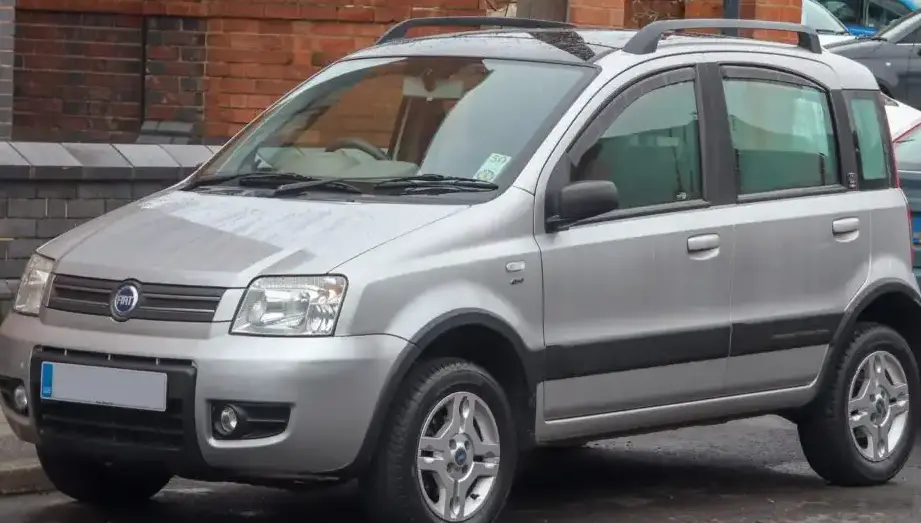
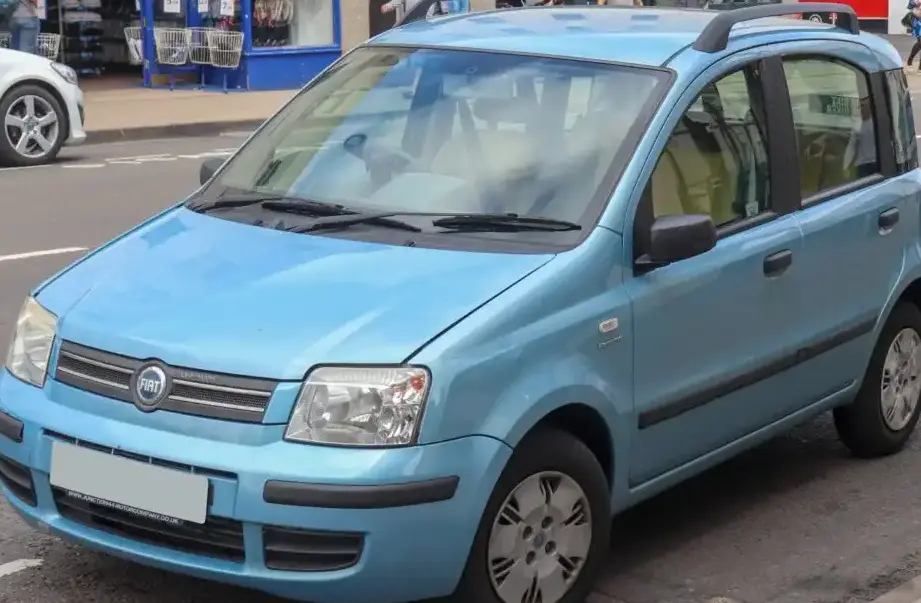
The Fiat Panda II (169) 1.2 MPI 60 Hp, launched in 2003, represented a significant update to the iconic Panda city car. The second generation Panda, designed by Giorgetto Giugiaro, offered a more modern and spacious interior compared to its predecessor, while retaining the original’s focus on affordability and practicality. The 1.2 MPI engine, paired with a five-speed manual transmission, was the base engine option, targeting buyers seeking the lowest possible purchase price and running costs. It was a popular choice in Europe, particularly in Italy, Spain, and Germany, where it competed with other small city cars like the Renault Twingo and Volkswagen Lupo.
Powertrain & Engine Architecture
The heart of the Panda II 1.2 MPI is the Fiat 188A4000 engine, a 1.2-liter (1242 cc) inline-four cylinder petrol engine. This engine utilizes a single overhead camshaft (OHC) valvetrain with two valves per cylinder. Fuel delivery is managed by a multi-point fuel injection system, providing adequate, though not exceptional, performance. The engine produces 60 horsepower at 5000 rpm and 102 Nm (75.23 lb-ft) of torque at 2500 rpm. The five-speed manual transmission was the standard offering, providing a relatively simple and robust drivetrain. The engine’s design prioritized fuel efficiency and reliability over outright power, making it well-suited for urban driving conditions. It’s a naturally aspirated engine, meaning it doesn’t employ a turbocharger or supercharger.
Driving Characteristics
The 1.2 MPI-equipped Panda II offers modest performance. Acceleration from 0 to 60 mph takes around 13.3 seconds, and the top speed is approximately 96 mph. The engine feels somewhat strained when accelerating hard, particularly when fully loaded or on inclines. The five-speed gearbox is well-matched to the engine’s characteristics, allowing for comfortable cruising at highway speeds, although overtaking requires careful planning. Compared to higher-output versions of the Panda II, such as the 1.4-liter engine, the 1.2 MPI feels noticeably slower. However, its lighter weight and efficient engine contribute to excellent fuel economy, making it an ideal choice for city commuting. The gear ratios are optimized for maximizing fuel efficiency rather than providing sporty acceleration.
Equipment & Trim Levels
The base 1.2 MPI Panda II was typically equipped with basic but functional features. Standard equipment generally included power steering, central locking, and front airbags. The interior featured durable, though basic, plastic trim and cloth upholstery. Optional extras included air conditioning, electric windows, and a radio/CD player. Higher trim levels, such as the Active and Dynamic, added features like body-colored bumpers, wheel covers, and upgraded interior trim. The focus was on providing essential features at an affordable price point, rather than luxury or advanced technology.
Chassis & Braking
The Panda II utilizes a simple yet effective chassis design. The front suspension consists of MacPherson struts, while the rear suspension employs a torsion beam. This setup provides a comfortable ride quality, particularly on smooth roads. The braking system features disc brakes on all four wheels, providing adequate stopping power for the vehicle’s weight and performance. An Anti-lock Braking System (ABS) was standard, enhancing safety during emergency braking situations. The relatively narrow tires (155/80 R13) contribute to fuel efficiency but offer limited grip in challenging conditions.
Market Reception & Comparison
The Fiat Panda II 1.2 MPI was generally well-received by critics as an affordable and practical city car. Its fuel efficiency and low running costs were particularly praised. However, its modest performance and basic interior were often cited as drawbacks. Compared to other trims in the Panda II lineup, the 1.2 MPI offered the lowest purchase price but sacrificed performance and features. The 1.4-liter engine provided a noticeable performance boost, while the diesel variants offered even better fuel economy. Despite its limitations, the 1.2 MPI remained a popular choice for buyers seeking a reliable and economical mode of transportation.
Legacy
The Fiat Panda II 1.2 MPI has proven to be a relatively reliable and durable vehicle. The 188A4000 engine is known for its simplicity and robustness, and with proper maintenance, it can provide many years of service. In the used car market, these Pandas are still relatively common and affordable. They are often sought after by first-time car buyers or those seeking a cheap and cheerful runabout. While not a performance icon, the Panda II 1.2 MPI represents a practical and economical solution to urban transportation, and its legacy as a dependable city car endures.