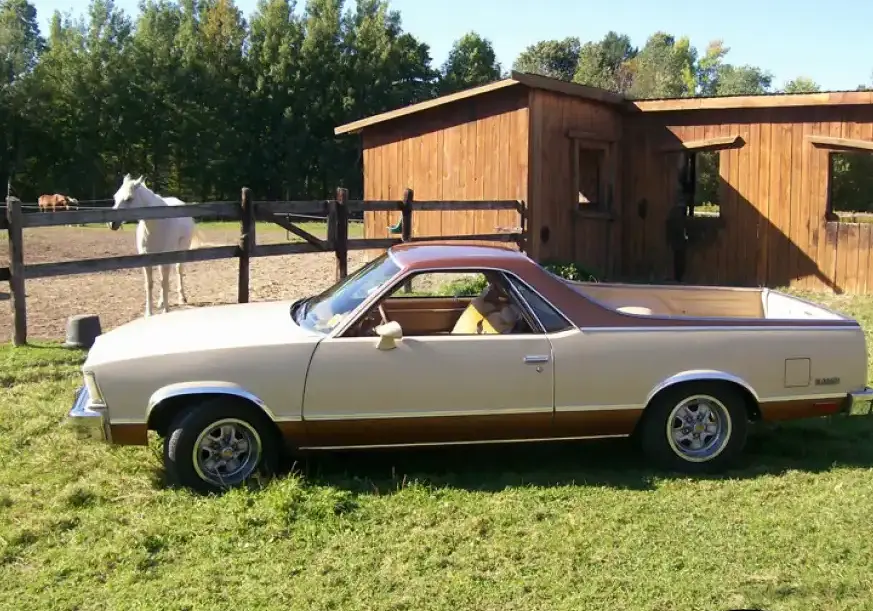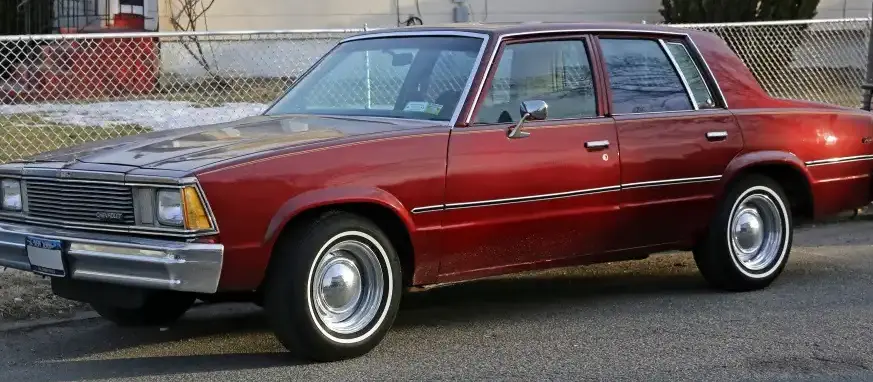
Technical Specifications
| Brand | Chevrolet |
| Model | Malibu |
| Generation | Malibu IV Sedan (facelift 1981) |
| Type (Engine) | 4.3L d V6 (85 Hp) Automatic |
| Start of production | 1981 |
| End of production | 1983 |
| Powertrain Architecture | Internal Combustion engine |
| Body type | Sedan |
| Seats | 6 |
| Doors | 4 |
| Fuel Type | Diesel |
| Weight-to-power ratio | 17.4 kg/Hp, 57.4 Hp/tonne |
| Weight-to-torque ratio | 6.6 kg/Nm, 150.6 Nm/tonne |
| Power | 85 Hp @ 3600 rpm |
| Power per litre | 19.8 Hp/l |
| Torque | 223 Nm @ 1600 rpm (164.48 lb.-ft. @ 1600 rpm) |
| Engine layout | Front, Longitudinal |
| Engine Model/Code | LT6 |
| Engine displacement | 4293 cm3 (261.97 cu. in.) |
| Number of cylinders | 6 |
| Engine configuration | V-engine |
| Cylinder Bore | 103.05 mm (4.06 in.) |
| Piston Stroke | 85.98 mm (3.39 in.) |
| Compression ratio | 22.5:1 |
| Number of valves per cylinder | 2 |
| Fuel injection system | Precombustion chamber injection |
| Engine aspiration | Naturally aspirated |
| Valvetrain | OHV |
| Engine oil capacity | 6 l (6.34 US qt | 5.28 UK qt) |
| Coolant | 13.8 l (14.58 US qt | 12.14 UK qt) |
| Kerb Weight | 1481 kg (3265.05 lbs.) |
| Trunk (boot) space – maximum | 469 l (16.56 cu. ft.) |
| Fuel tank capacity | 69 l (18.23 US gal | 15.18 UK gal) |
| Length | 4895 mm (192.72 in.) |
| Width | 1837 mm (72.32 in.) |
| Height | 1414 mm (55.67 in.) |
| Wheelbase | 2745 mm (108.07 in.) |
| Front track | 1486 mm (58.5 in.) |
| Rear (Back) track | 1467 mm (57.76 in.) |
| Front overhang | 915 mm (36.02 in.) |
| Rear overhang | 1235 mm (48.62 in.) |
| Ride height (ground clearance) | 153 mm (6.02 in.) |
| Minimum turning circle (turning diameter) | 12.2 m (40.03 ft.) |
| Approach angle | 23.3° |
| Departure angle | 16.5° |
| Ramp-over (brakeover) angle | 15.4° |
| Drivetrain Architecture | The Internal combustion engine (ICE) drives the rear wheels of the vehicle. |
| Drive wheel | Rear wheel drive |
| Number of gears and type of gearbox | 3 gears, automatic transmission |
| Front suspension | Independent, type McPherson with coil spring and anti-roll bar |
| Rear suspension | dependent spring suspension, Transverse stabilizer, Trailing arm |
| Front brakes | Ventilated discs |
| Rear brakes | Drum |
| Steering type | Steering rack and pinion |
| Tires size | 185/75 R14 |
| Wheel rims size | 6.0J x 14 |
The 1981-1983 Chevrolet Malibu with the 4.3L diesel V6 and automatic transmission was a unique offering in a period of automotive transition. Falling within the fourth generation of the Malibu (1981-1983), this variant aimed to provide a fuel-efficient alternative to the gasoline-powered models. The A-body platform, shared with other GM vehicles like the Oldsmobile Cutlass and Pontiac Grand Prix, provided a familiar foundation. However, the diesel engine and automatic transmission combination distinguished it as a specific trim level geared towards buyers prioritizing economy over outright performance. This model was primarily sold in the North American market, particularly in regions where diesel fuel was readily available and fuel economy was a major concern.
Powertrain & Engine Architecture
The heart of this Malibu variant was the 4.3L (4293 cc) LT6 diesel V6 engine. This engine utilized a precombustion chamber injection system, a common design for diesel engines of the era. This system involved injecting fuel into a small pre-chamber within the cylinder head, which then ignited the main charge in the cylinder. The LT6 featured an overhead valve (OHV) valvetrain, with two valves per cylinder. The high compression ratio of 22.5:1 was typical for diesel engines, contributing to their efficiency. The three-speed automatic transmission, a TH350 variant, was chosen for its durability and relative simplicity. While not known for its quick shifts, it provided a comfortable driving experience. The engine produced 85 horsepower at 3600 rpm and 223 Nm (164.48 lb-ft) of torque at 1600 rpm.
Driving Characteristics
The 4.3L diesel Malibu Automatic was not a performance car. Acceleration was leisurely, and the engine lacked the responsiveness of its gasoline counterparts. The automatic transmission’s gear ratios were optimized for fuel economy rather than quick acceleration. However, the diesel engine’s torque characteristics provided adequate power for highway cruising and everyday driving. The rear-wheel-drive layout offered balanced handling, but the relatively soft suspension tuning prioritized ride comfort over sporty handling. Compared to the V6 and V8 gasoline-powered Malibus, the diesel version felt significantly slower, but it offered a noticeable improvement in fuel economy. The manual transmission versions of the gasoline engines offered a more engaging driving experience, while the higher-output V6 models provided substantially more power.
Equipment & Trim Levels
The diesel-powered Malibu typically came with a fairly basic level of equipment. Standard features generally included cloth upholstery, a basic AM radio, and manual windows and locks. Air conditioning was often an optional extra. The interior design was typical of early 1980s American cars, with a focus on practicality rather than luxury. Trim levels were relatively limited for the diesel variant, with most examples being fairly similarly equipped. Options such as upgraded sound systems, cruise control, and power windows were available, but were not commonly ordered on this trim level due to its focus on affordability.
Chassis & Braking
The Malibu IV Sedan utilized a traditional body-on-frame construction. The front suspension was an independent McPherson strut design with coil springs and an anti-roll bar. The rear suspension was a dependent spring suspension with a transverse stabilizer and trailing arms. This setup provided a comfortable ride, but wasn’t particularly sporty. The braking system featured ventilated discs at the front and drum brakes at the rear. The braking performance was adequate for the car’s weight and power, but lacked the stopping power of more modern systems. Steering was via a rack and pinion system, providing reasonable precision.
Market Reception & Comparison
The diesel Malibu received mixed reviews. Critics acknowledged its improved fuel economy compared to the gasoline models, but often criticized its lack of power and sluggish performance. The diesel engine was also known to be somewhat noisy and rough compared to gasoline engines. Compared to other trims in the Malibu lineup, the diesel automatic was the least expensive and most fuel-efficient option. However, it also offered the lowest level of performance. The gasoline-powered V6 models were more popular with buyers who prioritized performance, while the diesel appealed to those seeking maximum fuel economy.
Legacy
The Chevrolet Malibu IV Sedan with the 4.3L diesel engine represents a fascinating, if somewhat forgotten, chapter in automotive history. While the diesel engine itself proved to be somewhat problematic in terms of long-term reliability – often suffering from issues with the injection pump and precombustion chambers – the model remains a unique and collectible vehicle today. Finding well-maintained examples is becoming increasingly difficult. In the used car market, these Malibus are often sought after by enthusiasts interested in experiencing a piece of 1980s automotive history. The diesel engine’s relatively low power output and the availability of more modern, fuel-efficient vehicles have limited its appeal to a niche market.