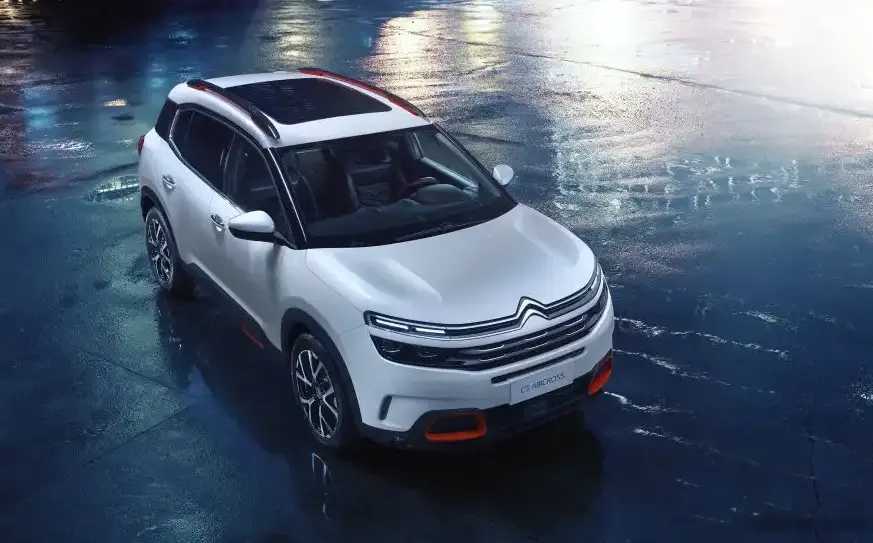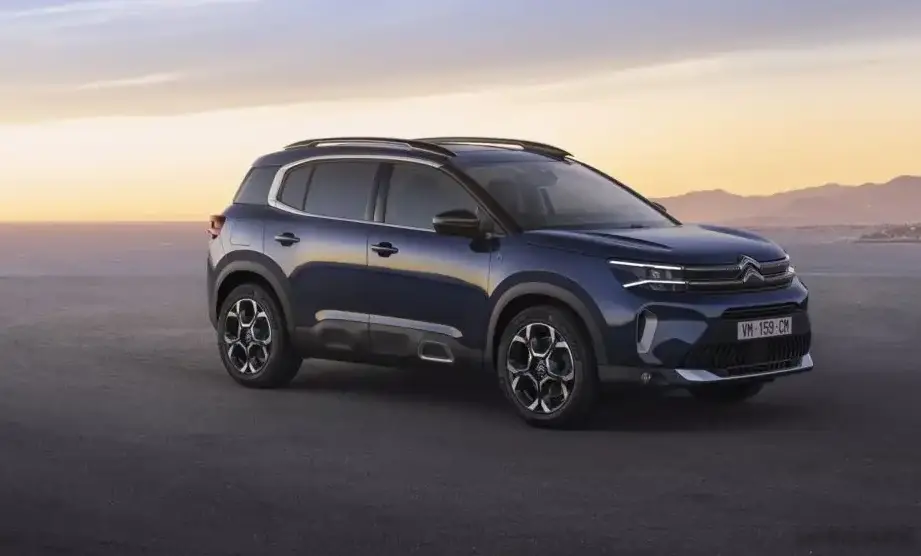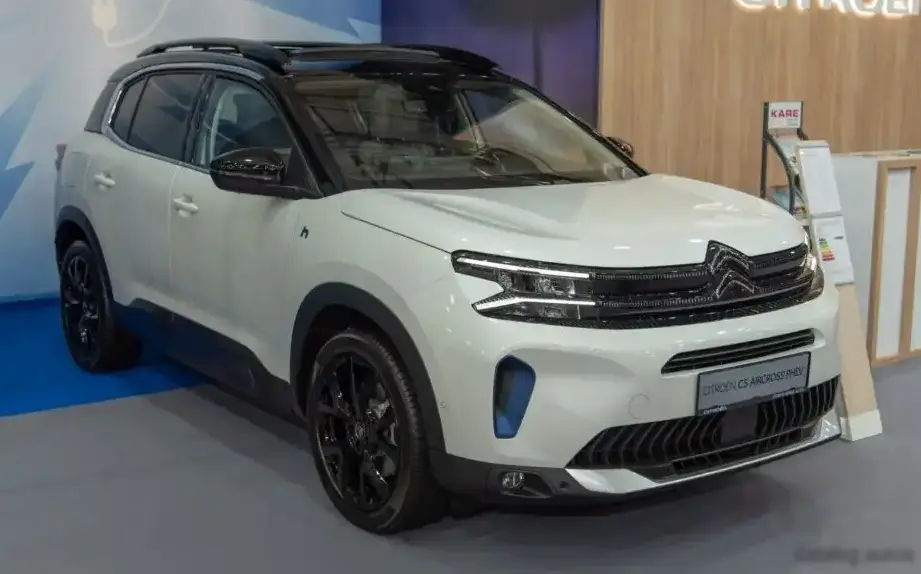
The Citroen C5 Aircross I (Phase II), specifically the 1.6-liter (224 hp) Plug-in Hybrid e-EAT variant, represents a significant step in Citroen’s push towards electrified vehicles. Introduced in February 2022 and produced through July 2025, this model combines a turbocharged gasoline engine with an electric motor, offering a blend of fuel efficiency and performance within the compact SUV segment. It sits as a mid-to-high range offering within the C5 Aircross lineup, appealing to buyers seeking reduced emissions and the flexibility of electric driving without the range anxiety associated with fully electric vehicles. This variant is primarily targeted towards the European market, where plug-in hybrid technology enjoys considerable popularity due to government incentives and growing environmental awareness.
Technical Specifications
| Brand | Citroen |
| Model | C5 Aircross |
| Generation | C5 Aircross I (Phase II, 2022) |
| Type (Engine) | 1.6 (224 Hp) Plug-in Hybrid e-EAT |
| Start of production | February, 2022 |
| End of production | July, 2025 |
| Powertrain Architecture | PHEV (Plug-in Hybrid Electric Vehicle) |
| Body type | SUV |
| Seats | 5 |
| Doors | 5 |
| Fuel consumption at Low speed (WLTP) | 8.8-8.9 l/100 km (26.7 – 26.4 US mpg, 32.1 – 31.7 UK mpg, 11.4 – 11.2 km/l) |
| Fuel consumption at Medium speed (WLTP) | 6.3-6.4 l/100 km (37.3 – 36.8 US mpg, 44.8 – 44.1 UK mpg, 15.9 – 15.6 km/l) |
| Fuel consumption at high speed (WLTP) | 6.1-6.2 l/100 km (38.6 – 37.9 US mpg, 46.3 – 45.6 UK mpg, 16.4 – 16.1 km/l) |
| Fuel consumption at very high speed (WLTP) | 7.7-7.8 l/100 km (30.5 – 30.2 US mpg, 36.7 – 36.2 UK mpg, 13 – 12.8 km/l) |
| Combined fuel consumption (WLTP) | 1.4-1.5 l/100 km (168 – 156.8 US mpg, 201.8 – 188.3 UK mpg, 71.4 – 66.7 km/l) |
| CO2 emissions (WLTP) | 31-33 g/km |
| Fuel Type | Petrol / electricity |
| Acceleration 0 – 100 km/h | 8.7 sec |
| Acceleration 0 – 62 mph | 8.7 sec |
| Acceleration 0 – 60 mph | 8.3 sec |
| Maximum speed | 225 km/h (139.81 mph) |
| Emission standard | Euro 6d |
| Weight-to-power ratio | 7.9 kg/Hp, 127.3 Hp/tonne |
| Weight-to-torque ratio | 4.9 kg/Nm, 204.5 Nm/tonne |
| Gross battery capacity | 13.2 kWh |
| Battery technology | Lithium-ion (Li-Ion) |
| Battery location | Below the floor, between front and rear seats |
| All-electric range (WLTP) | 55 km (34.18 mi) |
| Average Energy consumption (WLTP) | 17.8-18.2 kWh/100 km (28.65 – 29.29 kWh/100 mi, 118 – 115 MPGe, 5.6 – 5.5 km/kWh, 3.5 – 3.4 mi/kWh) |
| Max speed (electric) | 135 km/h (83.89 mph) |
| Electric motor power | 110 Hp @ 2500 rpm (320 Nm @ 500-2500 rpm / 236.02 lb.-ft. @ 500-2500 rpm) |
| System power | 224 Hp |
| System torque | 360 Nm (265.52 lb.-ft.) |
| Power | 181 Hp @ 6000 rpm |
| Torque | 300 Nm @ 3000 rpm (221.27 lb.-ft. @ 3000 rpm) |
| Engine layout | Front, Transverse |
| Engine Model/Code | 5G06 |
| Engine displacement | 1598 cm3 (97.52 cu. in.) |
| Number of cylinders | 4 |
| Engine configuration | Inline |
| Number of valves per cylinder | 4 |
| Fuel injection system | Direct injection |
| Engine oil capacity | 4.25 l (4.49 US qt | 3.74 UK qt) |
| Kerb Weight | 1760 kg (3880.14 lbs.) |
| Max. weight | 2300 kg (5070.63 lbs.) |
| Max load | 540 kg (1190.5 lbs.) |
| Trunk (boot) space – minimum | 460 l (16.24 cu. ft.) |
| Trunk (boot) space – maximum | 1510 l (53.33 cu. ft.) |
| Fuel tank capacity | 43 l (11.36 US gal | 9.46 UK gal) |
| Permitted trailer load with brakes (12%) | 1300 kg (2866.01 lbs.) |
| Permitted trailer load without brakes | 750 kg (1653.47 lbs.) |
| Length | 4500 mm (177.17 in.) |
| Width | 1969 mm (77.52 in.) |
| Width including mirrors | 2099 mm (82.64 in.) |
| Height | 1689 mm (66.5 in.) |
| Wheelbase | 2730 mm (107.48 in.) |
| Front track | 1579-1601 mm (62.17 – 63.03 in.) |
| Rear (Back) track | 1608-1630 mm (63.31 – 64.17 in.) |
| Front overhang | 917 mm (36.1 in.) |
| Rear overhang | 853 mm (33.58 in.) |
| Ride height (ground clearance) | 230 mm (9.06 in.) |
| Minimum turning circle (turning diameter) | 10.7 m (35.1 ft.) |
| Drivetrain Architecture | The Internal combustion engine (ICE) and electric motor drive the front wheels of the car with the ability to work in full electric or mixed mode. |
| Drive wheel | Front wheel drive |
| Number of gears and type of gearbox | 8 gears, automatic transmission e-EAT |
| Front suspension | Independent type McPherson |
| Rear suspension | Independent multi-link suspension |
| Front brakes | Ventilated discs |
| Rear brakes | Disc |
| Assisting systems | ABS (Anti-lock braking system) |
| Steering type | Steering rack and pinion |
| Power steering | Electric Steering |
| Tires size | 225/55 R18; 205/55 R19 |
| Wheel rims size | 18; 19 |
INTRODUCTION
The Citroen C5 Aircross I (Phase II) 1.6 Plug-in Hybrid e-EAT, launched in 2022, builds upon the foundation of the original C5 Aircross, a model designed to disrupt the traditional SUV market with its emphasis on comfort and distinctive styling. This plug-in hybrid variant leverages the EMP2 platform (also known as the 1HX0/A3 platform) shared with other Stellantis brands like Peugeot and Opel/Vauxhall. The Phase II update brought styling revisions and technological enhancements, further refining the C5 Aircross’s appeal. The 1.6 PHEV model specifically aims to provide a practical and environmentally conscious option for families and individuals seeking a versatile SUV with the benefits of electric driving.
Powertrain & Engine Architecture
At the heart of the C5 Aircross 1.6 PHEV lies the 5G06 engine, a 1.6-liter turbocharged inline-four cylinder gasoline engine producing 181 horsepower at 6,000 rpm and 300 Nm (221.27 lb-ft) of torque at 3,000 rpm. This engine utilizes direct fuel injection for improved efficiency and performance. The engine is paired with an 8-speed automatic transmission (e-EAT), specifically tuned to work seamlessly with the electric motor. The electric motor, located between the engine and transmission, contributes an additional 110 horsepower at 2500 rpm and 320 Nm (236.02 lb-ft) of torque. Combined, the system delivers a total output of 224 horsepower and 360 Nm (265.52 lb-ft) of torque. The 13.2 kWh lithium-ion battery pack is positioned under the floor between the front and rear seats, minimizing intrusion into passenger or cargo space. The battery supports both AC and DC charging, allowing for relatively quick replenishment of the electric range.
Driving Characteristics
The C5 Aircross 1.6 PHEV offers a refined driving experience, particularly in electric mode. The instant torque from the electric motor provides brisk acceleration in urban environments. In hybrid mode, the powertrain intelligently switches between gasoline and electric power, optimizing for efficiency. While the 8.7-second 0-62 mph acceleration is respectable, it’s not as sporty as some competitors. The e-EAT transmission provides smooth gear changes, contributing to a comfortable ride. The gear ratios are optimized for both fuel efficiency and responsiveness. Compared to the standard gasoline versions, the PHEV model feels slightly heavier due to the battery pack, but the added weight is well-managed by the suspension. Compared to higher-powered gasoline variants, this version prioritizes efficiency over outright performance.
Equipment & Trim Levels
The C5 Aircross 1.6 PHEV typically came well-equipped, reflecting its position as a mid-to-high range trim. Standard features often included a touchscreen infotainment system with Apple CarPlay and Android Auto compatibility, a digital instrument cluster, automatic climate control, and a suite of advanced driver-assistance systems (ADAS) such as lane departure warning, automatic emergency braking, and adaptive cruise control. Interior upholstery typically consisted of cloth or leather options, with higher trims offering premium materials. Optional extras included a panoramic sunroof, a premium sound system, and heated seats. The distinctive Citroen Advanced Comfort seats, designed to provide exceptional cushioning and support, were a key feature of this model.
Chassis & Braking
The C5 Aircross utilizes an independent McPherson strut suspension at the front and an independent multi-link suspension at the rear, prioritizing ride comfort. The suspension is tuned to absorb bumps and imperfections in the road, providing a smooth and controlled ride. The front brakes are ventilated discs, while the rear brakes are solid discs. ABS (Anti-lock Braking System) is standard, along with electronic brakeforce distribution and emergency brake assist. Stabilizer bars are fitted to both the front and rear axles to reduce body roll during cornering. The chassis is designed to accommodate the added weight of the battery pack without compromising handling.
Market Reception & Comparison
The Citroen C5 Aircross 1.6 PHEV was generally well-received by critics, who praised its comfortable ride, spacious interior, and fuel efficiency. However, some reviewers noted that the infotainment system could be occasionally laggy and that the overall driving experience wasn’t as engaging as some competitors. Compared to the 1.2-liter PureTech gasoline engine variants, the PHEV offered significantly improved fuel economy and lower emissions, but at a higher purchase price. Compared to the diesel variants, the PHEV provided a quieter and more refined driving experience, particularly in electric mode. The PHEV’s real-world fuel economy depended heavily on driving habits and charging frequency, but owners who regularly charged the battery could achieve impressive fuel savings.
Legacy
The Citroen C5 Aircross 1.6 PHEV represents an important step in Citroen’s transition towards electrification. While the C5 Aircross itself has been discontinued, the 1.6 PHEV powertrain has been carried over to other Stellantis models. The powertrain’s reliability has been generally good, with few widespread issues reported. On the used car market, these models are becoming increasingly attractive to buyers seeking a fuel-efficient and environmentally friendly SUV. The long-term durability of the battery pack remains a key consideration for potential buyers, but Citroen offers a warranty on the battery to provide peace of mind.