Technical Specifications
| Brand | Honda |
| Model | Brio |
| Generation | Brio II |
| Type (Engine) | RS 1.2 i-VTEC (90 Hp) CVT |
| Start of production | August, 2018 |
| End of production | 2023 |
| Powertrain Architecture | Internal Combustion engine |
| Body type | Hatchback |
| Seats | 5 |
| Doors | 5 |
| Fuel consumption (urban) | 7 l/100 km (33.6 US mpg, 40.4 UK mpg, 14.3 km/l) |
| Fuel consumption (extra urban) | 5.2 l/100 km (45.2 US mpg, 54.3 UK mpg, 19.2 km/l) |
| Fuel consumption (combined) | 5.9 l/100 km (39.9 US mpg, 47.9 UK mpg, 16.9 km/l) |
| Fuel Type | Petrol (Gasoline) |
| Emission standard | Euro 4 |
| Weight-to-power ratio | 11 kg/Hp, 90.8 Hp/tonne |
| Weight-to-torque ratio | 9 kg/Nm, 111 Nm/tonne |
| Power | 90 Hp @ 6000 rpm |
| Power per litre | 75.1 Hp/l |
| Torque | 110 Nm @ 4800 rpm (81.13 lb.-ft. @ 4800 rpm) |
| Engine layout | Front, Transverse |
| Engine Model/Code | L12B3 |
| Engine displacement | 1199 cm3 (73.17 cu. in.) |
| Number of cylinders | 4 |
| Engine configuration | Inline |
| Cylinder Bore | 73 mm (2.87 in.) |
| Piston Stroke | 71.6 mm (2.82 in.) |
| Compression ratio | 10.1:1 |
| Number of valves per cylinder | 4 |
| Fuel injection system | Multi-port manifold injection |
| Engine aspiration | Naturally aspirated engine |
| Valvetrain | SOHC, i-VTEC |
| Kerb Weight | 991 kg (2184.78 lbs.) |
| Max. weight | 1380 kg (3042.38 lbs.) |
| Max load | 389 kg (857.6 lbs.) |
| Trunk (boot) space – minimum | 258 l (9.11 cu. ft.) |
| Trunk (boot) space – maximum | 710 l (25.07 cu. ft.) |
| Fuel tank capacity | 35 l (9.25 US gal | 7.7 UK gal) |
| Length | 3815 mm (150.2 in.) |
| Width | 1680 mm (66.14 in.) |
| Height | 1485 mm (58.46 in.) |
| Wheelbase | 2405 mm (94.69 in.) |
| Front track | 1475 mm (58.07 in.) |
| Rear (Back) track | 1460 mm (57.48 in.) |
| Ride height (ground clearance) | 154 mm (6.06 in.) |
| Minimum turning circle (turning diameter) | 9.2 m (30.18 ft.) |
| Drivetrain Architecture | The Internal combustion engine (ICE) drives the front wheels of the vehicle. |
| Drive wheel | Front wheel drive |
| Number of gears and type of gearbox | automatic transmission CVT |
| Front suspension | Independent, type McPherson with coil spring and anti-roll bar |
| Rear suspension | Torsion |
| Front brakes | Ventilated discs |
| Rear brakes | Drum |
| Assisting systems | ABS (Anti-lock braking system) |
| Steering type | Steering rack and pinion |
| Power steering | Electric Steering |
| Tires size | 185/55 R15 |
| Wheel rims size | 6J x 15 |
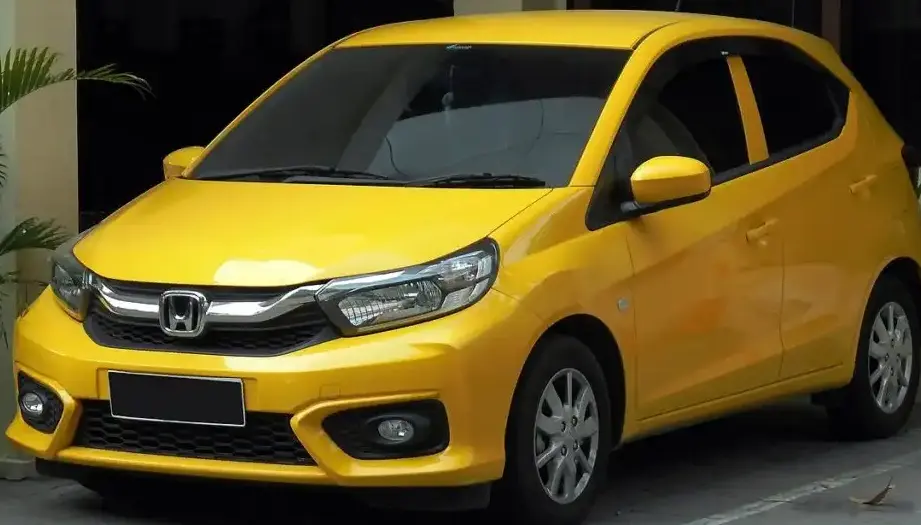
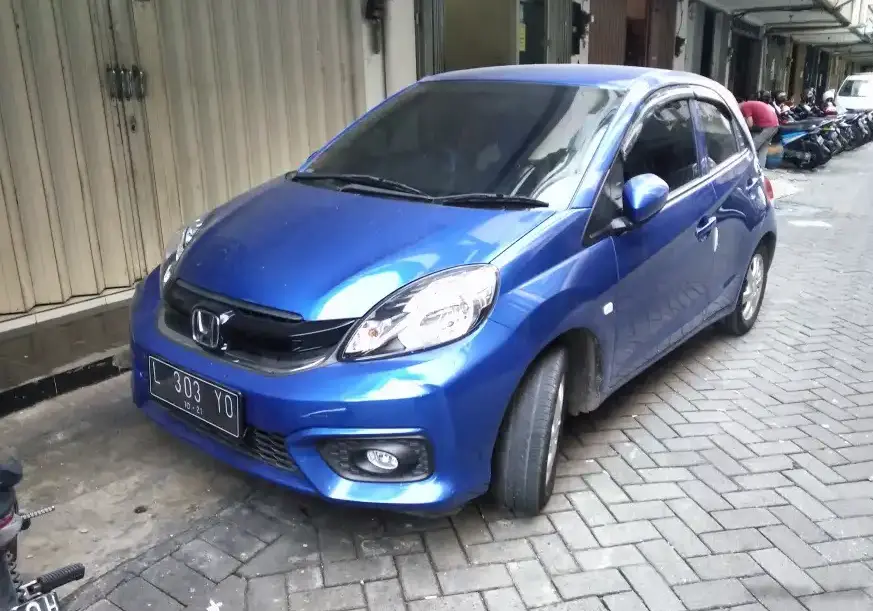
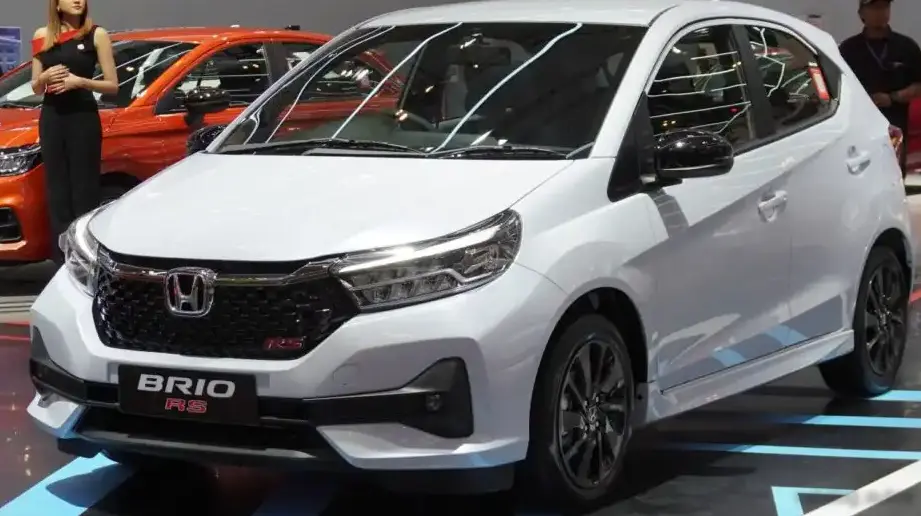
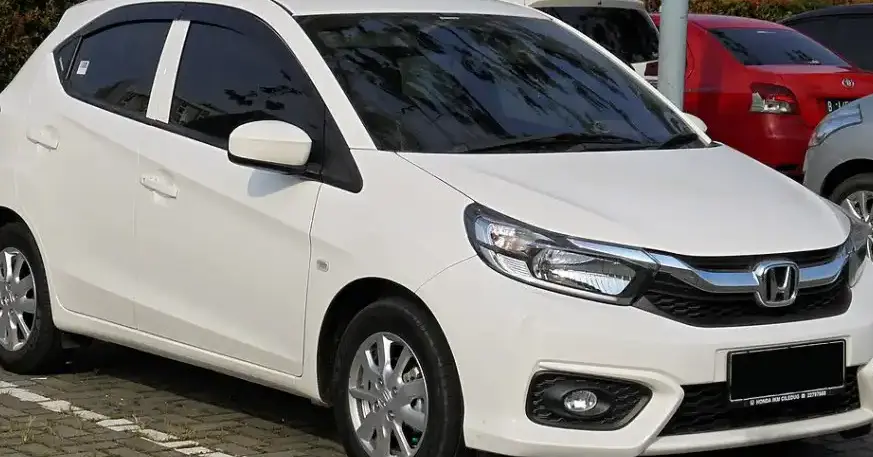
The Honda Brio II RS 1.2 i-VTEC (90 Hp) CVT, produced from 2018 to 2023, was a significant variant within the second generation of Honda’s Brio hatchback. Primarily designed for the Southeast Asian market – notably Indonesia, Thailand, and the Philippines – the Brio II aimed to deliver an affordable and fuel-efficient vehicle for urban commuting. The RS trim, combined with the 1.2-liter engine and Continuously Variable Transmission (CVT), positioned itself as an upgrade over the base models, offering a balance of practicality, style, and ease of driving. It aligned with Honda’s global strategy for small cars, competing with vehicles such as the Suzuki Swift, Toyota Yaris, and Mitsubishi Mirage.
Powertrain & Engine Architecture
The powertrain of the Brio II RS CVT centers around the L12B3 engine, a 1.2-liter inline-four cylinder gasoline engine. This engine is part of Honda’s Earth Dreams Technology series, which prioritizes efficiency and reduced emissions. It features a single overhead camshaft (SOHC) configuration and Honda’s intelligent Variable Valve Timing and Lift Electronic Control (i-VTEC) system. The i-VTEC system dynamically adjusts valve timing and lift, optimizing engine performance across a broad range of engine speeds. Fuel delivery is managed by a multi-point fuel injection system. The engine generates 90 horsepower at 6000 rpm and 110 Nm (81.13 lb-ft) of torque at 4800 rpm. This engine is coupled with a Continuously Variable Transmission (CVT), designed to provide smooth, stepless gear changes. The CVT is engineered to maximize fuel economy and deliver a comfortable driving experience, prioritizing efficiency over rapid acceleration.
Driving Characteristics
The 1.2L i-VTEC engine paired with the CVT provides adequate performance for typical urban driving scenarios. Acceleration isn’t particularly quick, but it’s sufficient for merging into traffic and navigating city streets. The CVT eliminates traditional gear shifts, resulting in a smooth, linear power delivery. However, this smoothness can also create a “rubber band” effect, where engine speed rises before corresponding acceleration is felt. Compared to a manual transmission version (available in some markets), the CVT prioritizes fuel efficiency at the expense of driver engagement. The Brio II’s relatively light weight (991 kg / 2184.78 lbs) helps to offset the engine’s modest power output. The CVT’s gear ratios are optimized for fuel economy, allowing the engine to operate at lower RPMs during cruising, contributing to quieter operation and reduced fuel consumption.
Equipment & Trim Levels
The RS trim level of the Brio II represented a mid-range offering within the lineup. Standard features generally included power windows, power door locks, air conditioning, and a basic audio system with USB connectivity. The RS trim also incorporated sporty exterior styling cues, such as a rear spoiler, unique alloy wheels, and body-colored side mirrors and door handles. Interior appointments featured upgraded seat upholstery and a more contemporary dashboard design compared to the base models. Optional extras could include a touchscreen infotainment system with Bluetooth connectivity, a reverse parking camera, and keyless entry. Safety features typically included dual front airbags and ABS (Anti-lock Braking System).
Chassis & Braking
The Brio II employs a front-engine, front-wheel-drive layout. The front suspension utilizes an independent McPherson strut setup with coil springs and an anti-roll bar, providing a reasonable balance between ride comfort and handling. The rear suspension features a torsion beam axle, a cost-effective and space-saving design. Braking is provided by ventilated discs at the front and drum brakes at the rear. The use of drum brakes on the rear axle was a cost-saving measure common in this vehicle segment. Electric power steering offers light and effortless steering feel, making it well-suited for maneuvering in urban environments.
Market Reception & Comparison
The Honda Brio II RS 1.2 i-VTEC CVT was generally well-received in its target markets. Reviewers consistently praised its fuel efficiency, practicality, and affordability. However, some critics noted the engine’s limited power and the somewhat unremarkable driving experience. Compared to other trims within the Brio II range, the RS offered a more stylish and feature-rich package, appealing to buyers seeking a slightly more premium experience. When compared to competitors like the Suzuki Swift and Toyota Yaris, the Brio II often stood out for its spacious interior and competitive pricing. Fuel economy figures were generally comparable to those of its rivals.
Legacy
The L12B3 engine and CVT transmission pairing in the Brio II have demonstrated a reputation for relative reliability. Routine maintenance requirements include regular oil changes, air filter replacements, and periodic CVT fluid checks. The Brio II, including the RS variant, has maintained a reasonable resale value in the used car market, particularly in the regions where it was originally sold. Its reputation for fuel efficiency and low running costs continues to make it an appealing option for budget-conscious buyers seeking a dependable urban commuter vehicle. While not a performance-oriented vehicle, the Brio II RS 1.2 i-VTEC CVT provided a practical and efficient transportation solution for a diverse range of drivers.