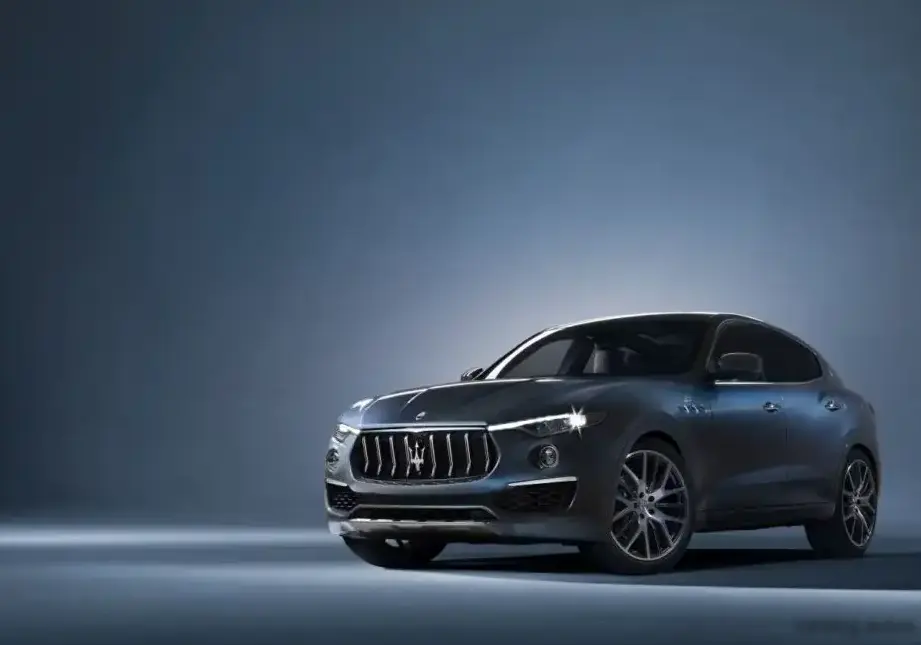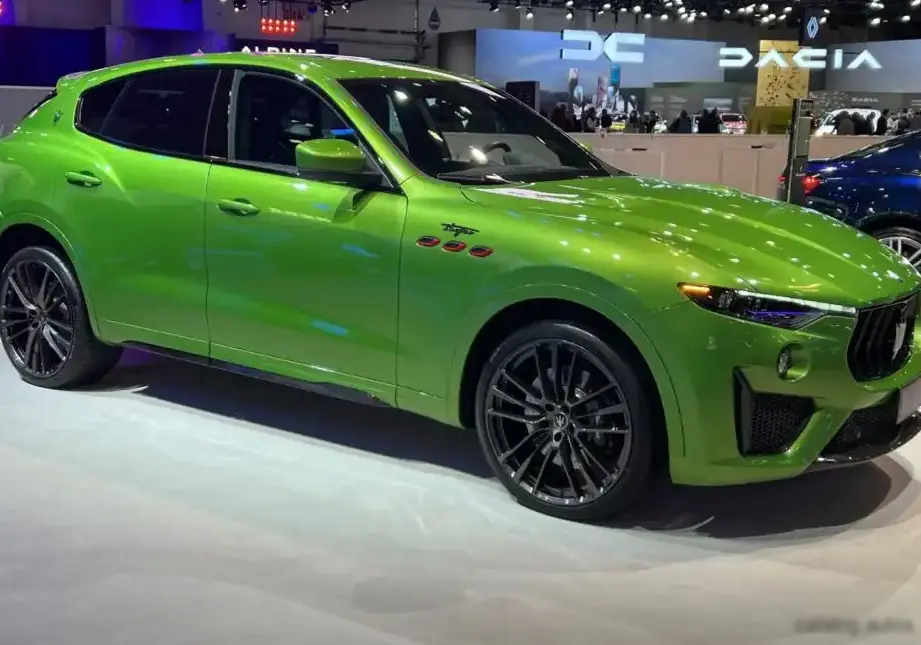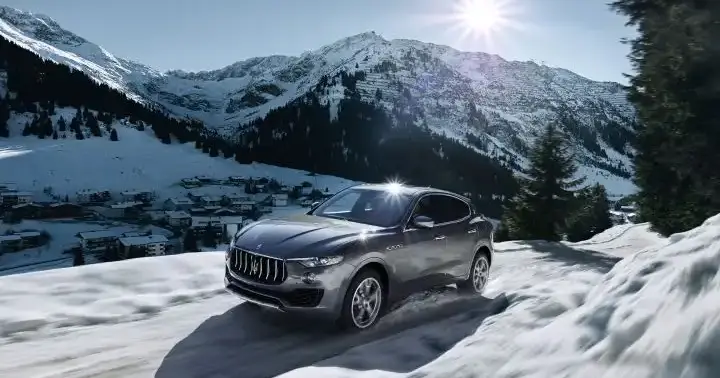
The Maserati Levante 3.0 V6, producing 275 horsepower and equipped with an all-wheel drive (AWD) system and an eight-speed automatic transmission, represents a significant entry point into the Maserati SUV lineup. Introduced in 2016, this variant played a crucial role in establishing the Levante as a competitor in the burgeoning luxury crossover segment. It was positioned as a more accessible option compared to the higher-performance trims, offering a blend of Italian styling, comfortable ride quality, and respectable performance. The Levante, as a whole, marked Maserati’s first foray into the SUV market, leveraging the company’s heritage of performance and luxury in a practical, family-oriented package.
Technical Specifications
| Brand | Maserati |
| Model | Levante |
| Generation | Levante |
| Type (Engine) | 3.0 V6 (275 Hp) AWD Automatic |
| Start of production | 2016 |
| Powertrain Architecture | Internal Combustion engine |
| Body type | SUV |
| Seats | 5 |
| Doors | 5 |
| Fuel consumption (urban) | 8.2 l/100 km (28.7 US mpg) |
| Fuel consumption (extra urban) | 6.6 l/100 km (35.6 US mpg) |
| Fuel consumption (combined) | 7.2 l/100 km (32.7 US mpg) |
| CO2 emissions | 189 g/km |
| Fuel Type | Diesel |
| Acceleration 0 – 100 km/h | 6.9 sec |
| Acceleration 0 – 62 mph | 6.9 sec |
| Acceleration 0 – 60 mph | 6.6 sec |
| Maximum speed | 230 km/h (142.92 mph) |
| Power | 275 Hp @ 4000 rpm |
| Torque | 600 Nm @ 2000-2600 rpm (442.54 lb.-ft.) |
| Engine layout | Front, Longitudinal |
| Engine Model/Code | B630WM |
| Engine displacement | 2987 cm3 (182.28 cu. in.) |
| Number of cylinders | 6 |
| Engine configuration | V-engine |
| Cylinder Bore | 83 mm (3.27 in.) |
| Piston Stroke | 92 mm (3.62 in.) |
| Compression ratio | 16.5:1 |
| Number of valves per cylinder | 4 |
| Fuel injection system | Diesel Commonrail |
| Engine aspiration | Turbocharger, Intercooler |
| Engine oil capacity | 8.5 l (8.98 US qt | 7.48 UK qt) |
| Coolant | 13 l (13.74 US qt | 11.44 UK qt) |
| Kerb Weight | 2205 kg (4861.19 lbs.) |
| Trunk (boot) space (minimum) | 580 l (20.48 cu. ft.) |
| Fuel tank capacity | 80 l (21.13 US gal | 17.6 UK gal) |
| Length | 5003 mm (196.97 in.) |
| Width | 1968 mm (77.48 in.) |
| Width with mirrors folded | 2158 mm (84.96 in.) |
| Height | 1679 mm (66.1 in.) |
| Wheelbase | 3004 mm (118.27 in.) |
| Front track | 1624 mm (63.94 in.) |
| Rear track | 1676 mm (65.98 in.) |
| Drag coefficient (Cd) | 0.31 |
| Minimum turning circle | 11.7 m (38.39 ft.) |
| Drive wheel | All wheel drive (4×4) |
| Number of gears | 8 |
| Gearbox type | Automatic transmission |
| Front suspension | Double wishbone |
| Rear suspension | Independent multi-link suspension |
| Front brakes | Ventilated discs |
| Rear brakes | Ventilated discs |
| Steering type | Steering rack and pinion |
| Power steering | Electric |
| Tires size | 255/60 ZR18 |
| Wheel rims size | 18 |
Powertrain & Engine Architecture
The heart of the Levante 3.0 V6 is the B630WM, a 3.0-liter turbocharged diesel V6 engine. This engine utilizes a common rail direct injection system, delivering fuel at extremely high pressure for optimized combustion. The engine features a single turbocharger with an intercooler, boosting power and efficiency. The V6 configuration provides inherent smoothness and balance, while the turbocharger contributes to a broad torque curve. The engine produces 600 Nm (442.54 lb-ft) of torque between 2000 and 2600 rpm, providing strong pulling power across a wide range of engine speeds. The eight-speed automatic transmission, sourced from ZF, is a key component of the powertrain. It offers smooth and responsive shifts, contributing to both performance and fuel economy. The transmission is programmed for comfort and refinement, with a focus on seamless gear changes rather than aggressive sportiness.
Driving Characteristics
The Levante 3.0 V6 Automatic delivers a comfortable and refined driving experience. While not as overtly sporty as some of its competitors, it offers ample power for everyday driving and highway cruising. The 275 horsepower and 442.54 lb-ft of torque provide brisk acceleration, with a 0-60 mph time of around 6.6 seconds. The automatic transmission is well-matched to the engine, providing smooth and predictable shifts. Compared to the more powerful Levante S models, the 3.0 V6 offers a more relaxed and fuel-efficient driving experience. The AWD system provides excellent traction in all weather conditions, enhancing stability and confidence. The Levante’s suspension is tuned for comfort, absorbing bumps and imperfections in the road with ease. However, it’s not as agile or engaging as some sportier SUVs.
Equipment & Trim Levels
The Levante 3.0 V6 typically came well-equipped, even in its base form. Standard features included leather upholstery, power-adjustable front seats, a touchscreen infotainment system with navigation, a rearview camera, and a suite of safety features. Optional extras included premium audio systems, panoramic sunroof, adaptive cruise control, and a variety of interior trim options. The interior design emphasized luxury and craftsmanship, with high-quality materials and attention to detail. The dashboard layout was clean and intuitive, with a focus on ease of use. Exterior styling options included a range of wheel designs and paint colors, allowing buyers to personalize their Levante.
Chassis & Braking
The Levante utilizes a double wishbone front suspension and an independent multi-link rear suspension, providing a comfortable ride and good handling characteristics. The suspension is tuned to prioritize comfort over outright sportiness. The Levante 3.0 V6 typically featured ventilated disc brakes on all four wheels, providing ample stopping power. Anti-lock braking system (ABS) and electronic stability control (ESC) were standard safety features. The steering is electrically assisted, providing a light and precise feel. The Levante’s chassis is relatively heavy, which contributes to its stable and planted feel on the road.
Market Reception & Comparison
The Maserati Levante 3.0 V6 was generally well-received by critics, who praised its stylish design, comfortable ride, and luxurious interior. However, some reviewers noted that it wasn’t as sporty or engaging to drive as some of its competitors, such as the Porsche Macan or BMW X5. Fuel economy was considered respectable for a vehicle of its size and performance, averaging around 32.7 US mpg in combined driving. Reliability reports have been mixed, with some owners reporting issues with the infotainment system and other electronic components. Compared to the higher-output Levante S models, the 3.0 V6 offered a more affordable entry point into the Maserati brand, appealing to buyers who prioritized comfort and luxury over outright performance.
Legacy
The Maserati Levante 3.0 V6 established Maserati as a viable player in the luxury SUV market. While the diesel variant has become less common in some markets due to tightening emissions regulations, the Levante continues to be a popular choice for buyers seeking a stylish and luxurious SUV with Italian flair. The B630WM engine, while not without its complexities, has proven to be relatively durable when properly maintained. On the used car market, the Levante 3.0 V6 represents a good value proposition, offering a blend of luxury, performance, and practicality at a competitive price point. Its long-term reliability will depend on the quality of maintenance and the driving habits of previous owners.