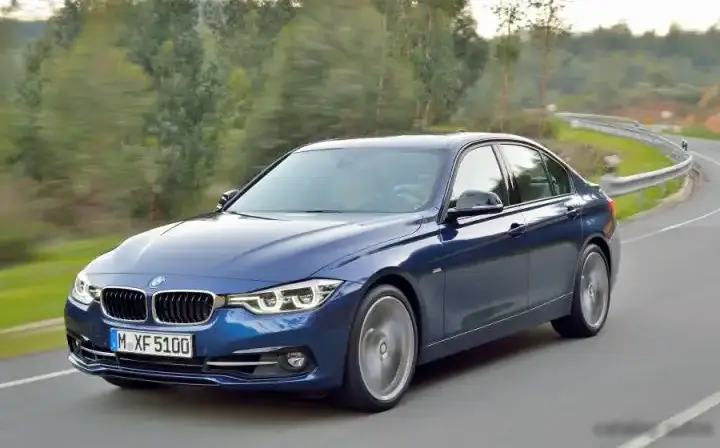
Technical Specifications
| Brand | BMW |
| Model | 3 Series |
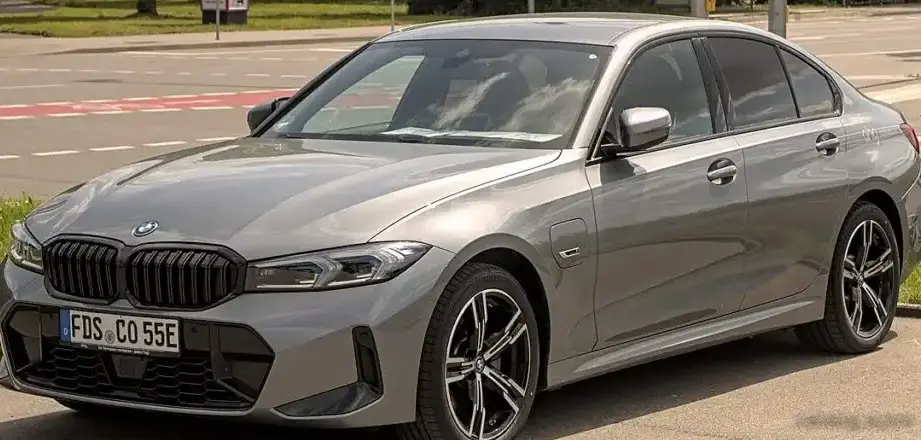
| Generation | 3 Series Sedan (F30 LCI, Facelift 2015) |
| Type (Engine) | 316d (116 Hp) |
| Start of production | 2015 |
| End of production | 2018 |
| Powertrain Architecture | Internal Combustion engine |
| Body type | Sedan |
| Seats | 5 |
| Doors | 4 |
| Fuel consumption (urban) | 5.1-4.6 l/100 km (46.1 – 51.1 US mpg, 55.4 – 61.4 UK mpg, 19.6 – 21.7 km/l) |
| Fuel consumption (extra urban) | 3.8-3.5 l/100 km (61.9 – 67.2 US mpg, 74.3 – 80.7 UK mpg, 26.3 – 28.6 km/l) |
| Fuel consumption (combined) | 4.3-3.9 l/100 km (54.7 – 60.3 US mpg, 65.7 – 72.4 UK mpg, 23.3 – 25.6 km/l) |
| CO2 emissions | 113-102 g/km |
| Fuel Type | Diesel |
| Acceleration 0 – 100 km/h | 10.7 sec |
| Acceleration 0 – 62 mph | 10.7 sec |
| Acceleration 0 – 60 mph | 10.2 sec |
| Maximum speed | 205 km/h (127.38 mph) |
| Emission standard | Euro 6 |
| Weight-to-power ratio | 13.2 kg/Hp, 75.8 Hp/tonne |
| Weight-to-torque ratio | 5.7 kg/Nm, 176.5 Nm/tonne |
| Power | 116 Hp @ 4000 rpm |
| Power per litre | 58.1 Hp/l |
| Torque | 270 Nm @ 1250-2750 rpm (199.14 lb.-ft. @ 1250-2750 rpm) |
| Engine layout | Front, Longitudinal |
| Engine Model/Code | B47D20A |
| Engine displacement | 1995 cm3 (121.74 cu. in.) |
| Number of cylinders | 4 |
| Engine configuration | Inline |
| Cylinder Bore | 84 mm (3.31 in.) |
| Piston Stroke | 90 mm (3.54 in.) |
| Compression ratio | 16.5:1 |
| Number of valves per cylinder | 4 |
| Fuel injection system | Diesel Commonrail |
| Engine aspiration | Twin-power turbo, Intercooler |
| Engine oil capacity | 5 l (5.28 US qt | 4.4 UK qt) |
| Coolant | 7 l (7.4 US qt | 6.16 UK qt) |
| Kerb Weight | 1530 kg (3373.07 lbs.) |
| Max. weight | 2090 kg (4607.66 lbs.) |
| Max load | 560 kg (1234.59 lbs.) |
| Trunk (boot) space – minimum | 480 l (16.95 cu. ft.) |
| Fuel tank capacity | 57 l (15.06 US gal | 12.54 UK gal) |
| Max. roof load | 75 kg (165.35 lbs.) |
| Permitted trailer load with brakes (12%) | 1700 kg (3747.86 lbs.) |
| Permitted trailer load without brakes | 745 kg (1642.44 lbs.) |
| Permitted towbar download | 75 kg (165.35 lbs.) |
| Length | 4633 mm (182.4 in.) |
| Width | 1811 mm (71.3 in.) |
| Height | 1429 mm (56.26 in.) |
| Wheelbase | 2810 mm (110.63 in.) |
| Front track | 1543 mm (60.75 in.) |
| Rear (Back) track | 1583 mm (62.32 in.) |
| Ride height (ground clearance) | 140 mm (5.51 in.) |
| Drag coefficient (Cd) | 0.26 |
| Minimum turning circle (turning diameter) | 11.3 m (37.07 ft.) |
| Drivetrain Architecture | The Internal combustion engine (ICE) drives the rear wheels of the vehicle. |
| Drive wheel | Rear wheel drive |
| Number of gears and type of gearbox | 6 gears, manual transmission |
| Front suspension | Independent coil spring |
| Rear suspension | Independent multi-link suspension |
| Front brakes | Ventilated discs |
| Rear brakes | Ventilated discs |
| Assisting systems | ABS (Anti-lock braking system) |
| Steering type | Steering rack and pinion |
| Power steering | Electric Steering |
| Tires size | 205/60 R16 92H |
| Wheel rims size | 7.0J x 16 |
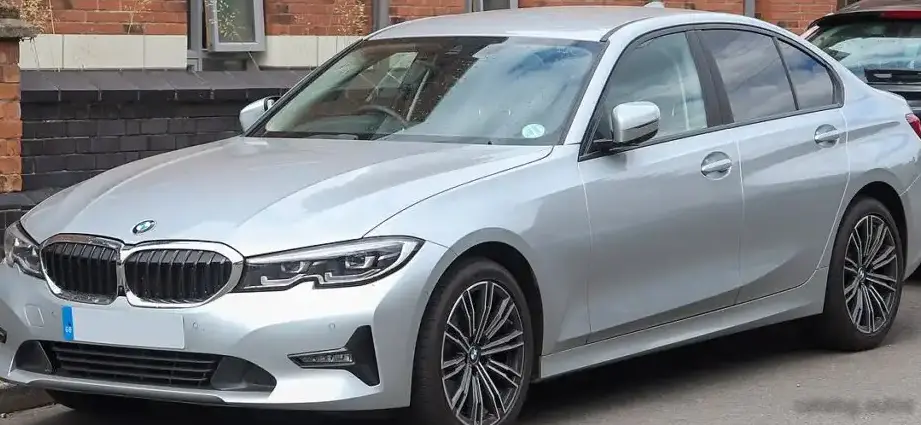
The BMW 3 Series Sedan (F30 LCI), specifically the 316d variant, was produced from 2015 to 2018. This model represents a mid-cycle refresh – known as the “Life Cycle Impulse” or LCI – of the sixth-generation 3 Series (F30). Positioned as an entry-level offering within the 3 Series range, the 316d aimed to balance fuel efficiency, reasonable performance, and BMW’s signature driving dynamics at a more accessible price point. It was primarily targeted towards European markets where diesel engines were, and continue to be, favored due to advantageous taxation and superior fuel economy compared to gasoline alternatives.
Powertrain & Engine Architecture
The 316d LCI utilizes the BMW B47D20A engine, a 2.0-liter (1995cc) inline-four cylinder diesel engine. This engine is part of BMW’s modular engine family, renowned for its efficiency and refinement. The B47 features a single turbocharger with variable geometry turbine (VGT) technology, along with direct common-rail fuel injection, delivering up to 2,200 bar of pressure. This high-pressure injection contributes to improved combustion efficiency and reduced emissions. The engine also incorporates BMW’s TwinPower Turbo technology, although in this specific application, it refers to the single, advanced turbocharger rather than a twin-turbo setup. The engine produces 116 horsepower at 4,000 rpm and 270 Nm (199 lb-ft) of torque between 1,250 and 2,750 rpm. The engine’s longitudinal mounting and rear-wheel drive configuration are hallmarks of the traditional BMW driving experience. The 316d was typically paired with a six-speed manual transmission, although an eight-speed automatic transmission was also available as an option.
Driving Characteristics
The 316d, with its 116 hp and relatively low torque output, offered a more relaxed driving experience compared to higher-powered 3 Series variants. Acceleration from 0 to 62 mph (0-100 km/h) took approximately 10.7 seconds. While not particularly sporty, the engine provided sufficient power for everyday driving and highway cruising. The manual transmission, when equipped, offered precise shifts and a good level of driver engagement. The automatic transmission, while smoother, could feel somewhat hesitant at times, particularly during quick overtaking maneuvers. The rear-wheel-drive layout contributed to balanced handling, but the relatively narrow tires (typically 205/60 R16) limited grip in cornering situations. Overall, the 316d prioritized fuel economy and comfort over outright performance.
Equipment & Trim Levels
The 316d LCI typically came standard with features such as air conditioning, power windows, central locking, and a basic audio system. Higher trim levels, such as Sport Line, Luxury Line, and M Sport, added features like sport seats, upgraded interior trim, larger alloy wheels, and more sophisticated infotainment systems. Optional extras included navigation, parking sensors, a sunroof, and leather upholstery. The LCI update brought revised interior trim options and updated infotainment systems with iDrive functionality. Standard safety equipment included ABS, stability control, and multiple airbags.
Chassis & Braking
The F30 3 Series utilized a MacPherson strut front suspension and a multi-link rear suspension. The 316d, being the entry-level model, typically featured smaller diameter brakes compared to higher-performance variants. Front brakes were ventilated discs, while rear brakes were also ventilated discs. The suspension was tuned for comfort, providing a relatively smooth ride quality. The steering was a rack-and-pinion system with electric power assistance, offering precise and responsive steering feel.
Market Reception & Comparison
The 316d LCI was generally well-received by automotive critics as a practical and fuel-efficient option within the 3 Series range. However, some reviewers noted that the engine lacked the punch of higher-powered alternatives. Compared to the 320d, which offered significantly more power and torque, the 316d was seen as a more sensible choice for drivers prioritizing economy over performance. The 316d’s fuel economy figures were consistently praised, making it an attractive option for high-mileage drivers. Its reliability was generally good, although diesel particulate filter (DPF) issues could occur with infrequent long-distance driving.
Legacy
The BMW 316d LCI (F30) remains a popular choice in the used car market, particularly in Europe. The B47 engine has proven to be relatively reliable, although regular maintenance is crucial, especially concerning the DPF and timing chain. The 316d’s combination of fuel efficiency, practicality, and BMW’s driving dynamics continues to appeal to a wide range of buyers. While not the most exciting 3 Series variant, it represents a well-rounded and affordable entry point into the BMW brand.