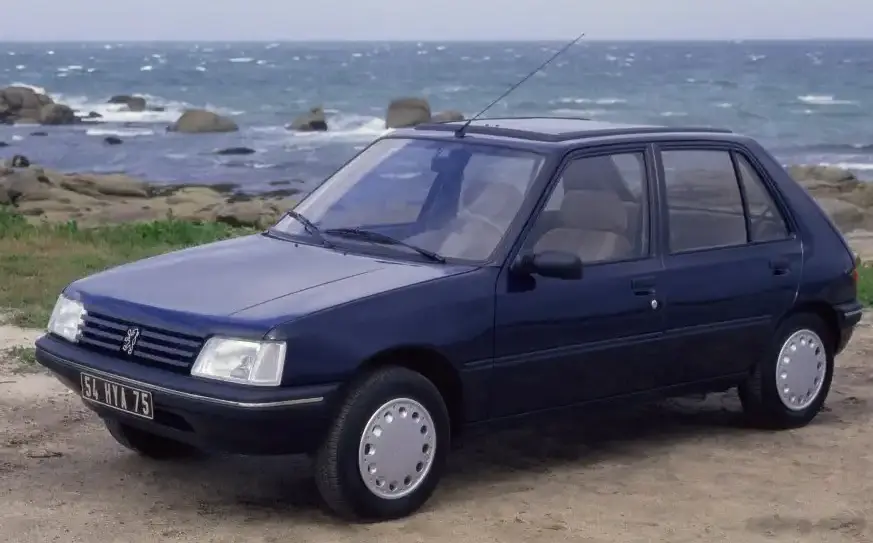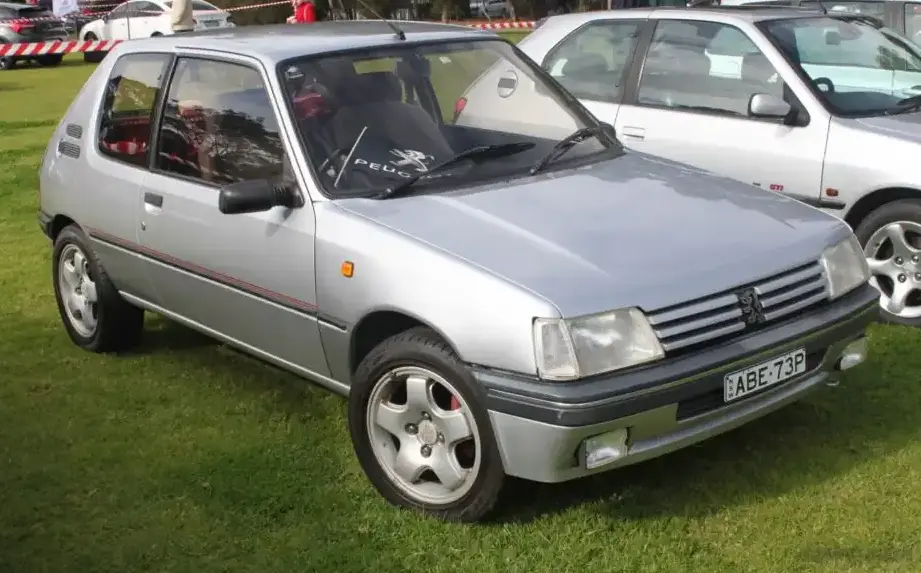
The Peugeot 205 I, specifically the 3-door 1.1-liter (55 horsepower) variant produced between 1987 and 1990, represents an entry-level offering within the highly successful 205 series. This model, designated as part of the 20A/C facelift generation, played a crucial role in establishing the 205 as a popular and affordable supermini in Europe. It was positioned as the most economical and accessible version of the 205, targeting budget-conscious buyers and those seeking a simple, reliable city car. While not known for outright performance, this variant offered a practical and fuel-efficient transportation solution.
Technical Specifications
| Brand | Peugeot |
| Model | 205 |
| Generation | 205 I (20A/C, facelift 1987) 3-door |
| Type (Engine) | 1.1 (55 Hp) |
| Start of production | 1987 |
| End of production | 1990 |
| Powertrain Architecture | Internal Combustion engine |
| Body type | Hatchback |
| Seats | 5 |
| Doors | 3 |
| Fuel consumption (urban) | 6.7 l/100 km (35.1 US mpg, 42.2 UK mpg, 14.9 km/l) |
| Fuel consumption (extra urban) | 4.5 l/100 km (52.3 US mpg, 62.8 UK mpg, 22.2 km/l) |
| Fuel Type | Petrol (Gasoline) |
| Acceleration 0 – 100 km/h | 14.6 sec |
| Acceleration 0 – 62 mph | 14.6 sec |
| Acceleration 0 – 60 mph | 13.9 sec |
| Maximum speed | 157 km/h (97.56 mph) |
| Weight-to-power ratio | 13.5 kg/Hp (73.8 Hp/tonne) |
| Weight-to-torque ratio | 8.5 kg/Nm (118.1 Nm/tonne) |
| Power | 55 Hp @ 5800 rpm |
| Power per litre | 48.9 Hp/l |
| Torque | 88 Nm @ 3200 rpm (64.91 lb.-ft. @ 3200 rpm) |
| Engine layout | Front, Transverse |
| Engine Model/Code | TU1C |
| Engine displacement | 1124 cm3 (68.59 cu. in.) |
| Number of cylinders | 4 |
| Engine configuration | Inline |
| Cylinder Bore | 72 mm (2.83 in.) |
| Piston Stroke | 69 mm (2.72 in.) |
| Compression ratio | 9.4:1 |
| Number of valves per cylinder | 2 |
| Fuel injection system | Carburettor |
| Engine aspiration | Naturally aspirated engine |
| Valvetrain | OHV |
| Engine oil capacity | 4.5 l (4.76 US qt | 3.96 UK qt) |
| Coolant | 6 l (6.34 US qt | 5.28 UK qt) |
| Kerb Weight | 745 kg (1642.44 lbs.) |
| Max. weight | 1195 kg (2634.52 lbs.) |
| Max load | 450 kg (992.08 lbs.) |
| Trunk (boot) space – minimum | 216 l (7.63 cu. ft.) |
| Trunk (boot) space – maximum | 564 l (19.92 cu. ft.) |
| Fuel tank capacity | 50 l (13.21 US gal | 11 UK gal) |
| Permitted trailer load with brakes (12%) | 700 kg (1543.24 lbs.) |
| Length | 3705 mm (145.87 in.) |
| Width | 1560 mm (61.42 in.) |
| Height | 1375 mm (54.13 in.) |
| Wheelbase | 2420 mm (95.28 in.) |
| Front track | 1350 mm (53.15 in.) |
| Rear (Back) track | 1300 mm (51.18 in.) |
| Drivetrain Architecture | The Internal combustion engine (ICE) drives the front wheels of the vehicle. |
| Drive wheel | Front wheel drive |
| Number of gears and type of gearbox | 5 gears, manual transmission |
| Front suspension | Independent, type McPherson with coil spring and anti-roll bar |
| Rear suspension | Torsion |
| Front brakes | Disc |
| Rear brakes | Drum |
| Assisting systems | ABS (Anti-lock braking system) |
| Steering type | Steering rack and pinion |
| Tires size | 145/80 R13 |
| Wheel rims size | 13 |
Powertrain & Engine Architecture
The 1.1-liter engine, identified by the code TU1C, is a naturally aspirated, inline-four cylinder unit. It utilizes a single overhead valve (OHV) valvetrain and a carburetor for fuel delivery. This carburetor setup was a cost-effective solution for the time, but it also meant less precise fuel metering compared to fuel injection systems. The engine produces 55 horsepower at 5800 rpm and 65 lb-ft of torque at 3200 rpm. The engine’s relatively small displacement and simple design prioritized fuel economy over performance. The 5-speed manual transmission was the only gearbox option available with this engine, offering a reasonable spread of gears for efficient driving. The transmission was chosen for its durability and cost-effectiveness, aligning with the overall budget-oriented nature of the vehicle.
Driving Characteristics
The 1.1-liter 205 is not a performance car. Acceleration is leisurely, taking approximately 14.6 seconds to reach 62 mph. The engine feels strained at higher speeds, and highway overtaking requires careful planning. However, within city limits, the 205 1.1 is surprisingly nimble and easy to drive. The light weight of the vehicle (around 1642 lbs) helps to mitigate the lack of power. The gear ratios are well-suited for urban driving, providing adequate acceleration from a standstill and allowing for comfortable cruising at lower speeds. Compared to the more powerful 1.4, 1.6, and 1.9-liter versions of the 205, the 1.1 feels significantly slower, but it offers a smoother and more forgiving driving experience for novice drivers.
Equipment & Trim Levels
The 1.1-liter 205 was typically the base model, featuring minimal equipment. Standard features included cloth upholstery, basic instrumentation, and steel wheels with hubcaps. Power steering and central locking were generally not included, though they could be added as optional extras. Interior trim was functional and durable, prioritizing practicality over luxury. Optional extras included a sunroof, upgraded stereo, and different exterior color options. The overall interior design was simple and straightforward, reflecting the car’s affordable positioning.
Chassis & Braking
The 205 utilizes a McPherson strut front suspension and a torsion beam rear suspension. This setup provides a good balance of ride comfort and handling for a small car. The front brakes are disc brakes, while the rear brakes are drum brakes. This configuration was common for cars in this price range during the late 1980s. The steering is a rack and pinion system, providing precise and responsive steering feel. The relatively light weight of the vehicle contributes to its agile handling characteristics. The 145/80 R13 tires offer adequate grip for everyday driving conditions.
Market Reception & Comparison
The Peugeot 205 1.1 was well-received as an affordable and reliable city car. Critics praised its fuel economy and ease of driving, but noted its lack of performance. Compared to other superminis of the time, such as the Renault 5 and the Fiat Uno, the 205 offered a more refined driving experience and a more stylish design. The 1.1-liter engine provided excellent fuel economy, making it an attractive option for budget-conscious buyers. However, the higher-powered versions of the 205, such as the 1.6 and 1.9, were more popular among drivers who prioritized performance.
Legacy
The Peugeot 205 1.1-liter engine, while not known for its longevity in high-performance applications, proved to be a reliable and durable unit when properly maintained. The TU1C engine is relatively simple to repair, and spare parts are still readily available. Today, the 205 1.1 is a popular choice among classic car enthusiasts looking for an affordable and easy-to-maintain vintage vehicle. Its simple design and robust construction make it a good candidate for restoration projects. While not a collector’s item like some of the more powerful 205 variants, the 1.1 remains a cherished and iconic example of 1980s French automotive engineering.